The generation shaped by amenity-rich student housing wants the same from the rental market. Developers are taking notice.
Welcome to the Alts Sunday Edition 👋
We all know Maslow's hierarchy of needs. The fundamental rung is a place to sleep.
A friend of mine recently spent four months looking for an apartment in Rotterdam.
Despite having a big budget and full location flexibility, she suffered through four months of unanswered emails, inspection queues, and a market that feels designed to exhaust you into submission.
She ended up snagging a place through a random Facebook group that wasn't even intended for rentals.
The cruelest part? Her visa depended on proof of housing, which meant she had to pay a deposit on an apartment she had never seen, in a country she was not yet allowed to enter. She had no way to verify the landlord, no way to inspect the property, and no legal recourse if the keys never arrived.
In an era where AI can generate fake ownership documents, you can't be certain the person handing you keys even has the right to do so. She had no way to know, and was really lucky it all worked out.
My search? It took just two weeks.
That contrast is what this article is about.
At the bottom of Maslow's pyramid, the way we solve for shelter is changing.
Let’s go. 👇
Uliana Lotova is a statistics student based in Melbourne. A part-time fencer, part-time football player, her favorite feeling is saying "I knew it!" when an early opportunity develops to a great deal. She is interested in the future of technologies and Asian history. This is her second issue with Alts. Last November she authored NEO: China's compliant blockchain.
🇪🇸 Own a stake in one of Europe's fastest-growing cities
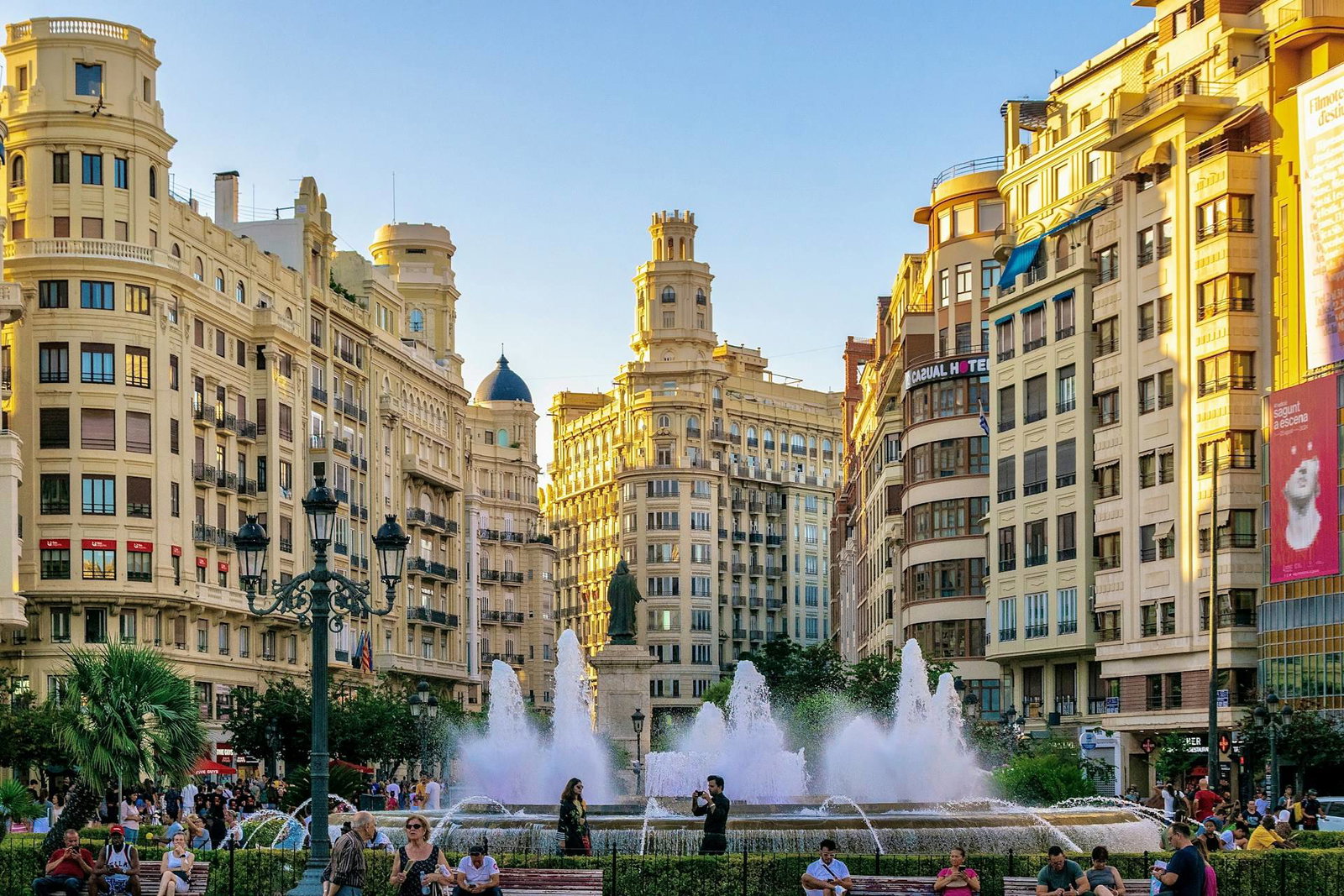
Invest in a 16-unit build in Valencia’s well-known beachside district
Speaking of building to own, there’s a new project we’re looking to create an SPV for.
Valencia has been one of Europe's most underrated cities for years — and the data is catching up:
It consistently ranks among the best places in Europe for quality of life, climate, and cost of living.
Valencia is booming, and you can invest. Heck, our own co-founder and CIO Wyatt lives just down the coast in Jávea, and has watched this market accelerate firsthand.
What is Álvaro López?
Bonum Consilium is a Valencia-based real estate development platform. Their current project, Álvaro López, is a 16-unit residential building in La Malva-rosa, steps from the Mediterranean.
Land acquired. Appraised by a Bank of Spain-registered firm. Building permit in process.
Details
We're currently exploring an Altea SPV for this deal.
Here's what the rough structure looks like right now:
30-36 month timeline
8% fixed annual coupon + 25% profit share on net proceeds
Projecting a ~10.1% XIRR
Sponsor equity subordinated below investor capital
Minimum investment of €7,500 (1 token)
Pre-sale deposits protected under Spanish banking law, held in bank escrow
Accredited investors can participate through our Altea SPV.
And interestingly, non-accredited investors can also access this deal through Brickken, a trusted European tokenization platform.
Valencia meetup
We're also planning a Valencia meetup in late June/early July around the cornerstone ceremony — a chance to see the project in person and celebrate with the team.
This is a potential Altea SPV for accredited investors. Non-accredited investors can also express interest and invest directly via Brickken.
What is BTR and BTO?
Build-to-Rent (BTR) and Build-to-Own (BTO) are two fundamentally different philosophies about how people should live.
BTO (sometimes referred to as Built-to-Sell) is the traditional model - the American dream made concrete. Buy a house, plant a tree, raise a family. You are the only owner of the roof you sleep under.
A property developer builds an apartment complex to sell the units to individuals, who can either use it as an investment, actually live there, or lease it to someone else.
What most people don't account for when they sign that contract is what comes with it:
Bills
Maintenance
Insurance
Furnishing
Repairs
Municipal charges
And the invisible “time tax” that turns homeownership into a part-time job.
The upside is full control, an appreciating asset, genuine security of tenure. But it ties you to one place, one decision, and a level of ongoing responsibility that tends to reveal itself slowly.
BTR, or Build-to-Rent, flips the model.
These are purpose-built rental buildings, owned and operated by institutional investors and global property groups, offering professionally managed living.
Think concierge services, shared gyms, pools, co-working spaces, dining rooms, all serviced and maintained. You pay rent, and in return, someone else handles everything else.
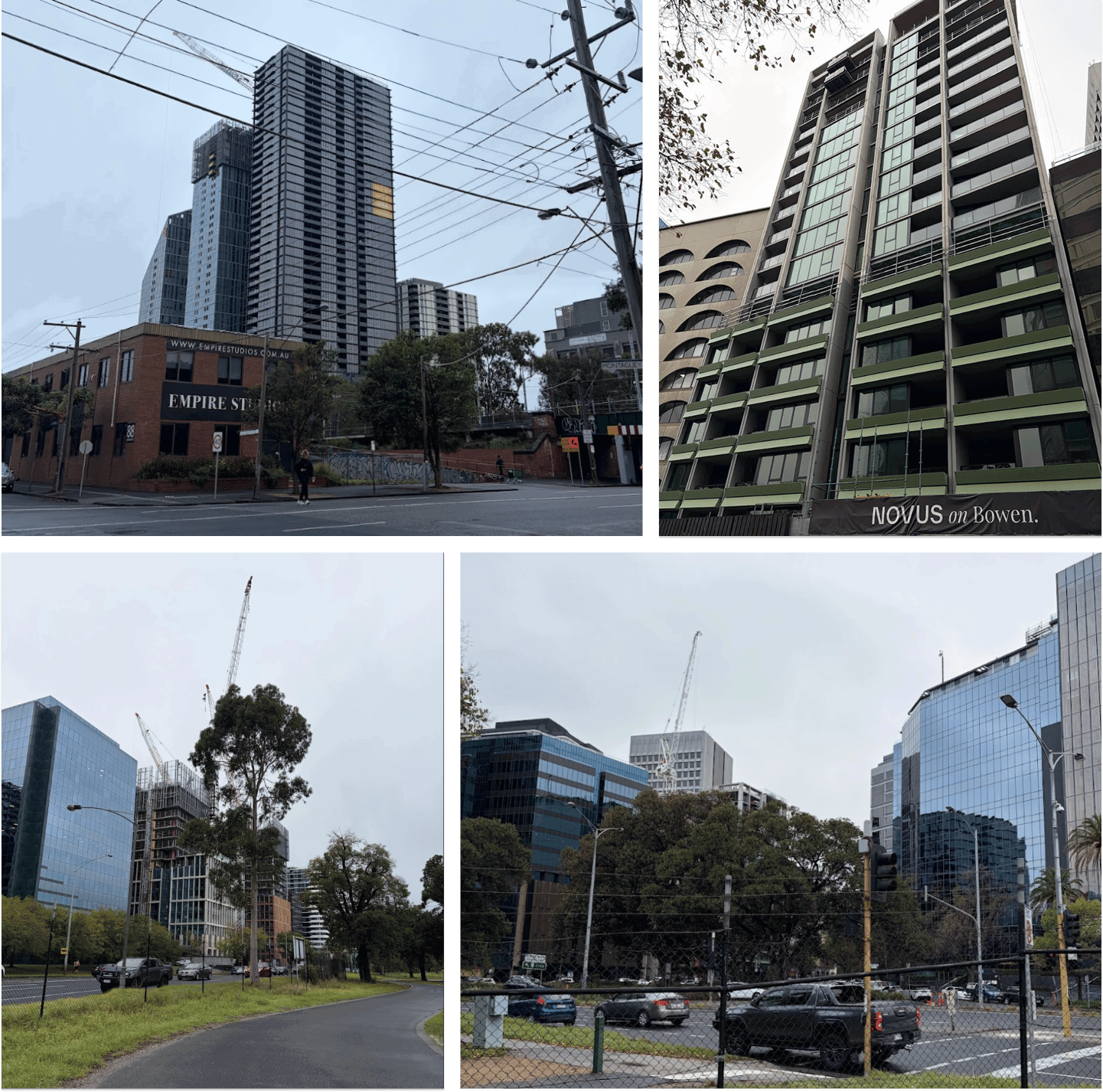
Here in Melbourne, Australia, my current home, BTR's operational footprint doubled in 2024 alone. I count at least four BTR buildings under construction on my daily bike route!
The concept originated in the US, gained momentum after the 2008 financial crisis as institutional capital moved into residential property at scale. The UK followed, building the most mature BTR market outside the US.
Today the global BTR sector is valued at $56.7 billion, projected to reach $137.4 billion by 2033 at a CAGR of 10.2%.
Gen Z’s ownership struggle
For Gen Z, the traditional path to ownership is structurally out of reach for most.
In the US, 27% of adults aged 19 to 28 own a home. Across Europe, homeownership among 25 to 34 year olds fell from 25% in 2005 to just 11% in 2018. In Australia, the median dwelling value has reached approximately AUD $880,000 — one of the highest in the world.
These are not temporary conditions caused by a bad market cycle. They reflect a generation entering adulthood with higher education debt, less stable employment, and a global labor market that rewards mobility over rootedness. Committing to a mortgage in one city could be strategically wrong.
So the question is not whether ownership is worth aspiring to but whether the conditions exist to make it possible — and for most of this generation, they don't yet.
The true cost of BTO
Most people know home ownership comes with a long tail of responsibility.
But what you may not know is that in many European countries, a homeowner’s obligations run even deeper.
Netherlands 🇳🇱
Buying in Amsterdam often means you don't actually own the land beneath your home.
Around 60,000 Amsterdam homeowners pay annual ground leasing fees to the municipality. These fees (called erfpacht) rose 8.6% in 2023 alone, pushing some properties above €20,000 per year in "ground rent."
The city rejected calls to cap the increase. Many buyers discover this only after signing.
Spain 🇪🇸
Spain is also a sharp illustration of what ownership risk looks like in practice. The good news is that prices in Spain have risen 33% since COVID! The bad news is that owning property there can expose you to liabilities most buyers never anticipate.
In Spain, apartments are sold as freehold, but every owner is automatically enrolled in a Comunidad de Propietarios - a community body with real legal power.
This body can compel owners to fund major renovations, pursue fines up to €600,000 for non-compliance, and block your ability to run a short-term rental if neighbors vote against it.
Critically, property debt follows the property, not the seller. So if you buy an apartment where the previous owner owed unpaid community fees, you will inherit those debts at settlement.
For example, if a squatter occupies your property and you don't remove them within 48 hours, you enter a judicial process that has historically taken up to three years to resolve. During that time, you keep paying the mortgage, community fees, property taxes, and utility bills for a home you cannot access.
One documented case involved a homeowner in Tarragona whose non-paying tenants sublet his apartment on Airbnb, generating tax authority fines sent to and signed for by the squatters themselves. The owner never received them, and was paying ~€2k a month for a property he couldn't enter. BTR emerged as a lifestyle trend, designed to solve exactly these types of issues.
BTR: Who it fits, what it costs, and what it feels like
BTR is not a perfect product. But it is a convenient one.
The transition into BTR is smoother than most people realize, partly because the industry has been preparing my generation for exactly this kind of living.
Student housing: The foundation of BTR
Student housing - purpose-built, serviced, furnished, with shared recreational spaces and professional management - operates on the same logic as BTR.
The big student housing providers (like Scape and Aparto) have built this model across major university cities around the world. The lease is capped by your degree timeline rather than your preference. You cannot live there without ongoing enrollment.
But the experience - the security, the convenience, the community, the legal protections - is nearly identical to BTR. For many young professionals, BTR is simply the next step after student housing ends.
Scape is a major student accommodation company that develops and operates premium student housing throughout Australia and the UK. Their model, which is a mix of student dorm + apartment building + co-living brand, is essentially the foundation of BTR. Interestingly, they recently converted their flagship vehicle into a $3.8 billion open-ended fund with a 16,000-bed portfolio across 33 assets.
I experienced this firsthand as an international student in Milan. Finding housing near Bocconi in 2023 was its own education.
Leasing agencies responded in confused Italian with a hint of English.
The university housing page listed dorms and agencies that were either fully occupied or over budget.
Bocconi's own allocation system ran in monthly rounds: one chance per month, and if you missed it, tough! You wait again. (I once recruited my brother, who was between gaming sessions, to click the allocation button as fast as his gaming mouse would allow.)
Later on, I rented privately in Milan. My landlord was a good man, genuinely helpful, and patient with a foreign tenant who didn't speak the language. But the arrangement was entirely built on personal trust, and personal trust is not a legal framework.
I paid a community fee on top of rent that provided no actual community services - no security, no shared spaces, no management. Utility bills arrived as whatever figure he chose to quote and no way to verify them. My deposit sat in his personal bank account. When the lease ended, I had no mechanism to compel its return - I simply waited and hoped.
Everything worked out. But I too was lucky. That is not a secure system. That is a relationship, and relationships end.
Insider look: After my Milan experience, moving into my BTR building in Melbourne was frictionless. I had the freedom to evaluate the rental agreement for a few weeks. I could select my floor and my unit. And the risks that had haunted my previous search (sublease fraud, unclear ownership, deposits held by people I couldn't verify) were gone. In their place: a contract, a management team, and a building that worked. I use all the recreational spaces and know exactly where my money goes.
BTR is more than shelter
BTRs have far less mental load.
Think back to Maslow's hierarchy. The physiological layer — water, heat, electricity, internet — it's all handled.
You don't buy a fridge or a washing machine. Electrical appliances come with the apartment, maintained by someone else. Safety is built into the building's operating model. Security staff at reception, key fob access, cameras, it's all there.
Above that, belonging: community events every month, shared spaces designed to get people out of their apartments and into conversation with neighbors. BTR effortlessly covers several rungs of the pyramid at once.
It's all about the amenities baby
In my opinion, this is where BTR really shines.
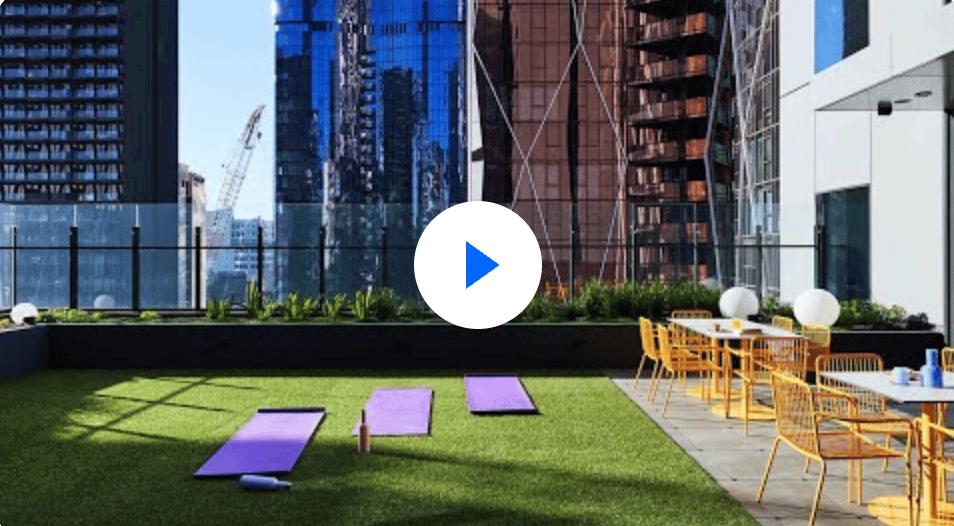
In a bid to attract renters, BTR amenities are starting to get ridiculously good. These are shared common areas, properly serviced, and professionally-maintained.
Growing up, going to a pool meant a long drive with my mom, cold changing rooms, and a specific time slot. Now I just take the elevator.
My gym is way beyond a treadmill and some weights. Weekly yoga, boxing, and pilates sessions are included, coaches are approachable, and the Saturday morning boxing class has become a genuine community fixture — full families showing up for a wellness hour before the rest of the weekend starts.
I used to think saunas were for special occasions — the kind that required a trip to a dacha, a Russian country house. Now I use one daily.
The library is worth mentioning separately. It's a calm, spacious, well-lit room with a view and a thoughtful selection — clearly a space someone on the management team cared about. Take a book, bring one of your own, leave it for the next person.
Libraries, views, pools, and co-working spaces that would cost hundreds per month on their own. All included in my BTR building. No wonder Gen Z loves this stuff!
Onsite maintenance covers both common areas and individual apartments. Something breaks, you report it, they fix it, at no additional cost.
None of this is "luxury," but to someone used to playing the sh*tty landlord game for years, it feels like it. BTR made it accessible to renters like me.
What are the downsides of BTR?
The risks are worth pointing out.
Rent escalation is contractually embedded in most BTR leases, and it can be high.
The BTR product is convenient, not cheap. In Australia, residents have faced rent increases of 9 - 17% at the end of year one! You are, by design, always a tenant. You build no equity. The flexibility that makes BTR appealing to a mobile generation is also what makes long-term wealth accumulation harder. That's the tradeoff.
My BTR contract is capped at five years — which is pretty good! But at renewal, there is no guarantee of continuity. I may face a new contract at a higher rate, or find the unit is no longer available. For someone building a stable life or family in one city, that uncertainty is the reason BTR remains a transitional product, not a permanent home.
Location is another consideration BTR marketing tends to gloss over. Because BTR is a relatively new model, buildings are often constructed on sites that older private developments passed on — near highways, rail corridors, or industrial edges. Convenient to the city center, yes, but convenient rarely means pleasant or quiet.
Ironically, BTR buildings can actually be sold! Your contract is with the operator, not the building. A change in institutional ownership can mean new management, revised pricing policies, or a different approach to the community rules you signed up for — with little notice or recourse. In my case, the operator changed a few days before I moved in. I found out via email.
Where is this heading next?
Obviously I'm biased towards BTR, but I'm also not naive. The future is not a single model. I think it's 3 models, serving different stages of life.
BTR is the entry point, where people land when they arrive in a new city, build careers across borders, or are simply not yet ready to commit to geography. It is also where Maslow's framework plays out most completely for a generation that cannot yet own. Physiological needs, safety, belonging - all designed into the building itself.
Serviced BTO sits in the middle: you own, but share professionally managed amenities and common spaces. The convenience of BTR without surrendering the asset, in theory. In practice, the line between serviced BTO and BTR is increasingly thin, and for investors, the distinction matters less than the yield.
Traditional BTO in a non-serviced building remains the benchmark for those with stability, capital, and a long-term commitment to a place. The equity builds. The full control comes with responsibility, which is entirely yours. You are the architect of your own space, though in most city centres, the land available for privately owned homes is shrinking fast.
In Spain - one of Europe's fastest-moving BTR markets - total sector investment hit €2.5 billion by Q3 2024, with Madrid supply up 115% year-on-year and Valencia growing 46% since 2022.
The direction is consistent across every major market. The world BTR is designed for - mobile, uncertain, subscription-native - is the direction things are moving. Maslow's first need has not changed. What has changed is how a generation is choosing to meet it.
So for investors, the question is not whether BTR is legitimate. It already is. The question is how early you are willing to move on a sector that is still, in most markets, just beginning.