|
Hello from London,
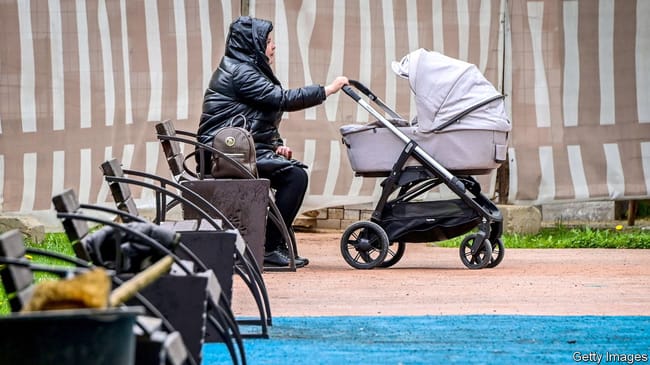
Some news stories are so sudden or obvious that you can’t miss them. Others, such as the one we just published on the catastrophic state of demography in Russia, take some careful unravelling—but could prove to be just as dramatic. When my colleague first spelled out
how dire are the trends for Russia’s population,
and offered some details, I found the story to be astounding.
The life expectancy for young men is now as low as for men in Haiti—and lower than in Bangladesh. The overall population is tumbling. By the
estimates of our data colleagues,
the covid-19 pandemic has taken a deadlier toll in Russia than in almost any other country. Add the effects of war—both the tens of thousands of men killed in Ukraine and the hundreds of thousands who have fled into exile—and the population looks terribly skewed. Women now outnumber men in Russia by the millions, for example.
For the long-term health of Russia, this matters. Other countries such as Japan have seen a slump in their population size or fertility rates, and managed the decline. But the sudden loss of young people, especially highly educated ones, is acutely painful for economies to deal with. To me, this again highlights how little Vladimir Putin cares for the fate of his own people. Whatever motivates him—some deluded sense of his place in Russian history, perhaps—it is not the well-being of ordinary Russians. I just hope that, one day, Russians will find a way to be rid of him.
For another perspective on Russia, let me recommend our latest By Invitation guest essay. This is by
John Foreman,
who recently returned from Moscow where he had served as Britain’s defence attaché. He pulls no punches in assessing the failings of Valery Gerasimov, the Russian chief of the general staff. Even when the Russian army seems to make some progress in the war—it may yet seize the town of Bakhmut in the coming days—those gains come at enormous costs in terms of lost men and equipment.
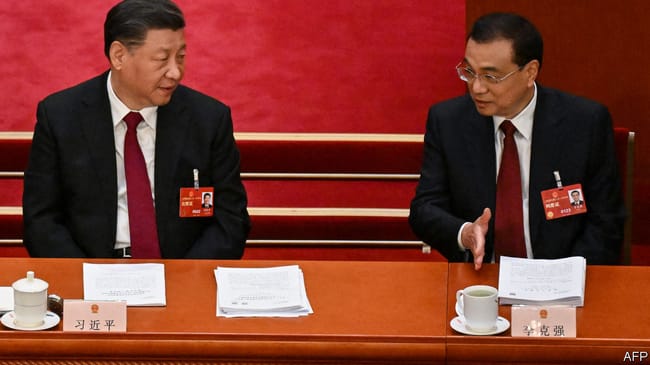
Look out, too, for our assessment of the
Communist Party’s new strategy for China’s economy.
The re-opening after covid, plus the question of how much China can disentangle itself from relying on exports to the West, seem to point to changes ahead. Recovery is coming, but how much sustained growth can be expected from China?
Our
most recent cover package
was entirely different. By some estimates, around half of the planet’s population is set to count as obese or overweight by the middle of this century. But, it seems, there is now real cause for hope that many more people will get help in fighting the flab. We set out how a new range of drugs, initially intended to fight diabetes, have proved successful at helping users lose weight. This, combined with better eating and exercise habits, could prove to be a huge boon for human health in the coming decades.
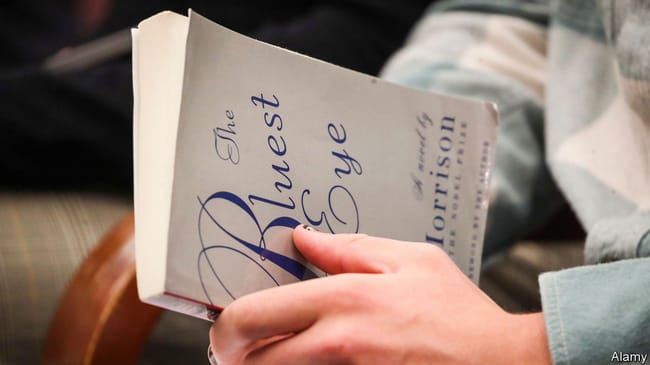
Let me also flag one of our recent The Economist reads articles: this takes readers on a tour of banned
books—seven books that you are forbidden to read,
either by states or by armies, prisons or schools—around the world. It has proved very popular indeed.
I’m also pleased to see the relaunch in the past few days of our
A-Z of economic terms.
This is the place to go when you need clarity in defining
backwardation,
contango,
cryptocurrencies
or hundreds of other terms. I’d like to hear if you think we’ve missed something out that should be added. And, looking ahead, let me know if you’d welcome a different sort of A-Z beyond economics.
Please continue to write to us at
[email protected].
|








 Email
Email 


