|
|
|
|
|
|
|
|
|
|
Story by J.M. Hirsch
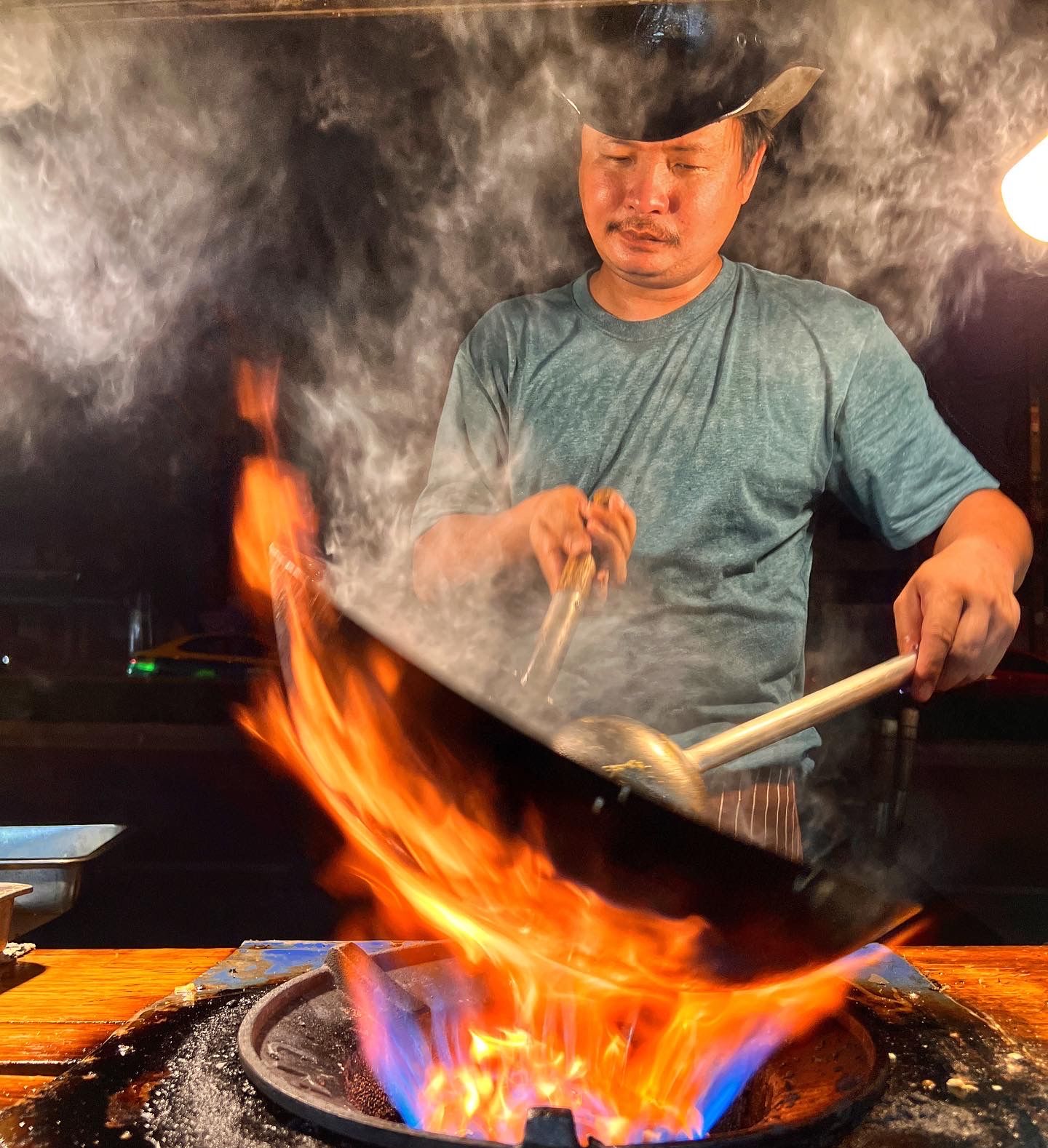
Flames rip and tear, stretching above the blackened edges of Aon Apilak Plurksawet’s carbon steel wok, sending raging tongues of orange toward his face as he jostles, bangs and slams the pan above the heat. The steamy night air is rich with chili, smoke, soy and fish sauces, the streetside perfume of Bangkok.
Noodles, shrimp and sprouts fly violently about the wok, Plurksawet maneuvering it by a single charred and beaten wooden handle. The intensity of his cooking explains his shop’s moniker: Pad Thai Narok Taek, or Mad Man Pad Thai.
Diners cluster at plastic tables on the sidewalk around Plurksawet’s cart. Icy bottles of Singha beer are delivered by boys working at a nearby shop. He serves only four dishes, all iterations of Thailand’s national and eponymous dish—pad Thai.
When I taste it, I understand the crowd. His pad Thai is a wonder of tastes and textures, a flavor bomb you can’t stop eating. Along with a shower of peanuts and chili flakes, a tangle of noodles and sprouts, a sauce as savory as it is sweet and tangy, and a finishing squeeze of lime and sprinkle of pickled fresh chilies, there also is a hard-to-identify richness.
For that, you can thank those intense flames, which impart so-called wok hei, the distinctive smoky-caramelized flavor that is the hallmark of high-heat wok cooking. A host of factors contribute to wok hei, but two are particularly notable: the carbon steel woks and the high-octane gas burners found in most restaurants.
Those burners, which can reach more than 150,000 BTUs, generate intense heat quickly. The woks, like cast-iron skillets, are seasoned with a coating of polymerized oils, creating a naturally nonstick surface. The interaction of the heat and oil-coated pan produces smoke and speedy caramelization that coat the food as it cooks.
But many home cooks struggle to reproduce this effect. Home stovetop gas burners often max out at 18,000 BTUs, and few cooks have well-seasoned carbon steel woks. Hacks to replicate this abound, but many are cumbersome.
So we sought out Gigg Kamol, Thailand’s Iron Chef and owner of several Bangkok restaurants. He has spent years trying to replicate wok hei with home cooking equipment. The challenge, he says, was in trying to replicate restaurant equipment conditions. Success came when Kamol instead worked to duplicate not the conditions, but the flavors. This meant adding ingredients in ways that maximize caramelization.
|
|
|
|
|
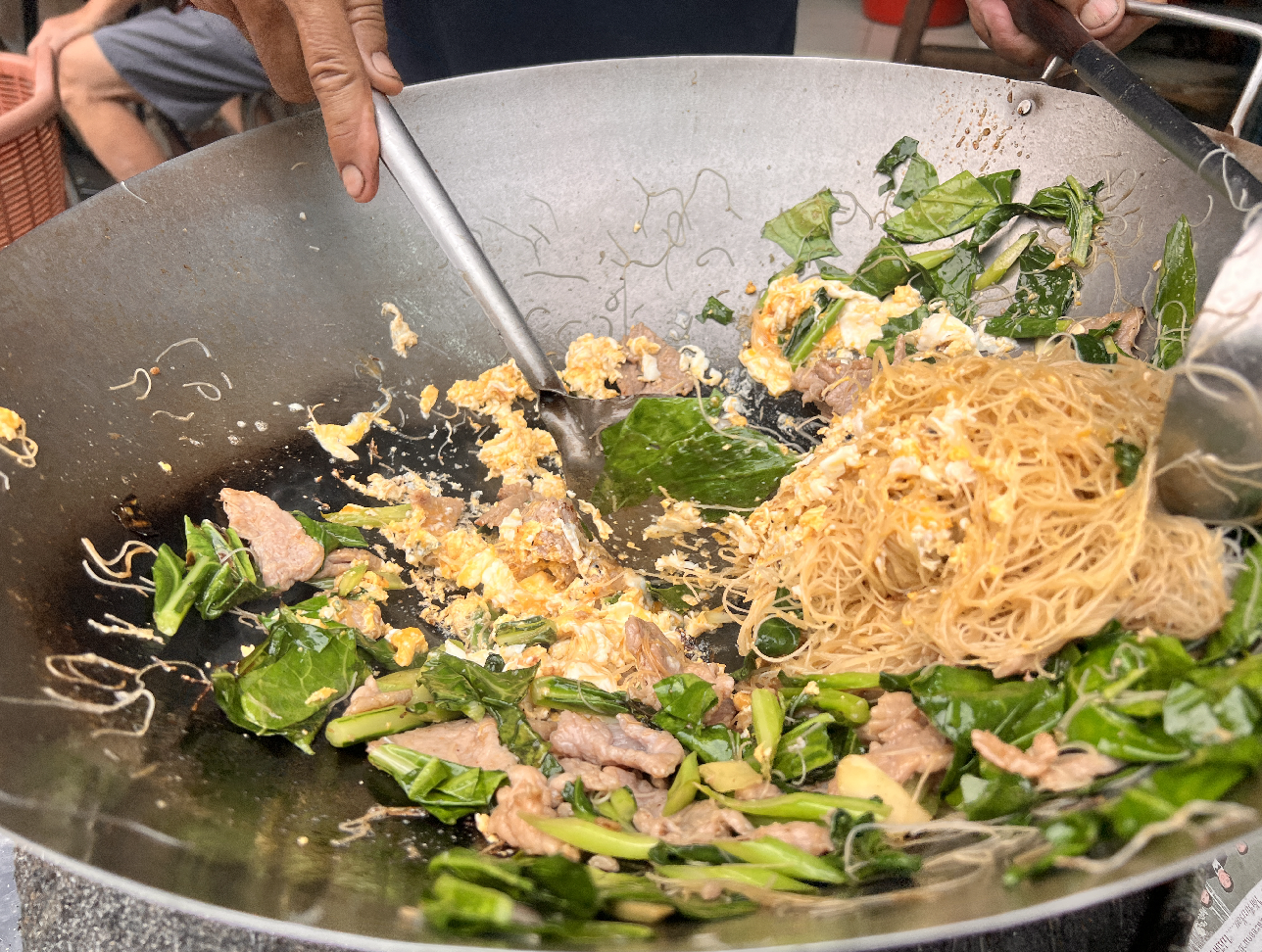
He calls it saucing the wok, not the food. Pouring sauce over food reduces its contact with the wok, limiting its contact with heat. But when he pushed the food to one side and drizzled the sauce directly on the surface of the pan, it sizzled, caramelized and developed deeper, richer flavor. To further enhance this effect, he also cooks proteins first to give them time to release and cook off any water, which would dilute the other flavors. We used his technique for our pad Thai and loved the results. But the same approach works for all manner of stir-fry where the smoky richness of wok hei is desired. |
|
|
|
|
|
|
As a reader of Milk Street, you qualify to receive a free bottle of fresh-pressed extra-virgin olive oil, direct from the new harvest at one of the world’s top artisanal farms (valued at $39). Pay just $1 shipping and it’s yours—free, as an introduction to the Fresh-Pressed Olive Oil Club—with no commitment to buy anything.
Says Christopher Kimball: “With olive oil, fresher is always better. When we tasted T.J.’s harvest-fresh olive oils here at Milk Street, we fell in love with their vibrant, grassy flavor.”
|
|
|
|
|
|
|
|
|
|
|
|
|
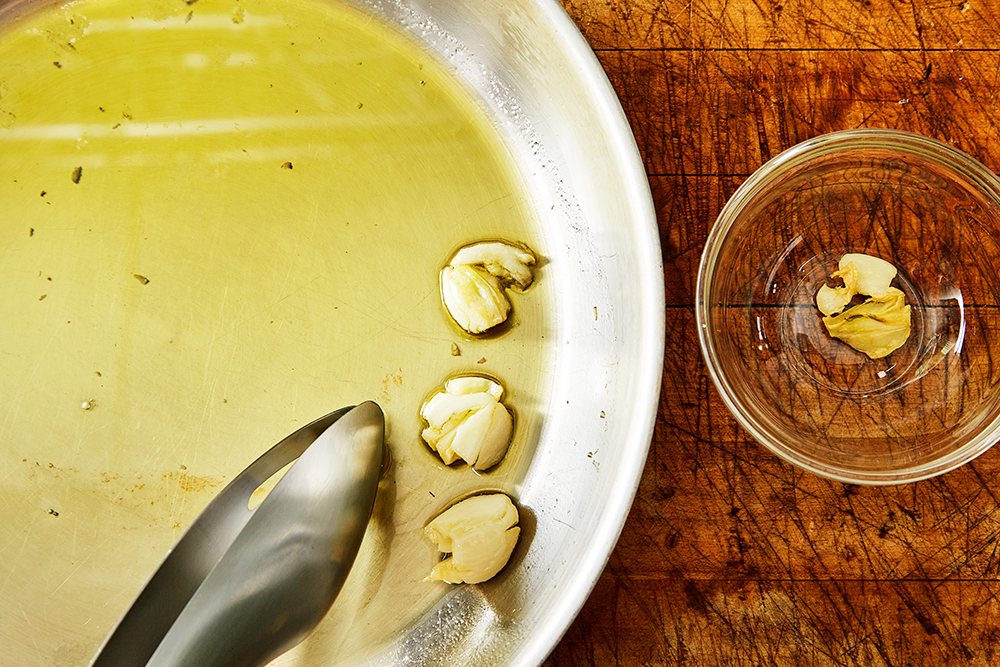
It will sound strange to red sauce-loving Americans, but Italian cooks know that sometimes the best thing to do with garlic is throw it away. This is true whether you are making a tomato- and olive-rich pasta puttanesca or a simple orecchiette with sausage and broccoli rabe. Stay with me for a moment. Italian-American cooking leans into the punchy, in-your-face flavor you get when minced garlic is added directly to a sauce, soup or pasta dish. But in Italy, they prefer a more nuanced garlic flavor. It’s a lesson we learned in Naples when cooks teaching us a minimalist takes on two pasta dishes—a classic puttanesca and a simple orecchiette with sausage and broccoli rabe—said one of the most important steps was to throw away our garlic. At her rooftop kitchen just outside Pompeii, Antonella Scala started her wonderfully pared down puttanesca by sautéing a few cloves of peeled and lightly crushed garlic in a bit of olive oil. Then she scooped them out and threw them away! And in nearby Gragnano, in the shadow of Mt. Vesuvius, Alfonso Cuomo did something similar, letting several cloves sizzle in a glug of olive oil before discarding them and adding crumbled sausage and fennel seed. I expected the finished dishes to taste somewhat lacking. After all, they threw away one of the main flavorings. Yet both pastas were rich with garlic, but just enough for a savory undercurrent that allowed the other ingredients to shine. Turns out, Italian cooks typically start their sauces by sautéing a handful of cloves in olive oil. After a few minutes — and before the garlic browns and turns acrid — they spoon it out and throw it away. At that point, the garlic has done its job, infusing the oil with gentle flavor and aroma that more evenly permeates the noodles and sauce without overpowering the dish. And without leaving potent, even pungent chunks of garlic floating in your sauce. |
|
|
|
|
|
|
|
|
|
|
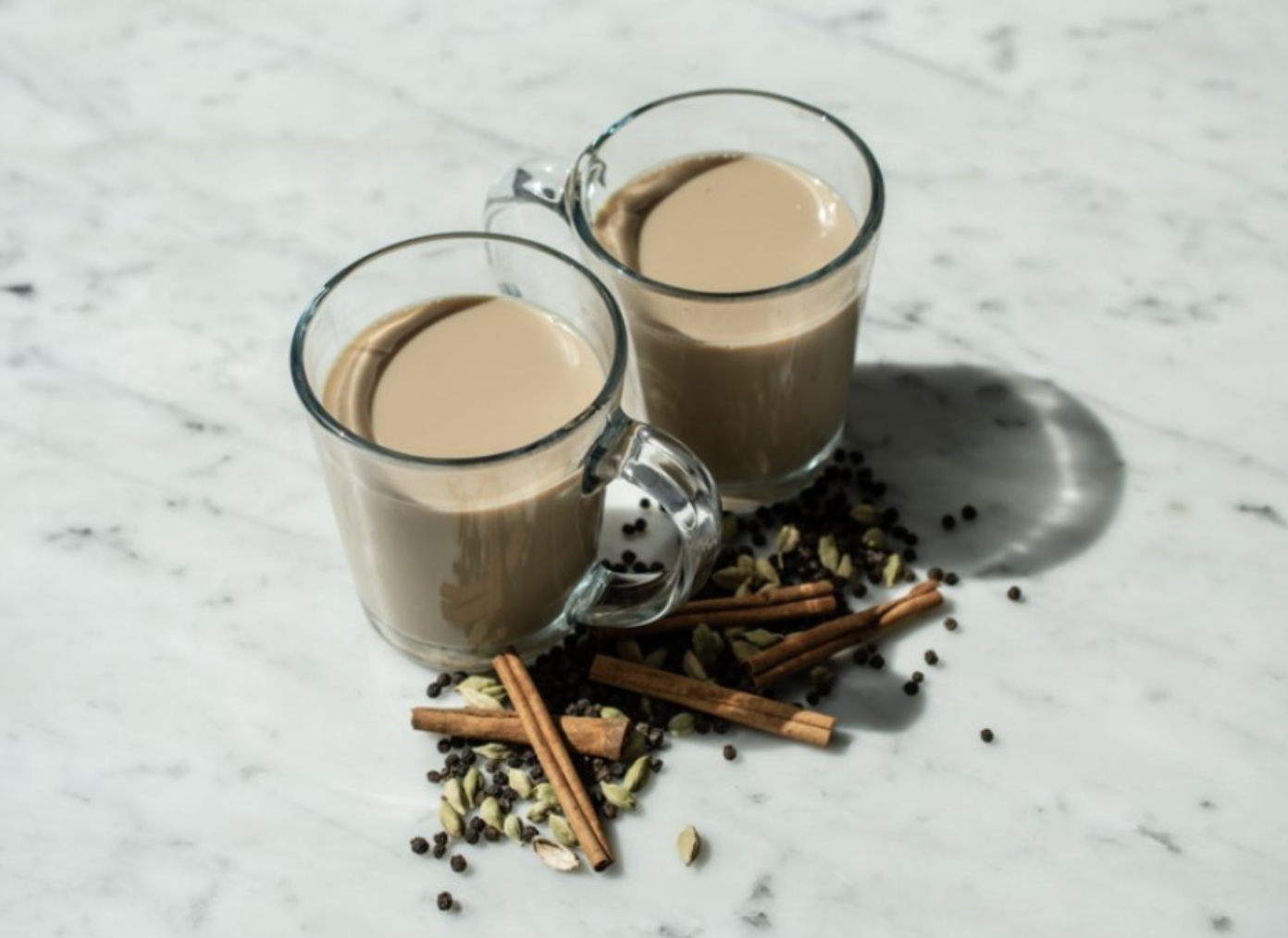
In Mumbai, good manners call for offering chai to guests visiting your home. But the chai tastes nothing like the overly sweet lattes made from boxed concentrates that have become a staple of American coffee shops. In India, chai is freshly brewed from tea, whole spices, water and milk, creating a warmly rich, lightly sweetened drink. And the teachers at APB Cook Studio showed us it takes only minutes to make.
To brew chai, in a medium saucepan over medium, combine 2 cups water with 1 tablespoon loose black tea, 1 teaspoon grated fresh ginger, 12 finely crushed green cardamom pods, 1 large cinnamon stick and 4 teaspoons whole black peppercorns. Bring to a simmer and cook for 2 minutes. Add 1 cup whole milk, return to a simmer, then let rest off heat for 1 minute. Sweeten with up to 4 teaspoons white sugar, then use a mesh strainer to strain into mugs. |
|
|
|
|
|
|
|
|
|
|
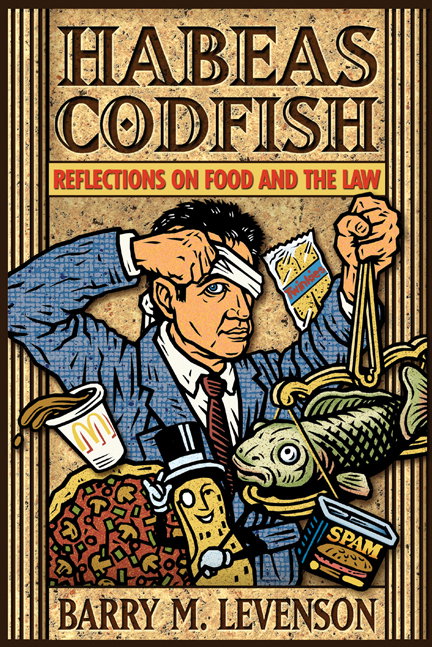
Habeas Codfish by Barry Levenson
In 1925, Wisconsin passed a law that made it illegal to make, sell or possess margarine, punishable by a $500 fine and jail time. Welcome to food and the law, a fascinating look at how courts have tried to adjudicate culinary issues throughout history.
In the Middle Ages, English laws made it illegal to adulterate bread. (Outlaw bakers were put in the stocks and their bread burned in front of them.) The U.S. courts have tried to define peanut butter, ice cream and ketchup to help settle labeling issues. In liability cases, a woman slipped on a banana peel in a Kroger market and won $400 (reversed on appeal), and judges have delineated a test for unwelcome surprises in foods (a nail, chicken bone or, in one case, a thumb) by allowing natural additives (clamshell in clam chowder) but not foreign substances (the aforementioned thumb) under the legal theory of “reasonable expectations.”
Before the 1930s, the legal concept of “privity” meant that a consumer could not sue a manufacturer because no binding contract existed between the two of them. Some consumers have sued due to “loss of enjoyment”—a bad jar of applesauce provoked one mother to sue on behalf of her sons, who were traumatized to the point that they could never enjoy applesauce again. (She lost.) And the First Amendment has protected even the most heinous restaurant reviews, such as referring to a fish course as “trout à la green plague.”
“Habeas Codfish” is also full of trademark infringement cases including McDonald’s—is “Mc” part of their trademark?—and the anthropomorphic use of the peanut (Mr. Peanut vs Crown Nut). Perhaps the most interesting cases are on the periphery of the world of food. Dan White, who shot San Francisco Mayor George Moscone and Supervisor Harvey Milk employed the “Twinkie defense” claiming that his consumption of sugary foods lead to diminished capacity - he was unable to act with premeditation. (He was convicted of a lighter offence, involuntary manslaughter). And, summing up endless suits by prisoners about prison food, the law has ruled, “De gustibus non est disputandum.”
|
|
|
|
|
|
|