This issue: Lit-mag editors share how they’re approaching the problem of AI in submissions, we report from the Volume 0 Allie Rowbottom release party, and an exclusive.
|
|
|
|
|
Senior newsletter editor, New York |
|
|
|
THE BOOK GOSSIP QUESTIONNAIRE |
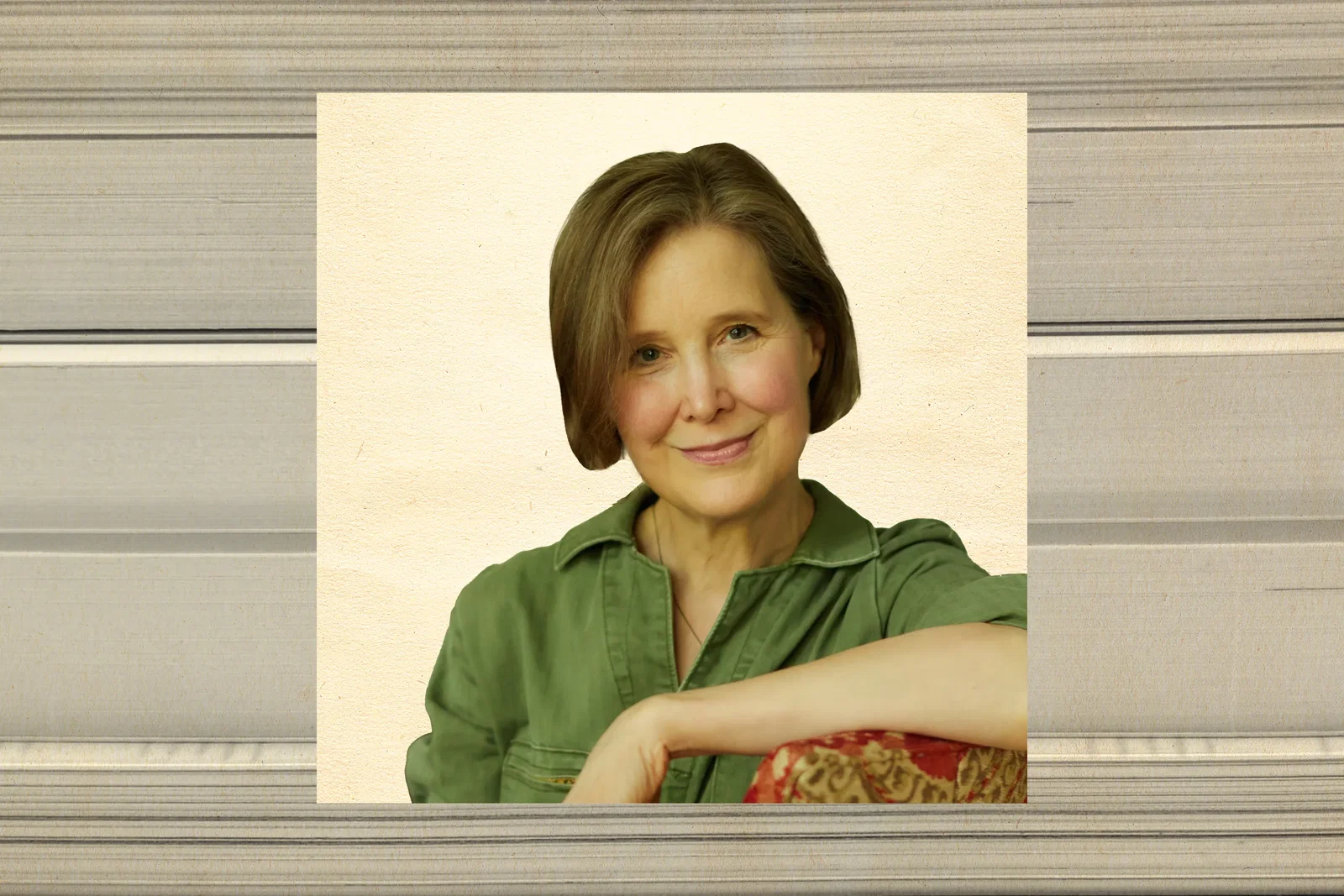
Ann Patchett Scrapped a Different Novel Before Whistler “I wasn’t blocked. It just didn’t work.”
|
Photo-Illustration: New York Magazine; Photo: Emily Dorio |
|
|
|
Today, Ann Patchett, the Nashville-based author of several novels and a few children’s books, releases Whistler. Beginning with a chance encounter at the Met, her latest novel is about a stepfather and a stepdaughter finding each other again years after a terrible car crash that led to the dissolution of their family unit. In this edition of the Book Gossip Questionnaire, Patchett talks about her writing regimen, the author she wished she wrote like, and what she’s learned from revisiting Bel Canto.
|
|
|
|
|
-
The book you’ve reread the most often?
Our Town, Thornton Wilder. I’ve probably read it around 30 times. I read it most years and then I wrote a book about it, so I really read it a lot.
-
Finish the sentence: I can’t write without _____.
A little bit of quiet time. Life is so busy and I need to carve out a little bit of space. I cannot stand in the corner of a cocktail party and write; I have to look at my calendar and think, I’m going to be home all day.
-
Recount a recurring dream.
I only have one dream, which is I’m trying to check into a hotel and the line at the desk is unbelievably long and the elevators are all broken except one and then there are too many people on the elevators and I have to carry my luggage up ten flights of stairs, but my luggage breaks. I get to the room, but there’s already somebody else staying in there, but then I remember it’s time for me to go to the airport, but I can’t find a taxi. So I get on a subway and it connects to a bus. That’s it. It just goes on. I get on the train in the wrong direction or I get on the train, but I’ve left my luggage on the platform. It’s boring. It’s anxious-making. It’s endless.
-
The last album you listened to all the way through.
Renée Fleming’s By Request, a collection of arias. I’m an old-fashioned gal. I believe that albums are like books that should be listened to from start to finish.
-
How many hours a day do you write and where?
I don’t write any hours a day. It’s either I’m writing or I’m not writing. If I am writing and I’m at the beginning of a project, maybe 20 minutes a day. If I am writing and I’m at the end of a project, maybe six hours a day. If I’m not writing, not at all. Because I have a book coming out in a couple of weeks, what I’m doing now is writing my name. I have to sign 16,000 hardback books between May 5 and May 30.
-
Describe your new book without revealing the plot.
What I’m working on now is publicity, and it’s not a joke. Before I started signing these 16,000 hardbacks, I signed 25,000 tip sheets that’ll be sewn into the book. It is my full-time job to do this. And I am so lucky this horrifying experience that I am in the middle of right now is available to only a tiny handful of people. It’s like a factory job. I’m not writing anything.
I can sign books for maybe four hours at a time. I’m doing personalizations for the bookstore — I own a bookstore, Parnassus, in Nashville — so there have been a lot of days that I’ve been there for eight hours. It’s very Rumpelstiltskin where they lock the princess in the room full of straw and say, “Don’t come out until it’s gold.” But a friend of mine just brought me this little timer and she said to set it for 25 minutes and then at the end take two or three minutes to do squats or push-ups or run in place. There’s a whole group of booksellers who are with me while I’m doing this. Every 25 minutes we all stop and hop up and down like bunnies, and then we start again.
-
Describe a physical place of great importance to you.
My house where I live with my husband and our dogs. It’s where I want to be because they are there. But if we moved someplace, that would be the physical place of great importance, if you know what I mean.
-
The book you wish you’d written.
Any book by Elizabeth Strout. Her work seems effortless and it invites the reader in and makes the reader feel part of everything.
-
A director, living or dead, you’d most like to see adapt one of your books.
Frank Capra, which is a dumb answer because I’m a big believer in promoting the living. But there is a kindness and a decency to his work that I aspire to in my work.
-
Describe your reading habits in three words.
Galleys, endless, joyful.
-
When was the last time you reread your first book?
I’ve never reread my first. Very few authors reread their work. That’s what I’ve come to learn. I reread Bel Canto last year because I did a hand-annotated version of it, and it was fascinating. My takeaways: way too many adjectives. If I could describe something really brilliantly once, I went ahead and described it three times. And every time a beautiful woman walked in the room, I talked about how her hair smelled. It happened six times in the novel. Appalling.
-
The writer you’d most like to have a conversation with, living or dead?
My friend Lucy Grealy because she’s dead and whenever somebody asks me a variation on that question, I think, I’ve got a great hack, I could see my best friend again. Dorothea Benton Frank also. It would be so fun to see Dottie again.
-
What was the last meal you cooked, and who was it for?
Last night, I made dinner. It was for my husband and Renée Fleming, who is in town singing with the symphony tonight and she’s staying with us for a couple of days. I made Charlie Bird’s farro salad, and then I had a little piece of grilled salmon and I charred a whole head of cauliflower; put those three things in a bowl and it was healthy and terrific.
-
Your most successful tool/method/substance/ritual for getting unblocked?
I don’t believe in block at all. I believe that some problems are very hard to solve and some problems are unsolvable. But ours is one of the few professions that if you’re not getting the job done, you can claim that you are blocked by some force greater than yourself. I don’t do that. My husband is a doctor. He solves very difficult problems. Sometimes he can’t solve the problem, but he doesn’t get to claim blockage. Before I wrote my new book, I threw away a book I had been working on for a year. I wasn’t blocked. It just didn’t work. I had made some bad decisions. But the universe was not preventing me from solving that problem.
-
Your vice, if you identify as having one?
I am remarkably vice-free. I’m going to say black liquorice, even though that’s not entirely true, but nobody wants to read an interview with somebody who doesn’t have a vice.
-
The last thing that really made you laugh.
I have this friend named Josie Robins who lives around the corner from me and she is my everyday friend. I see her three times a day. It’s like, “I’m going to walk the dogs. I’m going to go into the grocery store. Do you want to come?” Josie and I laugh. We weep every single time we see each other. I think she probably does that for everybody. But if we’re going to the grocery store and she puts on “Pink Pony Club” and starts doing a head bop while we’re driving over, it’s hilarious.
-
Your favorite piece of book gossip, whether historical or current.
I’m going to say everything about Virginia Evans because I am so in love with her story. Seriously, The Correspondent was your eighth book and you didn’t get the first seven published and nobody wanted the eighth one and now it’s won the PEN/Hemingway and sold millions of copies?
People say to me 20 times a day in all sorts of different ways, “How can I get my book published?” “How can I be famous?” “How can I get where you are?” The answer is always that you don’t write because you want to have a career. You write because you don’t know how to not write. Virginia Evans got up every morning when she had two little kids and a job and no money and she wrote because she didn’t know how not to.
I interviewed Douglas Stuart last week for John of John — there are no words for how much I love that book. It’s great. He was telling a story of when he won the Booker. He said, “This book went to 21 different editors and the 22nd editor accepted it.” And his agent was in the room and she said, “It was 44 people who turned it down. I just stopped telling you.” It is so moving that people stick with it because they love it. They had no expectations for The Correspondent. They had no expectations for Shuggie Bain and it won the Booker. That’s gossip.
-
A writer you want to sound like:
Yiyun Li. Her clarity of thought and astonishing honesty.
-
A writer you actually sound like:
Liz Strout — just the straightforwardness. The word simplicity is very misleading. I worship Colson Whitehead, I worship Louise Erdrich; I don’t read them and think, Maybe someday I’ll sound like that. But there’s something about Liz where I’m like, That’s my wavelength. That’s my North Star. I could write for the rest of my life and never sound like Louise in a single sentence, but somehow I feel like if I work harder to be so profoundly truthful and clear-eyed, I would sound like Liz.
-
The question you wish more people asked you?
“What can I do to help?” We have a Parnassus Books Foundation, and we buy books for kids in title-one schools so that we can bring in authors and illustrators and give all the kids a book for free. I have worked for ten years with the Book Industry Charitable Foundation, which provides safety nets for people who work in brick-and-mortar bookstores. All of the profit at my bookstore is shared among the employees. I want to make a place where people can sell books and have that be a real job.
The things that I’m proudest of in my life and that I most want to talk about, people don’t ever ask about. You look at the world and you see all of the suffering and all of the discord and you think, Why doesn’t somebody do something about it? You do what you can do in your own wheelhouse.
I grew up believing that you’re not ever supposed to tell if you do something good. But I really think I have to talk about this stuff because it’s so important to show people what you can do. You think, What I want to do is in the Middle East. What I want to do is end the aggression of Russia against Ukraine. And I can’t do that, ergo, I can do nothing. You figure out whatever little thing. I am not changing the world. I am doing what I can do every day, and that’s my joy.
|
|
|
|
Subscribe now to get unlimited access to everything New York, including subscriber-only newsletters, exclusive perks, the New York app, and more. |
|
|
|
Slop in Slush Pile? How literary magazines are screening submissions for AI-generated text.
|
|
|
|
Last month, two incidents appear to have shifted the conversation around AI and publishing for good: (1) Jamir Nazir’s prize-winning short story “The Serpent in the Grove,” chosen by the Commonwealth Foundation and then hosted on Granta’s website per a preexisting agreement, was suspected of being written using an LLM, and (2) author Steven Rosenbaum said that ChatGPT “fucked up” his book about how AI is reshaping reality by inserting a number of misattributed or totally fake quotes. (You couldn’t prompt Chat to write a more on-the-nose irony than that.) While book publishers, who do not systemically fact-check longform nonfiction works, appear particularly vulnerable to unknowingly propagating AI hallucinations, literary-magazine editors are now faced with the dilemma of whether to screen submissions for prose generated with the so-called help of AI and how.
“The Serpent in the Grove” struck a nerve with readers and writers, but lit-mag editors are not yet panicking about the possibility of AI-inflected stories overwhelming their inboxes. “I think we’d be having a different conversation if the technology could do the things we like and want,” said Samuel Rutter, editor-in-chief of the relatively new mag Kismet. “We’re still working with a lot of writers for whom the ideating and the writing is almost the more exciting part than the publishing,” he said. Joyland co-editor-in-chief Walker Caplan agreed that any AI-authored stories would be weeded out through their usual editorial standards organically, arguing that conversations among Joyland staff about AI dovetail into existing questions about the type of work they want to publish in general. “We don’t want to accept writing simply because it sounds like a plausible or optimized story,” Caplan said. “We want to accept stories that have a singular, even idiosyncratic vision.” Editors who prioritize style are already hunting drafts for the type of muddy turns of phrase and mixed metaphors that LLMs are known to deploy.
Unlike news organizations, lit mags have the benefit of taking their time. Per N+1 co-editor Lisa Borst, lit mags are a “zone of beautiful, countercyclical inefficiency. We publish pretty infrequently. The work isn’t meant to be super-easy to digest or to write.” It’s an intensive process that involves the type of back-and-forth between editor and writer that Borst believes would double as a screen for AI. “The question is, ‘Can this person nimbly respond to your suggestion or defend their own work?’ And if they can’t, that to me is the biggest red flag,” she said.
That doesn’t mean there won’t be unintended negative consequences for new writers especially. A couple of the editors I spoke to were concerned that, as magazines increasingly lean on writers they already know and trust, it may become more difficult for emerging talent to break into publishing. Still, many publications remain committed to discovering new talent, even if it costs them time and energy. Kelley Deane McKinney, managing editor at The Paris Review, said when they find a debut writer they want to work with, they might give feedback on several stories before finally publishing them: “Art isn’t produced via efficiency; good writing isn’t better than bad writing because it’s efficient.”
For the most part, even after the hubbub around Nazir’s story, lit-mag editors aren’t necessarily jumping to adjust the terms of their submissions guidelines or author contracts specifically to safeguard against slop. Some already have certain measures in place; The Yale Review added AI guidelines to its submissions page as of this past fall. While many editors are optimistic that writers would understand the existing anti-plagiarism language in their contracts to already exclude the use of AI, others are actively building in more explicit protections against LLMs or thinking about doing so. For instance, Rutter has added AI-specific language into Kismet’s contracts as well as a stronger stipulation: that Kismet would reserve the right to “exercise final determination over the question of AI use” in cases of doubt. Because it’s essentially impossible — at least for the time being — to determine with certainty where AI was used and where it wasn’t, the editor could terminate a story regardless if something felt fishy.
And what of AI detectors? Of the eight magazine editors I spoke to for this story, none of them were interested in using one to sniff out submissions. Even the most advanced detectors, such as Pangram, can be finicky, and many editors are ethically opposed to submitting writers’ work into AI and thereby feeding the environmentally disastrous beast — a beast that was already trained on published authors’ writing without consent.
As essential as it may now be for lit-mag editors to build familiarity with AI’s “style” or “accent” to act as their own AI detector, requiring them to do so can feel like just another thing to ask an already overworked and largely undercompensated group of people. The Yale Review’s executive editor, Meghan O’Rourke, thinks that while it’s helpful for editors to understand the capacities of LLMs, she doesn’t believe they can catch every single instance of their use. “The work of being a magazine editor is to build a relationship based on trust with your writer. The often very overworked people who are doing this are doing it in good faith. If there does happen to be a bad-faith submission that is largely AI generated, I don’t know that we can ask magazines to never fumble that particular challenge.” Plus placing that onus on editors could put magazines in the unsavory position of policing writers. “I don’t think that is why any of us got in the business,” she said.
It’s also not why most readers read literature. When I asked Dirt Media CEO Daisy Alioto about the effect of that surveillance mind-set on readers, she said that “you don’t have to be an AI booster to think ‘catching people out’ is a poor use of the literary community’s energy. I think a lot of people are scared and disappointed by their literary careers, and the badge of honor around avoiding AI becomes a new kind of balm for that. Just do good work and find ways to fund it that you can live with.”
In time, AI-generated text may become trickier and trickier to identify, morphing and developing new tics and tells along the way. So before writers excise em dashes from their stories and readers smell blood at the sight of a list of three, remember: Literary-magazine editors are convinced that AI isn’t yet the storyteller alarmists might think. And why would it need to be? “We’re sitting inside what perhaps biasedly or optimistically I think of as the furthest-reaching, least-relevant use case for AI,” said Joyland’s Caplan. “There are no deadlines; there’s no one forcing you to submit a story. This is an oasis away from our optimized world. The joy of editing is getting to think slowly alongside and with somebody else, to be with them in this system of meaning they’ve created, to perceive what their story wants to say and to excavate that.”
|
|
|
|
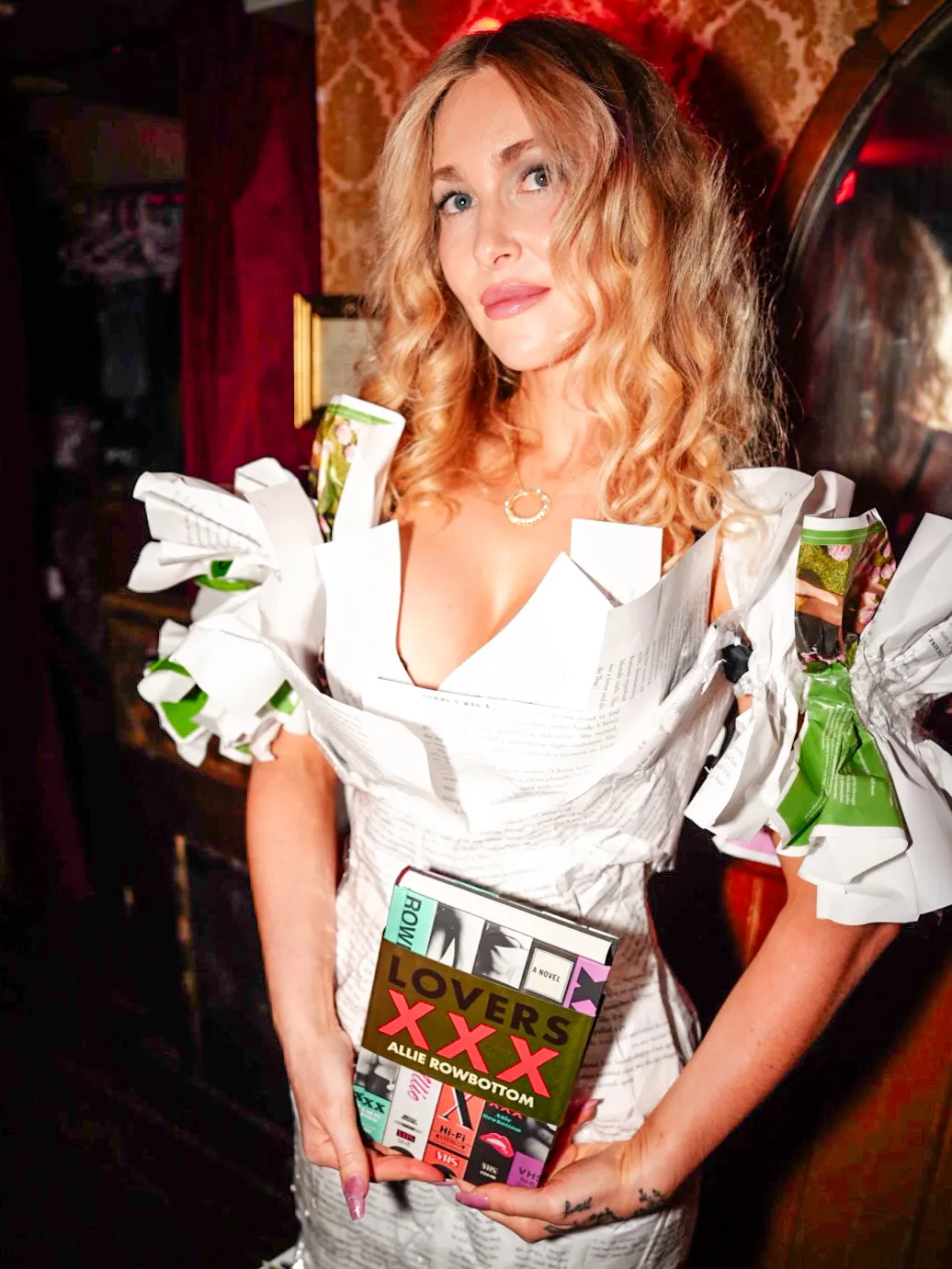
Up until last Thursday night, my knowledge of the burlesque club the Box had been sparse but specific: lurid details from a former roommate about a live show involving a beer bottle, blood, and various orifices. More recently, I’d heard about the Tate brothers’ visit to the club and the talent’s subsequent collective strike. So when I got an invite for a party there celebrating Allie Rowbottom’s second novel, Lovers XXX, a story about a young woman’s perilous jaunt through the golden age of porn in the California Valley, my interest was piqued.
Located on the Lower East Side, the Box was all soft purple light and extravagant flower arrangements. A woman spun delicately from a silver hoop above me, light glinting off her crystal leotard. I accepted a tequila sunrise that was cloyingly sweet, and downed it, trying to get my bearings. The crowd was mostly younger women, chatting in small groups and sipping fruity drinks.
In the corner, I met another showgirl, Aila, kneeling quadruped on the bar over a large charcoal drawing. “It’s of her,” she said, pointing to the aerialist. “Can I draw you?”
“Of course,” I answered. While she drew, she told me she started working here shortly after her first time visiting the club. “I came, and I was just so entranced I got up onstage and started taking all my clothes off, and the manager was like, ‘Come back to audition.’” In her offstage life, she’s an artist: “I went to school for two years, and then I dropped out, just like Lady Gaga,” she said with a laugh. “My parents would have been pissed, but what were they gonna say? My dad loves Lady Gaga!”
Back among the civilians, I met Kate and Michele, longtime fans of Allie’s and veterans of her book parties. “I’m so glad Allie is doing book launches like this,” Kate told me. “I feel like she started this trend of having it be like this,” she said, gesturing to the open bar and the spinning aerialist. “And it’s getting the youth reading again. Community is so important!”
“Wait,” Michele said, cutting in. “Is that Caroline Calloway?” she asked, pointing to a petite blonde with flowers in her hair.
When I told Caroline I was at the party for work, she squealed and squeezed my hand. “Me too!” she whispered. “They have me doing socials,” she added, referring to Lovers XXX’s publisher, Soho Press. I might pull you later for an interview!” I make a mental note to avoid this at all costs.
She flagged down two more people. “You have to meet Serena Shahidi,” she said. Serena introduced herself and Spencer Thomas, her plus-one and “gay boyfriend.”
“Oh, thank God you’re gay,” Caroline said, “that makes me like you so much more.”
“I know,” said Serena. “He’s kind of giving trade tonight.”
Caroline pulled Serena for a TikTok, and Spencer and I compared first-year-out-of-undergrad stories. He’s an aspiring novelist, with one book self-published and another on the way. “I guess I’m technically a content creator, but I never lead with that,” he told me. “In New York, it’s all about faking it until you make it. You have to speak to the life you want to live.”
Serena returned from her interview. “Caroline Calloway just asked me what kind of porn I watched. I was like, ‘I’m Gen Z! We don’t do that.’”
A dirty martini and half a glass of white wine later, I found myself in a plush velvet balcony booth overlooking the small stage in the theater portion of the club, tucked between Serena and Spencer and two of his friends, Nick and Aiyana. They swapped dating predicaments: Serena was caught between two hedge-fund managers, one of which she was worried was secretly gay; Spencer had a nightmarish three days with a Heated Rivalry look-alike-contest winner who sang Noah Kahan too loudly in his shower.
Soon, a bald man came out onstage and announced a series of readings by contributors to magazine and party co-host Volume 0, a literary magazine by Book of the Month highlighting “the salacious, awkward, and taboo topics that don’t get talked about.” The first was a mousy girl in a plaid skirt with knee-high socks and no shoes. She read an excerpt of a short story about a young woman hooking up with an older man, who likes it when he fucks her from behind while she whines “no” and hates going out to eat. Serena rolled her eyes. “It’s like, ‘Oh my God, what if there was a girl who was dating an older guy and liked non-consent?’ Come on.”
For the second act, a man read some sort of heterosexual Brokeback Mountain fantasy where the sex isn’t explicit and the woman makes the man eggs in the morning. The third contributor was an older woman in a leopard-print dress, whose narrator is a middle-aged woman ruminating on her vagina. She paused each time before she said “pussy,” popping the “P” into the mic.
“Okay, I actually liked that one,” Spencer said.
The emcee appeared again. “I don’t know if you’ve noticed,” he drawled, “but fashion is very interested in literature these days. What you’re about to see here tonight has never been done before.” He introduced Allie, who was wearing a dress made of paper. She carried no book and instead plucked a piece of paper from her dress, read off a passage from a specific scene in her novel, and then tossed it into the audience with a coquettish smile. She continued like this, narrating a chapter in which the protagonist, a young adult-film starlet, prepares for her first anal scene, until the bustier of the top lay in discarded sheets at the foot of the stage, revealing a leopard-print bra underneath. After Allie’s performance ended, the lights dimmed and the music got harder. In the corner, I spotted a JFK Jr. look-alike pantomiming shooting a gun. I decided it was my time to leave.
Toward the exit, I bumped into Hailey Denise Colborn, who runs a literary-based social club in the city called Hot Literati. I asked her what she thinks makes a good party and found her parroting what Kate said earlier to me that night: “Anything that makes people feel less self-conscious! People just want to be together, in community. Community is so important!”
|
|
|
|
If you're enjoying Book Gossip, forward it to a friend. If this was forwarded to you, sign up here to get this newsletter every two weeks.
Send us tips, gossip, or feedback at [email protected].
|
|
|
|
https://link.nymag.com/oc/611a318d9063ba338d0c9636rdm7h.y39/c6e3628f
|
|
|
|
|