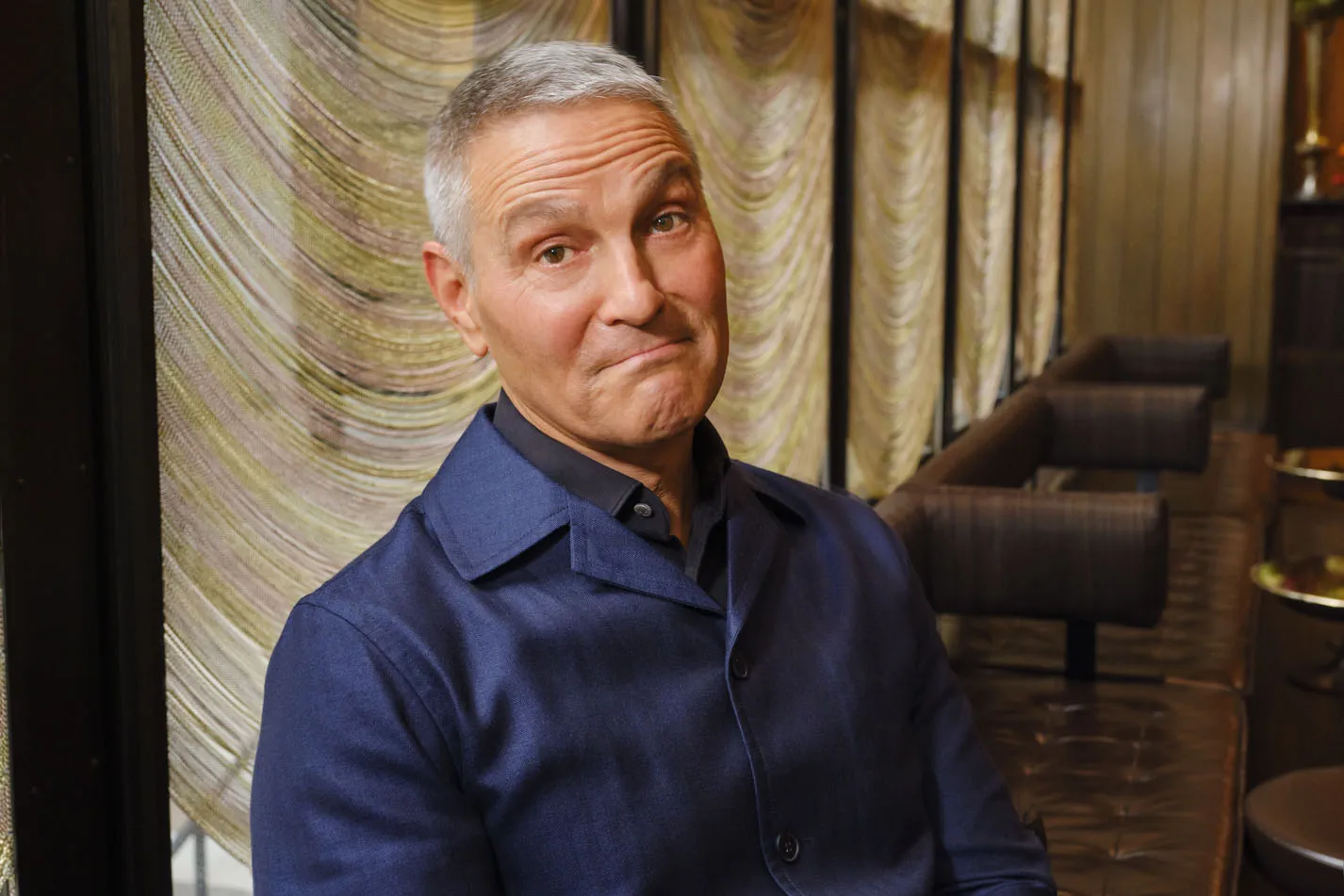
By Lane Brown, a features writer for New York Magazine |
“You know this is the longest I’ve ever been on one call, right?” says Ari Emanuel, only about an hour into our conversation. Over the past 40 years, the agent turned mogul has built an empire with much shorter calls — hundreds a day, sometimes 30 seconds long, dialed for him by an assistant on multiple lines so he never has to hear a ring or wait on hold. Agents call this “rolling the calls,” which is where he got the title of his new memoir. |
In Roll the Calls, ghostwritten by J. R. Moehringer (who also ghostwrote Andre Agassi’s Open and Prince Harry’s Spare), Emanuel, now 65, tells the story of how a dyslexic kid from Chicago ascended from the CAA mailroom to a job where he might negotiate an actor’s next movie role or the WWE’s next TV contract, or pitch President Trump on a film tax credit or Elon Musk on a UFC card with fighting robots. In 1995, he co-founded the agency Endeavor, which merged with William Morris, went public, and was taken private again last year. He’s still the executive chairman of WME Group and an agent for Martin Scorsese, Mark Wahlberg, Dwayne Johnson, and Larry David, among others. He’s also the executive chair and CEO of TKO Group Holdings, the company that owns UFC and WWE. And he’s the co-founder, along with business partner Mark Shapiro, of the live-events company Mari, which owns tennis tournaments, art fairs, a car auction, and, pending approval, 70 theaters, including seven on Broadway.
|
Outside the business, Emanuel is still best known as the model for Ari Gold, the agent played by Jeremy Piven on Entourage. TV fans coming to Roll the Calls will find all the profanity and score-settling they’re hoping for — it may be the angriest business memoir ever written. One chapter includes a list of people who are dead to him. We spoke twice over Zoom, then he called me a third time to discuss something he’d just watched on TV. |
Read some excerpts from the interview below.
|
How much of your day is still spent being an agent?
|
A lot of it. I was on the phone yesterday with Matthew Vaughn for a show he’s doing. I was on today with Pete Berg about his current movie and the next one and Mark Wahlberg about his next movie. I was texting with Dwayne Johnson about a project he wants to do. Jonah Hill about some stuff this morning. I’m dealing with some video-game rights and whether we can make movies from them. I do it all day long. |
What’s the smallest thing you’re doing for somebody right now? |
I’m trying to get Pat McAfee a role in a Michael Mann movie. |
Most self-help books say anger and grudges are self-defeating — there’s that line everybody uses that holding a grudge is like drinking poison and waiting for the other person to die. But you’ve been drinking poison every day for 40 years, and you’re a billionaire and maybe the healthiest person alive. Can a grudge work as fuel? |
I’m not a guy who sits and dwells. Shit happens, I fuck stuff up, I’ve got to move on and fix it. But somebody fucks me? Okay, you’re in the book. Not this book — the book in my head. I know you fucked me, and one day, I don’t know when, I’m definitely going to try and get you. And I think that’s healthy. |
A bunch of times in Roll the Calls, you use the same tactic: You call somebody every single day until they finally give up and say “yes” to whatever you’re asking for. You did it to get your first job at CAA, to get both of your wives to date you, to sign Oprah and Larry David. In the stories in the book, this strategy has a 100 percent rate of success. Can you tell me about a time when it went wrong?
|
I’ve pounded on a lot of clients I never signed. I’ve done a lot of giftings. I sent Oprah a mirror: “Look at yourself — you’re Oprah Winfrey.” That one worked. A lot of them just didn’t happen. In the book, I’m flattering myself that it’s 100 percent. But this goes to wanting what you want and being okay with having the door slammed in your face. |
Why didn’t you try it on Taylor Swift? In 2014, you bought IMG for more than $2 billion. She comes to your office with her mother and asks for nothing to change. You say “no,” because the whole point of the merger was that every client would use every part of the company, and she fires WME. Now she’s the biggest star in the world. |
I was promoting that we had to represent people across the board. You can’t pick and choose how you want to be represented by us. Even though she was a big star and I would have loved to have had her, if I’m going to say what I say, I have to live by it — as hard as that one was. And it was hard. But people wouldn’t trust my word in the company, and that was more important than anything. That was difficult. |
In the book, you write that once Entourage became a hit, “people take my calls ten times faster” — they “might not want to talk to Ari Emanuel, but they sure as shit want to talk to Ari Gold.” Are you telling clients, “You need to develop a self-caricature”? |
At the time, the show definitely helped me. But I think you’re trying to come up with a story line here. I don’t give a shit. Whatever the fuck you want to write. I’m definitely not that person anymore. [A dog wanders into his office.] But there’s a whole new generation of people seeing Entourage now. I’m just watching it for the first time. I’m on season two, episode four. |
|
|
|
https://link.nymag.com/oc/611a318d9063ba338d0c9636sdaln.1a/9c1e3035
|
Vox Media, LLC
1701 Rhode Island Ave NW, Washington, DC 20036
Copyright © 2026, All rights reserved |
https://link.nymag.com/oc/611a318d9063ba338d0c9636sdaln.1a/9c1e3035
|
|
|
|
|