Illustration by Kyle Hilton |
Audio: Listen to this article. |
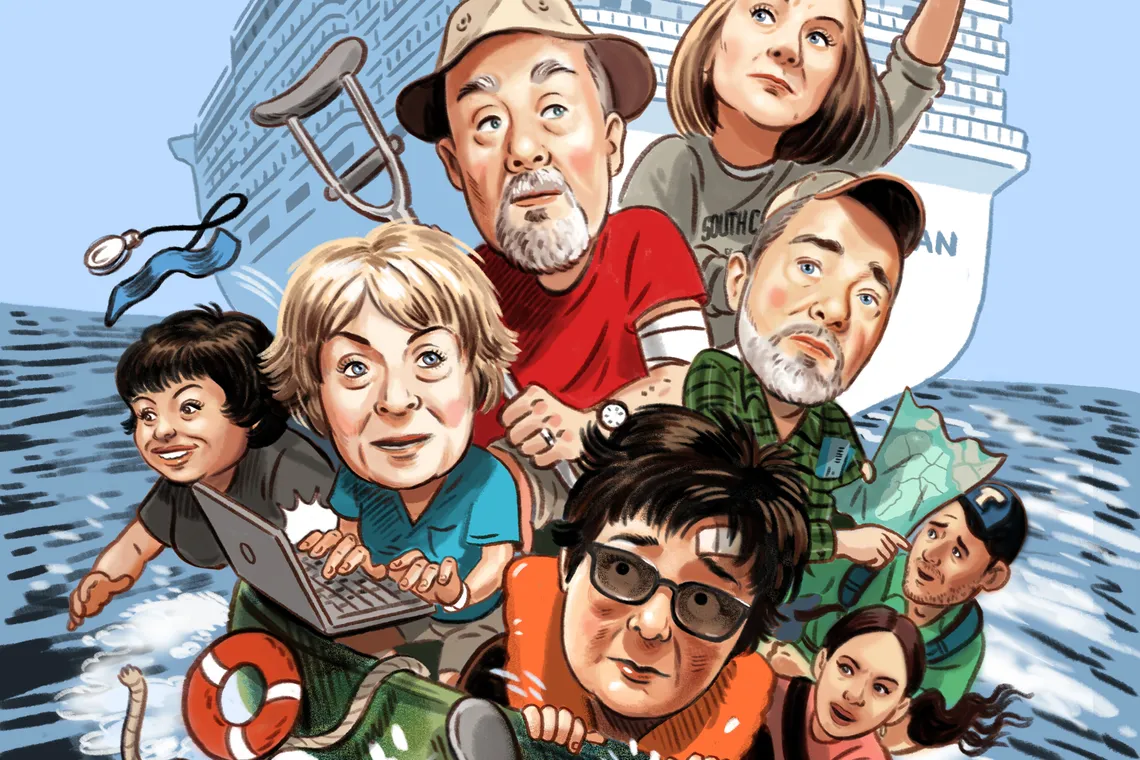
They were going to be late — that much became clear as clouds gathered over São Tomé, a verdant island 190 miles off the coast of West Africa. The group of eight — six Americans and two Australians — had left its Norwegian Cruise Line ship that morning, March 27, for a day trip across the island. But they had car trouble on the way back. Time ticked by as they sat in the tropical heat waiting for a replacement car. “Call your boss,” the passengers urged their driver. “Tell him to call the ship.”
|
When they arrived back at port, an hour late for their all-aboard time, they were relieved to see that their ship, the 2,290-passenger Dawn, was still there, a white rectangle anchored offshore. Now, all they had to do was reach it. The group didn’t speak Portuguese, the official language on São Tomé. But the sight of eight white people in shorts and backpacks panicking at the pier didn’t need much translation. A local called the port agent, and when he got there, Jay Campbell — a spry, bearded retiree in a baseball cap from South Carolina — began pressing him to contact the captain. “They need to come get us,” Jay insisted.
|
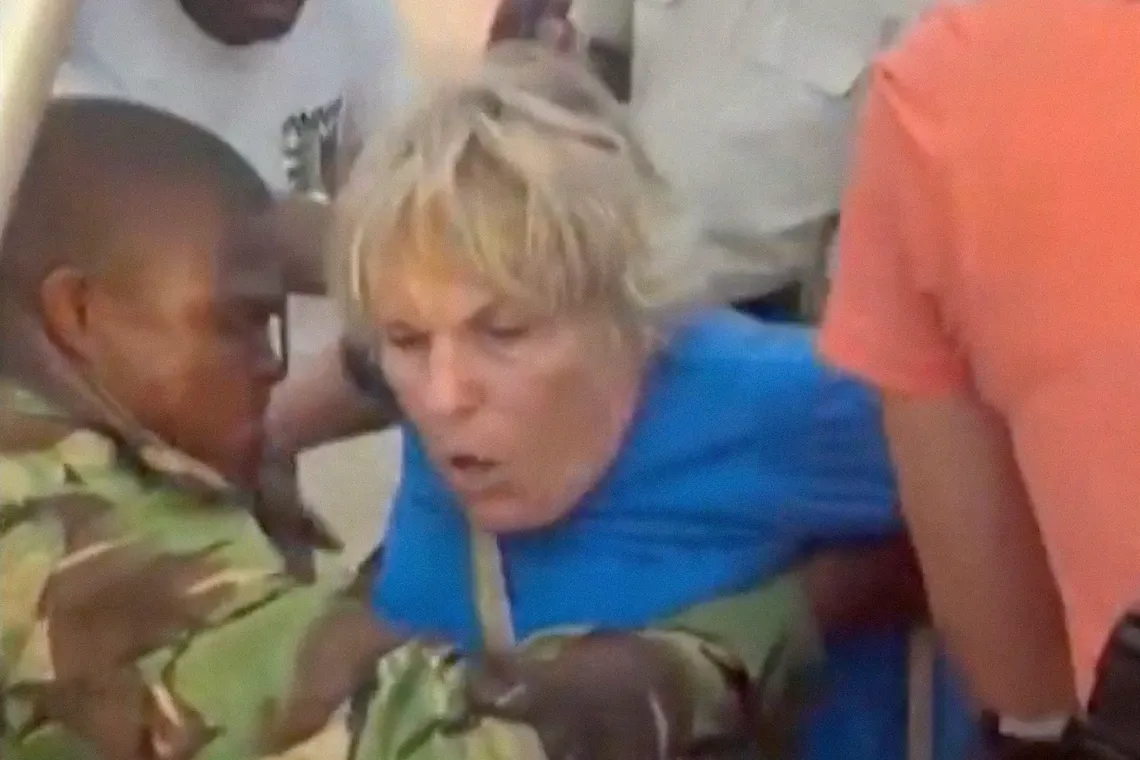
But no one could reach the ship on the radio, not the port agent or the São Tomé and Príncipe Coast Guard. Pam, another one of the Americans, had a working phone and managed to reach Norwegian’s emergency customer-service line at its corporate office in Miami. (Some of the names in this story are pseudonyms, and personal details have been changed.) But the woman on the other side said the only way the company could contact the vessel was by email. Eventually, the Coast Guard agreed to ferry the group over for a fee of about $250. Violeta Saunders, one of the Australians, uses a mobility scooter — to get her onboard, Coast Guard officers had to essentially throw her between them, across one of their pontoons. Everyone clapped when she made it.
|
As the Coast Guard sped toward the cruise ship, Pam was still on the phone with the Norwegian employee in Miami, begging her to tell the ship to wait. As they approached the looming 14 white decks, she got an update: The captain was refusing their request. They would not be allowed to board. They were able to watch as the ship that held their clothes, their medication, their luggage, and their phone chargers started her mighty engines and sailed away. |
Cruisers of all stripes are familiar with the concept of force majeure, an arcane clause in maritime law that predates the Napoleonic Code. Force majeure, an “act of God” — it’s the acknowledgment that on the high seas, a ship is vulnerable to significant events beyond its control. Cruise ships are not responsible for acts of God. In fact, as the passengers were about to learn, they are not responsible for much of anything. |
|
|
The eight, including Violeta Saunders, struggle at the dock to get back onboard. Photo: Courtesy of Jill and Jay Campbell |
The eight people left behind by the Dawn were not inexperienced cruisers. The trip they were on, a brand-new 21-day journey from Cape Town to Barcelona, with stops in Angola, Côte d’Ivoire, and São Tomé, was self-selecting for customers who had long graduated from the usual ports of call in the Caribbean or the Med. Jay Campbell and his wife, Jill, both retired corporate executives, had traveled together to dozens of places, including on other Norwegian cruises to Dubai and Greenland, with Norwegian. So this group knew the No. 1 rule of getting off a ship: Don’t be late back because ships do not wait for their passengers. Unless, as is common cruise knowledge, you are on an excursion booked through the company. But the eight were not on a Norwegian-sponsored tour. Those had quickly sold out months ago, forcing them to book an identical, and cheaper, one with a local company.
|
Still, back on the shore, the group was stunned. Yes, they were late, but the ship had been within reach for over an hour. They could immediately see that being left behind in São Tomé was not like missing a ship in Cozumel after too many margaritas at Señor Frog’s. The island, along with nearby Príncipe, is extremely remote, the second-smallest African nation. Now, they were standing on the pier as the sun went down, surrounded by a kaleidoscope of shipping containers on one side and the endless ocean on the other.
|
For the Campbells, the situation was merely inconvenient. They cruised not for the mai tais and the buffet but to see a dozen countries in as many days. It was a similar situation for 30-something Sarah, a pregnant ER doctor from Tennessee, who was on the cruise with her husband, a firefighter. But for the others, it would not be so easy. Pam’s mother was a diabetic and on numerous medications, all held hostage on the boat. Violeta had her mobility scooter but not its batteries. Plus she was traveling with Doug, her 79-year-old husband, a retiree from Melbourne with a gastrointestinal condition that requires a daily pill. “We thought, Well, shit,” Doug says. “All we’ve got is the clothes on our backs.”
|
|
|
https://link.nymag.com/oc/611a318d9063ba338d0c9636mn4on.1258/05b03c20
|
Vox Media, LLC
1701 Rhode Island Ave NW, Washington, DC 20036
Copyright © 2024, All rights reserved |
https://link.nymag.com/oc/611a318d9063ba338d0c9636mn4on.1258/05b03c20
|
|
|
|