Not a subscriber yet?
Sign up here.
|
|
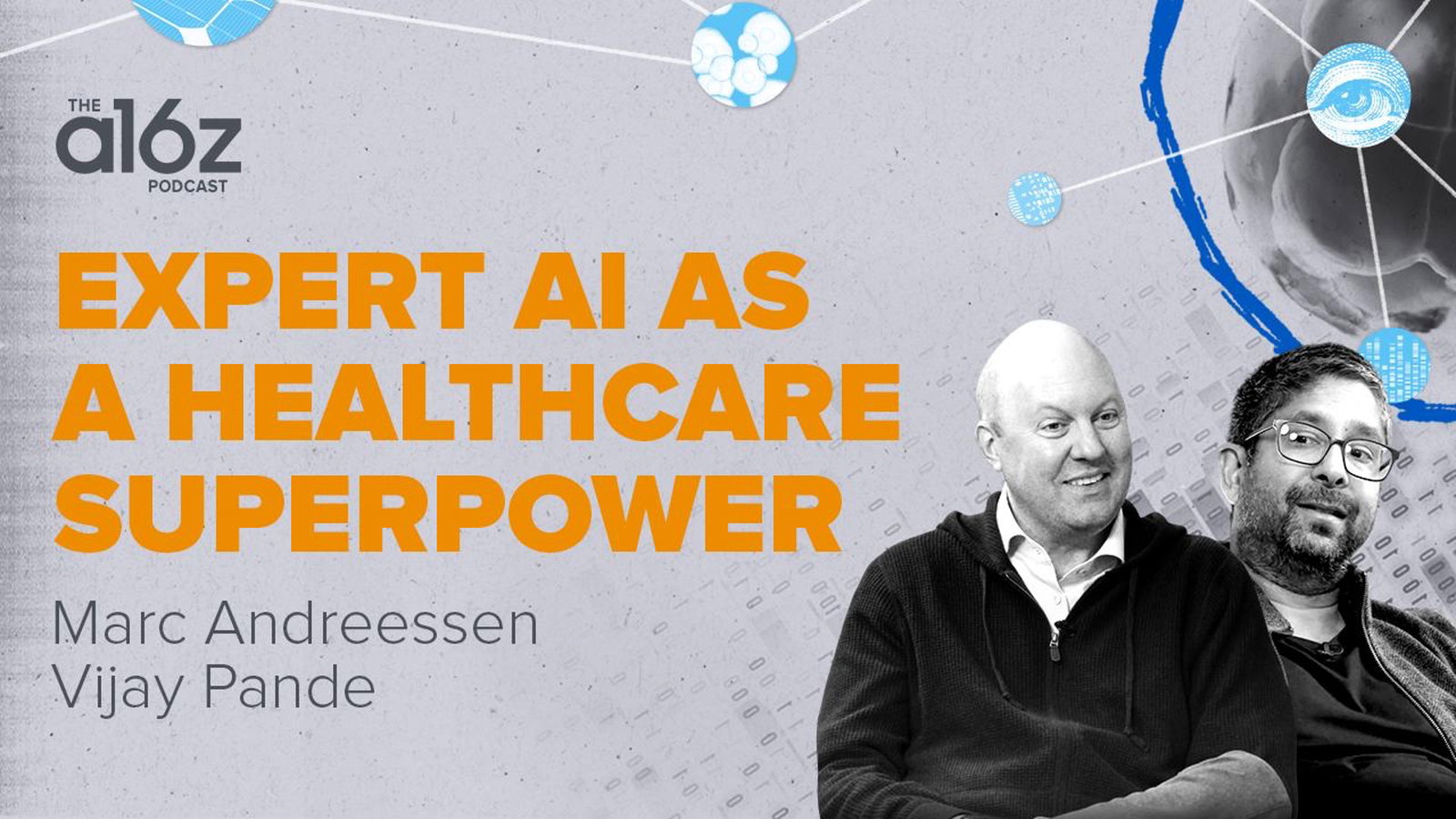
Expert AI as a healthcare superpower
|
|
| |
The last few months have seen dramatic — almost magical — applications of expert generative AI released to the public. But what does this mean for healthcare and bio? Vijay and Marc recently sat down for a conversation covering everything from expert AI as a creativity booster to the nature of consciousness itself.
Check it out on our YouTube channel or our podcast, Bio Eats World, or listen wherever you get your podcasts.
|
|
We can’t remember a year that had the built up anticipation comparable to JPM 2023. The hotels are expensive and the restaurant reservations impossible to find, but the biotech community is anchored around this annual January meet-up in San Francisco. If the number of reception invites and meeting requests is any indicator, 2023 is the year of JPM’s return in full force.
While we’re looking forward to making new connections and re-engaging with old friends, what we’re really excited about are the conversations that will nucleate a year to remember for biotech dealmaking. The current macroeconomic climate, combined with deep biopharma balance sheets and need for innovation have created the perfect storm with a two-sided appetite for business development.
For many early stage biotech companies, this may be the first time they have ever attended a JPM or seriously undertook a BD process. Technology platform companies may be just starting to explore where their technology has the best platform-partnership fit, and therefore who they should be building long term relationships with. Or perhaps, after an exhausting week pitching to biopharma teams and investors, early stage company CEOs may be wondering whether it’s time to bring on board their first BD hire.
|
|
And others who have already navigated the maze of introductory BD discussions are now wading through the rough waters of progressing from exploratory discussions to actually executing a partnership. You can never predict how the in-person interactions held this week at JPM might plant a seed that will sprout into a transformational deal for your company this year. We’re excited for the return of JPM and for the explosion of creative partnerships we expect to see this year.
—Becky Pferdehirt, investment partner
|
|
|
You can never predict how the in-person interactions held this week at JPM might plant a seed that will sprout into a transformational deal for your company this year.
|
| |
|
|
|
|
|
We are fully bought into the present and future application of engineering principles to biomedical discovery (as evidenced by our investment thesis), and we think few fields are as amenable to this foundational shift as personalized medicine. Decades of innovative biomedical research have established a comprehensive toolkit imparting on us unprecedented power to more precisely alter the destiny set by life’s genetic code, yet many express compounded disappointment by the apparent lack of meaningful applications of these tools to broadly address human disease and suffering.
We think the field is rounding a corner. Computational infrastructure is making up for lost time, with recent developments in GPUs and methods of AI meeting the analytical burden of higher-throughput and cheaper genetic sequencing.
|
|
We applaud the growing list of gene therapy successes while also embracing how accumulating evidence from clinical trial failures illuminates underappreciated pain points that can be addressed in data-driven and technology-driven ways.
|
| |
|
|
|
|
|
These same technologies are moving the needle in drug discovery and development pipelines as well. We applaud the growing list of gene therapy successes while also embracing how accumulating evidence from clinical trial failures illuminates underappreciated pain points that can be addressed in data-driven and technology-driven ways.
We’ve made a number of bets in this evolving space (Maze Therapeutics, Ultima Genomics, IDRx, Dyno Therapeutics, Scribe Therapeutics, amongst others), but the job is far from finished. Thus, we have been actively building a prepared mind around the remaining unmet needs and newfound opportunities in personalized medicine.
|
|
|
We look forward to sharing an upcoming article that draws from key opinion leaders to lay out our internal opportunity analyses and excitement in the space.
—Vineeta Agarwala, general partner, Jorge Conde, general partner, Becky Pferdehirt, investment partner, and Cody Mowery, venture fellow
|
|
“The stronger the ideology or mission of the company, the more successful the company,” said our firm’s founder and namesake Marc Andreessen in 2014. Within Bio + Health specifically, mission and impact are front and center.
At the end of 2022, I attended the Brightedge Summit, hosted by Brightedge, the impact investing venture capital fund of the American Cancer Society. The two-day summit brought together investors and thought leaders within the oncology field to debate several important questions: How do we define impact investing within healthcare? What are the challenges and opportunities with defining mission related targets as part of an investment thesis?
|
|
In my view, the definition of impact investing in healthcare is still taking shape. As an investor focused on early stage biotech platform companies, I find it challenging to predetermine absolute “impact.” Seed stage companies may not know the best initial therapeutic application of their platform, and the company may need to pivot several times. At the same time, the industry is producing vast amounts of data that will likely, ten years from now, enable current-day moonshots to be eventual clear wins.
|
|
|
At the same time, the industry is producing vast amounts of data that will likely, ten years from now, enable current-day moonshots to be eventual clear wins.
|
| |
|
|
|
|
|
While the final answers are still taking shape, we made strides toward a definition of impact investing, with quantitative metrics, in healthcare. Moreover, I left the summit confident that a16z Bio + Health is, and will continue to be, uniquely positioned to make impactful investments along the patient journey.
—Ben Portney, investment partner
|
|
The past few years have brought us a wealth of new therapeutic modalities capable of achieving functions only dreamed of in science fiction novels — correcting faulty genes, curing inherited disease, imparting novel functions to our body’s cells that even years of evolution haven’t accomplished. However, medical utility of all these new technologies requires one common trick: delivering them to the cells in the human body where they will work their magic.
We have recently witnessed a boom of creative academic research and innovative startup companies tackling exactly this problem. However, the field still struggles to safely and efficiently deliver these novel therapeutic modalities to the vast majority of organs beyond the liver, limiting therapeutic utility. Delivery has become an industry-stalling bottleneck.
In 2023 we hope to finally see a breakthrough in precision delivery that will unleash a landslide of queued-up therapeutic approaches to progress into the clinic. This advancement will be enabled by a shift from empirical screening-based discovery to rational design, incorporating big data and computational prediction. The decade of delivery is upon us.
—Vineeta Agarwala, general partner, and Becky Pferdehirt, investment partner
|
|
As software "eats" every step in the life sciences value chain — from discovery to development to distribution of new medicines — the industry will have to continue engineering new processes at each step, in order to actualize the productivity gains made possible by machine learning. In other words, new tools are required. Today, bio companies developing new therapeutics and diagnostics are also building new tools with which to engineer biology out of sheer necessity.
If this trend plays out as we expect, and we're able to read, write, and execute biology, eventually there will be further specialization of labor between drug makers and tool makers.
|
|
The industry's appetite for science-native software-as-a-service tools is accelerating.
|
| |
Jorge Conde & Jay Rughani
|
|
|
|
Drug makers will continue to focus their time, effort, and resources toward being the best at developing drugs — perhaps akin to original equipment manufacturers (OEMs) in the computer, automotive, and aircraft industries. Tool makers will focus on making the best tools.
|
|
|
The pandemic and the current macroeconomic environment are accelerating this trend toward engineering new tools. As approximately more than 300 biotechs trade at market capitalizations below the cash on their balance sheet, and the cost of capital continues to rise, life sciences companies have an even greater need for better software & data tools to conduct science more efficiently. The industry's appetite for science-native software-as-a-service tools is accelerating.
—Jorge Conde, general partner, and Jay Rughani, investment partner
Check out all of our big ideas here.
|
|
Things we’re thinking about
|
|
| |
Bio
Health
Bio Eats World
Thanks for reading!
– Olivia Webb and a16z Bio + Health team
|
|
You are receiving this newsletter since you opted in earlier; if you would like to opt out of future newsletters, you can unsubscribe immediately.
This newsletter is provided for informational purposes only, and should not be relied upon as legal, business, investment, or tax advice. You should consult your own advisers as to those matters. This newsletter may link to other websites and certain information contained herein has been obtained from third-party sources. While taken from sources believed to be reliable, a16z has not independently verified such information and makes no representations about the enduring accuracy of the information or its appropriateness for a given situation.
References to any companies, securities, or digital assets are for illustrative purposes only and do not constitute an investment recommendation or offer to provide investment advisory services. Furthermore, this content is not directed at nor intended for use by any investors or prospective investors, and may not under any circumstances be relied upon when making a decision to invest in any fund managed by a16z. (An offering to invest in an a16z fund will be made only by the private placement memorandum, subscription agreement, and other relevant documentation of any such fund which should be read in their entirety.) Past performance is not indicative of future results.
Charts and graphs provided within are for informational purposes solely and should not be relied upon when making any investment decision. Content in this newsletter speaks only as of the date indicated. Any projections, estimates, forecasts, targets, prospects and/or opinions expressed in these materials are subject to change without notice and may differ or be contrary to opinions expressed by others. Please see disclosures for additional important information.
|
|
|
|
|
Software Is eating the world
|
|
MENLO PARK OFFICE
|
|
2865 Sand Hill Road, Suite 101
Menlo Park, CA 94025
|
|
|
SAN FRANCISCO OFFICE
|
|
180 Townsend Street
San Francisco, CA 94107
|
|
|
NEW YORK OFFICE
|
|
11 Madison Avenue, 15th Floor
New York, NY 10010
|
|
|
|