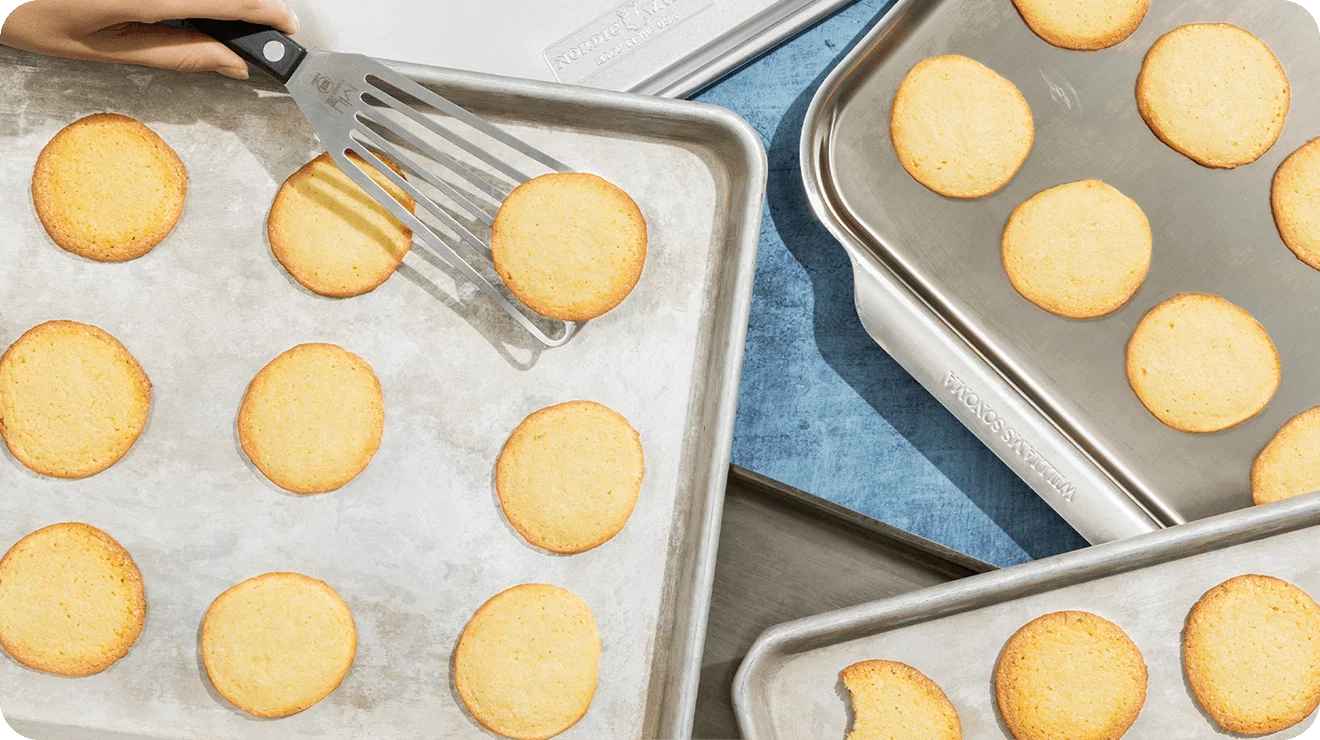
A baking sheet is the most essential pan
 |
Lisa McManus
Executive Editor, ATK Reviews
|
When I began reviewing kitchen gear—in 2006!—only professional kitchens used
rimmed baking sheets (often called sheet pans). As a newbie in the test kitchen, I marveled at racks full of them, along with
wire cooling racks that fit snugly inside. Test cooks were using them to bake everything from cookies and
sheet cakes to
slab pies to
pizzas. With a rack inside, they used them to quickly
broil shrimp,
slow-roast beef,
toast slices of bread, hold freshly
fried chicken, and to catch drips while glazing
peach fritters. The pans made sturdy trays for prepped ingredients at the stove or in the walk-in fridge and for toting food to the grill. They were surprisingly essential for elegant desserts like a
Yule log,
pavlova, or
dacquoise.
Back then, I was dying to write a sheet-pan review, but first I had to find restaurant-supply stores that would ship single pans to home cooks, rather than their usual pallets of hundreds to bakeries and restaurants. Thankfully, today sheet pans are sold everywhere. We’ve even published an
all-new cookbook of sheet-pan recipes. As always, we’ve found a ton of uses for every size: half, quarter, and eighth sheets. (Full-sheet pans only fit commercial ovens!) Quarter- and eighth-sheet pans are perfect for small portions or for little jobs like toasting nuts or spices.
A crossover from professional kitchens, baking sheets are now essential everyday pans for home cooks too.
Read our full review of rimmed baking sheets.
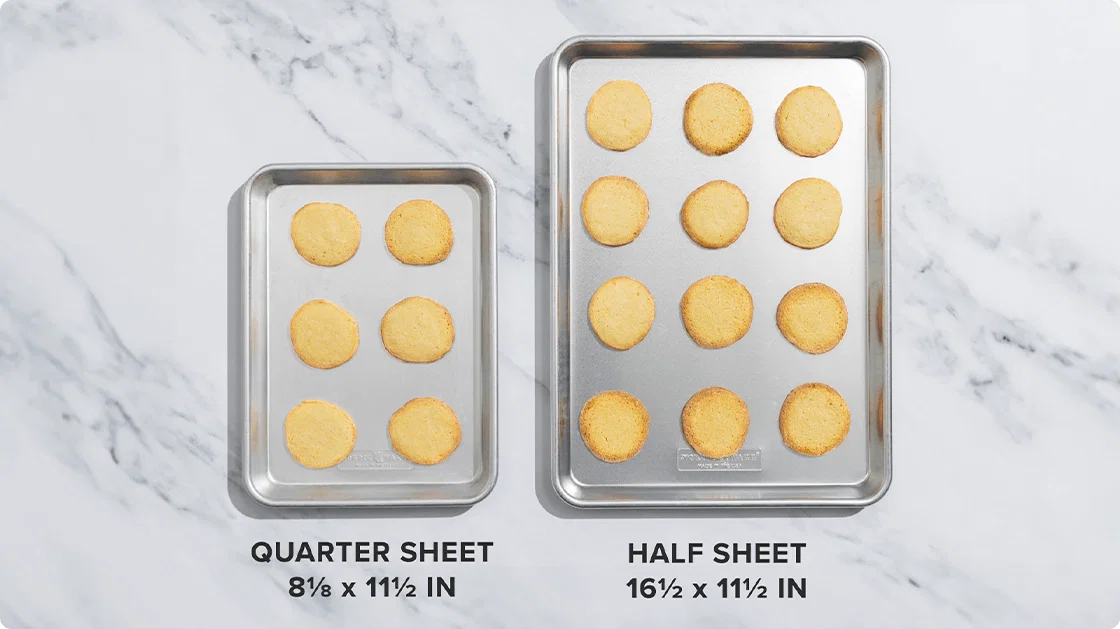
Half-sheet pans are the best all-purpose size for most cooks. While their dimensions are often listed as 18 by 13 inches, the actual cooking surfaces measure closer to 16½ by 11½ inches. We also recommend having a few quarter sheets on hand for smaller jobs.
|
|
|
Pro Tip
If your baking sheet is no longer clean and shiny, don’t fret—it’s not a bad thing! Dull, darkened pans actually absorb heat more efficiently, translating to deliciously golden-brown food.
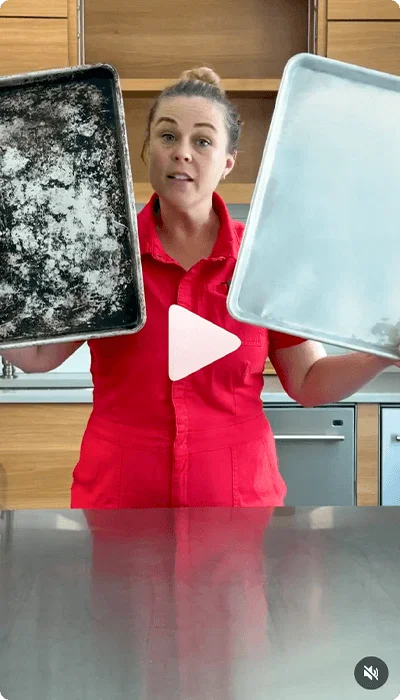
@testkitchen on Instagram
|
|
|