Behind the Recipes: Tostones |
|
|
“You’d be hard pressed to find a single Caribbean [or Latin American] dish that isn’t complemented by tostones,” said food historian Von Diaz when we connected to discuss the iconic twice-fried green plantains.
The fruit is “literally falling from the trees” in many areas, she noted. That bounty led to cooking with plantains at every stage of maturity, including the unripe phase that’s used for tostones.
The framework for frying the plantains is similar across cuisines: First, remove the peel and cut the flesh into fat chunks. Fry the chunks, press them into thin disks, and then fry them again.
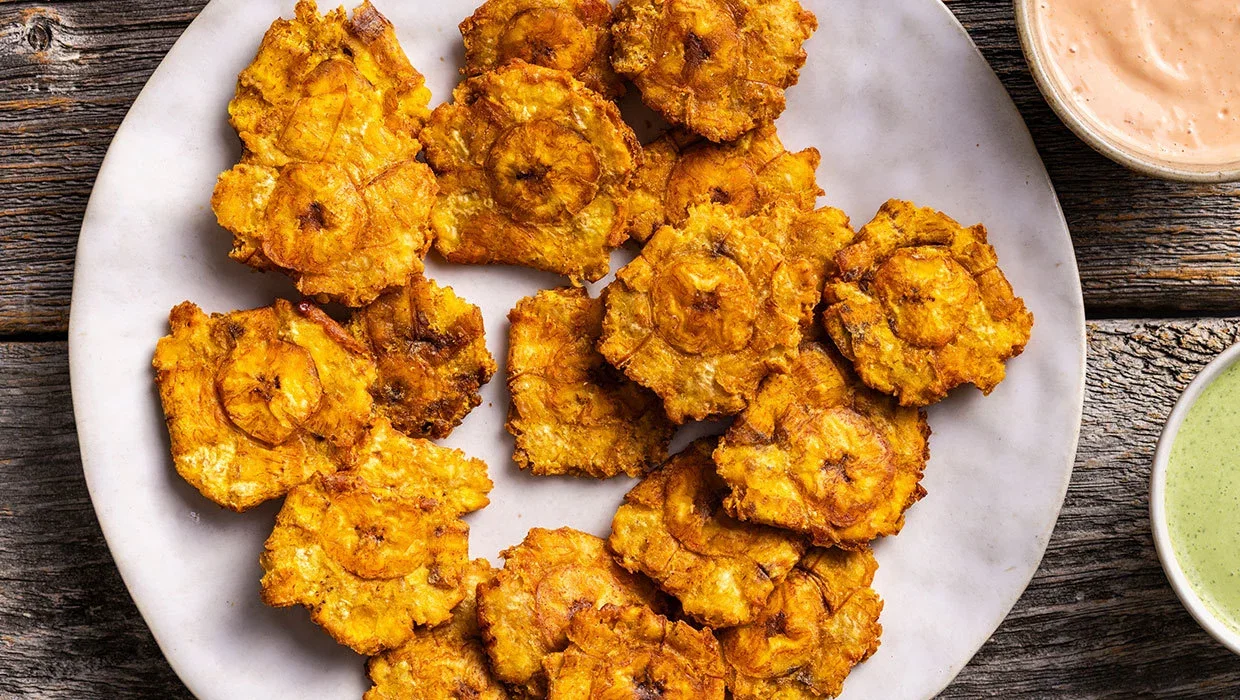
The most effective way to press the cooked chunks into uniform disks was the traditional one: using a tostonera (plantain press). It’s a satisfying process: As the chunks are smashed, they open like flowers, with the edges splaying into petal-like forms, the black seeds acting as the center of the bloom.
I had read about a traditional Puerto Rican technique that calls for briefly submerging the pressed, once-fried plantains in salt water, so I gave it a try.
It worked beautifully. The saline bath coated the broad surface area, seasoning the tostones much more thoroughly than simply sprinkling on salt at the end of the second fry. And the textural benefits were striking: During a brief rest on a wire rack, the salt water permeated and hydrated the flesh, leading to softer, silkier interiors.
Submerged in bubbling oil, the salt water–dunked tostones sizzled and puffed, developing frilly, ultracrunchy edges. Get the perfect tostones ready to serve as the backbone of countless meals.
|
|
|
|
Crispy Fried Plantains (Tostones)
|
Fried green plantains are all about contrast: crackly, caramelized edges and soft, buttery centers. Get the recipe. |
|
|
|
|
-
Frying the cut fruit at a low temperature gently softens the interior without toughening the exterior.
- Using a generous amount of oil, rather than shallow frying, is essential for producing evenly ochre exteriors without any tough, overly browned spots.
-
A traditional tostonera (plantain press) is the most effective way to press the parcooked pieces into their signature round shape, but the bottom of a clear drinking glass also works.
- Dipping the pressed plantains into a highly concentrated saltwater solution and allowing them to rest briefly on a wire rack ensures that they are fully seasoned throughout.
-
The payoff becomes apparent during the second fry, when rising steam helps the hydrated coins puff slightly and produce lacy edges.
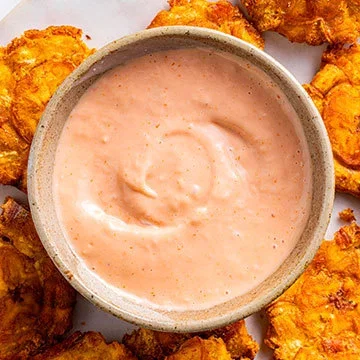
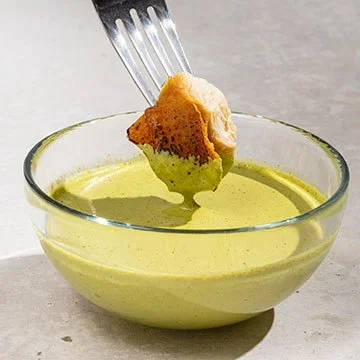
- Serving the tostones with two punchy, creamy sauces makes for a bright finish.
|
RECIPE DEVELOPED BY KELLY SONG |
Kelly Song is an associate food editor at America’s Test Kitchen. She studied English literature and poetry at Cornell and worked in broadcast and breaking news at CNBC. Her love of cooking began with her dad, who taught her how to wield a wok, and continued in Ithaca, New York, where she was the sous chef of a French bistro. She went on to help build two restaurants in Tampa, Florida. When she isn’t donning an apron, she loves bird watching, ballroom dancing, and playing her violin.
|
|
|
|
|
|
This content is from the July/August 2026 issue of Cook’s Illustrated. Not a subscriber? Let’s change that. |
|
|
|
How to Sear Scallops with a Golden Crust |
|
|
|
Limited-Time Membership Offer: Save 50%
Get instant access to our five-star-rated app and site filled with trusted recipes, expert cooking tips, how-to videos, and unbiased product reviews. Cook and shop with confidence for all occasions, from weeknight dinners to gatherings big and small. Save 50% on ATK Essential now - that's less than $1/week.
|
|
|
|
|
For the Ultimate Juicy Burger, Reverse Sear It |
Our favorite method for cooking steak to perfection is also the best way to produce a thick, juicy, medium-rare burger. Check out this method. |
|
|
|
By Steve Dunn, Senior Food Editor |
I just returned from vacation in Ireland and can’t stop riffing on my favorite breakfast from the trip. The porridge at Ballymaloe House was legendary. Stone-ground oatmeal made with the property’s own honey and a sinful amount of cream, I topped mine with strawberry-rhubarb compote, nuts and seeds, and a sprinkling of the most decadent demerara sugar. I’ve yet to successfully recreate that magic at home, but am having fun trying. |
|
|
|
|
Sign up for The New Vegetarian
Sign up for The New Vegetarian, a weekly newsletter featuring a fresh approach to vegetarian cooking, curated and written by longtime ATK author, editor, and vegetable enthusiast Jack Bishop.
|
|
|
Sign up for The Well-Equipped Cook
Get inside intel on must-have kitchen gear—including our newest equipment reviews, pro tips, and great deals—curated by ATK Reviews executive editors Hannah Crowley and Lisa McManus.
|
|
|
|
|
|