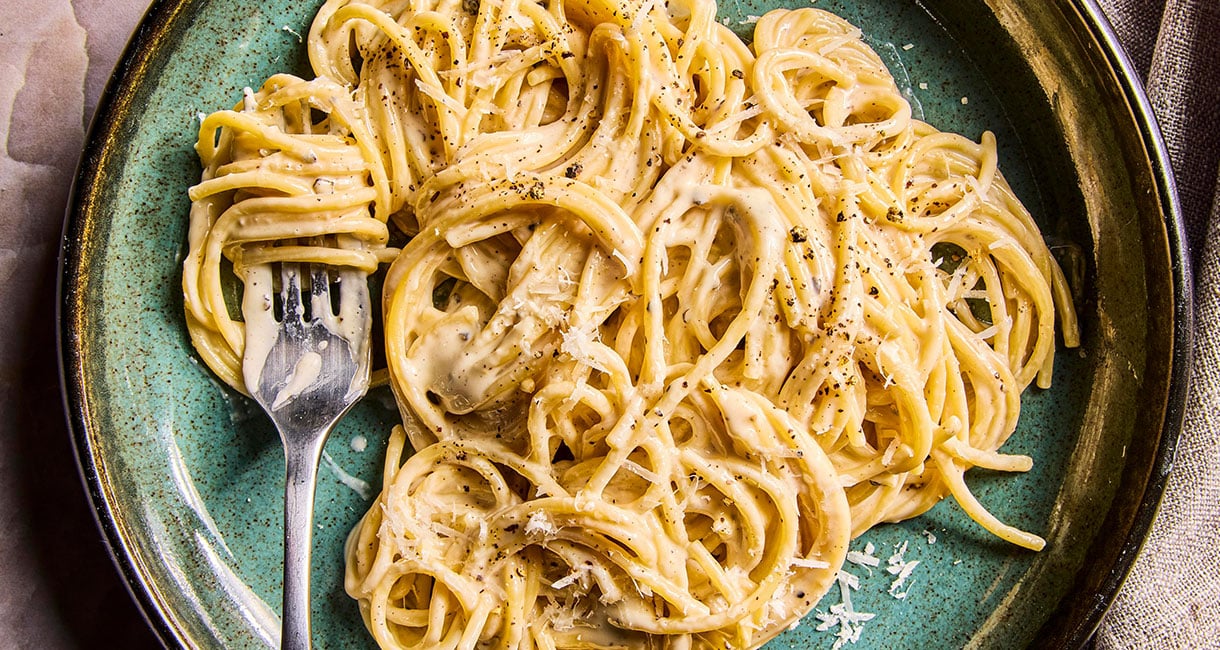
Fail-Safe, Four-Ingredient Cacio e Pepe
Cacio e pepe makes so much of so little. Like Rome’s other great pasta traditions—pastas alla gricia, amatriciana, and carbonara—cacio e pepe is the magnificent sum of few humble parts.
But the feat is at its most impressive here, in the recipe with the sparest ingredient list: just strand pasta, its cooking water, coarse black pepper, and handfuls of Pecorino Romano. Unlike in those other dishes, there is no meaty funk from guanciale, no brightness from tomato, and no richness from egg—and it only takes one bite to understand why none of that is necessary in this formula.
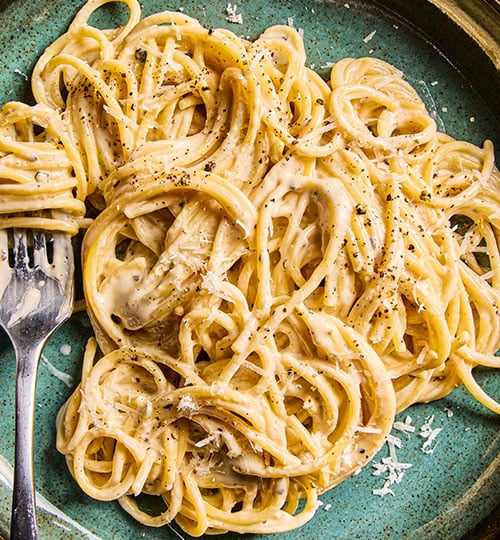
When tossed together with care, these components transform into a mirror-glossy sauce that’s plenty complex all on its own, grounded by earthy savor and prickling with fruity heat.
The secret to this transformation is emulsification: the mixing of two ingredients, the starchy water and the sharp sheep’s cheese, that ordinarily resist each other.
When the water and cheese are forcibly combined, they become a silky, full-bodied sauce that coats each strand of pasta—or at least in practiced hands they do. The truth is that building this emulsion is a finicky process that can all too easily produce a clumpy, watery mess.
Many recipes nowadays thus include some butter, olive oil, or even cornstarch to aid in the emulsification process and guard against this unappetizing result. But these extra ingredients can mask the funk and spice that make the dish so special. I wanted a purist’s take.
Read on for more on this special dish →
|