|
|

|
|
|
Santorini’s Silkiest Meze
The Cycladic island of Santorini is celebrated for its breathtaking rocky cliffs; its blue-domed, whitewashed architecture; and its caldera, a massive volcanic crater that stretches along the southern Aegean coastline.
But do you know about
Santorini’s fava dip? Similar to
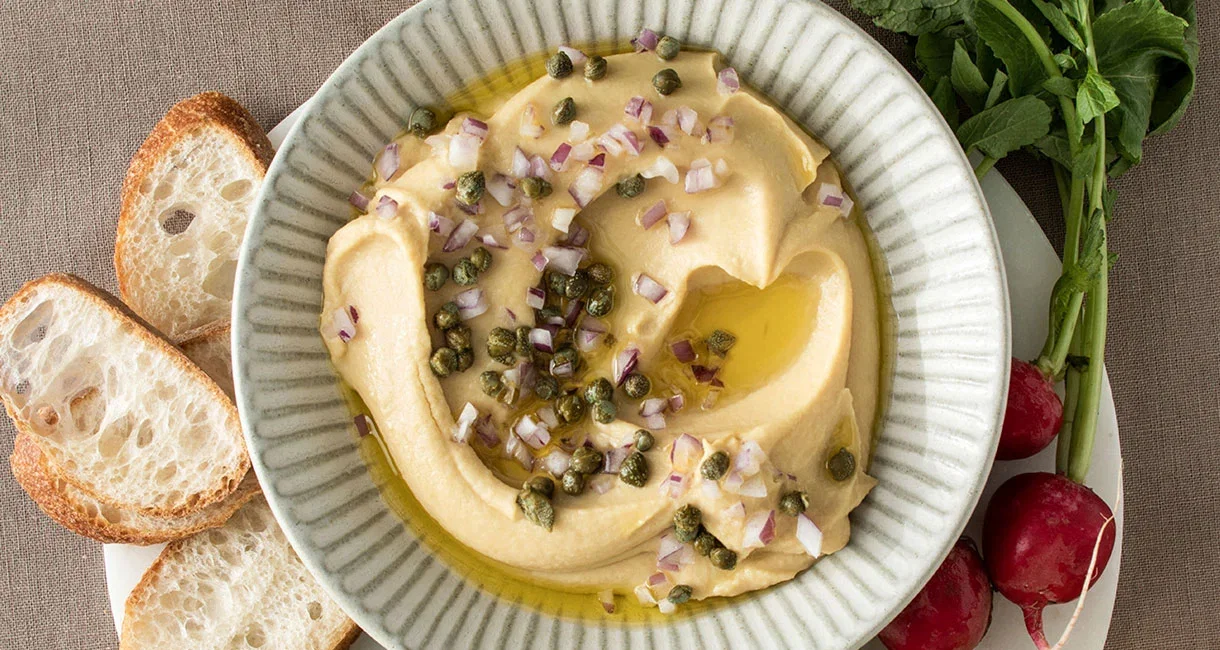
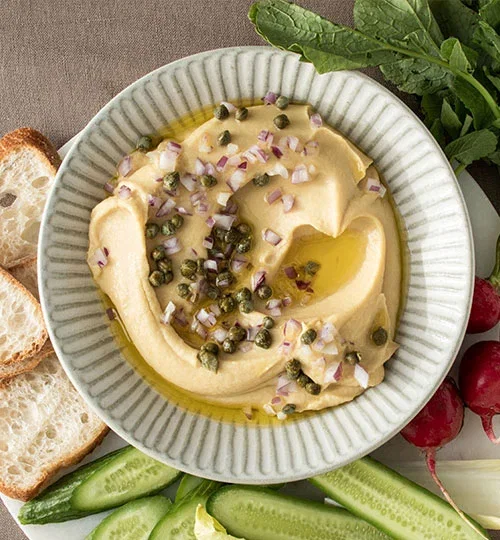
hummus, this simple meze has a rich, earthy-nutty taste and a consistency that can be coarse or velvety. Drizzled with
olive oil and dressed up with bold toppings—the sharpness of chopped red onion and the salty tang of capers bring the dip to life—it’s prime for swiping up with crudités, crackers, or bread.
In Greek, “fava” refers not to fava beans but to the split peas that thrive in the island’s rich volcanic soil. Once a crop of pure sustenance, the Lathyrus clymenum variety has evolved to become a beloved ingredient throughout Greece and globally as a Protected Designation of Origin (PDO) product.
Stateside, the coveted Santorini favas are difficult to source, so I use the common yellow split pea, Pisum sativum. Though botanically different, they have the same golden color and are a typical substitute. Simmered with salt and a handful of aromatics, the starch in the legumes absorbs water as it cooks, giving the dip lots of body.
Go behind the recipe for Santorini’s silkiest meze →
|
FEATURED RECIPE |
Fava (Greek Yellow Split Pea Dip)
|
Yellow split peas are the down-to-earth star of this creamy Greek taverna dip.
|
|
|
|
|
|
|
|
|
|
|
WHY THIS RECIPE WORKS
|
|
|
|
|
| • |
In Greek, “fava” refers to a specific variety of yellow split pea that can be difficult to find stateside; we were happy to discover that the yellow split peas commonly available here make a worthy substitute.
|
|
|
|
| • |
When simmered, the peas collapse and release starch, which gives the dip its creaminess.
|
|
|
|
| • |
Blending with olive oil and lemon juice makes it silky smooth.
|
|
|
|
| • |
Capers, red onion, and an extra drizzle of olive oil are traditional garnishes.
|
|
|
RECIPE DEVELOPED BY Erica Turner
|
|
|
|
Erica Turner is a former associate editor of Cook’s Illustrated. She has a master’s degree in international communication and attended culinary school in Gaziantep, Turkey, where she worked for the United Nations and volunteered at a school for Syrian refugees for two years before moving to Jerusalem and then back to the States. The author of four books (including a poetry book and cookbook) and a passionate filmmaker, she’s always working on creative projects and seeking opportunities to learn about new cultures.
|
|
|
|
|
|
| |
Become a subscriber! |
|
This content is from the May/June 2026 issue of Cook’s Illustrated. Not a subscriber? Let’s change that →
|
|
|
|
|
| |
|
|
Ingredients
|
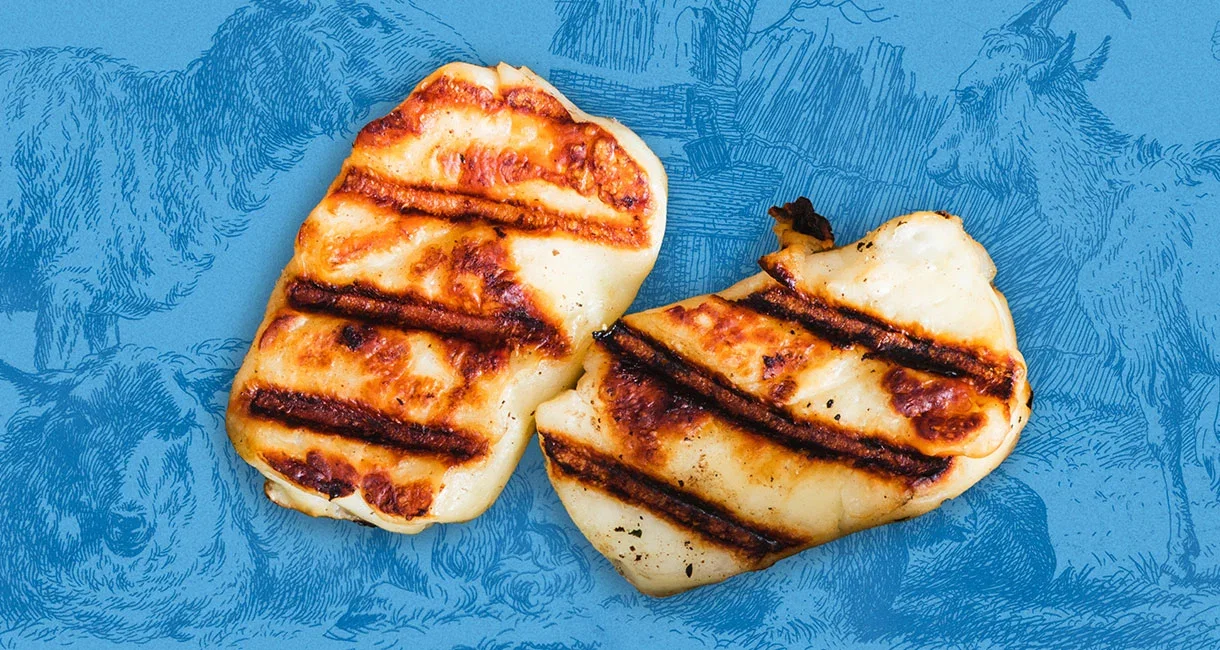
The Cheese You Can Sear Like a Steak
|
|
|
|
|
On Instagram and TikTok, gooey cheeses that can be dramatically stretched out from a panini or a slice of pizza get all the love. But pullable cheeses aren’t the only kind that deserve the spotlight. Read on to learn all the ways that halloumi differs from other cheeses, along with how it’s made and how to cook with it. →
|
|
|
RELATED RECIPE |
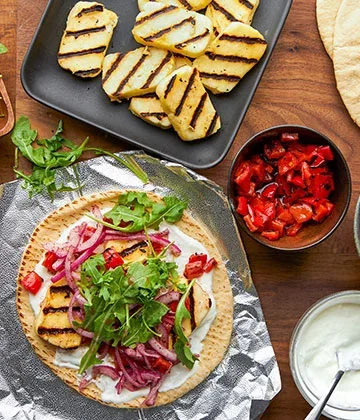
Grilled Halloumi Wraps
|
Thanks to its unique molecular structure, squeaky, briny halloumi stays firm over a flame, taking on flavorful browning and char. |
|
|
|
|
|
|
|
|
|
|
|
|
Ingredients
|
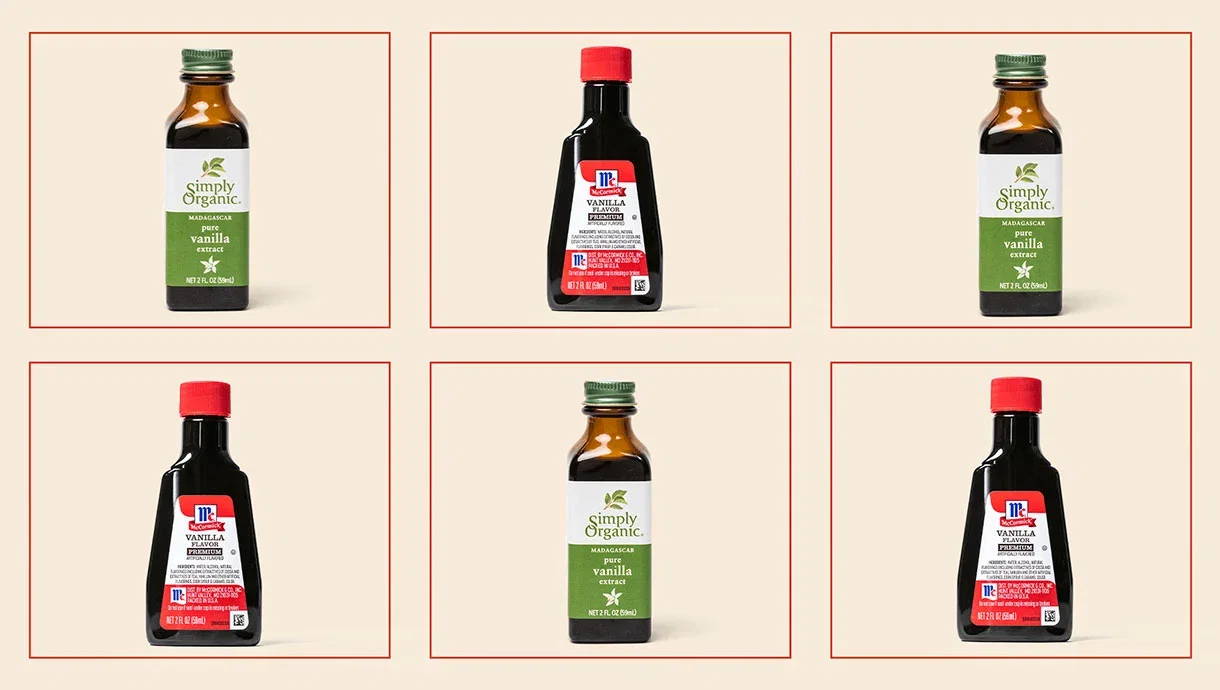
Vanilla Extract vs. Imitation Vanilla: Does It Matter What You Buy?
|
|
|
|
|
|
|
| |
|
|
Keeping up with the team . . .
|
|
|
|
|
|
|
What I’m Eating
|
|
|
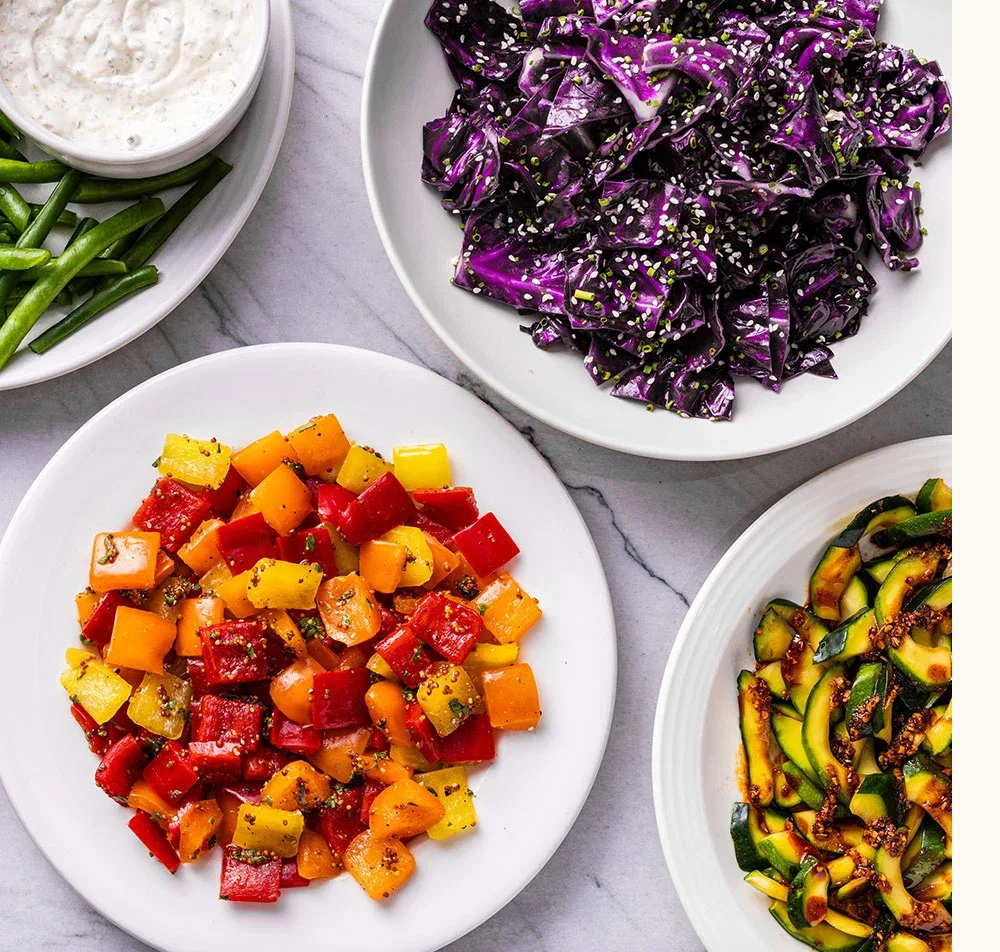
No-Cook Veggies
|
We recently shot photos for the “no-cook” vegetables in our July/August 2026 issue—and I can’t get enough. To riff on Japan’s yamitsuki cabbage, which is salted, massaged, and then rinsed and drained, we used this technique for green beans, bell peppers, and more. It basically “cooks” the veggies without heat and then you can store the prepped veggies in the fridge and dress them however you like for a quick snack or side dish. My current favorite is
cabbage dressed with toasted sesame oil and sesame seeds.
|
|
|
|
|
Under the Radar
|
|
|
America’s Test Kitchen Back Catalog Episodes
|
I started watching ATK TV long before I worked here. One recipe that opened my eyes was Bryan Roof’s
Weeknight Roast Chicken from ATK Season 12. You turn off the oven to slowly finish the cooking so the meat doesn’t dry out. That kind of thinking was revolutionary to me back then, though it’s second nature now! I am looking forward to watching more
back-catalog episodes as they come to
Netflix (seasons 24–26 drop this weekend)—and rediscovering what else I learned about cooking from ATK, which inspired me to attend culinary school and eventually led me to the test kitchen itself.
|
|
|
|
 |
|