Som Tam Thai Is a Balancing Act
Som tam is a testament to the power of a little pressure.
This type of salad, which hails from Thailand’s northeastern Isan region and Laos, is built around a crisp, juicy vegetable or fruit pounded by hand in a mortar and pestle (“som” translates to “sour”; “tam,” to “pounded”). The pestle compresses the ingredient to an ultrarefreshing, dense crunchiness, the perfect foundation for a vibrant lime juice– and fish sauce–based dressing.
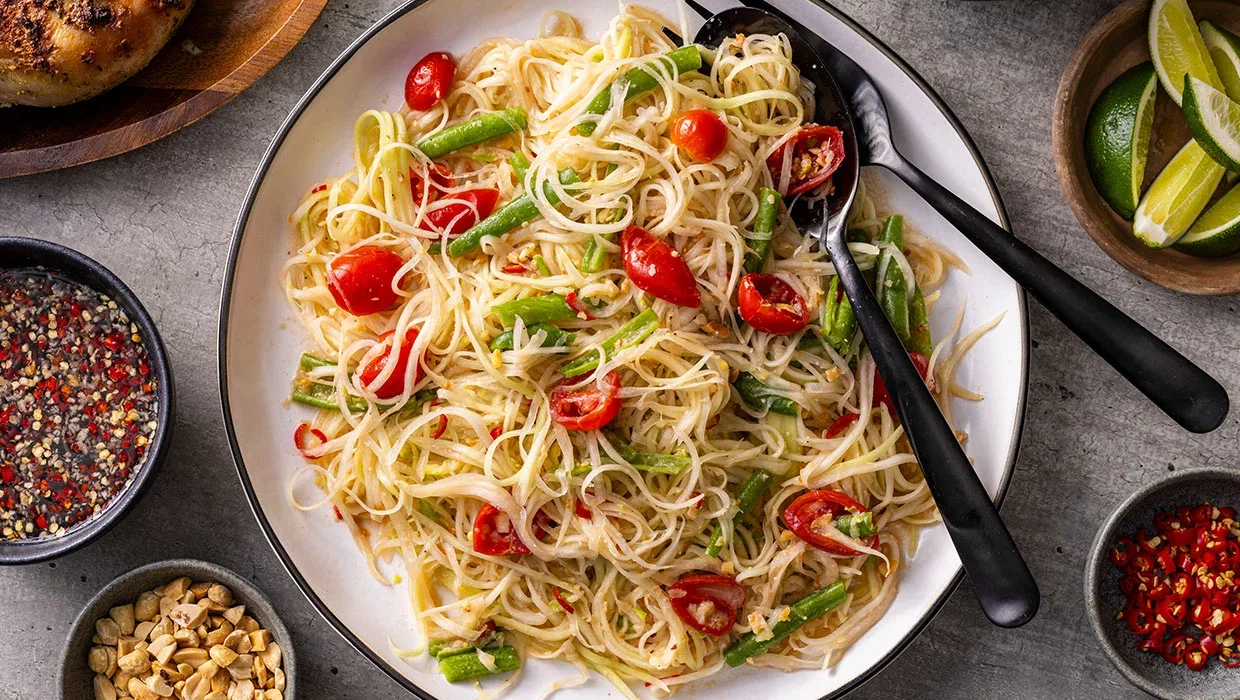
Som tam thai, which stars green shreds of underripe papaya, is the most well-known som tam outside of Thailand, and it’s one of the most common versions of the salad within the country as well. You can order it at shops and street stalls dedicated to the salad, where it’s made to order and you’re always offered a sample to make sure it has been correctly calibrated to your taste.
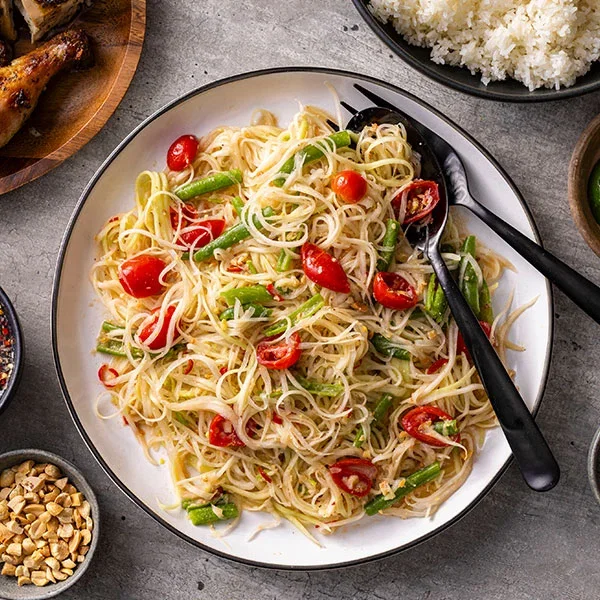
But it’s also a homemade dish that appears at everyday dinners and celebrations alike, often alongside grilled chicken, steak, or other rich proteins.
“It’s very easy to make, and every time you eat it, you feel like you’re home,” said chef
Pao Thampitak, founder of Boston’s Thai supper club
Gaaeng.
The ingredients for the dish can vary widely, but typical components include long beans, tomatoes, peanuts, chiles, aromatics, and a preserved seafood such as dried shrimp.
Most importantly, Thampitak said, the finished product must balance the signature Thai flavor quartet of hot, sour, salty, and sweet.
Served with more lime wedges, sliced chiles, fish sauce, and chopped peanuts for at-the-table customization, the salad bursts with color and life. Each bite is a reminder of what makes Thai cuisine so special: that collision of brightness, heat, and freshness that feels both explosive and harmonious. Here’s how to achieve the Som Tam Thai balancing act.
|