Turn Corn into Pasta Sauce |
|
|
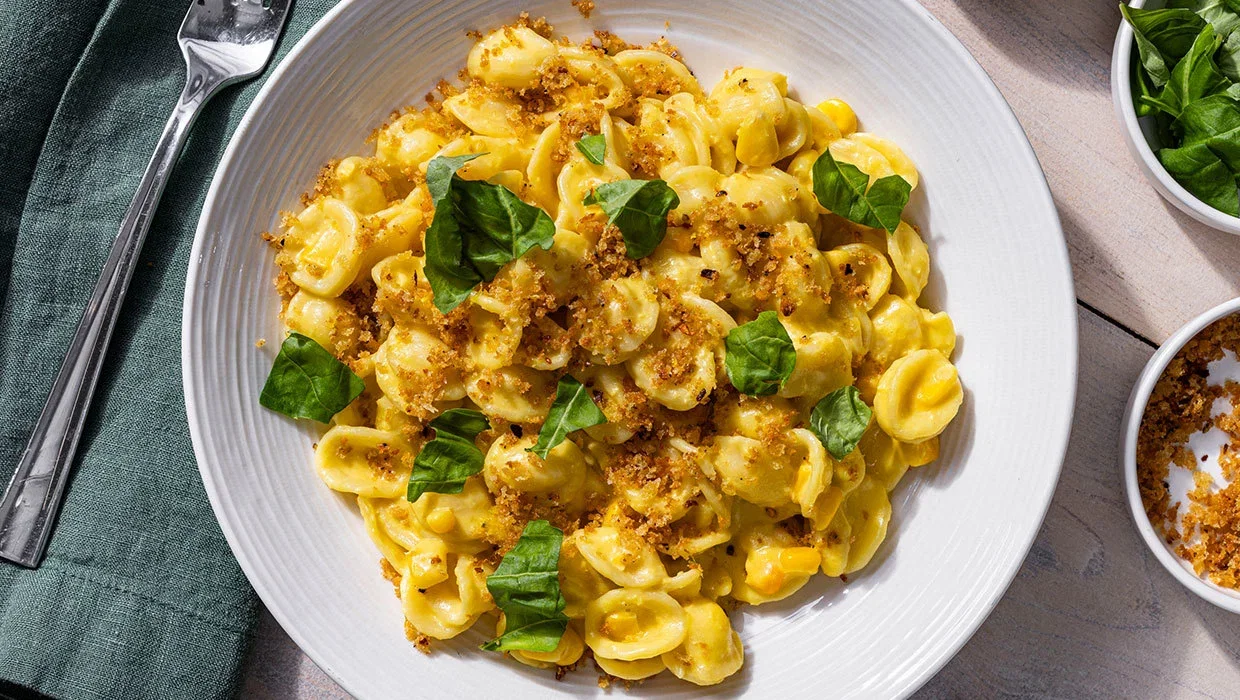
Whenever I cook with corn in a new way, I can’t help but feel like Rumpelstiltskin—but instead of straw, it’s corn that I’m spinning into gold. Maybe that’s because corn season is fleeting, so capturing its sweet, juicy goodness always feels like a win. Or maybe it’s the thrill of discovering how brilliant corn can be in unexpected places such as pasta sauce.
I don’t mean just tossing the kernels with pasta, which gives you lovely but sporadic bursts of their vibrant sweetness. The smarter move is to puree the kernels: It releases their natural starch and turns the vegetable into a golden, silky, lightly clingy sauce with pervasive corn flavor. Plus, it comes together in the blender and requires almost no cooking.
I start by blitzing raw kernels with as much of the pulpy, flavor-packed “milk” as I can scrape from the cobs. There’s just enough liquid to engage the blades and ample friction for grinding the solids. The velvety-smooth puree doesn’t even need straining.
Corn flavor is delicate, so I limit the seasonings to those that will enhance and balance it. Then I toss the cooked pasta (something short, with ridges or nooks for grabbing sauce) with the puree, fresh kernels for pops of sweetness, Parmesan, and reserved starchy cooking water and give the pot a stir over a low flame. That minimal exposure to heat maximizes the corn flavor by preserving some of its fresh-tasting volatile compounds while awakening others that only come through with cooking. Heat and agitation also gel the corn’s starch, causing the sauce to thicken up and turn exceptionally silky.
The result is one of the easiest, sunniest summer pastas I’ve ever made. And once balanced with garlicky panko bread crumbs, basil, and lemon, each bite is like pure gold.
|
|
|
|
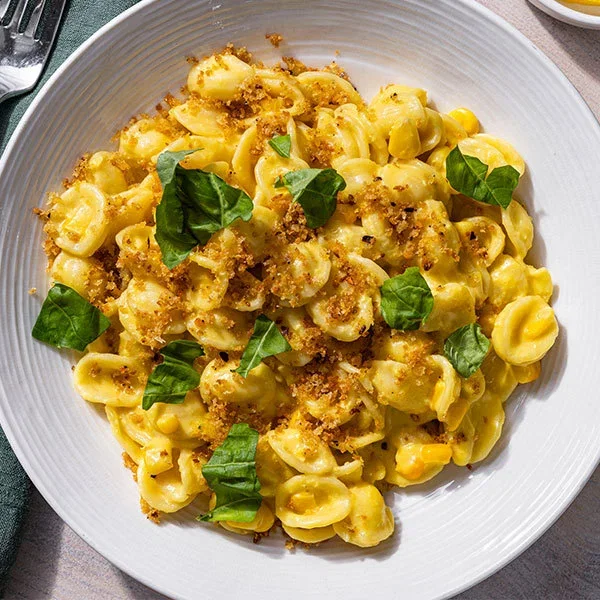
The vegetable’s natural starch makes it ideal for pureeing into a full-bodied sauce. Get the recipe. |
|
|
|
|
-
Blending fresh corn kernels with the pulpy “milk” scraped from the cobs yields a supersweet, bright-tasting pasta sauce.
- Since butter and corn have the same flavor compound, dimethyl sulfide, it’s a great match to enhance the characteristic flavor of cooked corn.
- Nutritional yeast adds a bit of savoriness.
-
Adding the puree near the end of cooking preserves its freshness, and heating the puree for just a few minutes activates the corn’s natural starch so that it thickens into a creamy sauce.
- Garnishes such as crisp panko crumbs with garlic, red pepper flakes, and lemon zest along with fresh basil leaves complement corn’s inherent flavors and textures.
|
RECIPE DEVELOPED BY ANNIE PETITO |
A native of New York, Annie Petito earned her degree from New York University’s Food Studies program. She’s passionate in her research and loves learning about the intersections between food and culture. After years in television production, Annie graduated from the Institute of Culinary Education and worked in several test kitchens, including Saveur, Cuisinart, Real Simple, and Food Network, before joining Cook’s Illustrated in 2014. She now lives in New Hampshire with her husband and daughter.
|
|
|
|
|
|
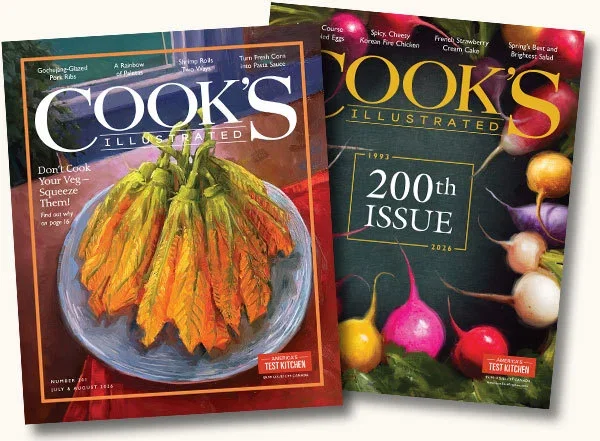
This content is from the July/August 2026 issue of Cook’s Illustrated. Not a subscriber? Let’s change that. |
|
|
|
How to Keep Flavors from Dulling in a Slow Cooker |
|
|
|
Digital members can access every recipe, review & video
Unlock the secret to flavor-packed, weeknight meals, plus crowd-pleasing favorites with an ATK Essential Membership. Get instant access free for 14 days.
|
|
|
|
|
Shaken vs. Stirred: Why Does It Matter How You Chill a Cocktail? Ask Paul |
Beyond thoroughly combining the ingredients, the purpose of shaking or stirring a cocktail is all about causing ice to melt. That accomplishes two essential things: It makes the drink cold, and it adds in a certain amount of water. But each method leads to different final results. |
|
|
|
By Jessica Rudolph, Senior Food Editor |
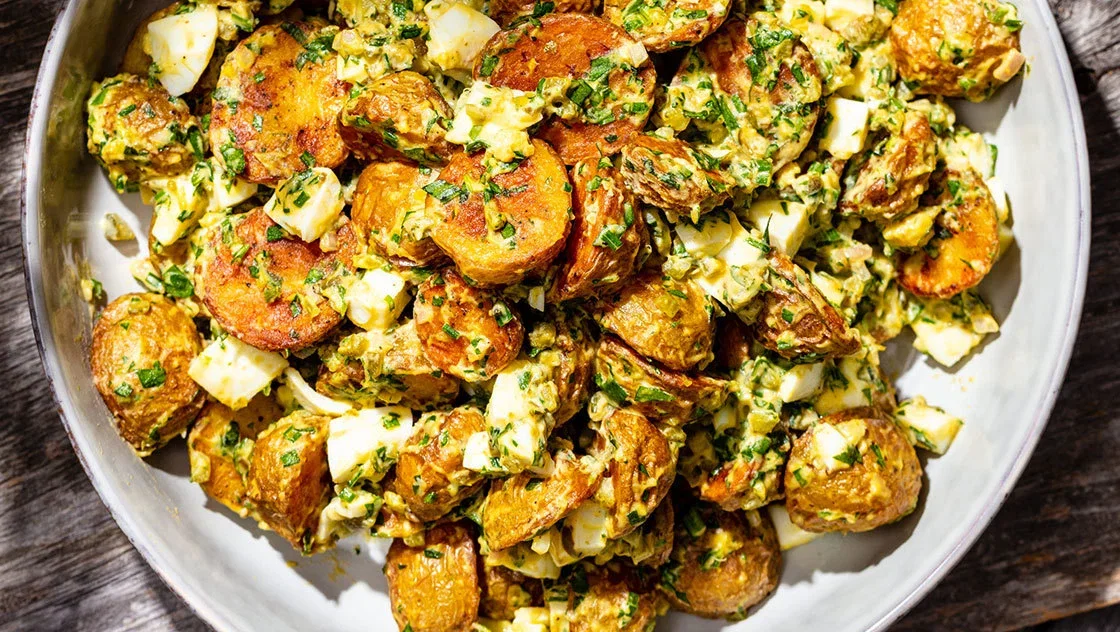
Mark Huxoll’s Potatoes with Sauce Gribiche tastes like the most decadent, luxurious potato salad. The baby potatoes are roasted until crispy, then dressed in a bright mustard vinaigrette emulsified with a hard-cooked egg yolk, and the whole thing gets tossed with a mountain of briny and fresh things: cornichons, capers, shallots, and so many herbs. While Mark was developing it, I’d hoard leftovers intending to serve them to my family at dinner . . . unfortunately I’d wind up sneaking so many bites throughout the day that they never made it home!
|
Chinese Enough by Kristina Cho |
I cycle through cookbooks from my local library to keep up with what’s cooking out in the world without cluttering my shelves. I was barely five recipes into Kristina Cho’s Chinese Enough when I knew I’d need my own copy to pore over. It’s warm, funny, and unfussy about the places where cuisines blur. I want to make something from nearly every page, but at the top of the list are the Typhoon Deviled Eggs, showered in a mess of gingery panko and pork floss.
|
|
|
|

|
Sign up for Featured Finds
Once a week, we share worthwhile sales on our favorite equipment so you can make smart shopping choices.
|
|
|
Sign up for The New Vegetarian
Sign up for The New Vegetarian, a weekly newsletter featuring a fresh approach to vegetarian cooking, curated and written by longtime ATK author, editor, and vegetable enthusiast Jack Bishop.
|
|
|
|
|
|