Lately, ads for metal cutting boards have been inundating social media. They’re touted as safer than traditional cutting boards, with claims that they’re easier to clean and sanitize. Honestly, the idea of metal cutting boards made me wince. We know from testing that using a hard glass cutting board is terrible for your knife, so I wondered whether a metal board could be any different.
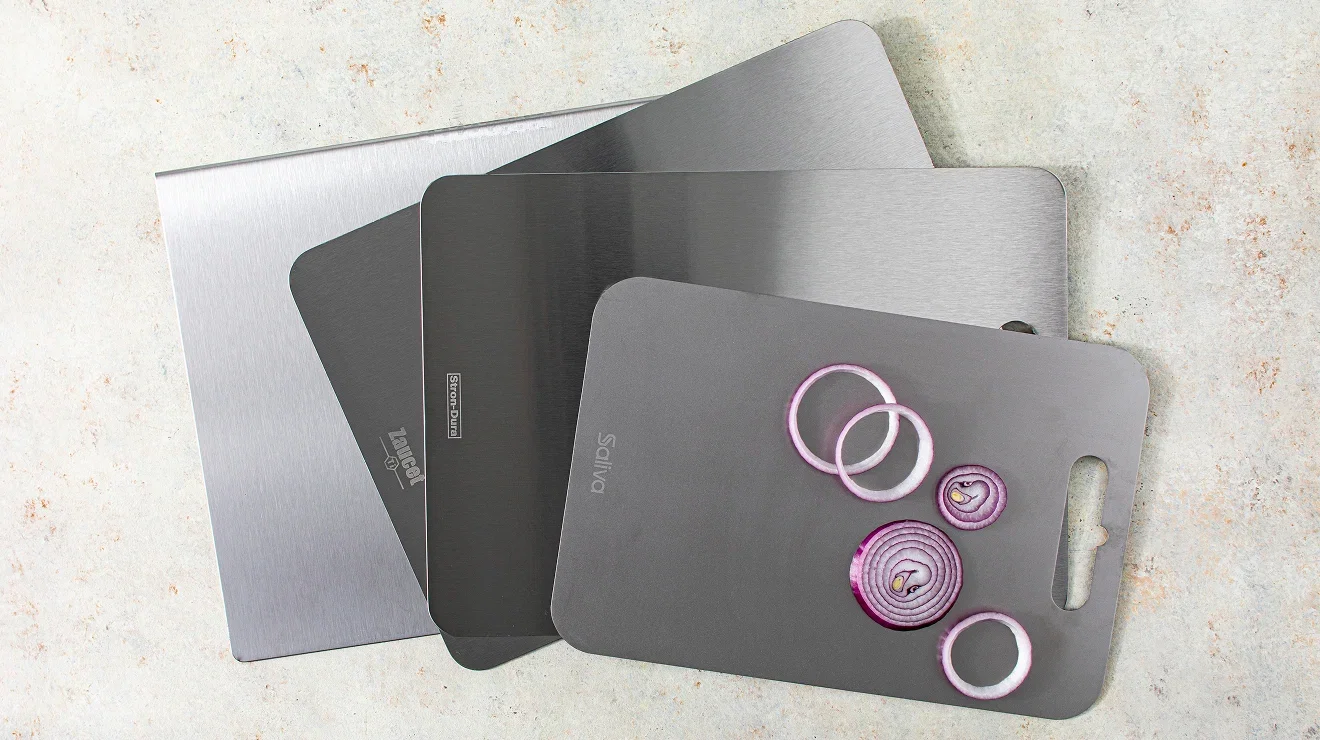
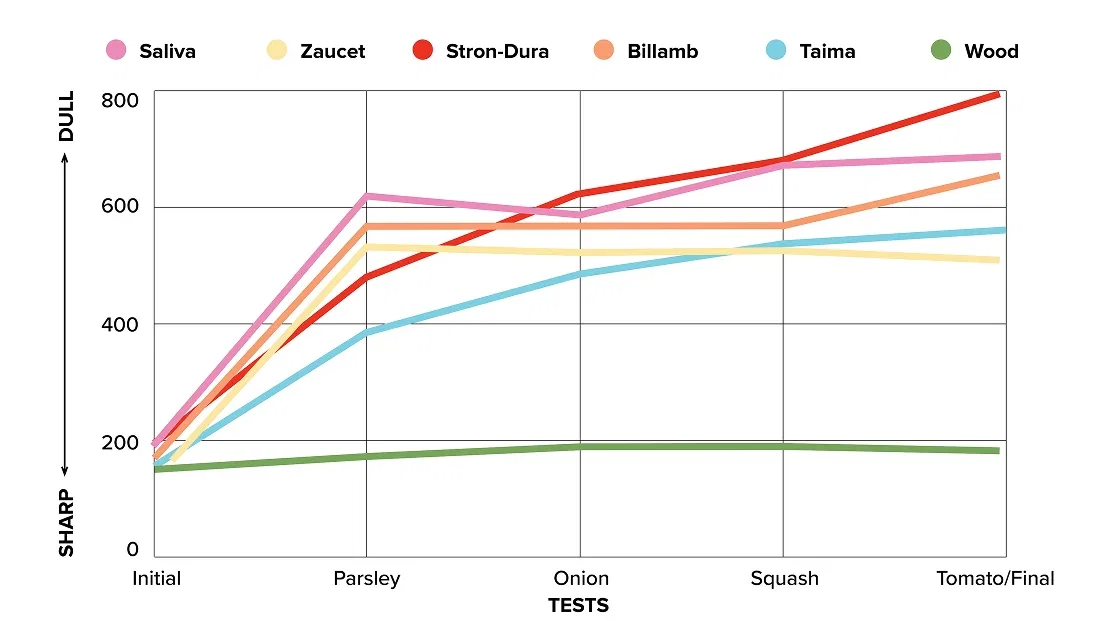
We put them to the test, buying boards made from titanium or stainless steel. With a fresh knife for each board, we minced parsley, diced an onion, chopped and peeled a whole butternut squash, and sliced a tomato. We tested the sharpness of each knife before and after every task. We also calculated the density of each board and discovered that two of the three “titanium” boards were plain old stainless steel.
Long story short: Metal boards wrecked the knives after just a few food-prep tasks. By the time we tried to slice a tomato, they struggled, sliding back and forth on the skin and unable to slice in. Metal is just too hard—and too unpleasant—to use as a cutting board.
When we repeated all the tasks on our top-rated wooden board, which is made of teak, cutting on that wood felt wonderful, like sinking into bed after a long, hard day. The knife's sharpness remained virtually brand-new. I’m sticking with a wood board.
Read the story of why we don’t recommend metal cutting boards.