|
Thank you for joining us.
|
|
|
|
|
|
|
In conversation with the Architectural Scientist and Biomaterials Technology Expert.
|
|
|
Q | Where to start? I usually know where to begin these conversations immediately, but the deeply systemic and multi-disciplinary nature of your work has me paralyzed for choice. So I'm going to give myself a pass and hand it over to you! You've said most would not view you as an architect in the conventional sense, how do you introduce your work?
I too have trouble trying to communicate the different aspects of my work - sometimes the work gets characterized as a technological solution, material science or as art. But I’m happy with any of these entry points because they all eventually lead to the same place. At its base, my work aims to capture the full spectrum of value associated with natural materials and the people who grow and design with them. To a large extent, we only capture and celebrate a fraction of a material's life. And once we have extracted that fractional value, we’ve become very comfortable divorcing ourselves from any responsibility for them or the people and contexts that produce them. Integrating material life cycles and their stakeholders is about owning that responsibility, and allowing the return of value - economic, cultural, environmental - back to their generation mechanisms.
|
|
|
Q | You have a deep tie to some of your influences from your father to the artist, El Anatsui, both connected back to Ghana, where you have just arrived to open a new chapter. Can you share some context on what both of them have meant to you, what drew you back to Ghana at this point and what 'home' means to you after so many years away in the States?
My family moved to Ghana to live when I was thirteen, having previously lived in Saudi Arabia where I was born, the UK, Grenada and a couple of countries in Southeast Asia. But I think Ghana was a special place for me, because it was the first time we weren’t moving for my dad’s “work” but because he became terribly ill. It became the place where he healed and in many senses we got another lease on life as a family. So Ghana has always been the “drinking well” where I find inspiration, comradery and reassurance for the work I do.
Even though I probably didn’t realize it until after he passed away, my respect for natural materials and processes comes from him. As a surgeon, I remember his patients and surgical staff telling me stories about him. They nicknamed him the “hand of God” because of how careful and precise his surgical work would be. One day, towards the end of his career, he told me that only a fraction of his success was his handiwork, the rest was nature. He believed more than anything in the body’s way of healing itself. That recognition sits with me until now.
I’m typically in Ghana for a few months of the year but coming home for this stretch before embarking upon a new journey, is a chance to get grounded on a number of opportunities that have emerged over the past year. In particular, being able to do a residency with El Anatsui, who has been a north star for me, is a dream come true. I’ve also begun to understand the longer term generosity and footprint of his art production enterprise in Nsukka, in Nigeria. In a way, this is what has always drawn me to El’s work, besides how spectacular it is formally -- how he has been able to exponentially multiply and circulate value from the ‘everyday’ and things we call ‘waste’. I remember a teacher of mine saying “if you build something out of trash, you’ll get trash.” I guess he never saw the magic of El.
|
|
|
Q | So here you are working to set up this incredible institute, the Centre for Integrated Lifecycle Technologies, and it sounds like you are truly building an ecosystem, which resonates strongly for me at a point that feels like an urgent and necessary shift toward collaborative innovation and away from the idea of individual silver bullet 'solutions' that are so often prioritized and idolized in the US. Can you describe the vision the Centre is in service of?
It’s very much in its early conception, but yes the Center for Integrated Life Cycle Technologies (CILT), pronounced ‘silt’ is what I hope to be working on for many years to come. The first phase of the Center is actually planting a forest of crops, trees and native flora that have disappeared to a large extent from forests as well as our agricultural and food tables. The second phase would be to launch a design research center that partners with academic, industrial and community stakeholders to accelerate scientific and cultural innovation at the intersection of agriculture, food and architecture. Realizing that circular design and integrated material life cycles have always been part of Ghanaian building traditions, agriculture and cuisine, the vision for the center is to create economic, environmental and social opportunities at the intersection of material life cycles. This is very much contingent on identifying alienated stakeholders typically at the beginning or end of the material life cycle, or teaming up with people who are already doing this and figuring out how research, development and design services can accelerate a shared mission.
|
|
|
Q | I can't stop thinking about the company you mentioned when we last spoke, the Global Mamas, which has grown exponentially to encompass a huge number of women with home-based enterprises. Could you share the work you are doing together to solve the critical health and environmental challenges that have arisen in their work and some of the fairly incredible benefits the solutions have yielded?
Global Mamas is a fantastic company based in Ghana that I was introduced to by a good friend in 2012, cofounded by Renae Adams and her partner, Kirsten Johnson. Although my earlier involvement with them was focused on the design of their circular apparel facility that is being built currently, it wasn’t until 2017 when they were experiencing regulatory issues with one of their facilities in a residential neighbourhood where they produce, that my current work with them on batik wastewater treatment started. As part of the dyeing process, toxic chemicals including high levels of suspended solids, color and heavy metals, were being discharged into the municipal drainage systems. In order to meet EPA regulations for their wastewater, I began to investigate the use of moringa pressmeal - a by-product from moringa teas and food production - as a natural flocculant for the treatment of toxic water. As part of that research, the Mamas in Ashiaman began to treat to reduce odor, pH, heavy metal and achieve color reduction in their batik wastewater. We also expanded the project to improve the ergonomic infrastructure around textile dyeing operations as part of the moringa wastewater treatment system. Next, we are aiming to look at the development of biosludge bricks - from the wastewater treatment sludge waste.
|
|
|
Q | It is just remarkable and I'd like to dig further into the concept of an 'integrative lifecycle' as most of us are not taught to think that way in modern education. What were the formative experiences that drew you into this kind of systems thinking and how would you advise those who are reading this and may be curious to start to explore this for themselves?
Two mentors of mine deserve much of the credit - the first being Anna Dyson who to me is an unparalleled visionary in the field of architectural sciences. Anna has the capacity to think deeply and teach across different scales, in response to energy and complex ecological forces. She is the only person I know who can bring scientists from national laboratories, folks from large chemical companies and architects from large firms together to one table, and keep everyone glued to their seats and excited about collaborating across scales and from a systems perspective.
The second is the cyberneticist and ethno mathematician, Ron Eglash, whose concept of generative justice emerged as a 21st century framework for the bottom-up creation and circulation of unalienated value. His work and writing on generative justice has inspired so many, and become a reference framework for me to think about the building material life cycle. I first came across his work in the 2000s in his book African Fractals which studied how repeating patterns at multiple scales in architecture --from a room, house to a larger settlement-- are both guided by and reinforce deep cultural and political organizational logics.
|
|
|
Q | I understand you have an exhibition coming up this Fall as well. Where can people see your work?
My first solo exhibition, Grounds for Return, will be coming up this September at Z33 Gallery for Contemporary Art, Design and Architecture in Belgium. For me, the design of the exhibition in collaboration with their fantastic curatorial and production team has been an exercise in clarity and intention. The exhibition explores distinct historical sites and spaces of extraction - the West African coastal landscape, the farm, the tunnel and the dining table - reconstituted materially as the result of generative justice systems. For me “return” is primarily defined as the physical and psychological reconnection of both human and non-human processes that patiently cycle and return value to their generation mechanisms.
|
|
|
Q | As I forewarned there is this one maybe uncomfortable question I often ask, because I think it's so important to pull back the curtain on what can often look like unattainable perfection. People who have seen the success you’ve had, it sometimes looks linear, and yet we know that is very rarely the case. So I come to the question of “The Dip.” The term Seth Godin coined as that miserable moment when what you’ve been trying to achieve or are building feels like an impossible grind. Could you share a little bit about a dip you’ve experienced and how you navigated?
I think for me “the dip that transcends all other dips” was in my second year of my doctorate, when my father’s unexpected death coincided with getting a startup grant to start a business selling coconut biocomposite products. At that time, I barely had a 2”x2” piece of coconut board and no idea of how to replicate its production reliably. I had no clue how to deliver a business pitch, let alone start a business. I was surrounded by some pretty experienced entrepreneurs and businessmen, that made everything I had at the time, seem pretty hopeless! And the one person who always encouraged me to keep going was gone.
After a torturous few days of pitching in the cleantech incubator program, I remember lying in bed for 2-3 days and mentally trying to piece together a roadmap after quitting my PhD program. But a friend made her way to me, and we got through a couple of difficult weeks together. I just decided to give it one more semester before I called it quits. Trying to do your PhD and launch a startup is probably not something I'd advise anyone to do --I remember preparing for my PhD candidacy exam, while doing 15-20 “customer discovery” calls a week, and drafting codevelopment agreements with people who knew the biocomposite production business better than I did. But there was something about the silent grieving process that was liberatory in a way --firstly it forced me to take a step back in every situation and decide what really matters, and secondly I had this ‘cloud’ over my head that just took away feelings of panic, intimidation or even the need to prove myself to anyone but myself. Holding on to that approach to life, opportunities and social interactions have helped me get through many dips since.
|
|
|
|
|
|
|
|
|
|
|
|
|
Q | On a lighter note, we love sharing current sources of creative energy, solace and just plain joy. Are there other people, books, art, film, music or other aspects of culture that currently inspire you?
I’m not sure this is a lighter note, but ever since last summer I have been working on a long-time passion project of mine documenting and visualizing the incredible “worldmaking” that the enslaved in the Transatlantic Slave Trade created and nurtured over time. So I’ve been reading some seminal books written by or about the formerly enslaved - from the “Rescue of Charles Nalle” to the “The Diary of a Slave Girl”, and watching series like “High on the Hog” and the “Underground Railroad”. I had always avoided reading about such personal histories, because they were just so painful to digest - but somehow I’ve realized the only way to go is “through it”.
Apart from that, my timeless inspiration are works of art by El Anatsui, in particular “Gravity and Grace” and “When I Last Wrote to You About Africa”, and more recently Maya Lin’s “Ghost Forest”. Music inspirations are endless - Louis Armstrong is a constant, but Michael Kiwanuka, Asa and more recently Black Pumas have been soul-soothing.
|
|
|
Q | In closing, where do you see alignment with Another Tomorrow? What resonates for you? Do you have a favorite piece of the collection?
I read your wonderful piece on the cotton industry in Texas and the depth of engagement in that article as well as in many of the pieces of journalism on your website told me much of what I needed to know about the company and its ethos. I really admire the philosophy of Another Tomorrow which sees farmers as partners, gives transparency and dignity to every part of the process, and makes hard choices about which value chain to enter. The sleeveless crewneck dress and the draped knit sweater are wonderful pieces, simply put- they make me feel like myself whenever I put them on.
|
|
|
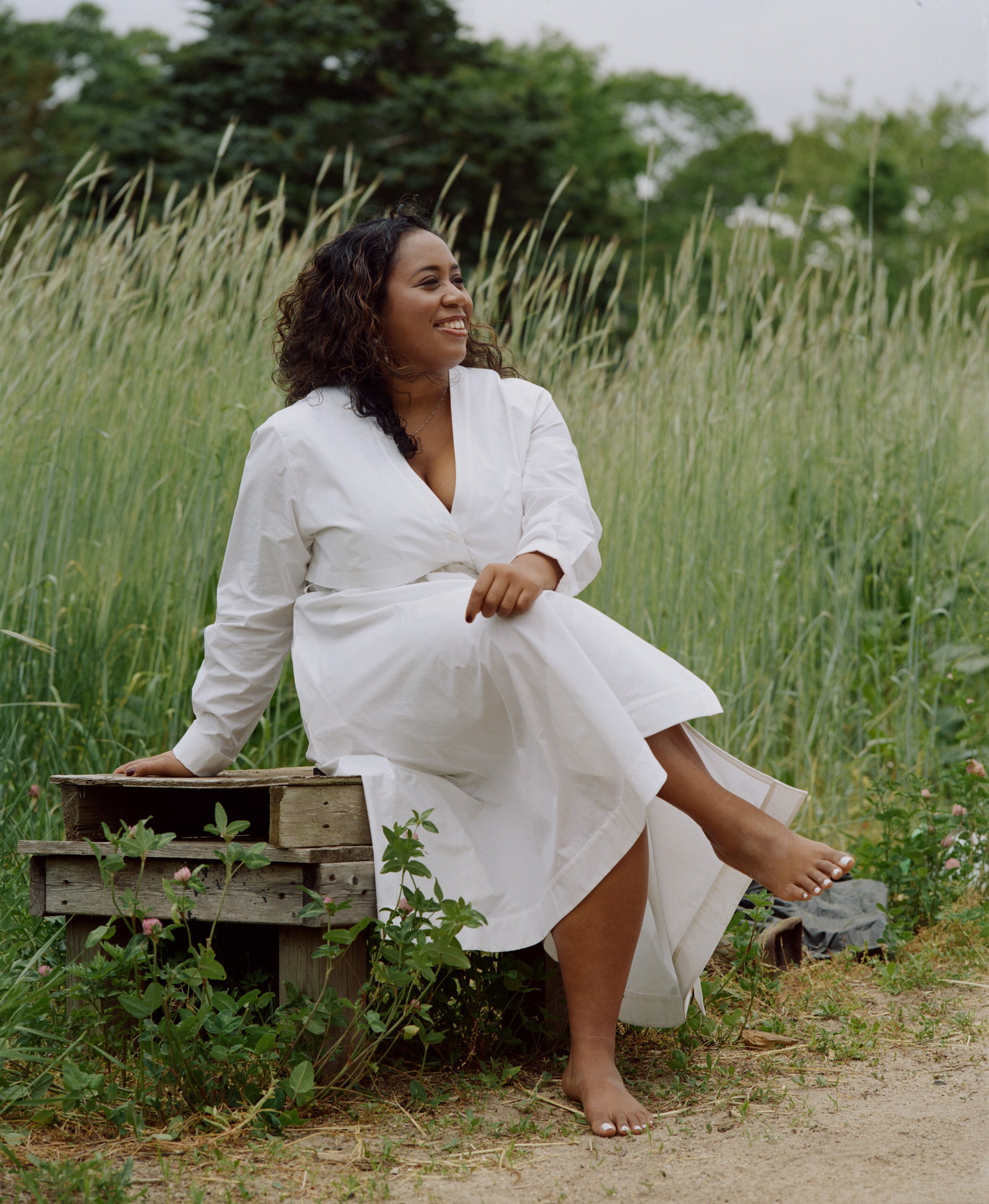
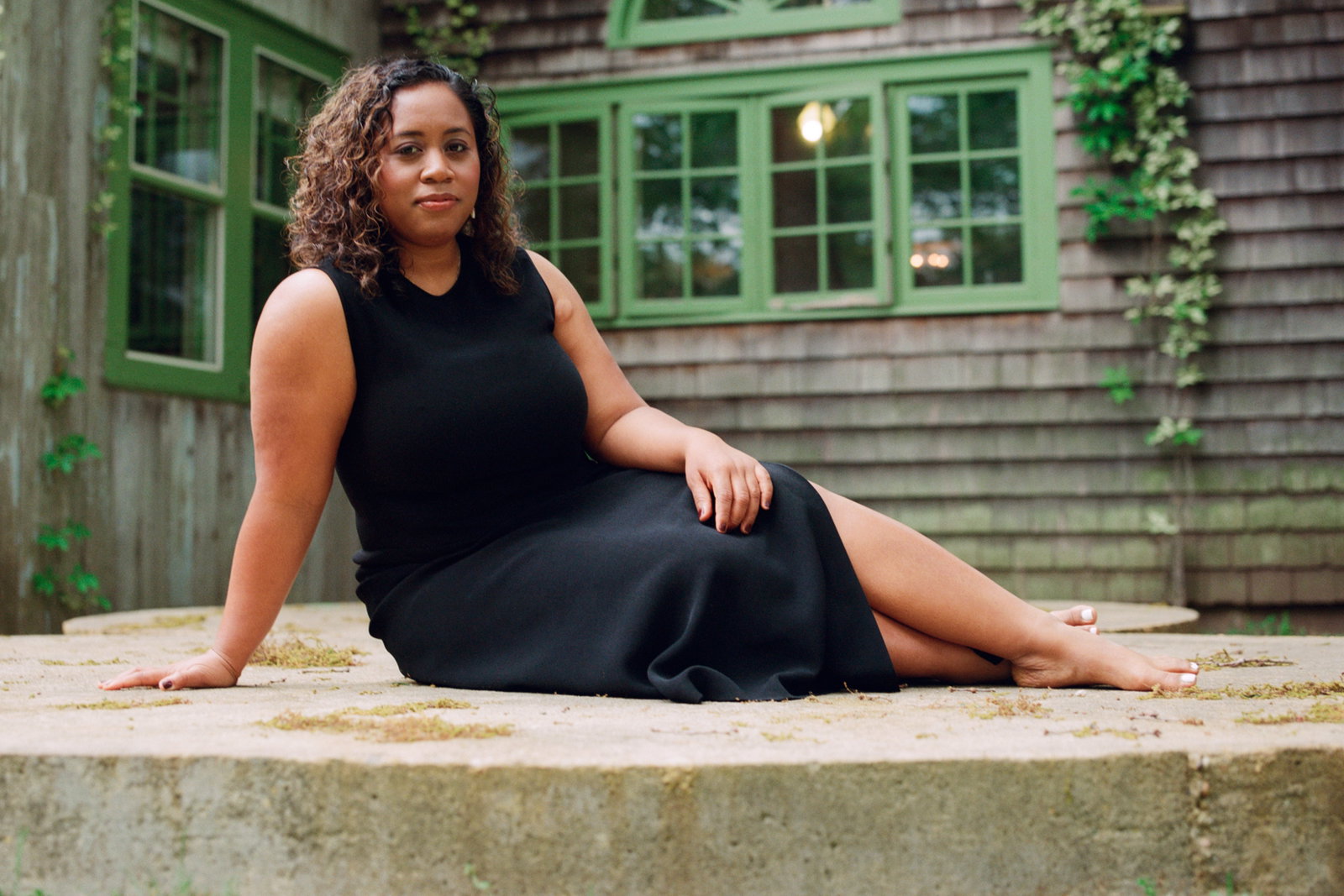
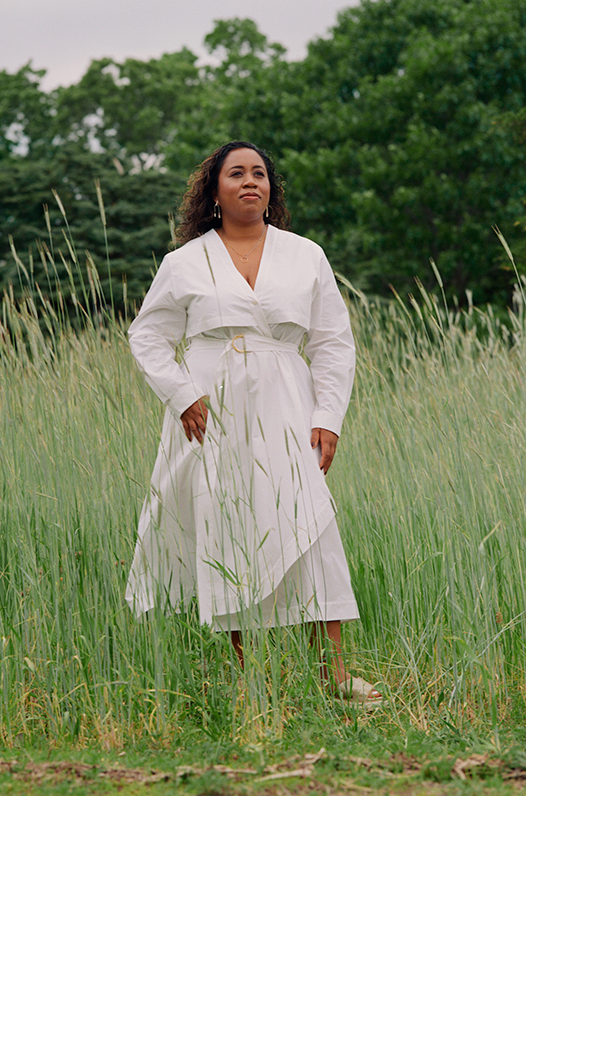
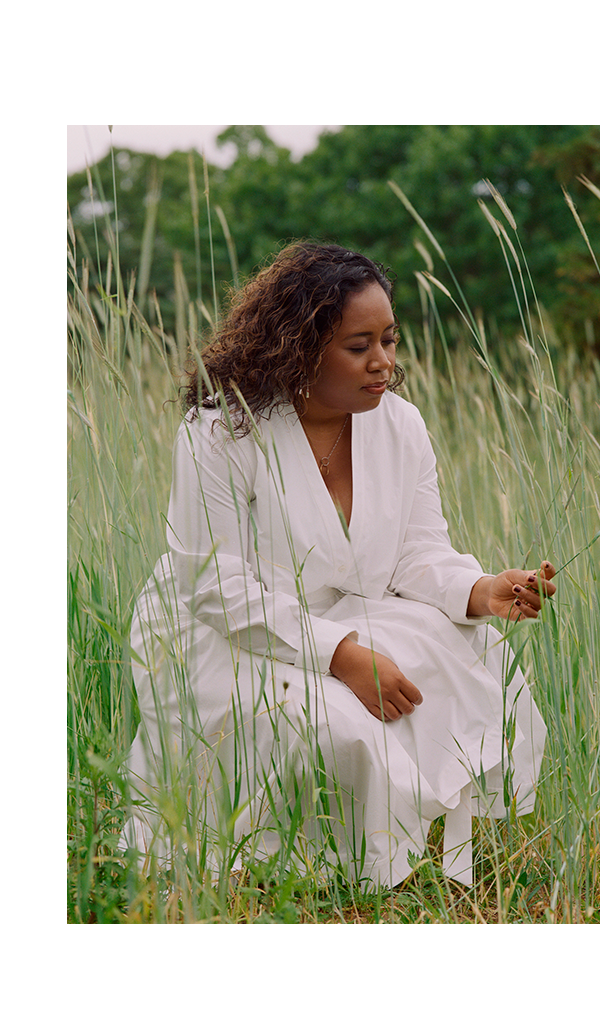
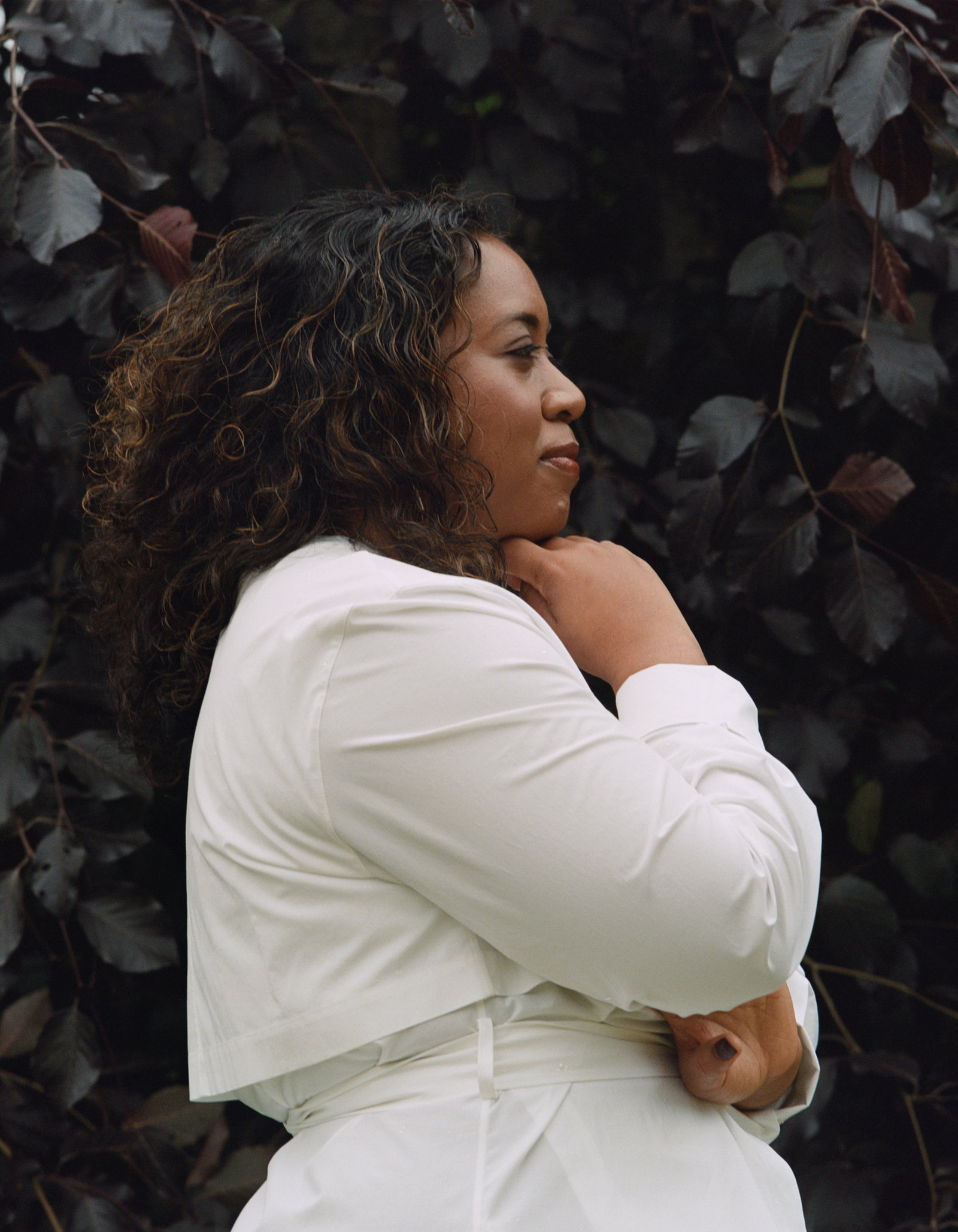
Mae-ling wears our V-Neck Shirt Dress and our Sleeveless Crewneck Dress.
You can find more from Mae-ling at @maelokko on Instagram and @mlokko on Twitter.
|
|
|
1133 Broadway
New York, NY 10010
[email protected]
Another Tomorrow © 2021
|
|
|
|
|