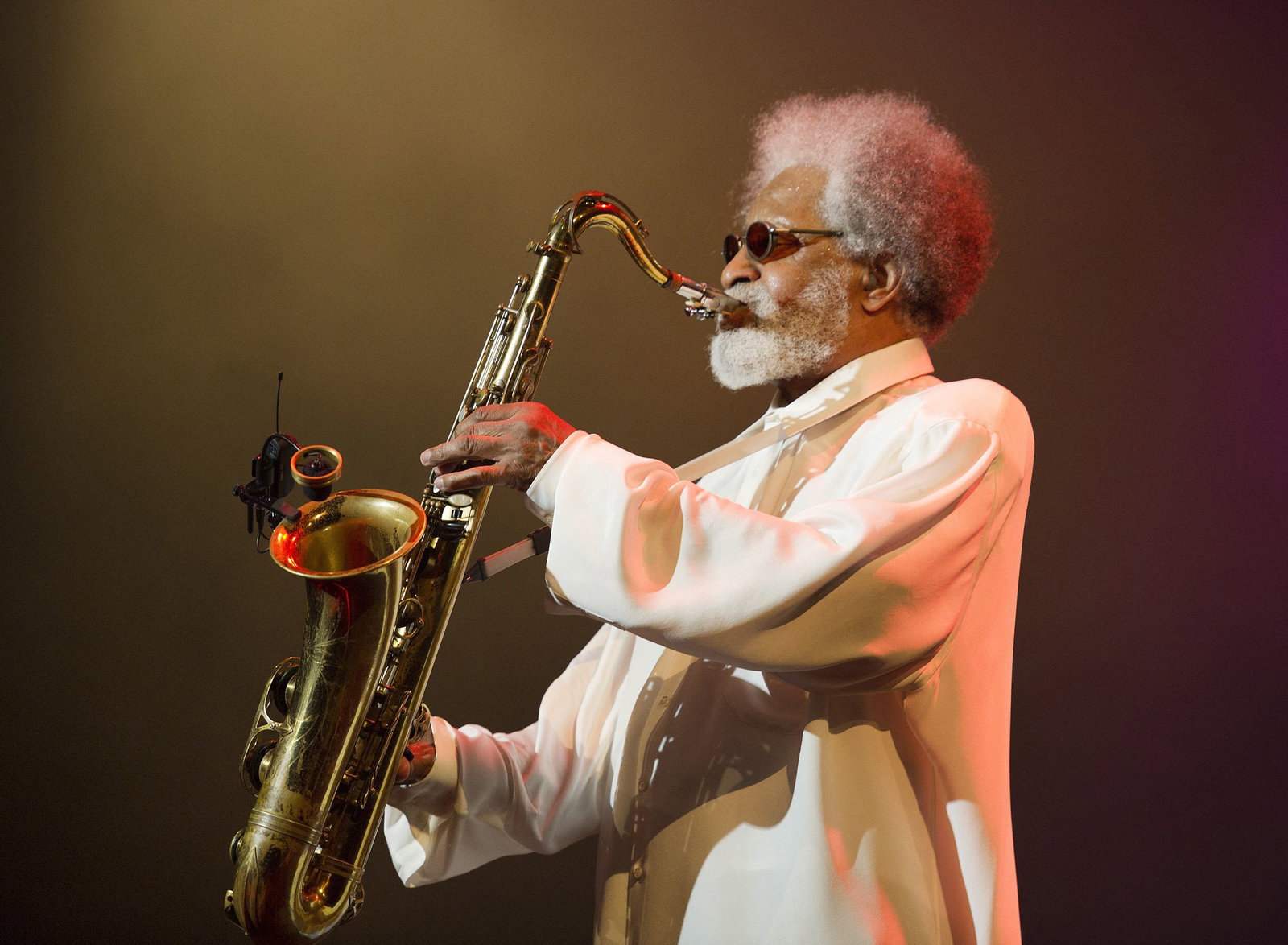
Sonny Rollins (1930-2026)
Sonny Rollins will go down in history as not only the single most enduring tenor saxophonist of the bebop and hard bop era, but also the greatest contemporary jazz saxophonist of them all. His fluid and harmonically innovative ideas, effortless manner, and easily identifiable and accessible sound have influenced generations of performers, but have also fueled the notion that mainstream jazz music can be widely enjoyed, recognized, and proliferated. Born Theodore Walter Rollins in New York City on September 7, 1930, he had an older brother who played violin. At age nine he took up piano lessons but discontinued them, took up the alto saxophone in high school, and switched to tenor after high school, doing local engagements. In 1948 he recorded with vocalist Babs Gonzales, then Bud Powell and Fats Navarro, and his first composition, “Audubon,” was recorded by J.J. Johnson. Soon thereafter, Rollins made the rounds quickly with groups led by Art Blakey, Tadd Dameron, Chicago drummer Ike Day, and Miles Davis in 1951, followed by his own recordings with Kenny Drew, Kenny Dorham, and Thelonious Monk.
“I think when the creative person ends, he continues in the next existence. I’m a person who believes this life isn’t the be-all and end-all of everything. A spiritual person doesn’t feel like that.”
–Sonny Rollins (2009)
Read more about Sonny Rollins' legacy and story here, and shop his tribute collection here!
|