A Century of Prints & Photographs: Spotlight on Andy Warhol and Ansel Adams |
No other era saw such an evolution of art, history, and culture as the 20th century, and our 20th Century Art sale brings that scope to life, bridging the modern, post-war, and contemporary periods in the cross-category style Artnet Auctions does best.
The sale features scarce and iconic prints and photographs by luminaries such as Pablo Picasso, Egon Schiele, Henri Cartier-Bresson, Roy Lichtenstein, Keith Haring, and Robert Rauschenberg, while showcasing the development of image-making across printed media.
Here, we’re highlighting two heavy hitters of the 20th century: Andy Warhol and Ansel Adams. Their works helped define the era, and we’re showcasing some of their most enduring images.
|
|
|
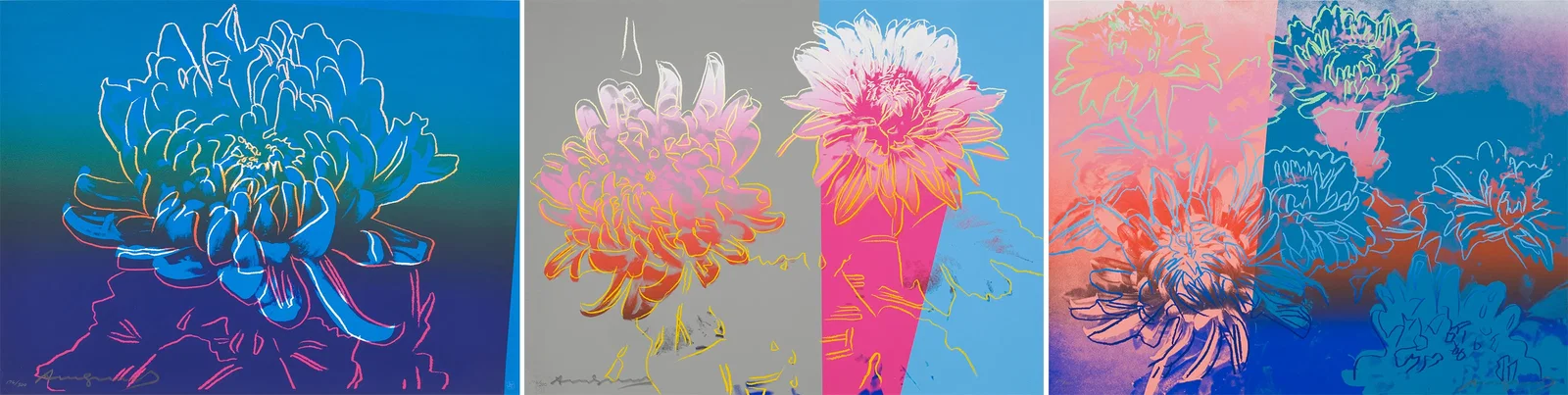
Andy Warhol, Kiku (complete set of three works), 1983 |
Warhol once said, “I always notice flowers.” The artist returned to the subject matter repeatedly, as seen in his colorful “Flowers” works, which include a “Poinsettias” series from the early 1980s, as well as his 1983 “Kiku” series of chrysanthemums, shown here.
Kiku is the Japanese word for chrysanthemum. Warhol visited Japan twice in his lifetime, first in 1956 during a trip around the world, and then in 1974 for a solo exhibition. In 1983, Fujio Watanuki, champion of the Japanese avant-garde and founder of the Gendai Hanga Center in Tokyo, approached Warhol about creating a body of work inspired by chrysanthemums. For the “Kiku” series, Warhol created 300 screenprint portfolios with three prints in each. The present lot is the complete set of three.
The chrysanthemum is an age-old symbol of the Japanese emperor and imperial house (it’s even printed on Japanese passports), and it also represents longevity, rejuvenation, and the autumn season.
|
|
|
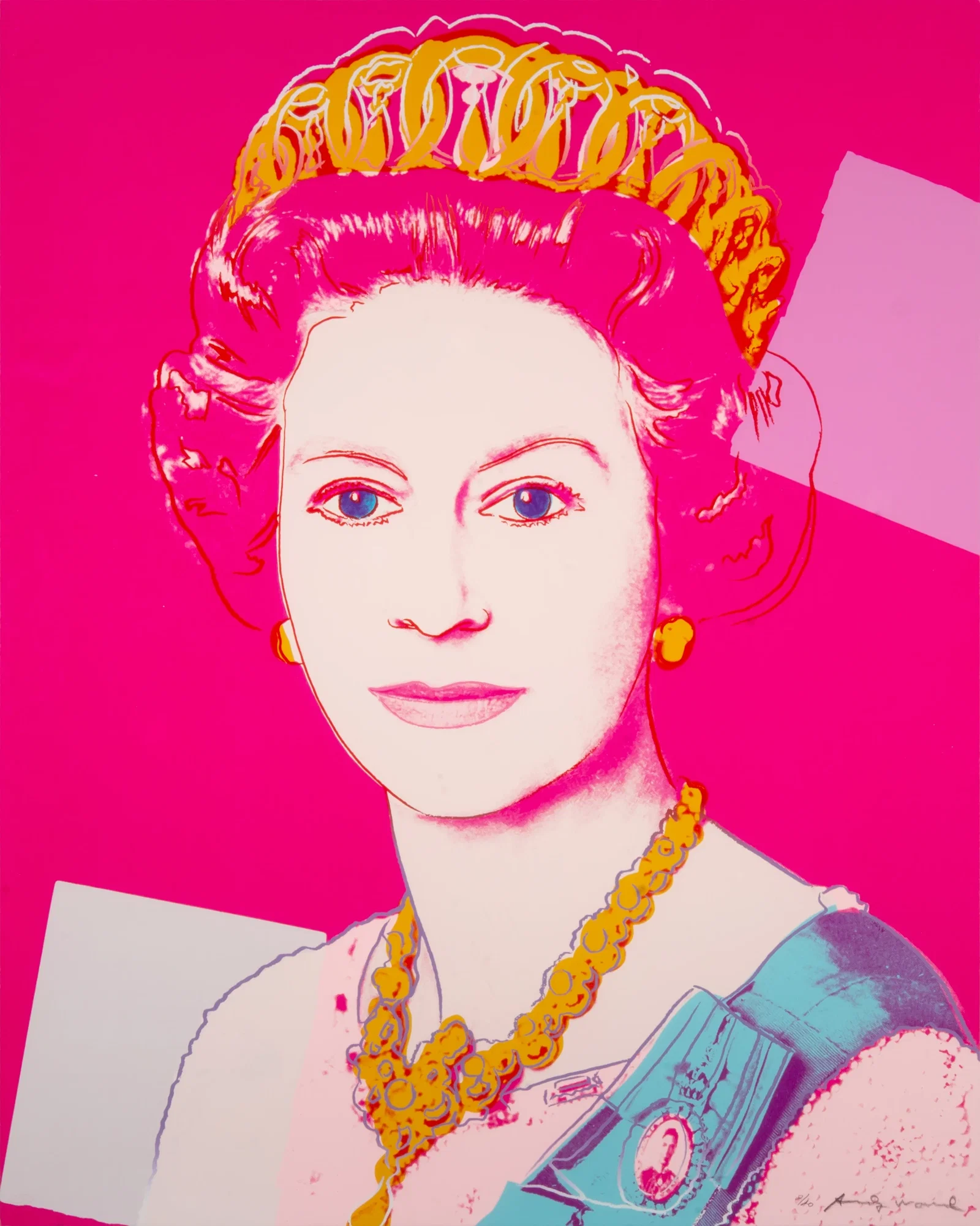
Andy Warhol, Queen Elizabeth II (from “Reigning Queens”), 1985 |
Beginning in the 1960s with his “Campbell’s Soup Cans” and the aforementioned “Flowers” series, Warhol challenged traditional ideas of art by embracing reproduction and mass media aesthetics, drawing inspiration from comic strips and advertisements to produce iconic celebrity portraits of figures such as Marilyn Monroe, Elvis Presley, and Elizabeth Taylor. That fascination with celebrity and mass culture eventually led him to portray the “World’s Most Recognizable Person,” Queen Elizabeth II, whom he captured in the screenprint above for his “Reigning Queens” series.
Although Warhol portrayed other monarchs as part of the series, this portrait of the Queen is undeniably the most recognizable. His pop rendering of Her Majesty is one of both reverence and cheeky kitsch, its stylization harkening back to his earlier “Ladies and Gentlemen” series, which featured famous drag queens in similarly vivid colors and geometric overlays.
The Queen herself demonstrated a fondness for the image: In 2012 (the year of her Diamond Jubilee), the Royal Collection acquired a set of four prints from the deluxe diamond dust edition.
|
|
|
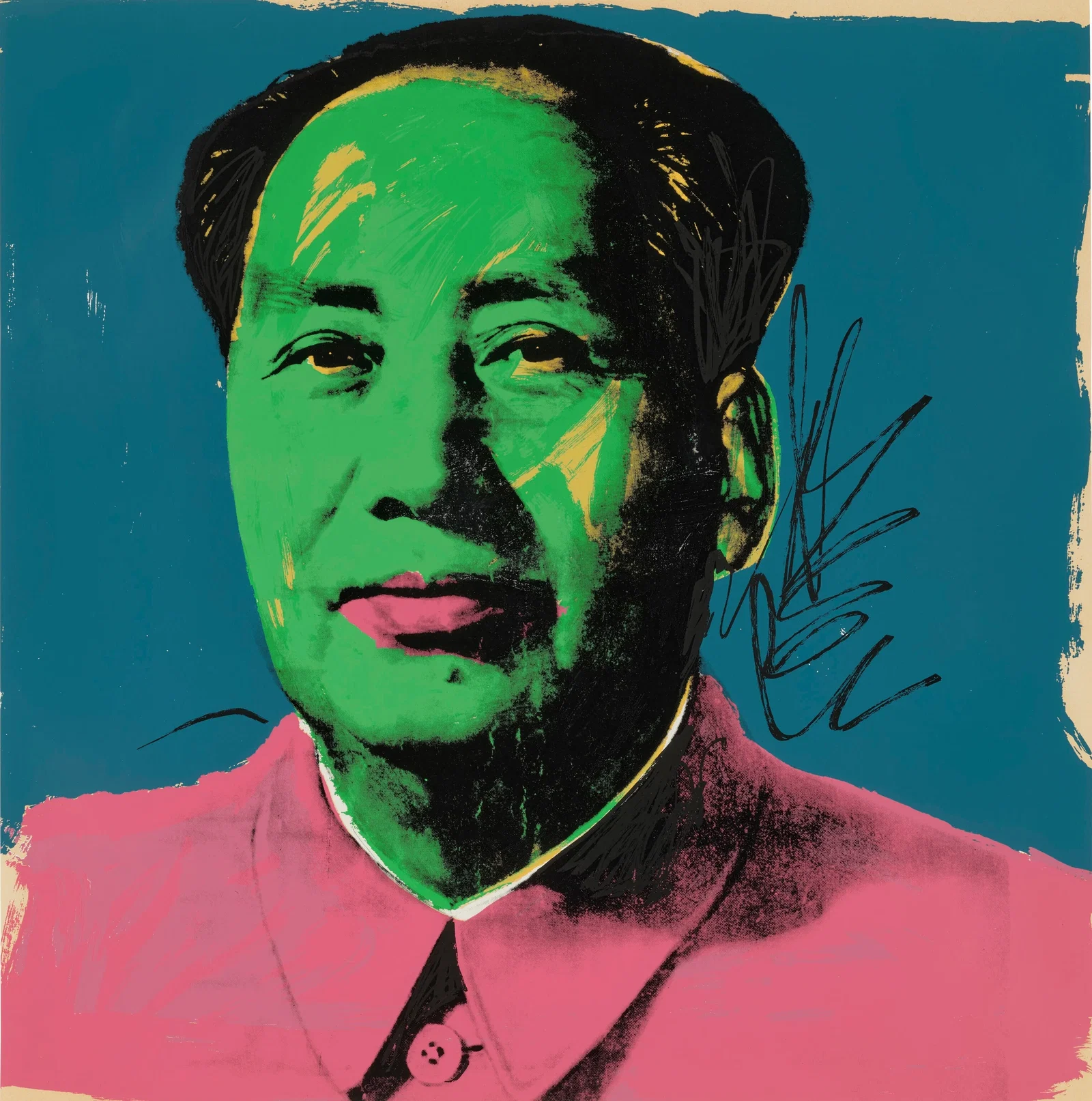
An extension of his fascination with celebrity, Warhol’s depiction of Chairman Mao Zedong captures one of the most recognizable portraits in the world across a series of ten screenprints. This portfolio marked his return to painting after an intense period focused on filmmaking, and it stands as his most ambitious project since the “Flowers” series of the mid-1960s.
The “Mao” portraits are considered Warhol’s first explicitly political works, commenting on controlled state propaganda in relation to the Western advertising machine—two methods of psychological influence that Warhol elevates to the same level in his practice. At the time of publication, the works were met with critical acclaim; as former Interview editor Bob Colacello noted, “They were controversial, commercial, and important, just like the man they portrayed and the man who painted them.”
|
|
|
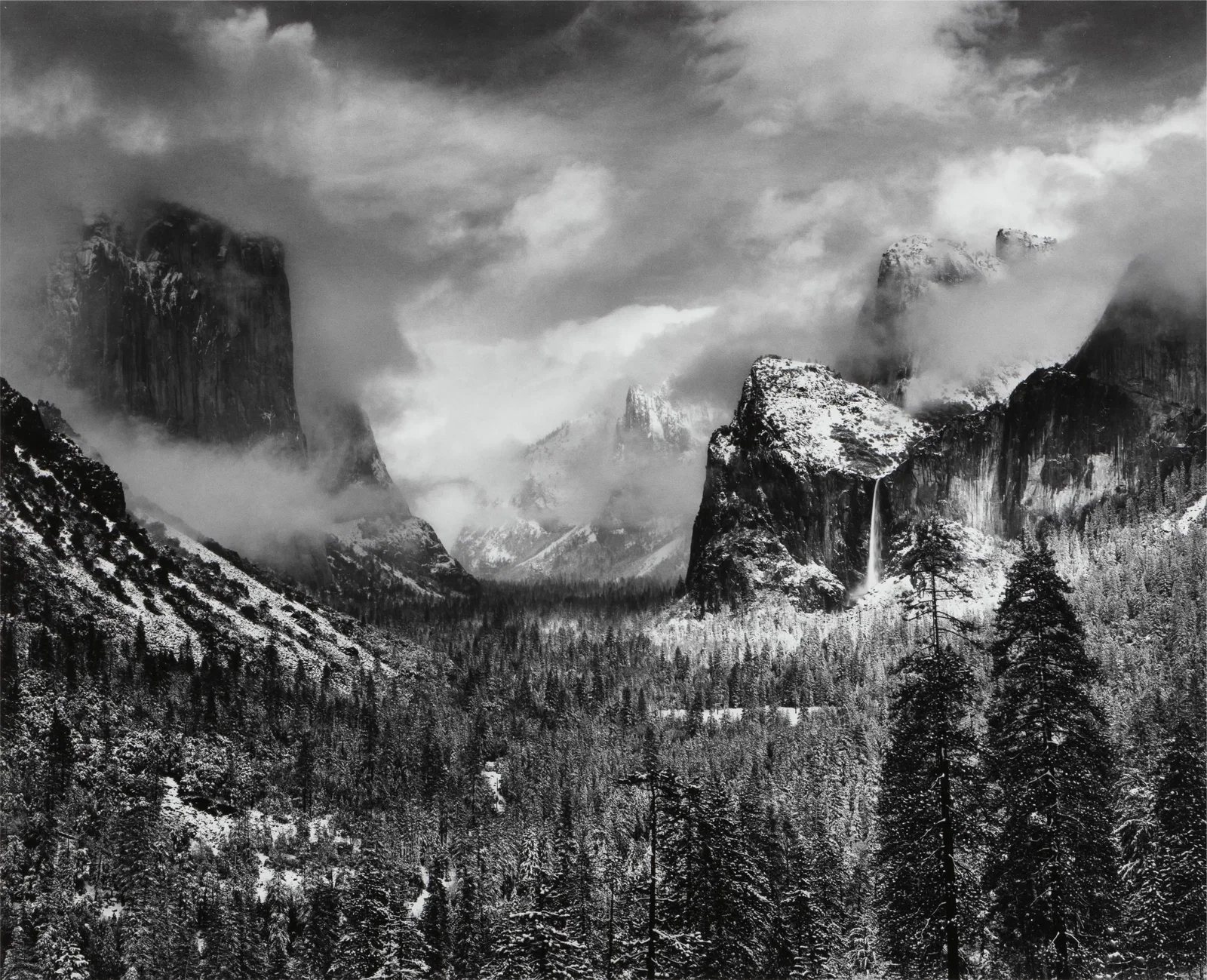
Ansel Adams, Clearing Winter Storm, Yosemite National Park, California, 1944 |
While Warhol turned his lens toward icons of celebrity and power, Ansel Adams found his subject in the American landscape. Carefully composed and technically precise, his picturesque images of Yosemite National Park are among the best-known works in the medium’s history. “Yosemite Valley, to me, is always a sunrise, a glitter of green and golden wonder in a vast edifice of stone and space,” he once said.
Starting in the 1930s, Adams photographed Yosemite Valley from Inspiration Point many times, with Clearing Winter Storm Yosemite National Park, California (1944) standing as the most famous image in the series. The iconic photograph depicts the moment of tension between the daunting force of nature and the serene promise of renewal, beautifully capturing the fleeting instant when a storm withdraws, revealing sunlight striking a distant waterfall to the right and the colossal peak of El Capitan emerging from the clouds to the left.
Together, these works trace two distinct visions of the 20th century: the oversaturated pop icons of Warhol and the black-and-white vistas of Adams’s American landscapes.
Don’t miss your chance to collect these works from our 20th Century Art sale. Place your bids before the sale closes on September 23rd.
|
|
|
|
Please don’t hesitate to reach out directly to the head of sale,
Sylvie François Sturtevant, Senior Specialist, Prints & Multiples, with any questions.
[email protected]
|
|
|
Other Works Live for Bidding in 20th Century Art |
|
|
|
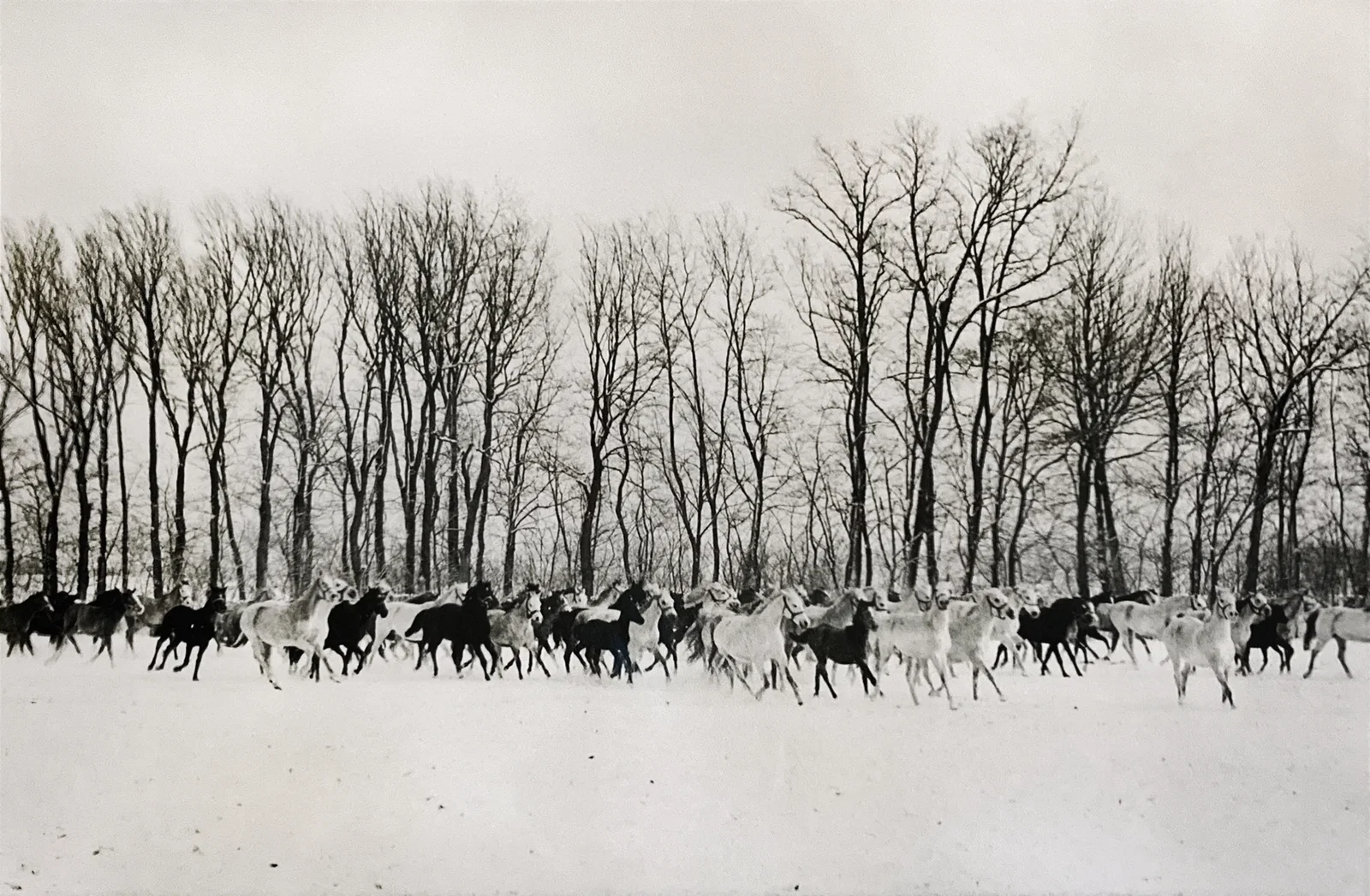
Henri Cartier-Bresson, Gyor, Hungary, 1964
Est. $20,000–$30,000
|
|
|
|
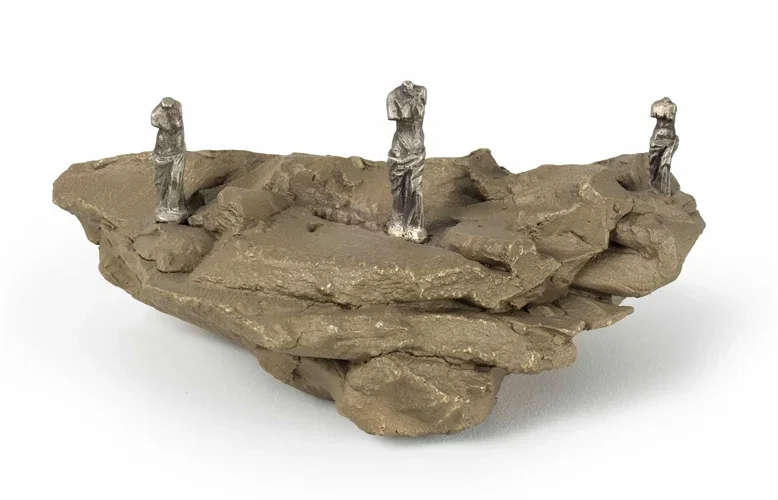
Jim Dine, Study for “Looking Toward the Avenue”, 1989–1990
Est. $20,000–$30,000
|
|
|
Henri Cartier-Bresson, Gyor, Hungary, 1964
Est. $20,000–$30,000
|
|
Jim Dine, Study for “Looking Toward the Avenue”, 1989–1990
Est. $20,000–$30,000
|
|
|
|