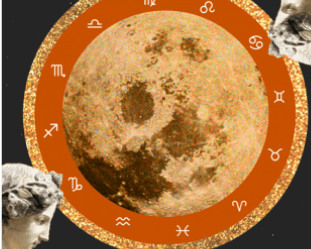
Every planet in our heavens above moves backwards and forwards from our perspective here on Earth. Planets do not actually “move backwards,” and this is obviously just an optical illusion due to the rotation and movement of our own planet around the sun in relation to these other celestial objects. Since ancient times we have known that if it appears to occur in the heavens, we will experience actual effects in our lives.
Certain planets, like Mercury, Venus, and Mars, are much closer to the Earth and their retrogrades affect us much more noticeably because they are tied to our daily lives more closely too. Mercury, which retrogrades multiple times a year, aligns with our minds, communication, technology, and daily affairs. This is why these cycles are so immediately noticeable when they take place. Venus, which rules our relationships, obviously causes a warped perspective on how we are seeing our connections, our own self-worth, and can bring people from the past back into our orbits for closure or to rekindle a rapport. Mars retrograde cycles tend to be especially intense and occur roughly every two years and can be extremely draining, since we need a strong Mars to take action—and those retrogrades cover very long periods in time.
Luckily, the outer planets—Jupiter, Saturn, Uranus, Neptune, and Pluto—tie more to the human collective, rather than just our daily affairs. While we can obviously feel their effects depending on where they are in the...