Welcome to Blue Horizons, a monthly dive into ocean news, discoveries and adventures proudly supported by Coral Expeditions, Australia’s pioneering cruise line.
|
|
New shark species discovered north of Australia Manta rays go deep to survive storms Hidden groundwater feeds Ningaloo Reef
…before plunging into the full stories below!
|
|
MEET THE NEWEST WALKING SHARK SPECIES |
|
On a recent night dive survey off south-eastern Papua New Guinea, a group of researchers noticed a shark they had found wasn’t quite like anything they had seen before. |
|
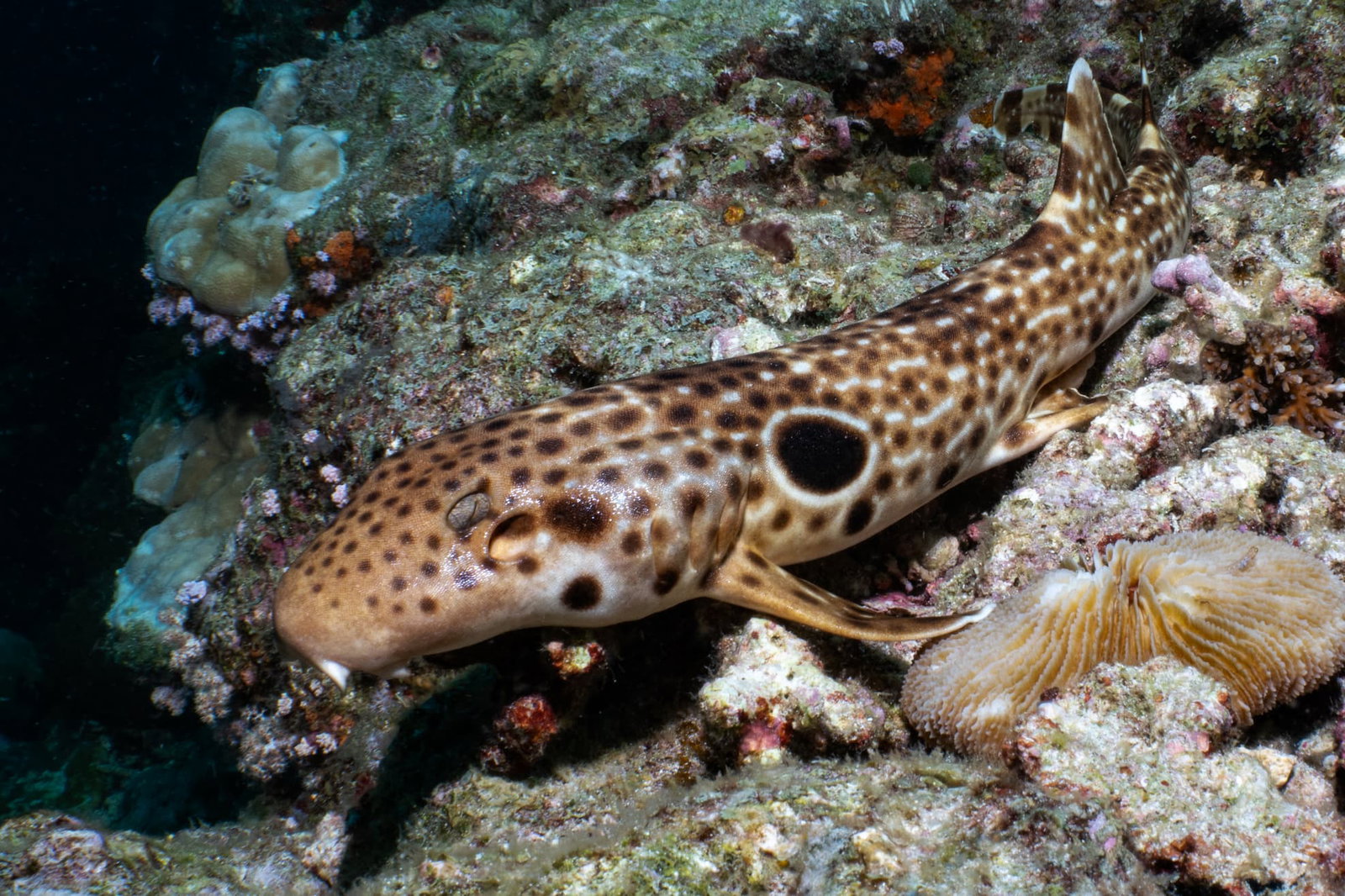
Not all sharks stick purely to swimming. Hemiscyllium dudgeonae prefers a nice stroll, thank you very much. (Photo credit: Mark Erdmann) |
|
The shark, now officially named Dudgeon’s walking shark (Hemiscyllium dudgeonae), is a nocturnal species found only in a tiny area of Milne Bay and nearby shallow waters. It was previously unknown to science.
Dr Christine Dudgeon has researched the Hemiscyllium genus – which includes Australia’s epaulette shark (Hemiscyllium ocillatum), a well-known Great Barrier Reef dweller – for more than two decades.
“New shark species don’t come along that often, and it’s most definitely the first one named after me!” Dr Dudgeon said.
|
|
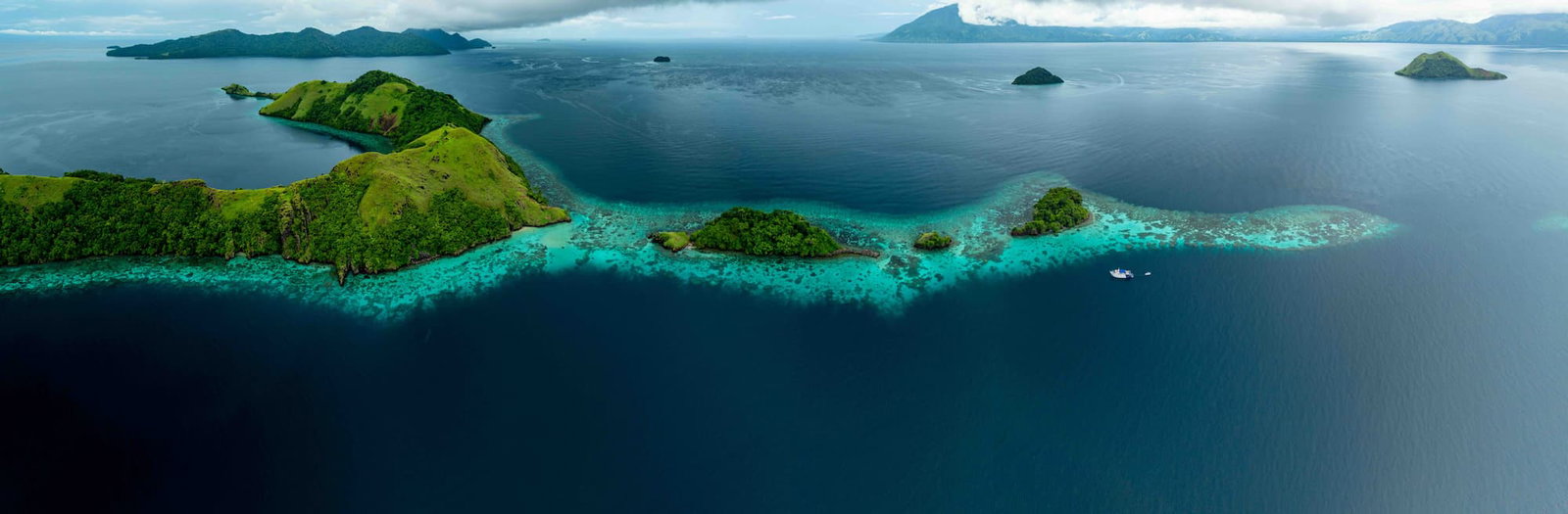
Milne Bay is about 800km from Australia in Papua New Guinea’s south-east. (Photo credit: Mark Erdmann) |
|
PhD student Jess Blakeway was the first among the University of Sunshine Coast-led research team to spot the giveaway detail when the specimen was brought aboard.
“The first thing that stood out was the white dashes along its brown body,” Ms Blakeway said. “These were quite different to the leopard-like spots we were expecting.”
Genetic analysis back in Australia confirmed what their eyes were telling them: a brand new species – the 10th in the walking shark genus, and the first described since 2013.
The species’ local name is kadedekedewa, which loosely translates to “dog shark” or “lazy shark” – a nod to its unhurried four-limbed gait across reef flats.
While news of the discovery was exciting, it also immediately raised conservation concerns.
With a restricted home range and threats from habitat loss, fishing and climate change, researchers hope to have the species assessed as Vulnerable or Endangered by the IUCN before the end of the year.
|
|
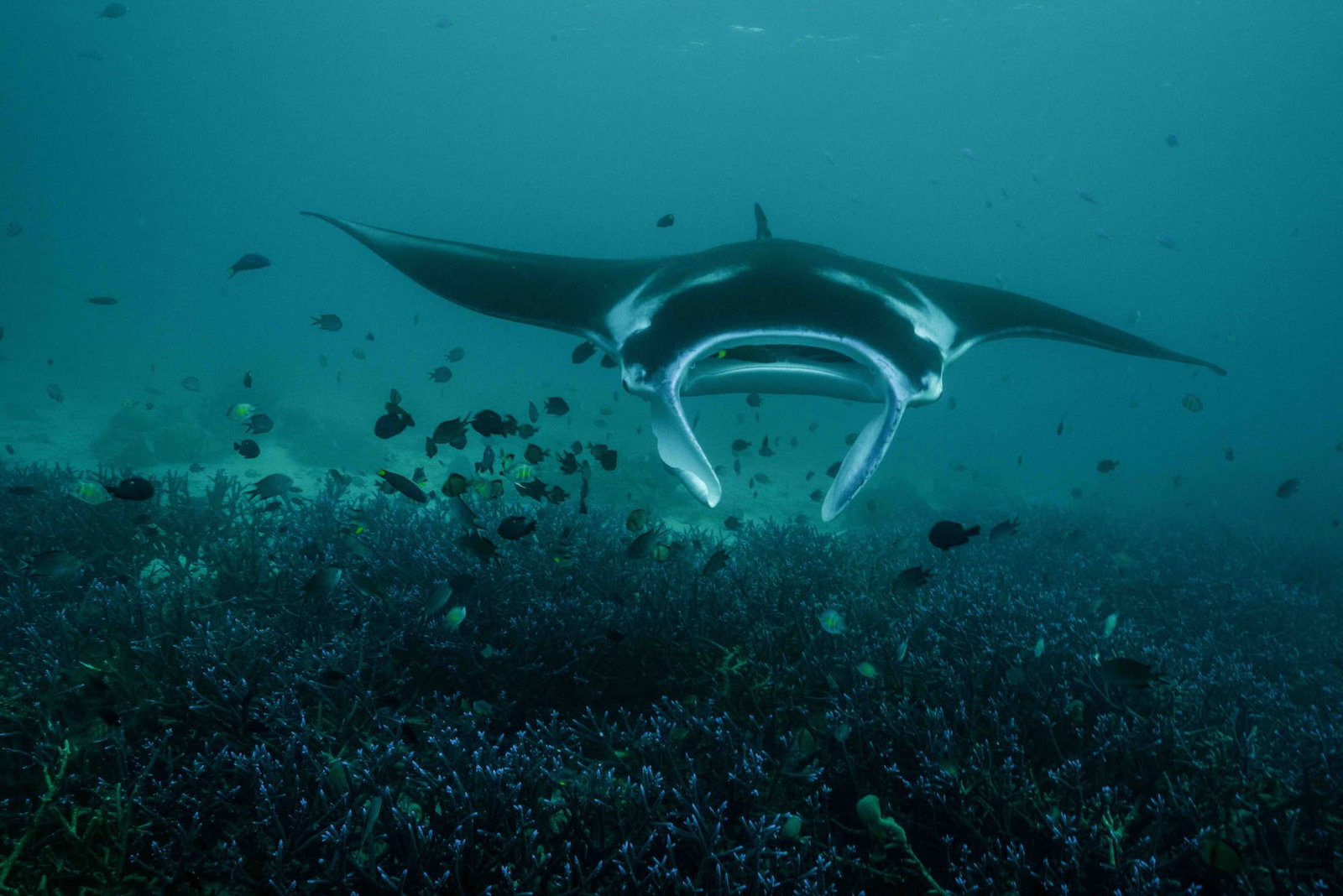
The reef manta ray: vulnerable, majestic and, apparently, a homebody at heart. (Photo credit: Mark Erdmann) |
|
MANTA RAYS RIDE OUT THE STORM BY GOING DEEPER |
|
When cyclones roll through and the ocean churns, where do manta rays go? Not far, it turns out – but much further down.
New research from the University of the Sunshine Coast has found that reef manta rays in south-eastern Papua New Guinea respond to storm events and seasonal changes not by travelling to new feeding grounds, but by diving deeper into the water column to find the tiny zooplankton they rely on.
Tracking 75 per cent of a tagged group of Mobula alfredi rays by satellite over three years, researchers found the animals stayed within 10km of their tagging site in Milne Bay despite two distinct monsoon seasons.
The furthest any individual swam was just 87km, far short of what the species is capable of.
“The data shows that the mantas expanded their vertical use of the water column rather than leaving the region to find prey,” said lead author and UniSC PhD student Anna Knochel.
The finding offers cautious hope for a species listed as vulnerable to extinction. By staying close to home rather than venturing into areas where they face greater risks from overfishing and bycatch, these mantas may be better positioned to survive.
The research also points to the Samarai Islands region as critical habitat deserving stronger protection.
|
|
NINGALOO’S SECRET INGREDIENT |
|
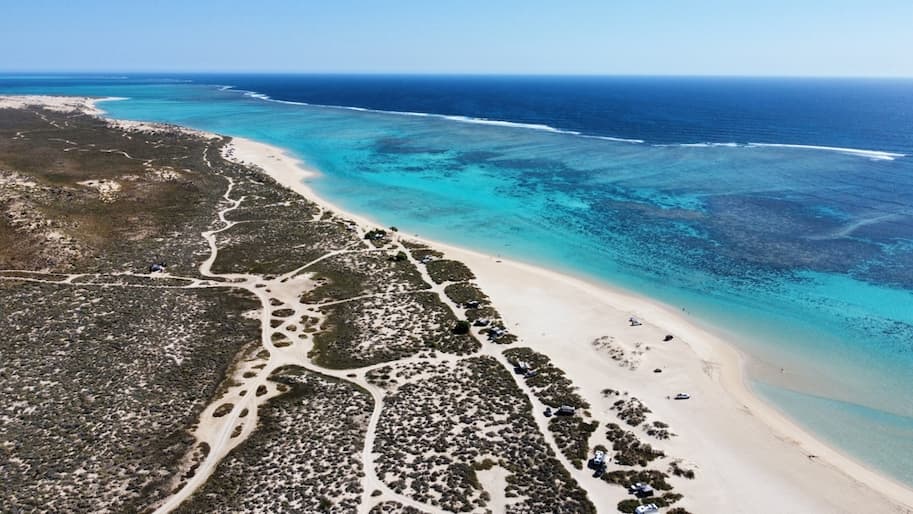
Scientists have begun mapping a hidden nutrient highway beneath the Ningaloo coast – one that may hold the key to the reef’s long-term health and its capacity to store carbon.
The Australian Institute of Marine Science (AIMS) researchers are investigating how groundwater moving from land to sea along the Ningaloo coast influences the reef’s health and its capacity for carbon storage.
|
|
The Ningaloo Coast is a spectacular UNESCO World Heritage Site off Western Australia. (Photo credit: Shutterstock) |
|
The focus is on nutrients, the invisible fuel that drives seasonal seaweed growth and which in turn can lock carbon away in the ocean floor for hundreds to thousands of years.
“We’ve been looking at the Ningaloo coast from Tantabiddi to just past Coral Bay, to assess nutrient levels in groundwater and the likelihood that these nutrients are reaching the reef,” said AIMS research scientist Dr Kay Davis.
The team found striking differences between north and south of the reef. In the north, the Cape Range National Park’s unconfined aquifer allows groundwater to flow freely to the sea. In the south, far deeper groundwater makes that exchange much harder.
Cyclone Narelle also arrived mid-fieldwork, which allowed researchers to resample sites before and after significant rainfall, offering a rare window into how extreme weather events affect groundwater chemistry.
The data will feed into the broader Blue Carbon Seascapes project, helping inform how best to protect the natural nutrient pathways that keep Ningaloo thriving.
|
|
A message from our Blue Horizons presenting partner, Coral Expeditions:
Western Australia’s shores host a rich mosaic of ecosystems. Marine sanctuaries, seagrass meadows and wildlife-rich islands thrive alongside dramatic headlands and ancient coastlines. Exploring these habitats reveals the interconnected web of life that makes this region one of Australia’s most remarkable natural frontiers.
Discover Western Australia’s remote coastline with Coral Expeditions. Explore some of the country’s most pristine and rarely visited shores across four unique itineraries ranging from 6 to 12 nights. From the turquoise waters of Ningaloo and the Abrolhos Islands to the remote Kimberley and Pilbara coasts, an extraordinary Western Australian expedition awaits.
|
|
THE LONG READ:
THE COLOSSAL SQUID WITH A CULT FOLLOWING
|
|
The world’s only complete specimen of a colossal squid – on display in New Zealand – has developed a cult-like following.
|
|
The colossal squid (Mesonychoteuthis hamiltoni) was described by scientists in 1925, based only on two large arm crowns found in the stomach of a commercially hunted sperm whale.
One hundred years later there’s still much we don’t know about this species – including its diet, lifespan, and reproductive traits.
“These animals live in an enormous, remote, dark, and three-dimensional environment – and are probably avoiding us,” explains squid expert Dr Kat Bolstad.
“Predators and scavengers, such as whales, fishes, and seabirds remain one of our best sources of information about the colossal squid.”
Bolstad is an Associate Professor of Environmental Science at Auckland University of Technology (AUT), and leader of the AUT Lab for Cephalopod Ecology and Systematics.
She also regularly collaborates with the Museum of New Zealand Te Papa Tongarewa, in Wellington.
It is there, at Te Papa, where you’ll find the world’s only whole specimen of a colossal squid on public display.
Taking centre stage within Te Papa’s Te Taiao | Nature exhibition, the squid sits preserved within a large tank, dominating the space. Nearby jars contain tentacles and even a beak of the species.
“I am biased, but I love the fact that the most popular exhibit at Te Papa is an invertebrate,” says Kerry Walton, Te Papa’s curator of invertebrates.
“This is one of nature’s most elusive creatures, so rarely seen that visitors to Te Papa are among the few in the world who get to stand face-to-face with a creature that most scientists only dream of seeing – it’s like winning the deep-sea lottery.”
|
|
We hope you enjoyed this edition of Blue Horizons, a series from Australian Geographic exploring the wonders of our oceans and the adventures they inspire. Have a story from the sea to share? Reply to this email and let us know. |
|
|
|
|