Welcome to Blue Horizons, a monthly dive into ocean news, discoveries and adventures proudly supported by Coral Expeditions, Australia’s pioneering cruise line.
|
|
Hope springs from a heat-proof reef Sea turtles get a fighting chance in Hervey Bay Ocean noise is drowning out pilot whale calls
…before plunging into the full stories below!
|
|
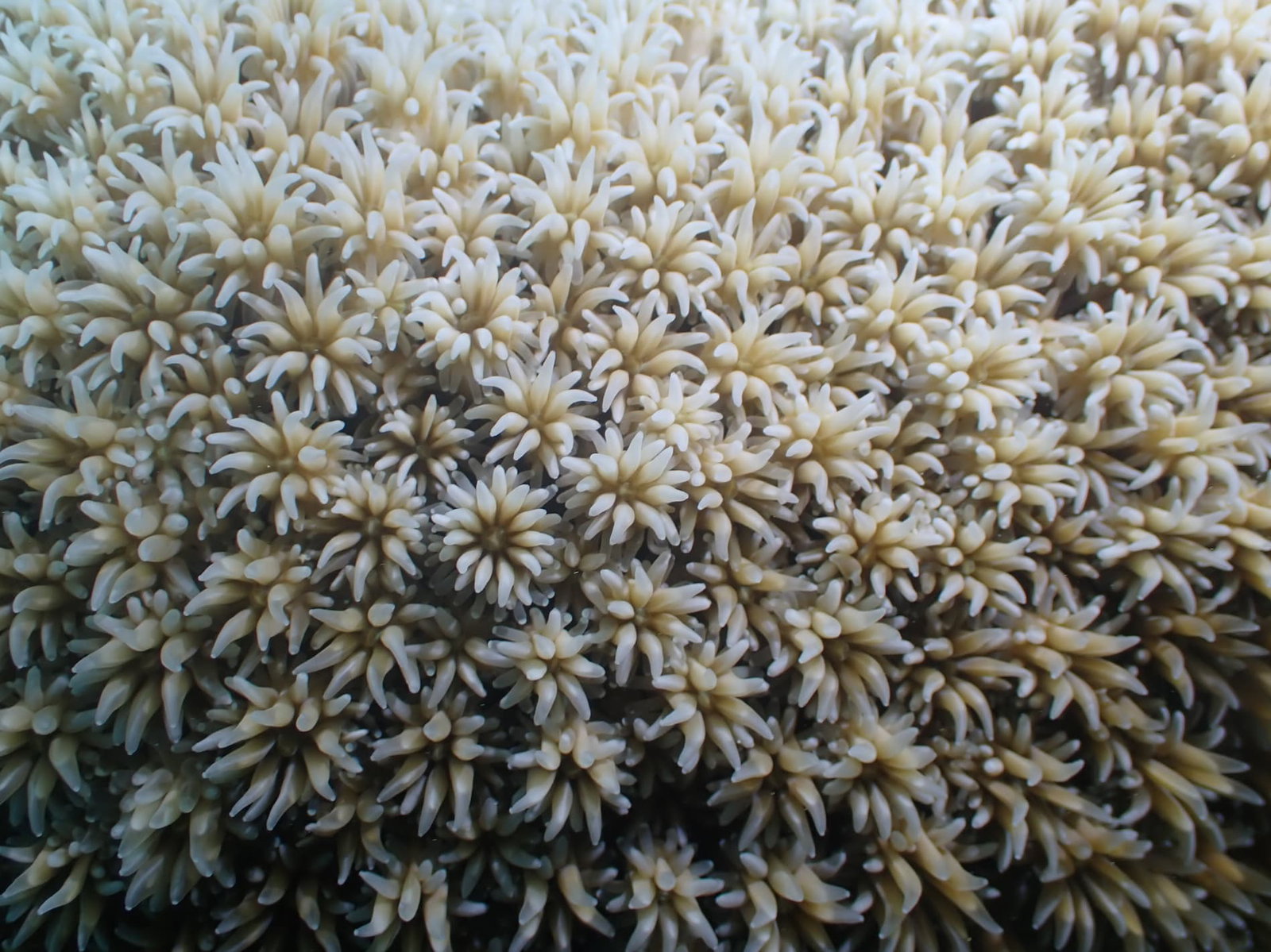
This coral (Galaxea sp.) was found on the Houtman Abrolhos Islands reefs, approximately 60–80km off the Western Australian coast. Photo credit: Andrew Baird |
|
MEET AUSTRALIA’S HEAT-PROOF REEFS |
|
While much of Western Australia's coastline was devastated by one of the worst marine heatwaves in the state’s history in 2025, one remote island group defied the odds.
Researchers from James Cook University, The University of Western Australia and Edith Cowan University have found that corals on the Houtman Abrolhos Islands – a sprawling archipelago off WA’s mid-coast – showed little to no bleaching, even as surrounding reefs “completely fried and died”.
In lab trials, the islands’ corals proved dramatically more resilient than expected: bleaching resistance was 3.7 times higher, they survived 3.8 times longer under heat stress, and their photosynthetic efficiency thresholds were up to 22 times higher than predicted.
|
|
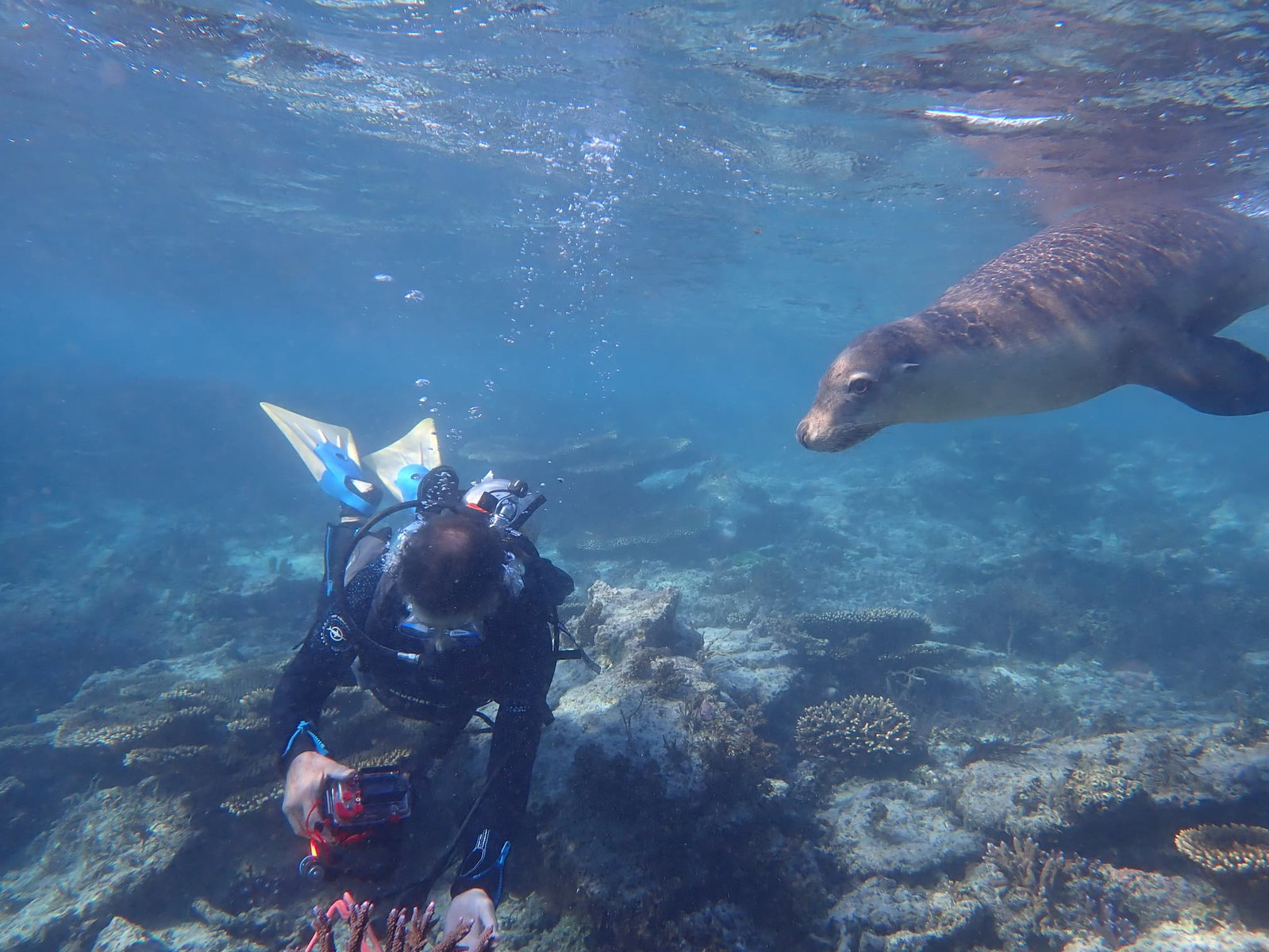
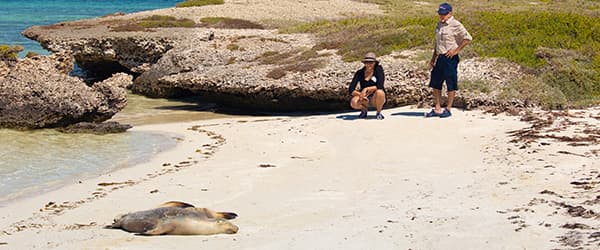
"You're gonna wanna see this!" A curious sea lion revels in the good news with researchers as they survey the Houtman Abrolhos Islands reefs, finding limited coral bleaching despite widespread extreme heat along the WA coastline. Photo credit: Charlotte Dale |
|
Scientists believe the islands’ unique position at the junction of temperate and tropical waters may be driving this extraordinary toughness.
“This marine heat wave was likely one of the worst in Western Australian history,” said lead author Dr Kate Quigley.
“But when we surveyed the HAI reefs there was really no to little sign of bleaching…it was very unexpected.”
Researchers believe fewer than 10 such refuge reefs exist worldwide. Protecting them, they say, is one of our best insurance policies against future bleaching events.
|
|
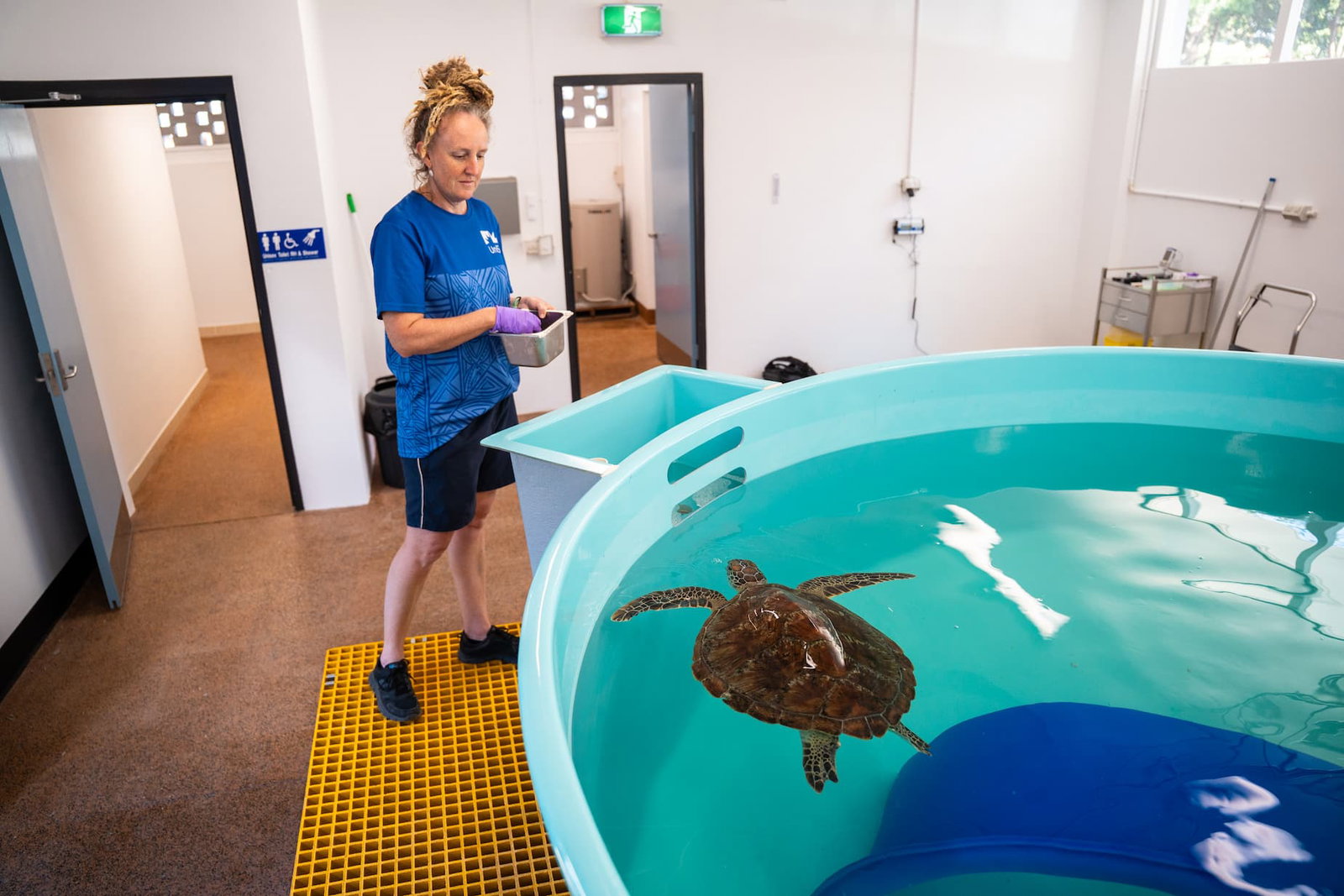
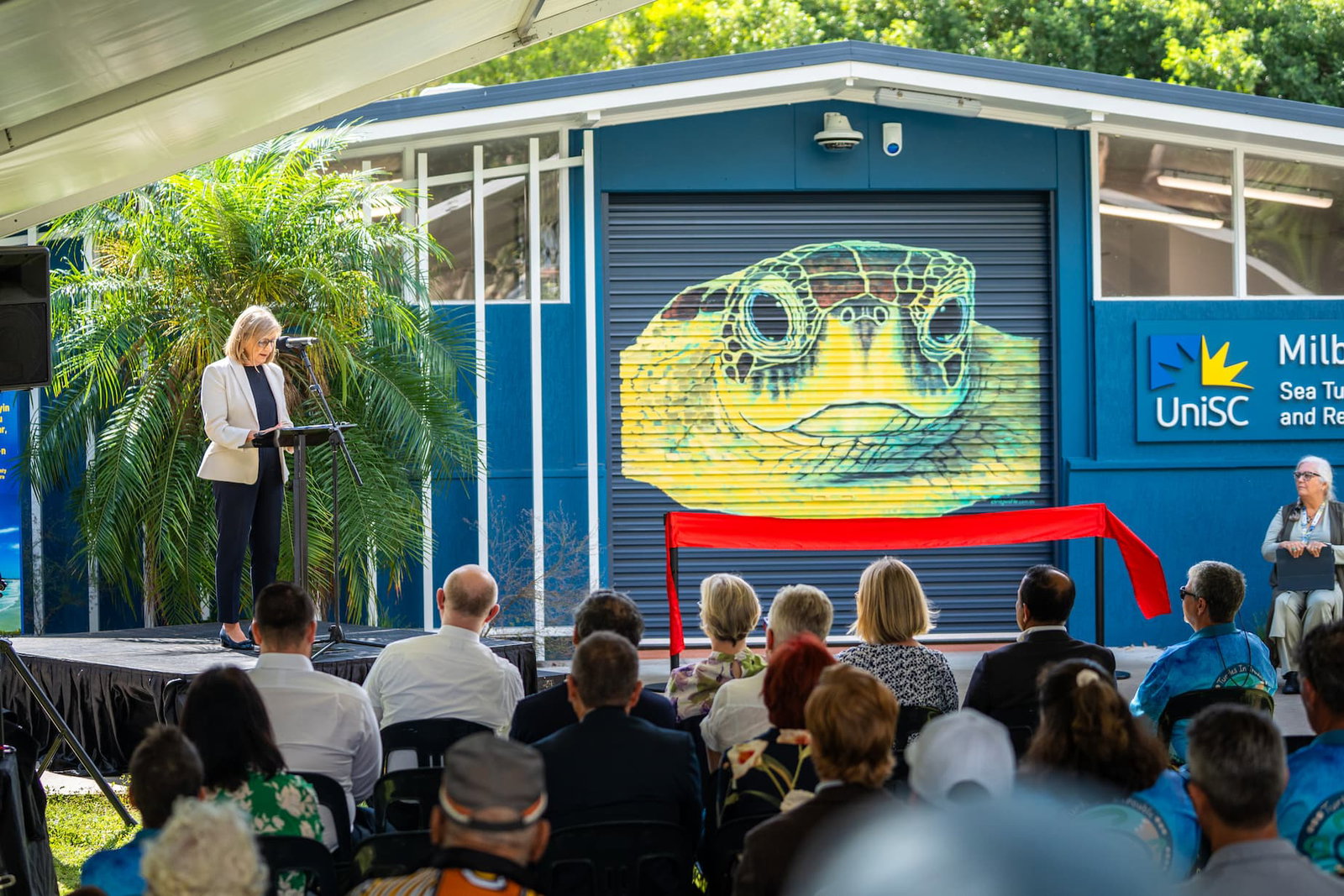
The Milbi Centre – named after the local Butchulla word for sea turtle – will give the six endangered marine turtle species found in the region a fighting chance. Photo credit: Courtesy UniSC |
|
A LIFELINE FOR SEA TURTLES |
|
Too many turtles were dying. That was the blunt assessment that led to the creation of the University of the Sunshine Coast’s Milbi Centre.
The new sea turtle rehabilitation and research facility on the Hervey Bay foreshore in Queensland welcomed its first patients in May.
Named after the Butchulla word for sea turtle, the centre will treat more than 50 turtles each year, providing around-the-clock specialist care for all six endangered marine turtle species found in the region.
Sick and injured animals will recover in indoor and outdoor tanks before being released close to where they were found – or transported to specialist hospitals on the Sunshine Coast or Gold Coast for further treatment.
But the centre is more than a hospital. Every turtle admitted becomes part of a growing body of research into disease detection, marine debris impacts, AI-based tracking and climate change. It’s knowledge that will inform turtle conservation worldwide.
“Every turtle that comes to the centre has a story, and what they tell us will contribute to better understanding the threats they face,” said lead researcher Professor Kathy Townsend.
“So while the focus is local, the impact will be global.”
|
|
UniSC Vice Chancellor and President, Professor Helen Bartlett, addresses the crowd during the opening of the Milbi Centre. Photo credit: Courtesy UniSC |
|
PILOT WHALES FIGHTING TO BE HEARD IN A SEA OF NOISE |
|
You know that feeling when you’re in a loud bar and need to shout just to have a chat with your mates? Now imagine that in your own home.
In the Strait of Gibraltar, one of the world's busiest shipping lanes, a critically endangered population of a few hundred long-finned pilot whales (Globicephala melas) are having that exact struggle.
New research has found the animals (which are actually dolphins, despite their name) are being forced to call at the upper limit of their vocal range just to communicate with each other over the relentless drone of passing cargo ships.
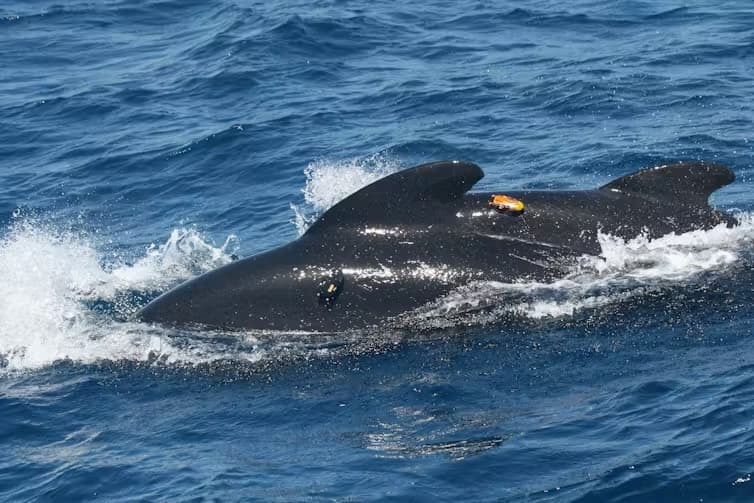
Scientists from Aarhus University attached small acoustic tags to 23 pilot whales between 2012 and 2015, recording more than 84 hours of underwater sound.
The results were striking. Calls became scarce during periods of heavy ship traffic, and when the whales did vocalise, they were calling significantly louder to compensate.
“It’s not always the visible impacts that need our attention,” said marine biologist and wildlife scientist Dr Vanessa Pirotta of Macquarie University in a recent article for The Conversation. “It might also be the impacts we can only hear.”
The implications stretch well beyond the Strait. Evidence is mounting that human-made ocean noise is stressing right whales, disrupting whale feeding behaviour and making sea turtles more vigilant.
The good news? Solutions exist.
“Thankfully, work is being done to reduce noise pollution in the ocean – from building quieter ships to rerouting ship activity, helping ship operators drive more quietly and dialling down the noise from all human activities,” Dr Pirotta said.
|
|
Two pilot whales with recorders attached swim through the Strait of Gibraltar. Photo credit: CIRCE |
|
A message from our Blue Horizons presenting partner, Coral Expeditions:
Western Australia’s shores host a rich mosaic of ecosystems. Marine sanctuaries, seagrass meadows and wildlife-rich islands thrive alongside dramatic headlands and ancient coastlines. Exploring these habitats reveals the interconnected web of life that makes this region one of Australia’s most remarkable natural frontiers.
Discover Western Australia’s remote coastline with Coral Expeditions. Explore some of the country’s most pristine and rarely visited shores across four unique itineraries ranging from 6 to 12 nights. From the turquoise waters of Ningaloo and the Abrolhos Islands to the remote Kimberley and Pilbara coasts, an extraordinary Western Australian expedition awaits.
|
|
THE LONG READ:
PLOTTING THE OCEANS
|
|
Mapping our coasts is critical for the conservation of coral reefs, atolls, mangroves, islands, estuaries, seagrass beds and beaches.
This is an edited extract of Plotting the Oceans: Stories of Powerful Maps and Their Makers by Sarah Hamylton, published by Monash University Publishing, and available now in bookstores nationally and online.
|
|
I developed a passion for mapping in my early 20s while working on a coral-reef conservation project in Fiji in 2003. What started as a three-week volunteering stint turned into an 18-month personal journey.
I had flown for two days from London to the city of Nadi on the western coastline of Fiji’s main island, where I boarded a catamaran ferry and motored past sugarcane fields out to the Mamanuca Islands, a group of 20 sandy islands fringed by coral reefs. Exclusive retreats, surf resorts, hotels and backpacker hostels had sprung up on these islands since the 1960s, and reefs were suffering where hotels had been built.
I stepped off the boat and took a swim. Clumps of thick Gracilaria algae had overgrown the reef to smother the corals, which rely on sunlight to feed. These algae are a sign that garden fertiliser nutrients are escaping into shallow waters. The growing human population was impacting the reefs.
The Ministry of Tourism were keen to establish a marine protected area covering the entire region to halt and reverse the damage before things went too far. This protected area could be subdivided into smaller zones, some earmarked for tourism fishing and diving, others afforded a higher level of protection.
But you need to know what’s there before you can conserve it. The Ministry had teamed up with Coral Cay Conservation, a London-based charity who brought volunteers to survey the reefs over five years. Thousands of underwater surveys were carried out to collect data for designing a protected area in the Mamanucas. I arrived a year after the project was launched, and worked initially as a volunteer, then later as a member of the sciences staff.
My job as a volunteer was to collect information from the underwater field surveys and map the 10,000sq.km of coral reef in the Mamanucas. This would provide a reliable foundation on which the protected zones could be established. With a dense network of diver surveys, you could pick any area within the island group and Coral Cay volunteers would have surveyed close by.
I quickly learned how to scuba dive alongside several other volunteers. Most of us had never seen a coral reef before and our assorted collection of ill-fitting wetsuits and swimming goggles showed it. With shared ideals about environmental protection and a sense of adventure, we learned to identify hundreds of fish, algae, corals and invertebrates before taking part in field mapping.
We rose early each day to complete four dives in a team, making detailed notes about the physical structure of the reef, the corals living on it, the colourful fish swimming above it and the tiny shellfish, shrimp and worms hiding in its nooks and crannies. Every evening as our scuba equipment hung out to dry for the night, we entered the information into an enormous database.
|
|
We hope you enjoyed this edition of Blue Horizons, a series from Australian Geographic exploring the wonders of our oceans and the adventures they inspire. Have a story from the sea to share? Reply to this email and let us know. If this journey inspired you, please pass it on to a friend. |
|
|
|
|