| |
|
|
| |
|
Presented By BlackRock
|
| |
|
Axios AM
|
|
By
Mike Allen
·
May 26, 2024
|
|
🍳 Good Sunday morning! Erica Pandey — [email protected] — is at the helm.
- Smart Brevity™ count: 1,187 words ... 4½ mins. Edited by Donica Phifer.
|
| |
| |
|
1 big thing: The new inflation
|
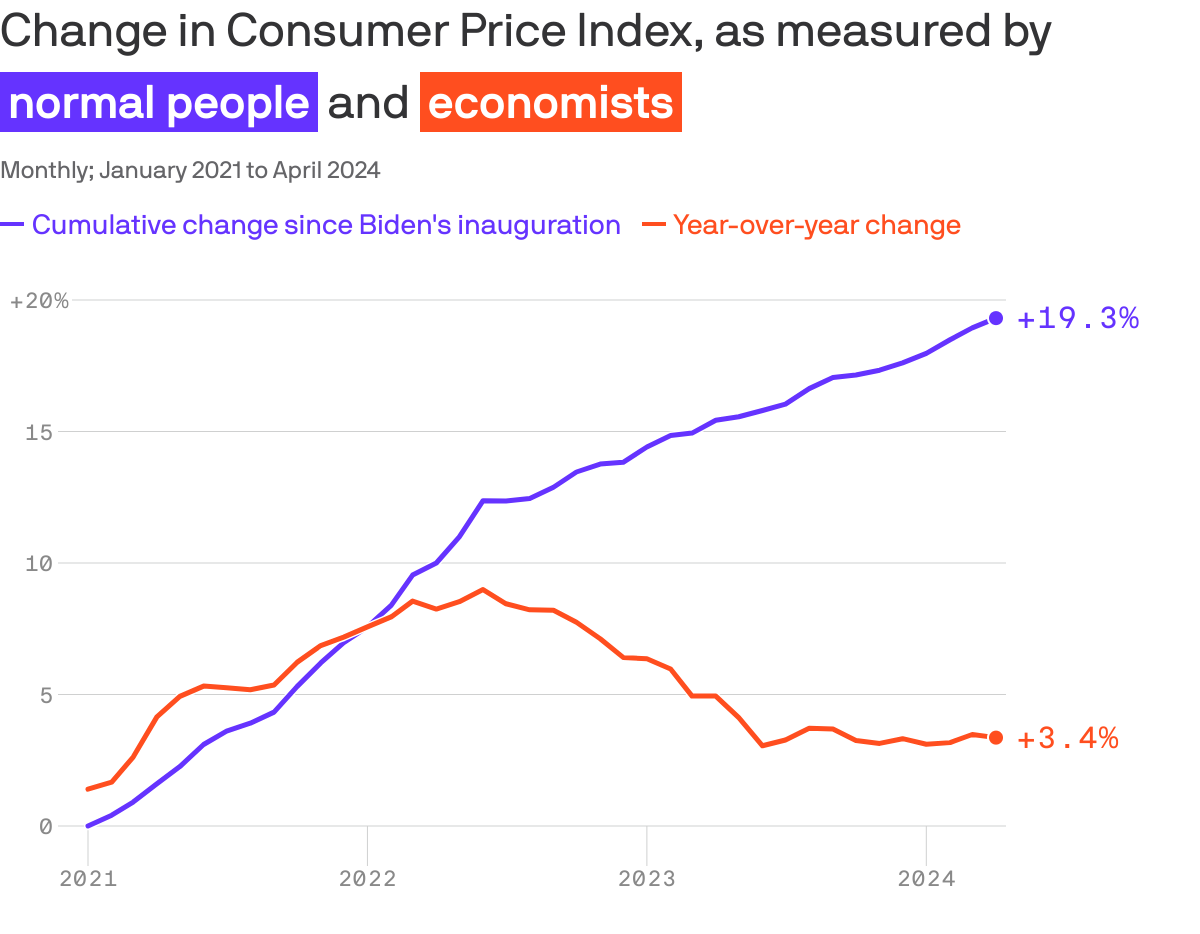 Data: BLS; Chart: Axios Visuals
The meaning of the word "inflation" has changed. It used to mean rising prices; now it means high prices.
-
Why it matters: Pedants, economists and style-guide editors might not like it. But if you want to understand what people mean when they complain about inflation, you need to understand how the vernacular has evolved over the past couple of years, Axios chief financial correspondent Felix Salmon writes.
The big picture: Inflation, at least as officially measured by the Bureau of Labor Statistics, has come down sharply from its peak of 9% in mid-2022.
-
It now stands at 3.4%, broadly in line with where it was for the quarter-century between 1983 and 2008.
💡 Reality check: The headline measure of inflation is based on something pretty arbitrary — where prices were exactly one year ago.
-
The more salient timeframe, especially in an election year, might be what has happened to prices since the pandemic, or since Joe Biden took office. In that time, prices have jumped 19.4%.
Zoom out: A more intuitive concept of inflation is just "am I paying higher prices for things than I used to."
-
Under that definition, inflation can be high even when prices are falling.
🗳️ Between the lines: This nerdy debate — the descriptivists versus the prescriptivists — has become a key driver of the 2024 presidential election campaign.
-
Voters who think that inflation is high are likely to blame Biden for it, and less likely to vote for him.
-
When Biden administration staffers push back by saying that inflation isn't high, they risk being seen as out of touch.
Share this story.
|


|
| |
| |
|
2. 🔎 Trump's new policy wonks
|
|
|
|
Illustration: Shoshana Gordon/Axios
|
| |
|
Donald Trump now has the most detailed policy platform of his political career, and it's largely the work of two people you've never heard of, Axios' Sophia Cai writes.
-
The big picture: Trump campaign speechwriters Vince Haley and Ross Worthington are the masterminds behind most of Trump's policy statements. The two worked under Stephen Miller in the Trump White House and former House Speaker Newt Gingrich's 2012 presidential campaign.
📝 Zoom in: Haley and Worthington write the first drafts of scripts Trump uses to record policy videos, as well as the text on how a second Trump administration would handle issues from education to energy and immigration.
-
Haley and Worthington co-managed the speechwriting shop in the White House for four years.
-
Though they have next to no public presence, they are known to be very chatty on the campaign's daily internal comms call.
-
While Miller isn't technically on the campaign, his relationship with his former subordinates and his direct line to Trump allow him to maintain a consequential role in shaping a potential Trump second term.
Share this story.
|
|
|
| |
| |
|
3. 🎒 Charted: Not enough counselors
|
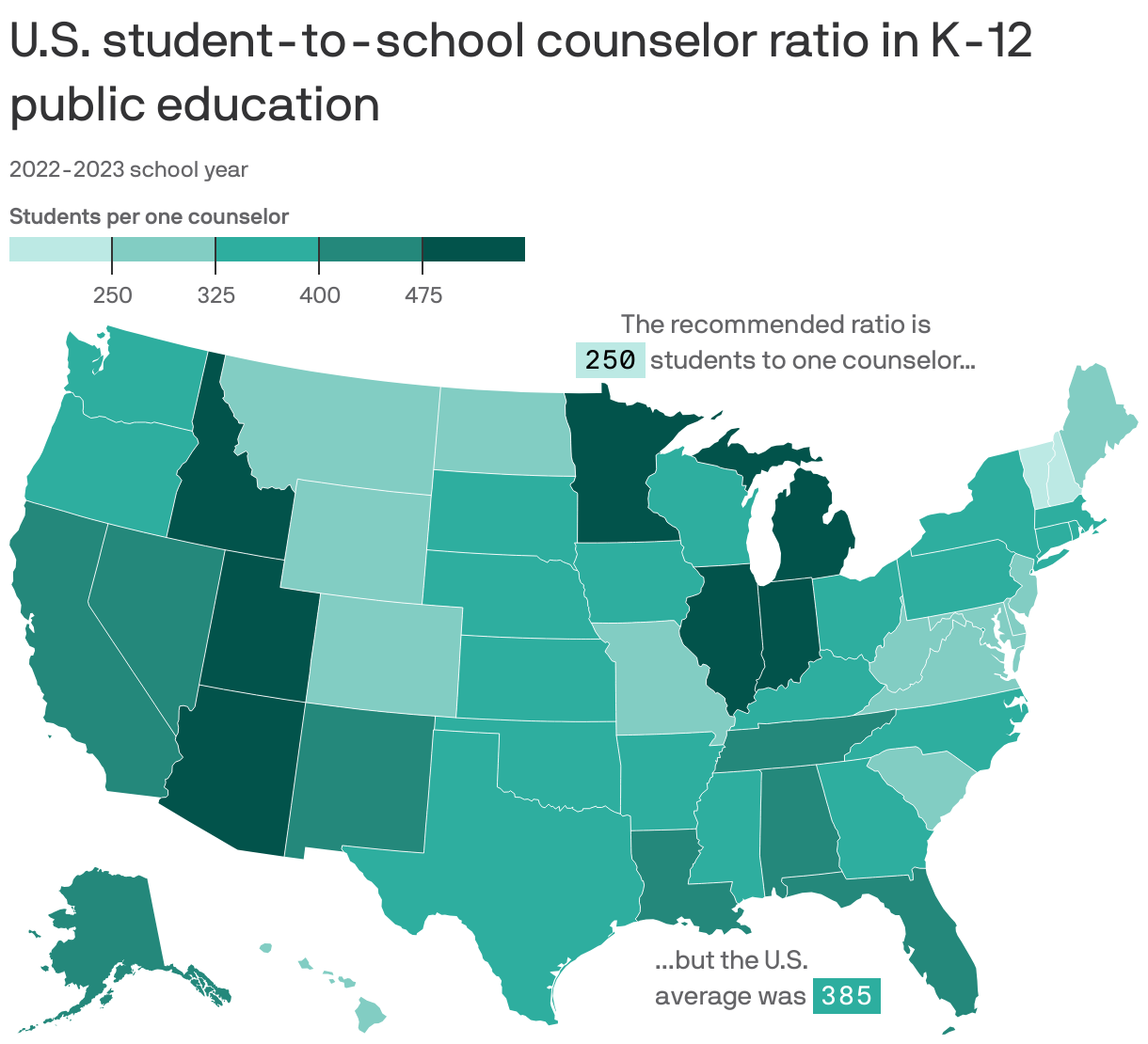 Data: American School Counselor Association. Map: Tory Lysik/Axios Visuals Schools across America are facing a critical — and growing — shortage of counselors amid a child and teen mental health crisis.
-
State of play: Arizona had the worst student-to-school counselor ratio in the nation — 667-to-1 during the 2022-2023 school year, Axios' Russell Contreras writes from American School Counselor Association data.
-
That's more than double the American School Counselor Association's suggested ratio of 250-to-1.
Michigan had the second-highest ratio (598), followed by Minnesota (544), Indiana (519) and Illinois (501).
-
Around 8 million U.S. students lack access to a counselor.
Between the lines: The disparity of school counselor access disproportionately hurts students of color seeking mental health support or advice in applying to college in a post-affirmative action world.
|
|
|
| |
| |
|
A message from BlackRock
|
|
BlackRock is invested in the future of teachers like Brian
|
| |
![]()
|
| |
|
BlackRock is proud to help manage the retirement plan assets for roughly half of public school teachers in the U.S.
We are committed to helping teachers like Brian achieve financial well-being so that he can focus on what matters most — his students.
Watch his story.
|
| |
| |
|
4. 🇺🇸 Field of flags
|
|
Photo: Joseph Prezioso/AFP via Getty Images
Eric Teo Lopez, 16, of the Fitchburg ROTC program works to replace damaged U.S. flags as he stands in a field of some 37,000 flags in Boston Common yesterday.
-
Each flag represents a Massachusetts service member who died defending the country, from the Revolutionary War until today.
|
|
|
| |
| |
|
5. 🌱 AI demystifies plants
|

|
|
|
Illustration: Aïda Amer/Axios
|
| |
|
The latest AI tools are uncovering the secret life of plants and giving us insights that could help farmers plan for a far different future, Axios managing editor Alison Snyder writes.
-
Why it matters: A growing global population needs to be fed using less land — all under the pressures of degrading soil, pests, disease and climate change.
🍇 New technology is allowing researchers to unravel the inner workings of plant biology that were previously hidden in a complex web of molecular interactions.
-
One paper found the structures of less than 2% of the proteins in plant biology's model species, Arabidopsis thaliana, were known. Compare that to about 10 times as many for human proteins. AlphaFold, an AI, bumped that coverage of the plant's proteins to more than 60%.
-
Researchers at the University of Kentucky reported using machine learning algorithms to predict the genetic makeup of a grapevine from the microbiome of the soil. They could, for instance, tell whether a vine was shiraz or cabernet sauvignon.
Read on.
|
|
|
| |
| |
|
6. 🎥 Acclaimed documentary pulled
|
|
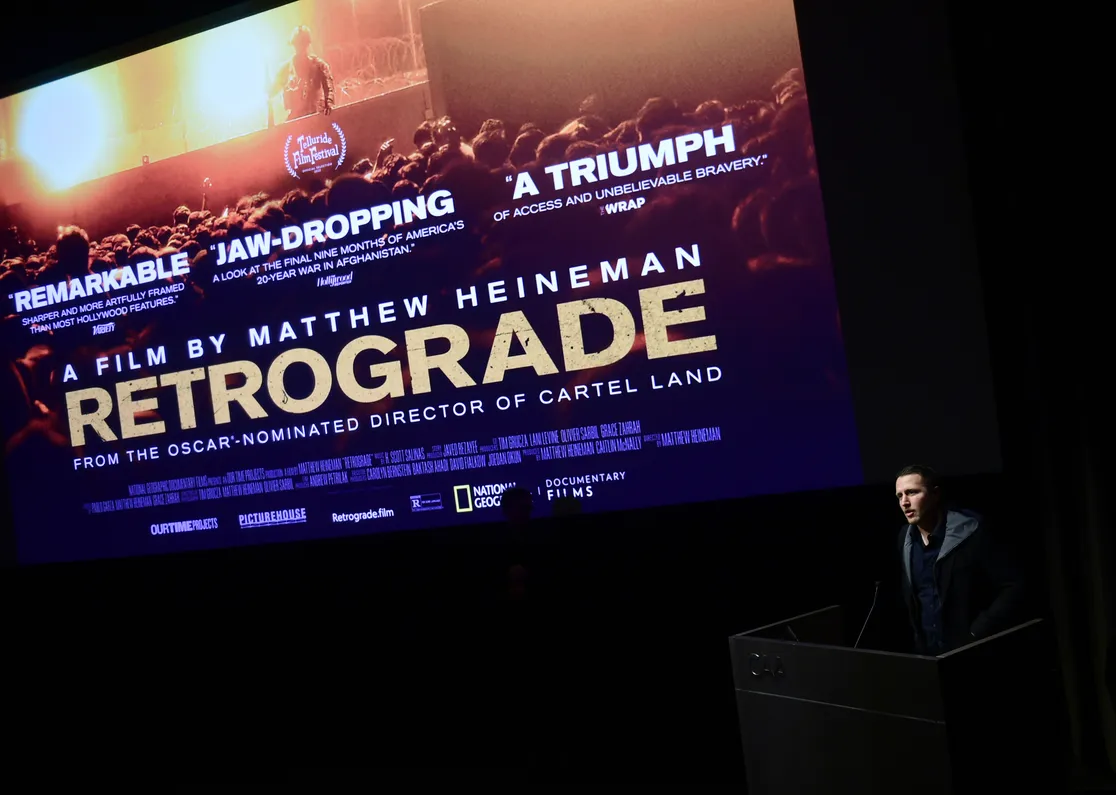
"Retrograde" director Matthew Heineman speaks at the documentary's L.A. screening in Jan. 2023. Photo: Vivien Killilea/Getty Images for Disney+
Before the release of "Retrograde," an Emmy-winning National Geographic documentary, in December 2022, multiple people say they warned the film's director and producer.
-
They had concerns about including close-ups of Afghan contractors who had worked for U.S. troops as interpreters and bomb-clearers before Afghanistan fell to the Taliban, The Washington Post reports in a stunning deep dive.
-
The shots were kept in the film, and after the film's release, one of the men shown in the film was captured and killed by the Taliban.
The stakes: Thousands of Afghans who helped U.S. troops live in constant danger after America's withdrawal.
-
At least eight more of them were identified in "Retrograde."
The big picture: "The death raises thorny questions about the responsibilities of journalists and documentarians, particularly in conflict zones, who are faced with the difficult task of balancing the desire to tell complete and compelling stories with the potential dangers their work might create for subjects," The Post reports.
-
The latest: After the Post inquired whether the decision to show faces may have put the film's subjects in danger, National Geographic removed "Retrograde" from all platforms.
|
|
|
| |
| |
|
7. 🇨🇳 Gun-toting robot dog
|
|
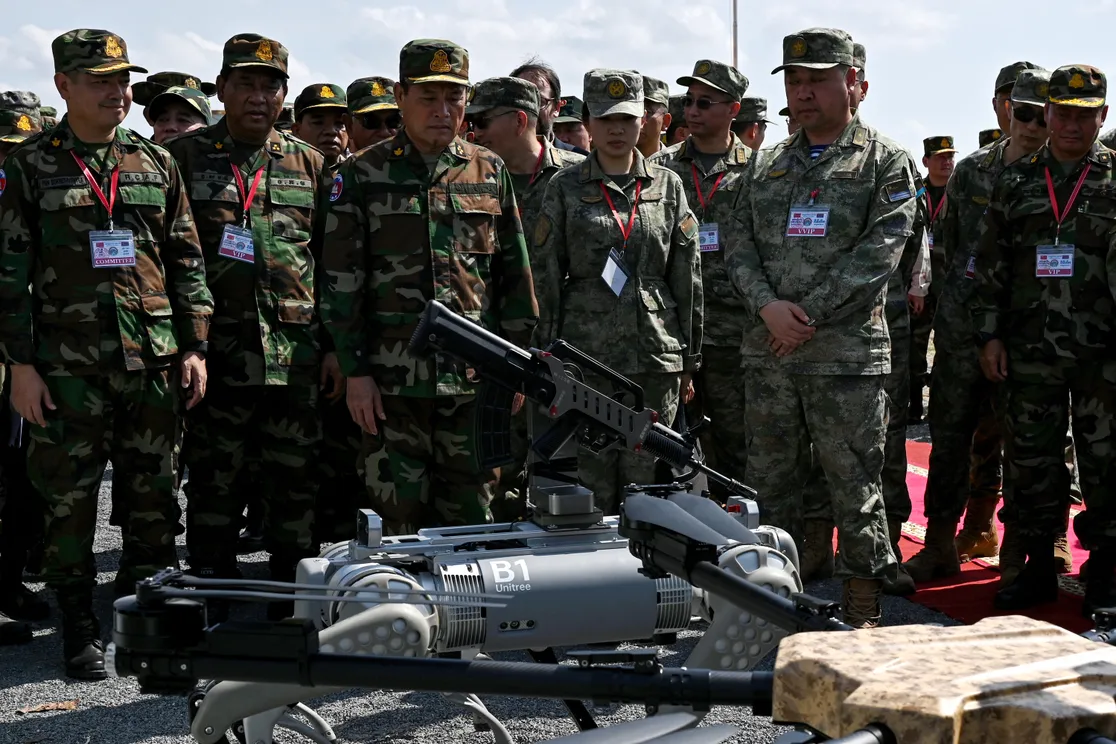
Chinese and Cambodian officials observe a demo of the robo-dog. Photo: Tang Chhin Sothy/AFP via Getty Images
China flaunted a robot dog strapped with a gun during its largest-ever military exercise with Cambodia, producing images reminiscent of dystopian movies.
-
Why it matters: China and the U.S. are racing to dominate robotics and other smart machinery. Defense officials from both countries believe unmanned technologies will be decisive in future wars, Axios' Colin Demarest writes.
⚡ Catch up quick: The U.S. Marine Corps last year tested a rocket launcher on the back of what it called a robotic goat.
-
Mechanical versions of man's best friend made by Ghost Robotics were used in an exercise at Nellis Air Force Base, Nevada, in 2020.
What's next: These machines are expected to become increasingly common on the battlefield. They can schlep supplies, scout dangerous areas, act as decoys and more.
🚀 Axios will launch a weekly newsletter this summer diving into the trends upending warfare. Sign up for our Future of Defense newsletter here.
|
|
|
| |
| |
|
8. ⚾ Parting shot!
|
|
Photo: Adriana Schellhaas
A rainbow stretches over Pittsburgh during a Pirates vs. Braves game yesterday in this photo snapped by reader Adriana Schellhaas of Alexandria, Va.
|
|
|
| |
| |
|
A message from BlackRock
|
|
How BlackRock is helping to create better retirements
|
| |
![]()
|
| |
|
At BlackRock, we're helping American workers spend with more confidence in retirement.
What you need to know: Anne Ackerley, Head of BlackRock’s Retirement Group, shares how BlackRock is helping to improve retirement security and turn their retirement savings into income.
Learn more.
|
| |
|
📬 Was AM forwarded to you? Get your own here.
|

|
Your essential communications — to staff, clients and other stakeholders — can have the same style. Axios HQ, a powerful platform, will help you do it. |
|
|