| |
|
|
| |
|
|
| |
|
Axios Future of Mobility
|
|
By
Joann Muller
·
Feb 11, 2026
|
|
🐪 It's hump day! Today, we're examining how two big companies, Uber and Ford, are navigating the fast-changing dynamics in transportation.
All in 1,670 words, a 6½-minute read.
|
| |
| |
|
1 big thing: Why Uber is bullish on AVs
|
| |
|
|
|
Illustration: Aïda Amer/Axios
|
| |
|
Uber's CEO says the introduction of robotaxis will be good for its business, not the death knell that some investors fear.
Why it matters: Fifteen years ago, Uber was transportation's Great Disruptor. Now the ride-hailing company itself is in danger of losing ground to competitors like Waymo and Tesla as robotaxis expand across America.
Threat level: Waymo just raised $16 billion to accelerate its global growth, while Tesla CEO Elon Musk says its robotaxis will be widespread in the U.S. by the end of 2026.
- If the two AV leaders bypass Uber to run their own robotaxi networks, Uber risks being cut out of the value chain, says AV strategist Grayson Brulte, author of The Road to Autonomy newsletter.
The big picture: Uber's superpower, CEO Dara Khosrowshahi argues, is the efficiency of its global network — something standalone AV companies lack.
- He's positioning Uber as an "indispensable demand layer," Brulte notes, with the company hoping to become the world's largest facilitator of AV trips by 2029.
Driving the news: Khosrowshahi spent a big chunk of the company's recent fourth-quarter earnings call defending its AV strategy, which involves a mix of human drivers and robotaxi partners operating on its network.
- "AVs fundamentally amplify the strengths of our platform," Khosrowshahi told investors: "global scale, deep demand density, sophisticated marketplace technology, and decades of experience matching riders, drivers and vehicles, all in real time," he said.
The intrigue: Early data suggests Uber's ride-hailing demand is expanding, not shrinking, in cities where AVs operate, Khosrowshahi said — even in places where they're not yet available on Uber's network.
- As vehicle supply increases across ride-share, trips become more affordable with shorter wait times, he said. This improved experience has drawn in new customers and led to existing riders taking more trips.
- "The history of ridesharing has always been supply-led," Khosrowshahi told investors. "With the benefit of learning from multiple AV deployments around the world, we're more convinced than ever that AVs will unlock a multitrillion-dollar opportunity for Uber."
Zoom in: Uber says its hybrid platform strategy — human drivers and AVs on the same platform — is the most efficient way to capitalize on that opportunity, in light of fluctuating ride demand.
- Robotaxis provide a consistent baseline supply of vehicles, while human drivers handle demand spikes at certain times of day, on weekends or during big events, for example.
- During slow times, Uber can even redirect AVs to deliver food for UberEats.
- Standalone robotaxi networks like Tesla and Waymo don't have that flexibility, Uber says.
Follow the money: Robotaxi economics depend on high utilization rates.
- Too many AVs sitting idle, waiting for rides, is costly for fleet owners — and yet not enough AVs means missed revenue and unhappy customers.
- In Austin, Texas, and Atlanta, where Waymo robotaxis operate on Uber's network alongside human drivers, Uber reported 30% more trips per vehicle per day and 25% shorter wait times compared with robotaxi-only platforms.
Viewing the competitive landscape, Uber is preparing for a world with a multitude of AV suppliers to fill up its network.
- Today, it has more than 20 AV partners providing rides, delivery and freight services on its platform globally.
- In the U.S., Uber offers robotaxi options in Atlanta, Austin, Dallas and Phoenix, with more markets and multiple partners to come.
- In the Middle East and Europe, it's deploying AVs mostly with Chinese partners, including Baidu, WeRide and Pony.ai.
- Just this week, Uber announced Baidu's Apollo Go taxis will be fully driverless in an affluent section of Dubai starting in March.
The bottom line: Robotaxi technology has arrived. Now, it's a battle for network control.
|


|
| |
| |
|
2. How robotaxis might roll out on Uber
|
| |
|
|
|
Illustration: Aïda Amer/Axios
|
| |
|
A flurry of AV announcements, mostly from Waymo, would lead you to believe robotaxis are everywhere.
Reality check: AV trips account for just 0.1% of all rideshare trips globally, according to Uber, which says driverless rides will remain a tiny portion of the market for many years.
Here's how Uber sees robotaxis developing on its network over time:
-
Phase 1: Establish a foothold. A baseline supply of robotaxis available alongside human drivers in major cities. This is where Uber is today, in seven markets. By year-end, the company expects AVs on its platform in 15 cities globally.
-
Phase 2: Scale in dense metros. Over the next five to 10 years, as technology costs fall, robotaxis expand in urban cores where demand is concentrated and regulations allow. Human drivers still fill gaps and serve suburbs.
-
Phase 3: AV-heavy markets. In the long run, robotaxis could provide the majority of rides in select cities — though executives caution that mass production and regulatory shifts remain years away.
- "Eventually, in the very long term, we can think about a majority of supply coming from AVs in certain markets. But that future is far, far away, given where the OEMs are on their production ramp curves," Balaji Krishnamurthy, Uber's vice president of strategic finance, told shareholders.
What to watch: To accelerate AV deployment, Uber struck deals recently to buy at least 20,000 robotaxis from Lucid and Nuro, and another 25,000 robotaxis powered by Waabi.
|
|
|
| |
| |
|
3. Ford's new spending plan
|
| |
|
|
|
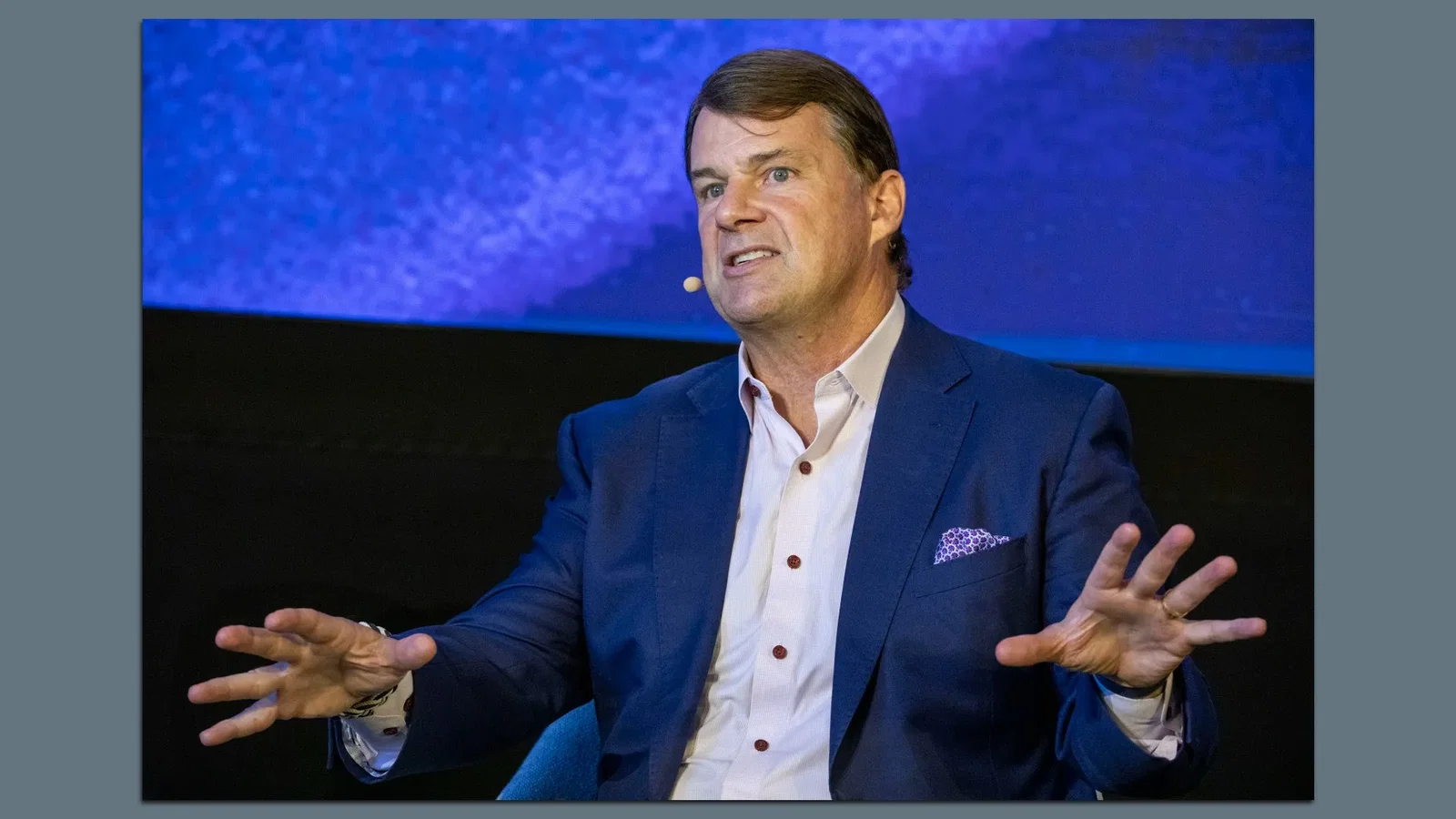
Ford CEO Jim Farley. Photo: Bill Pugliano/Getty Images
|
| |
|
Ford is taking another big swing at the future after writing down $19.5 billion in planned electric vehicle investments, but this time it's doing it with the help of partners and a tighter rein on costs.
Why it matters: Policy changes in Washington, along with lower-than-expected EV demand, left Ford and other carmakers with billions of dollars in wasted EV investments.
- Now, as Ford prepares its next generation of EVs, hybrids and automated driving tech, it's tightening capital discipline to avoid throwing good money after bad.
Driving the news: "I think the customer has spoken. That's the punch line," CEO Jim Farley said during an analyst call after Ford announced an $11.1 billion net loss for the quarter.
- Asked how its spending priorities will differ in the future, Farley said Ford will rely on partnerships where it makes sense and disciplined investments in technologies and segments where it can lead.
- He said Ford would "cherry-pick" electrification technologies around the world to suit each market.
In the U.S., Ford is betting on a new low-cost EV platform that will underpin a variety of high-volume models in the $35,000 range, starting with a mid-sized pickup truck.
- "Tesla has shown that we can make money in that market even without subsidy from the government at the right cost level," said Farley.
- It's also adding more hybrids and introducing better-performing extended-range electric powertrains (EREV) in its largest trucks and SUVs.
Overseas, Ford is leaning on partners to lower its product development costs.
- "We're looking for ways to help us move faster to get access to IP that will eventually become commoditized, and to lower our capital expenditures and improve our scale," he said.
- In Europe, for example, Ford is launching two small, affordable EVs based on a Renault platform, avoiding massive upfront investment.
- It also reportedly held talks with China's Xiaomi and BYD about collaborating on electric vehicles. It's already licensing battery technology from a Chinese partner.
When it comes to automated-driving investments, Ford says it can save money developing those technologies in-house.
- That's how Ford can afford to put so-called Level 3 automation (eyes-off, hands-off) on its upcoming entry-level EVs, he said.
The intrigue: Ford's Level 4 strategy (full automation) could differ, said Farley, but added "I'm not going to go into that today," suggesting more partnerships could be ahead.
- He's teased before that Ford might license technology from another company.
|
|
|
| |
| |
|
A MESSAGE FROM AXIOS
|
|
The media intelligence leaders need in 2026
|
| |

|
| |
|
The media industry is resetting — fast.
Media Trends Executive gives decision-makers the signal behind the noise, from AI-led disruption to platform and policy shifts. If staying ahead matters in 2026, this is essential reading.
Become a Media Trends Executive member to unlock all the insights.
|
| |
| |
|
4. Drive-thru
|
| |
|
|
|
Illustration: Brendan Lynch/Axios
|
| |
|
🚧 Elon Musk's Boring Co. is about to embark on its most ambitious tunneling project yet in Nashville, but critics worry the company is woefully underprepared. Says the mayor: Hopefully, "no one dies." — (Bloomberg)
🇺🇸 🇲🇽 🇨🇦 President Trump is privately musing about exiting the U.S.-Mexico-Canada trade pact, injecting further uncertainty into upcoming renegotiations. Automakers say USMCA is critical to their business. (Bloomberg)
- 🏒 Meanwhile, Trump is threatening to block the opening of the new Gordie Howe International Bridge between the U.S. and Canada, which would be a blow to the auto industry. (Axios Detroit)
🔥 A key aluminum plant damaged by two fires last year won't reopen until sometime this summer, costing Ford an extra $1 billion as it continues importing heavily tariffed aluminum for F-150 pickups. Ford already took a $2 billion hit from the fires in 2025. (Wall Street Journal)
|
|
|
| |
| |
|
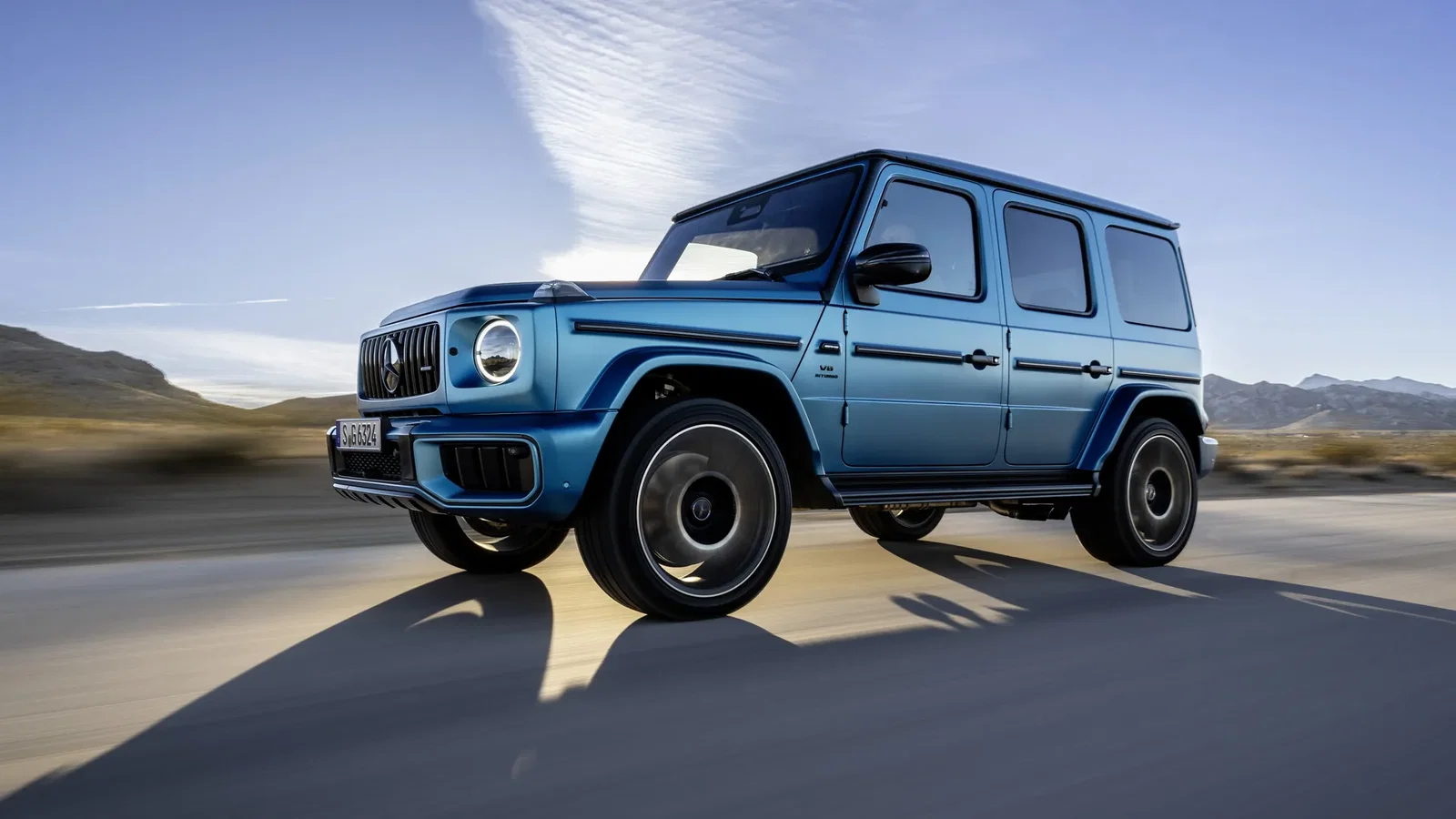
5. What I'm driving: 2025 Mercedes AMG G 63
|
| |
|
|
|
2025 Mercedes AMG G-63. Photo: Courtesy of Mercedes-Benz
|
| |
|
I know the Mercedes-Benz G 63 is an automotive icon, its square design barely changed from the 1970s-era Geländewagen (or G Wagen).
- And I get that it's become a status symbol for the country club set.
- I just don't get it.
The G63 is big on the outside, but cramped on the inside. It's nearly impossible to get in and out of. Visibility out the rear window is terrible because of the placement of the spare tire. And it's so tall it barely fit in my garage.
- The doors have old-fashioned latches that require extra effort to open and shut, and the sound of the automatic door locks as I shifted into gear was like fingers on a blackboard to me.
And why does a tall, boxy SUV need a high-performance, track-ready AMG package that allows it to go 0-60 in 4 seconds?
- It's silly, really, and yet the AMG version has been the most popular model for years, despite its $186,000 starting price.
The AMG model I drove had a sticker price of $211,000, once you added various options, including fancier wheels and an upgraded interior.
I have to admit driving the Mercedes AMG G63 was surprisingly comfortable, though, thanks to its new adaptive suspension that softened the impact of Michigan's winter potholes.
The bottom line: I'd pay $211,000 for a house, but not for a car.
I test-drive vehicles in my role as a juror for the North American Car and Truck of the Year awards. Opinions are my own.
|
|
|
| |
| |
|
A MESSAGE FROM AXIOS
|
|
Your Media Edge for the Year Ahead
|
| |
|
|
| |
|
Media is in a moment of rapid evolution. Ad models are evolving, platforms are recalibrating, and AI is accelerating everything.
Media Trends Executive, curated by award-winning Axios senior media correspondent Sara Fischer and Kerry Flynn, delivers the forward-looking insights leaders rely on to plan, pivot, and move faster than competitors — all year long.
Stay ahead with a Media Trends Executive membership.
|
| |
|
Thanks to Pete Gannon and Bill Kole for editing. Tell your friends to sign up for Axios Future of Mobility!
|

|
It's called Smart Brevity®. Bring it to your org — via hands-on training or internal comms software — to harness its power and impact. |
|
|
|