|
|
Good morning!
A key found in a hotel room. A rule that says give it away. A business model built on belief rather than efficiency.
Today’s story isn’t about optimizing. It’s about meaning—and what happens when your customers don’t just buy, they believe.
Let’s unlock it.
Chad Sakonchick, founder of BetterLegal
|
|
|
|
The Key to Belief
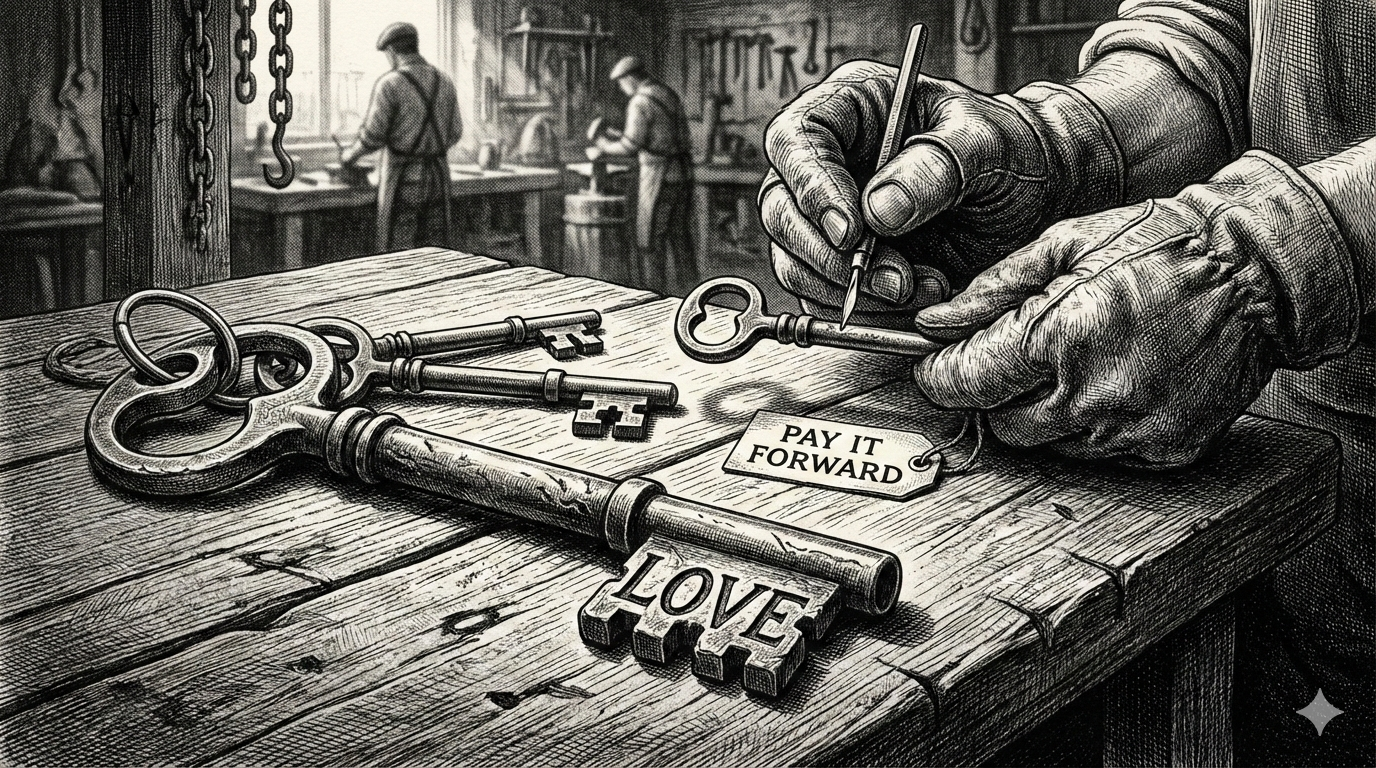
In 2008, Caitlin Crosby, a touring musician, picked up a metal hotel key in New York City. Most would’ve tossed it—it was outdated, obsolete. Crosby, however, saw something else: potential. She had a locksmith engrave a word—“LOVE”—onto the key, turning it from a forgotten object into a symbol. What followed was a journey that transformed not only how jewelry could be sold but what it could stand for.
That key became the cornerstone of The Giving Keys, a jewelry brand built not just on brass and chains, but on belief. It was born at a time when consumers, reeling from the financial crisis, craved meaning over luxury. Crosby sold the keys at her concerts, each engraved with words like “COURAGE,” “STRENGTH,” or “HOPE.” But the innovation wasn’t just aesthetic—it was social.
|
|
|
|
|
After meeting a homeless couple in Los Angeles, one of whom had experience making jewelry, Crosby hired them to engrave the keys. The company was reborn: now a business that employed people transitioning out of homelessness, transforming discarded keys into wearable totems of resilience and purpose.
Critics scoffed. Hiring individuals with unstable housing, trauma, or addiction histories introduced obvious risks. Supply chains relied on inconsistent materials. Customers were encouraged to give away the product once it had served its purpose—breaking every rule of repeat retail. But Crosby wasn’t building a typical brand. She was building a belief system.
To scale responsibly, The Giving Keys partnered with Chrysalis, a nonprofit that provided social support and job-readiness training. By 2017, they had provided more than 130 transitional jobs, with many employees "graduating" to stable, long-term employment.
Their “Pay It Forward” model—wear the key, absorb its message, then give it to someone who needs it more—turned a product into a story and a customer into a missionary. Each gift created a marketing moment far more powerful than a paid ad. This wasn't a jewelry brand that went viral despite its inefficiencies—it went viral because of them.
Crosby turned every risk—unstable labor, inconsistent inventory, unusual marketing—into her moat. The Giving Keys proved that when a mission is inseparable from your product, customers don’t just buy. They believe.
|
|
|
|
FOR YOUR TOOL BELT
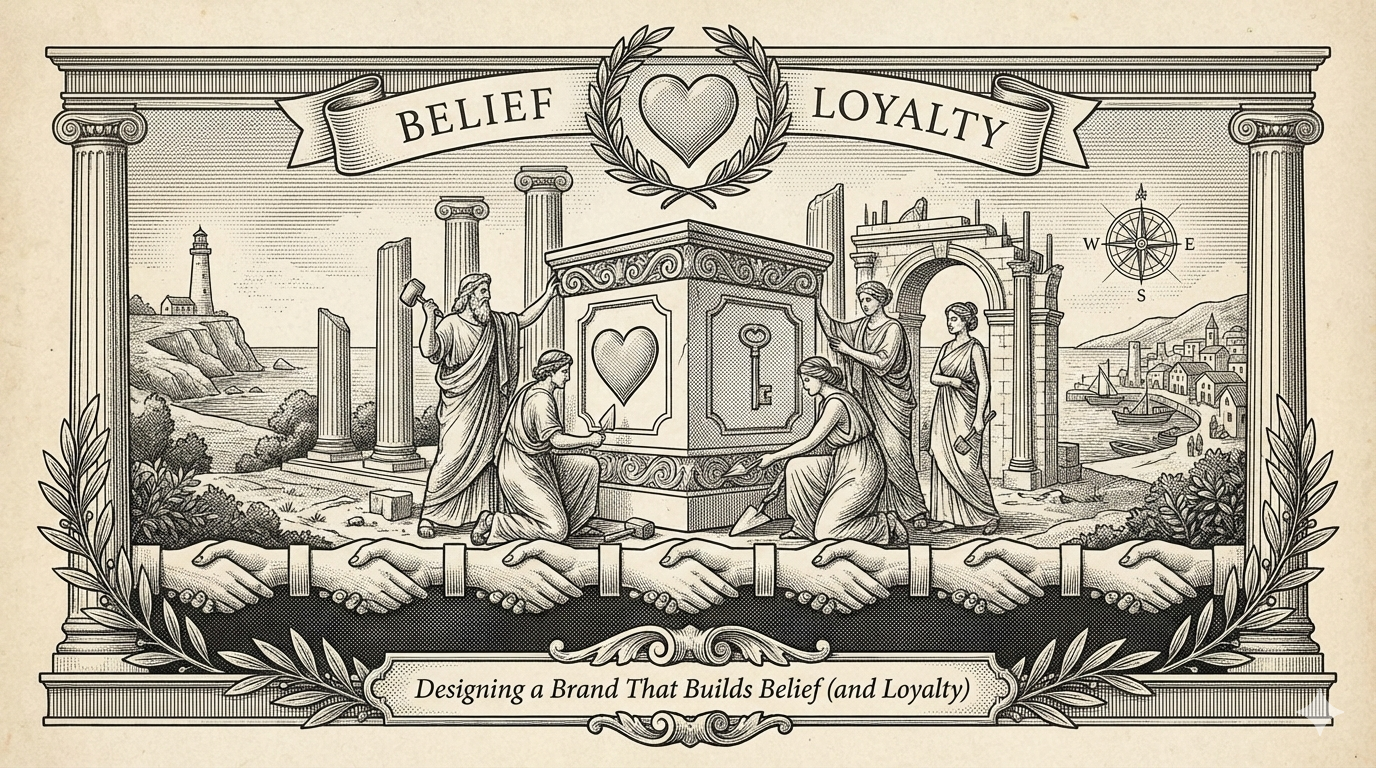
Designing a Brand That Builds Belief
|
|
|
|
|
It's one thing to say your business has a mission. It's another to design that mission into your product so deeply that removing it would collapse the entire model. That’s exactly what Caitlin Crosby did with The Giving Keys—and you can, too.
Here’s how to create a belief-driven brand that builds loyalty organically:
-
Don’t Tweak—Integrate.
Your mission shouldn’t be an afterthought or a slide in your pitch deck. It should be baked into the business model itself. For The Giving Keys, every product sold contributed directly to hours of transitional employment. The product was the mission.
-
Give Customers a Role.
Create a mechanism for participation. When customers are invited to join the journey—not just buy the product—they become loyal advocates. The “Pay It Forward” concept turned customers into part of the story, building an emotional connection that outlasts a single purchase.
-
Partner, Don’t Pretend.
You don’t need to solve every social issue yourself. Find organizations who already do the work well and form authentic partnerships. The Giving Keys teamed up with Chrysalis to provide case management and stability, allowing them to focus on employment and production.
-
Turn ‘Risk’ into Story.
Don’t hide the messy parts of your mission—highlight them. Crosby didn’t apologize for hiring a vulnerable workforce or relying on old, inconsistent materials. She made those the center of the brand story. Customers are drawn to truth more than perfection.
-
Let the Product Mean Something.
Whatever you sell, make it matter. A metal key may seem trivial—until it carries a word someone needed to hear. Strive to create products that speak to more than utility. Meaning scales further than features.
Whether you sell jewelry, coffee, or code—your brand can be more than what you make. It can be what you mean.
|
|
|
|
TERMS EXPLAINED
Transitional Employment Model
|
|
|
|
|
A transitional employment model provides short-term, supportive job opportunities to individuals facing significant barriers to employment—such as homelessness, addiction recovery, or time spent in the criminal justice system. But unlike traditional jobs, these roles are designed to be temporary. The goal isn't retention. It's re-entry.
Think of it like a professional stepping stone. These jobs offer structure, income, and on-the-job learning, while also providing access to social services like counseling, housing support, or legal aid.
At The Giving Keys, this model was central. Employees—often referred by the nonprofit Chrysalis—were hired not as charity, but as part of the workforce. The company didn’t measure success by how long someone stayed, but by how many were able to “graduate” into stable, long-term employment elsewhere.
It’s a business model that asks: What if the best outcome for your employee is that they eventually leave?
|
|
|
|
YOUR QUESTIONS ANSWERED
What Are You Too Afraid To Ask?
|
|
|
|
|
What do you want to know (but are too afraid to ask)?
Every entrepreneur faces challenges, and often, the questions you have are the same ones that many others are pondering. We want to help you navigate these challenges by providing answers to your most pressing business and legal questions.
Do you have a legal question, a business term you don't understand, or a specific issue you're facing in your business right now? Don't hesitate to ask!
Reply to this email with your question, and we'll pick a few to answer in a future issue. Your question could help not only you but also other entrepreneurs in our community.
|
|
|
|
BetterLegal
5473 Blair Rd Ste 100 PMB 35833, Dallas
United States of America
|
|
You received this email because you signed up on our website or made a purchase from us.
|
|
|
|
|
|