The beauty of football lies in its simplicity: one ball, two goals, and nearly nonstop action. But beneath the spectacle is a sport that places extraordinary demands on the body. Elite players may cover more than 6 miles (10 km) during a match while repeatedly accelerating, decelerating, changing direction, and battling opponents for possession. During the 2026 FIFA World Cup, many teams are also contending with North America’s summer heat and humidity, adding another layer of physical stress.
Among the most serious health concerns is heatstroke, a medical emergency that occurs when the body can no longer cool itself effectively. High temperatures and humidity can accelerate dehydration and fatigue, reducing endurance and increasing the risk of dangerous overheating. To help protect players, FIFA has implemented hydration breaks and, when possible, scheduled matches outside the hottest parts of the day.
Head traumas such as concussions, traumatic brain injuries, and skull fractures are also a major concern. They may result from falls, blows, collisions, or impacts to the head. Mexico’s Raúl Jiménez suffered a skull fracture and required emergency surgery after a clash of heads with another player in 2020. Jiménez, who is part of the Mexican squad in the 2026 FIFA World Cup, is now required to wear a protective headband while playing.
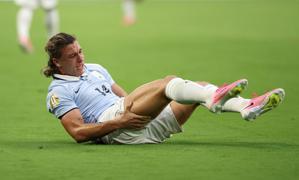
The most common football injuries involve the lower body. Ankle sprains, hamstring strains, and anterior cruciate ligament (ACL) tears often result from sudden pivots, tackles, or awkward landings. Concussions are less frequent but remain a concern, particularly after collisions between players. As sports medicine advances, teams are better equipped than ever to prevent, diagnose, and treat injuries. Yet in a tournament where every match matters, staying healthy may be as important as skill, tactics, or talent.
The 2026 FIFA World Cup has been marked by high-profile absences and late squad changes to replace injured players. Brazil’s Rodrygo was ruled out because of an ACL injury, while Neymar entered the event managing a calf problem. The Netherlands lost Xavi Simons to an ACL injury and Jurriën Timber to a groin issue, and Japan lost captain Wataru Endo to a foot injury and Kaoru Mitoma to a hamstring injury. Mexico had to replace Luis Ángel Malagón after he suffered an Achilles rupture. Other notable dropouts include Hugo Ekitiké (France), Billy Gilmour (Scotland), Nayef Aguerd and Abde Ezzalzouli (Morocco), and Tino Livramento (England).
During the tournament itself, Canada’s Ismaël Koné suffered multiple leg fractures after being tackled by Qatar’s Assim Madibo. Other footballers who were seriously injured while playing include Germany’s Nico Schlotterbeck, Brazil’s Raphinha, Czech Republic’s Tomáš Souček, and Uruguay’s Manuel Ugarte.