The penalty shoot-out is a system in which five players from each team alternately take spot kicks, with the higher-scoring team declared the winner. It is far from a perfect tiebreaker, but the others used before the 1970s were even stranger. Before the shoot-out was officially introduced, tied football matches were settled through grueling playoffs, full-match replays, or completely arbitrary lot draws. Thankfully, fans never had to see a World Cup winner chosen by a coin flip, but it remained a real possibility until penalties were introduced.
Association football’s early tiebreaking methods included a 30-minute extra-time period (equivalent to overtime), a format that has survived to this day. Other methods included replaying tied fixtures and using playoff matches to rank teams level on points. On rare occasions random chance was used to break deadlocks; perhaps the most notable example was drawing lots to decide whether Spain or Turkey would qualify for the 1954 FIFA World Cup. The latter team earned the place when a blindfolded 14-year-old boy drew its name out of a pot.
Since its inception in the 1970s, the penalty shoot-out system has deeply divided soccer fans. While proponents praise it as an entertaining spectacle and the ultimate test of nerve, opponents often dismiss it as a one-dimensional duel that undermines players’ efforts in open play.
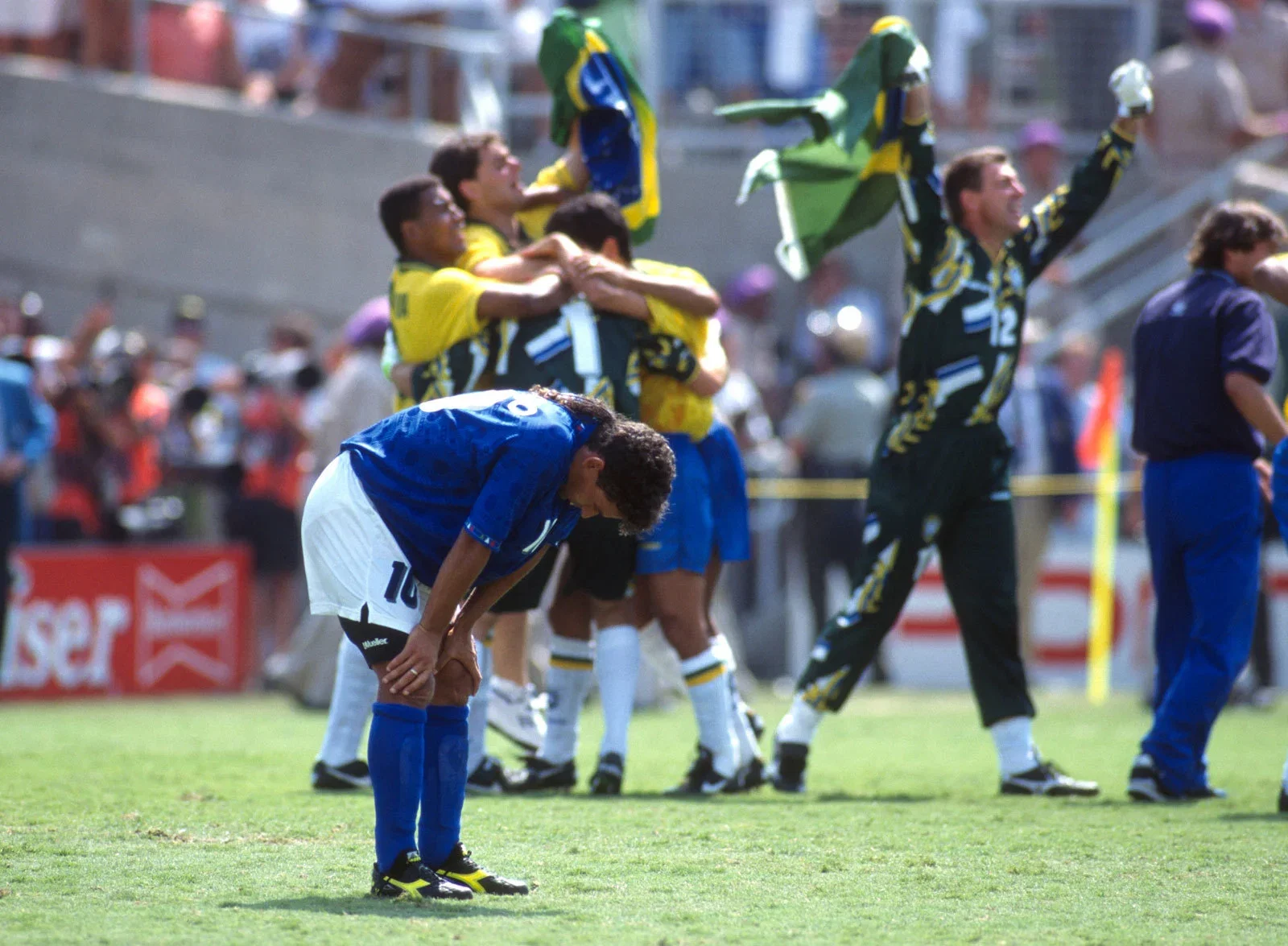
FIFA adopted penalty shoot-outs as tiebreakers in World Cups from the 1978 edition onward. However, the tournament’s first shoot-out was played at the 1982 World Cup semifinal, when West Germany drew 3–3 with France before prevailing 5–4 on penalties. Since then penalties have delivered some of the tournament's most dramatic results and heartbreaking moments. Italy’s Roberto Baggio as well as France’s David Trézéguet and Aurélien Tchouaméni have gone down in infamy for missing crucial spot kicks in shoot-outs during the 1994, 2006, and 2022 FIFA World Cup finals, respectively.
The 2026 FIFA World Cup has already seen its share of shoot-out drama. Germany, a traditional powerhouse with a historically flawless shoot-out record, was eliminated by 41st-ranked Paraguay. The Netherlands suffered a similarly agonizing exit at the hands of Morocco, the third consecutive World Cup in which it was eliminated on penalties. In the round of 16 Colombia and Switzerland played out a 0–0 draw before the European team won the shoot-out 4–3.
With no viable alternatives, it looks like penalty shoot-outs are here to stay for the foreseeable future. That hasn’t stopped football organizations from trying to find a better way. The sudden-death “golden goal” and “silver goal” formats, in which a single goal could end a match immediately or at the end of an extra-time period, respectively, were briefly adopted during the 1990s and early 2000s.
Club football leagues, most notably the U.S.-based North American Soccer League (in the 1970s) and Major League Soccer (in the 1990s), organized an ice hockey–inspired penalty shoot-out. Instead of a traditional spot kick from 12 yards, players started 35 yards from the goal and had five seconds to dribble the ball forward and attempt to score against the advancing goalkeeper. The system was popular among American fans but never caught on in other countries and was discontinued in 1999.