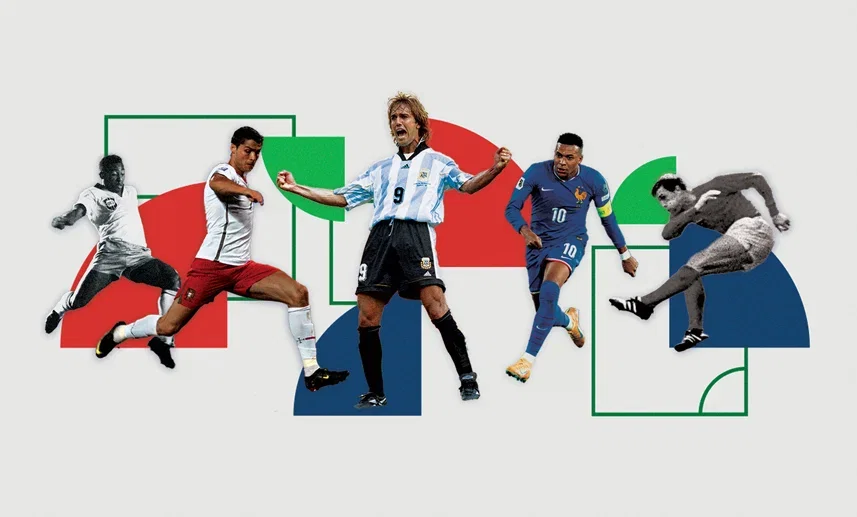
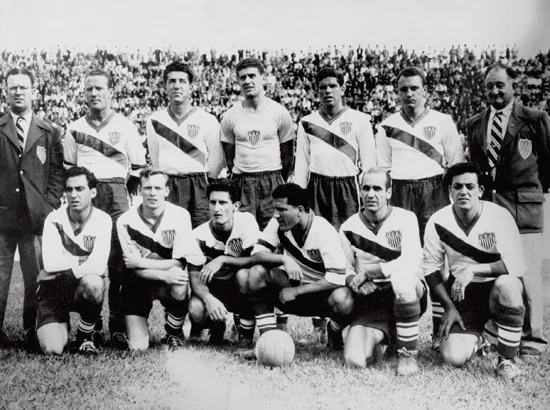
Scoring a hat trick is a special achievement for any football player, and doing so for their country in a World Cup is the pinnacle of individual achievement. From American Bert Patenaude scoring the first World Cup hat trick in 1930 to Argentina’s Lionel Messi becoming the oldest player to achieve the feat in the tournament’s history, each hat trick holds a special meaning for players and supporters. Messi’s achievement is even more impressive, considering his age when he netted three goals in the 2026 edition.
In contrast, legendary Brazilian footballer Pelé became the youngest player (17 years 244 days) to score a hat trick in the 1958 World Cup semifinal against France. Hungary’s László Kiss holds the record for scoring the fastest men’s World Cup hat trick (seven minutes) and is also the only substitute player to achieve the feat.
Only four players in World Cup history have scored more than one hat trick. Messi’s compatriot Gabriel Batistuta is the only player to score a hat trick in two separate World Cups (1994 and 1998). Hungary’s Sándor Kocsis (1954), France’s Just Fontaine (1958), and West Germany’s Gerd Müller (1970) all scored both their hat tricks in a single edition.
France’s Kylian Mbappé (2022) and England’s Geoff Hurst (1966) are notably the only players to score a hat trick in a World Cup final. Poland’s Ernst Wilimowski scored four goals in a match against Brazil at the 1938 World Cup, but his team still lost, thanks in part to Leônidas’s hat trick for Brazil. It was the first time multiple hat tricks were scored in a single World Cup game. Germany’s Miroslav Klose is famous for scoring a hat trick in his World Cup debut match in 2002.
And last but not least, Russia’s Oleg Salenko is the only player to score five goals in a World Cup match. Ironically, Salenko’s stellar performance became the last time he would play for his country.