The world held its breath during the Cabo Verde vs. Argentina round of 32 match at the 2026 FIFA World Cup. The tiny island country lost the match but won hearts with a plucky fight against the defending champions. Egypt advanced in the knockout stage for the first time, beating Australia 4–2 on penalties following a 1–1 draw in open play. Colombia edged out Ghana 1–0, Portugal scraped past Croatia with an unconvincing 2–1 win, and Switzerland dispatched Algeria 2–0 to lock in the final spots for the next stage.
The highly anticipated round of 16 began on the Fourth of July with cohost Canada losing 3–0 to Morocco and runaway favorite France beating Paraguay 1–0. On July 5 Brazil’s attempt at a sixth World Cup title ended with a heartbreaking 2–1 loss to dark horse Norway. England, down to 10 men after a red card in the first half, held on to beat cohost Mexico 3–2 in front of the latter’s roaring home crowd. July 6 is headlined by a massive Spain vs. Portugal clash, while the third cohost, the United States, takes the field against Belgium. The round of 16 will wrap up on July 7, with Argentina facing Egypt and Switzerland battling Colombia.
|
|
|
The Curving Journey of the World Cup Ball |
If you know a little bit about football (soccer), you may know that the ball your kids knock around the park is made up of black and white hexagons and pentagons—32 in all. But this ball hasn’t been used since time immemorial: It was introduced at the 1970 World Cup and is called the Telstar ball after a similar-looking U.S. satellite. The two great advantages of this design were that it was very close to a sphere and that the black-and-white panels made the ball easier to see on black-and-white televisions. The Telstar was also the first World Cup ball made by Adidas, which has made all such balls since.
|
Encyclopædia Britannica, Inc. |
The ball used at the 2026 World Cup is quite different from the Telstar. It’s named the Trionda, Spanish for “three waves,” a name reflected in its four wavelike panels. The panels are not sewn together but are bonded with adhesive. Thus the “seams” between the panels don’t have stitching. Nevertheless the ball has deep seams, as well as grooves and embossed icons relating to the flags of the three countries hosting the World Cup. The seams, grooves, and icons are done to produce the “right” amount of drag.
You may be thinking, “Wait a second, surely you want footballs to be smooth like an airplane so they can just whip through the air,” but you’d be wrong. Adidas provided the world with a lesson in how a smooth ball does not mean a smooth tournament with the Jabulani, the ball used at the 2010 World Cup. Goalkeepers’ hate for the unpredictable Jabulani has become part of tournament legend. One goalie compared it to a beach ball. Even a striker expressed his unhappiness, saying, “You are going to kick it, and it moves out of the way.”
What happens with a smooth surface is that the air just flies off the side of the ball, creating a low-pressure zone behind it. The contrast with the relatively high pressure in front results in a drag force that causes the ball to move unpredictably through the air, making it nearly impossible to estimate its trajectory, as many, many goalkeepers learned while facing Jabulani free kicks.
Irregularities such as seams and grooves allow air to flow around the back of the ball, creating a smaller, lower-pressure area and thus reducing drag. (This is why golf balls have dimples, by the way.) Wind tunnel tests of the Trionda showed that it avoids the drag problems of the Jabulani.
|
|
|
How to Enjoy Summer Without Running Up Interest |
Between the matches, the parties, and the gear, summer is looking fun. But it can also add up. A 0% intro APR card gives you the room to enjoy the season now and pay it down later without interest eating into every payment. CardCritics breaks down the best options right now, including cards with 21 months of 0% intro APR on balance transfers and no annual fees. |
|
|
The Trionda contains a motion sensor that helps refs make offside calls.
|
|
|
|
The 14 Most Famous World Cup Goals |
|
|
|
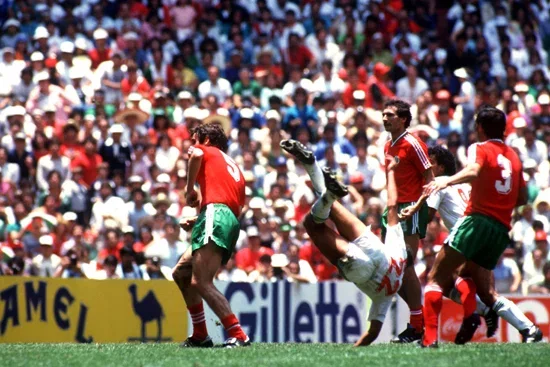
Credit: Peter Robinson/EMPICS—PA Images/Getty Images |
#10: Negrete’s Acrobatic Classic
|
|
|
Cheer on your favorite team in style with official kits, jerseys, and fan gear made for every match, every moment, and every unforgettable win this summer. |
Please support our sponsors! They help us keep The Pitch free. |
|
|
|
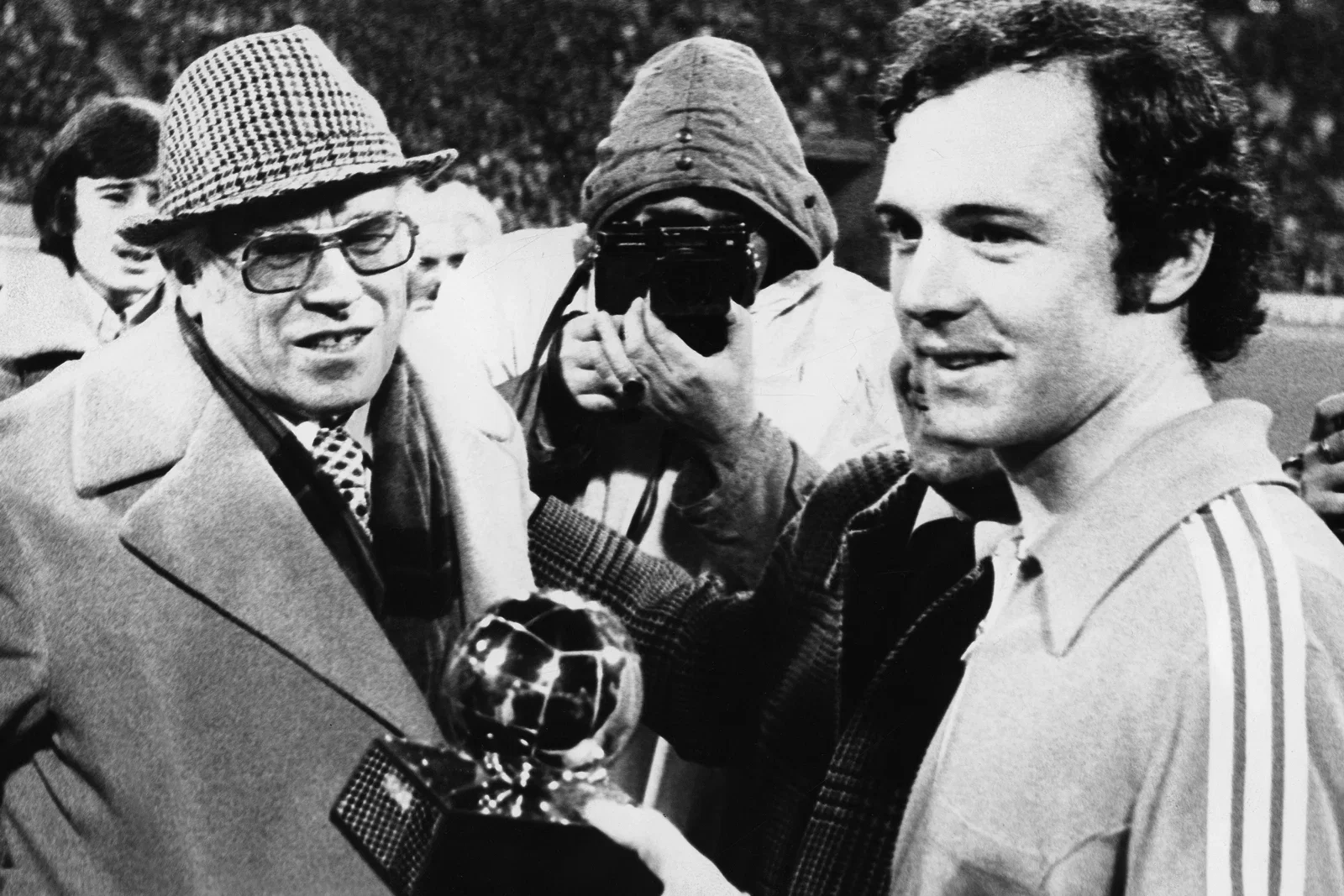
Famous Footballers: Franz Beckenbauer, “der Kaiser” |
|
|
|
|
Don't Pass Up This Chance to Pay No Interest Until 2027
|
|
|
|
|
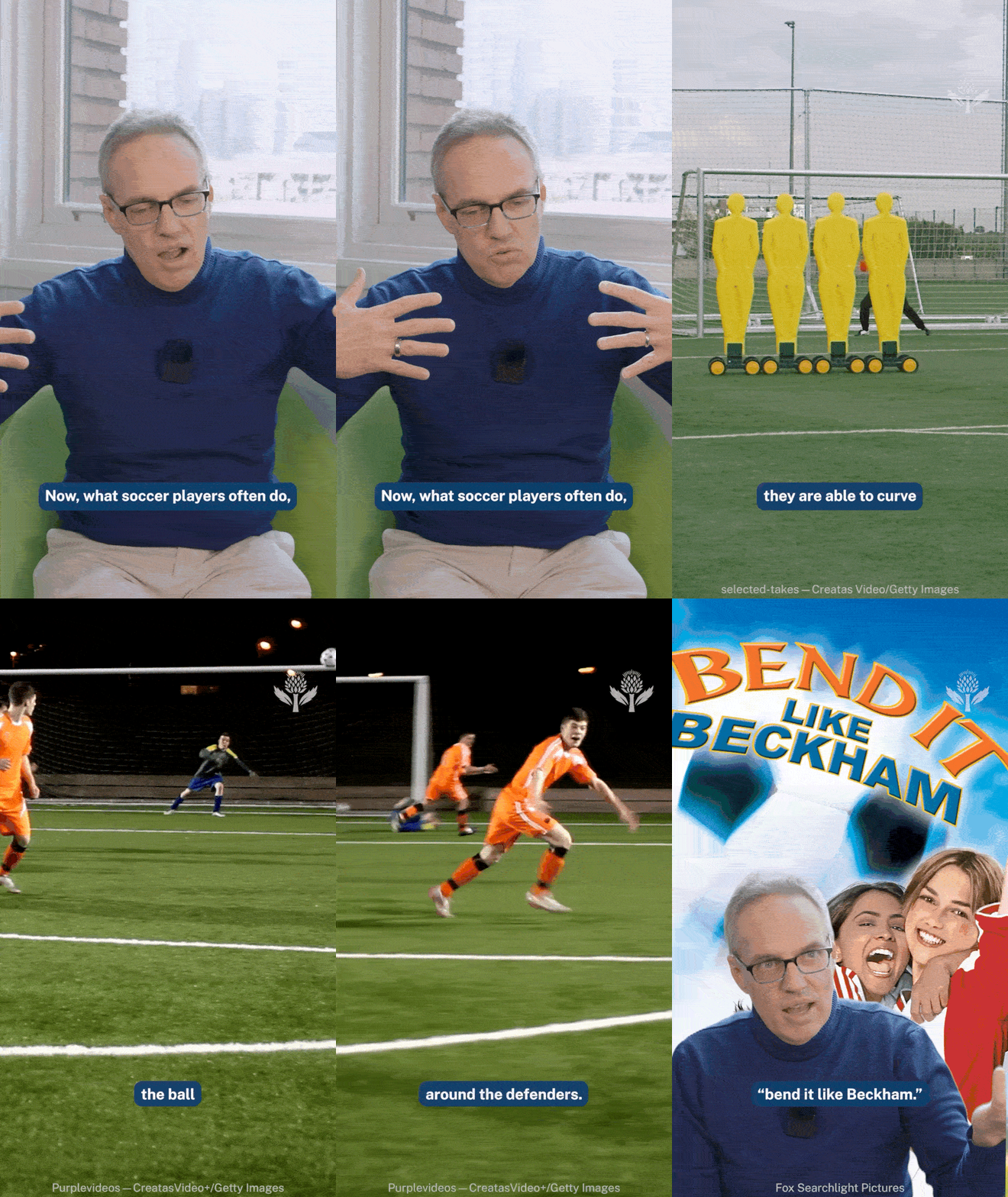
Why Does a Football Swerve?
|
|
|
|
|
2026 FIFA World Cup Calendar |
|
|
|
The World Cup means more when you know what’s behind it.
|
|
|
You are receiving this message because you opted in to a newsletter from
The Britannica Group.
To manage your email preferences, click here.
|
|
|
|