|
The Gut-Brain Connection
The Anxiety No One Connected to Her Gut
She lost 22 pounds on her GLP-1 medication. Then a low-grade tension showed up that her therapist and prescriber couldn't explain. Here's what we found when we looked at her gut.
|
|
|
REVIEWED BY
Dr. Onikepe Adegbola, MD PhD
|
PUBLISHED
Frontiers in Microbiology, Feb 2026
|
CLINICAL TRIAL
350 Adults, Placebo-Controlled
|
|
|
A patient told me last month she thought her anxiety was getting worse. She'd started a GLP-1 medication three months earlier. Lost 22 pounds. Felt good about the progress.
But she noticed a creeping unease she couldn't explain. More irritable. Harder to fall asleep. A low-grade tension that showed up most days by 3 PM. Her therapist suggested it might be the weight loss itself. Her prescriber adjusted the dose. Neither helped.
Then we looked at her gut.
|
|
95%
of your body's serotonin is produced in your gut, not your brain. Your intestinal cells and the bacteria living alongside them manufacture the molecule that regulates mood, sleep, and how you respond to stress.
|
|
The Three Pathways
A February 2026 review in Frontiers in Microbiology analyzed clinical trials on specific probiotic strains and mental health outcomes. Strains like Lactobacillus rhamnosus, Bifidobacterium longum, and Lactobacillus gasseri produced measurable improvements in anxiety and stress markers, with effects showing up within 4 to 8 weeks of daily supplementation. Here's how it works.
|
|
Bacterial GABA Production
Certain gut bacteria produce GABA, the same calming neurotransmitter targeted by anti-anxiety medications.
|
|
|
|
Reduced Inflammatory Signaling
Short-chain fatty acids from bacterial fermentation reduce inflammatory signals that cross into brain tissue.
|
|
|
|
Vagus Nerve Signaling
The vagus nerve carries gut-produced chemical signals to the brainstem, where they influence mood regulation.
|
|
|
Why This Matters More on a GLP-1
A 2025 systematic review of 38 studies found that GLP-1 medications reduce microbial diversity. Less food reaching the colon means less fuel for beneficial bacteria, and the strains that decline first are often the same ones producing serotonin precursors and GABA.
|
|
66%
Improvement in anxiety-related feelings within 6 weeks of a multi-strain synbiotic
|
91%
Of participants with bloating reported minimal interference by week one
|
Seed Health, January 2026. 350 adults, randomized, placebo-controlled.
|
|
|
What She Started Taking
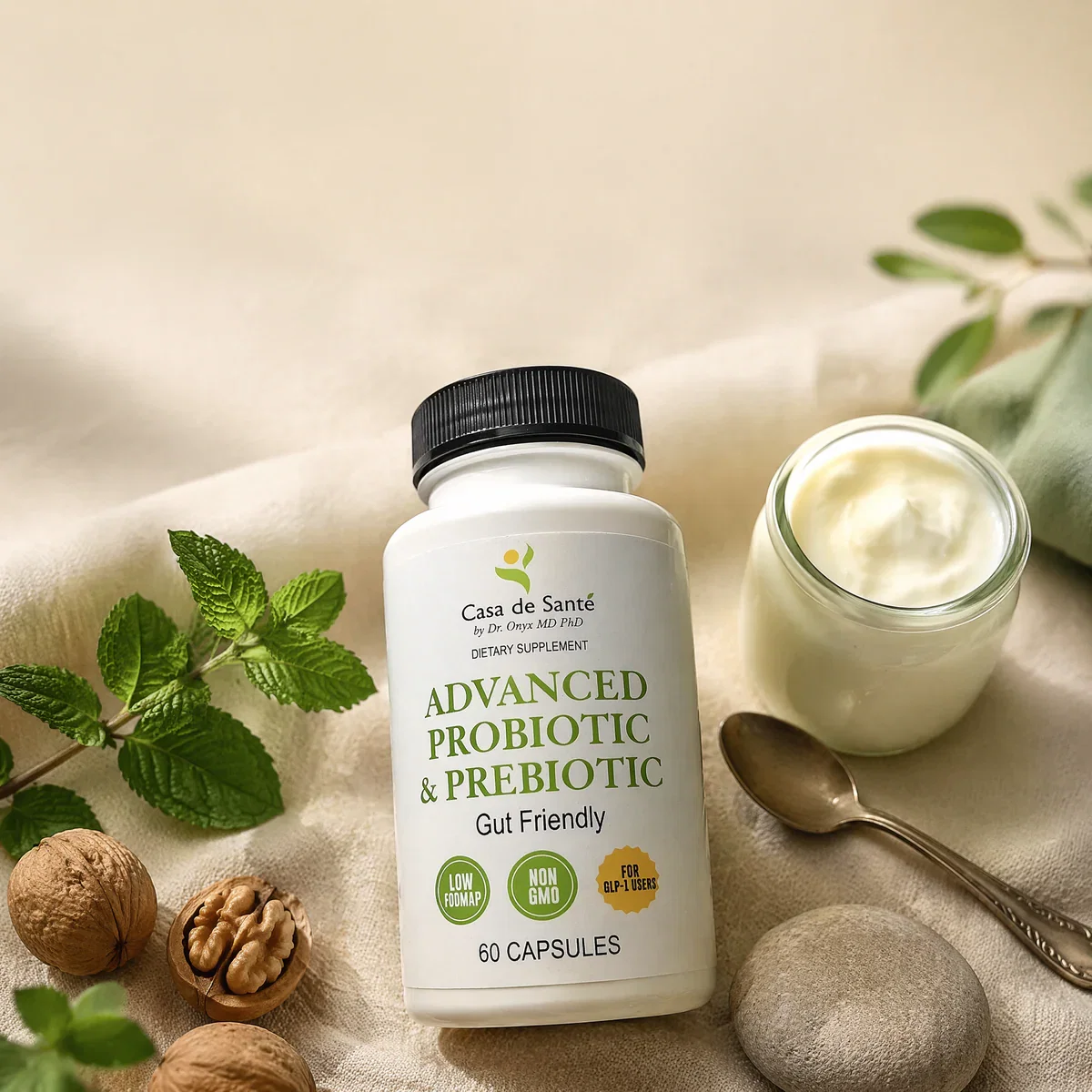
GLP-1 Digestive Support Synbiotic
Lactobacillus and Bifidobacterium strains studied for gut-brain signaling, plus prebiotic fiber to feed them. Built for the microbiome changes that come with GLP-1 medication.
|
|
Two Things That Helped Her |
|
1. A daily synbiotic with documented strains
For both gut barrier function and neurotransmitter support, paired with prebiotic fiber.
|
|
2. Probiotic-rich foods at the same time each day
Yogurt, kimchi. Consistency mattered more than quantity. A Nature study found daily probiotic intake reduced negative mood over 28 days, with the benefit appearing after the two-week mark, not before.
|
|
|
"The volume turned down. Same life. Same stressors. Less noise."
Patient, at her 8-week check-in
|
|
If you've noticed mood shifts since starting your GLP-1 medication, your gut bacteria may be part of the equation. Supporting the microbiome isn't a replacement for mental health care, but it addresses a biological pathway that most treatment plans overlook. |
|
|
To your health,
Dr. Onikepe Adegbola, MD PhD
Casa de Sante
|
|
P.S. If you're already taking a probiotic but haven't noticed a difference, check the strain list. Single-strain products miss the gut-brain pathways. A multi-strain synbiotic with prebiotic support covers more ground. |
|