| Physician Formulated • Gut Health Science |
Casa de Sante
Gut Health, Backed by Research
|
|
New Research: May & March 2026
Why the Weight Comes Back After GLP-1s
It is not your willpower. It is your gut bacteria.
|
|
|
A patient of mine lost 34 pounds on semaglutide over eight months. Bloodwork improved. Energy came back. She felt like herself again.
Then she stopped the medication. Four months later, she had regained 22 of those 34 pounds. Same eating habits. Same exercise. The weight came back like it had been waiting.
Her question: "Did my body just forget everything?"
|
Not her body. Her gut bacteria. |
|
|
A randomized clinical trial published in May 2026 compared two groups of adults with obesity. One group took semaglutide. The other followed a high fiber diet. Both groups lost similar weight over 12 weeks, about 5%.
But after both groups stopped their interventions, the semaglutide group rebounded faster and heavier.
Researchers ran shotgun metagenomic sequencing on stool samples. What they found: semaglutide had worsened the gut dysbiosis that was already present in obesity. Fewer beneficial species. Less microbial diversity.
|
The medication fixed the number on the scale while the ecosystem underneath deteriorated. |
|
The Mechanism
GLP-1 medications reduce appetite, so you eat less food. Less food means less dietary fiber reaching your colon. Less fiber means fewer short-chain fatty acids. Your beneficial bacteria starve. Opportunistic species fill the gap.
When the medication stops, your appetite returns to a gut environment that is less equipped to regulate metabolism, produce satiety signals, or maintain energy balance.
|
A Second Study Tested a Fix
A study published in Nutrients in March 2026 tested whether probiotics could change that trajectory. When researchers combined a specific Lactobacillus strain with a GLP-1 receptor agonist, the combination produced better weight loss than the drug alone, preserved muscle mass, and reduced both glycemic rebound and weight regain after stopping the drug.
The authors called it a "microbiota derived metabolic adjunct approach." In plain English: the right gut bacteria made the medication work better and the results last longer.
|
Two Things I Tell Patients |
1 |
Start your synbiotic now, not when you stop your medication. |
Building microbial diversity while you are on a GLP-1 is the protective step. Waiting until after you taper off means rebuilding from a deeper deficit.
|
|
2 |
Feed the bacteria you are adding. |
A synbiotic gives you both the bacteria and the fiber to sustain them. But diverse produce matters too. Different plants feed different microbial species. Aim for variety across the week: berries one day, leafy greens the next, squash the day after. You are not eating for yourself. You are feeding a colony that determines what happens when your prescription changes.
|
|
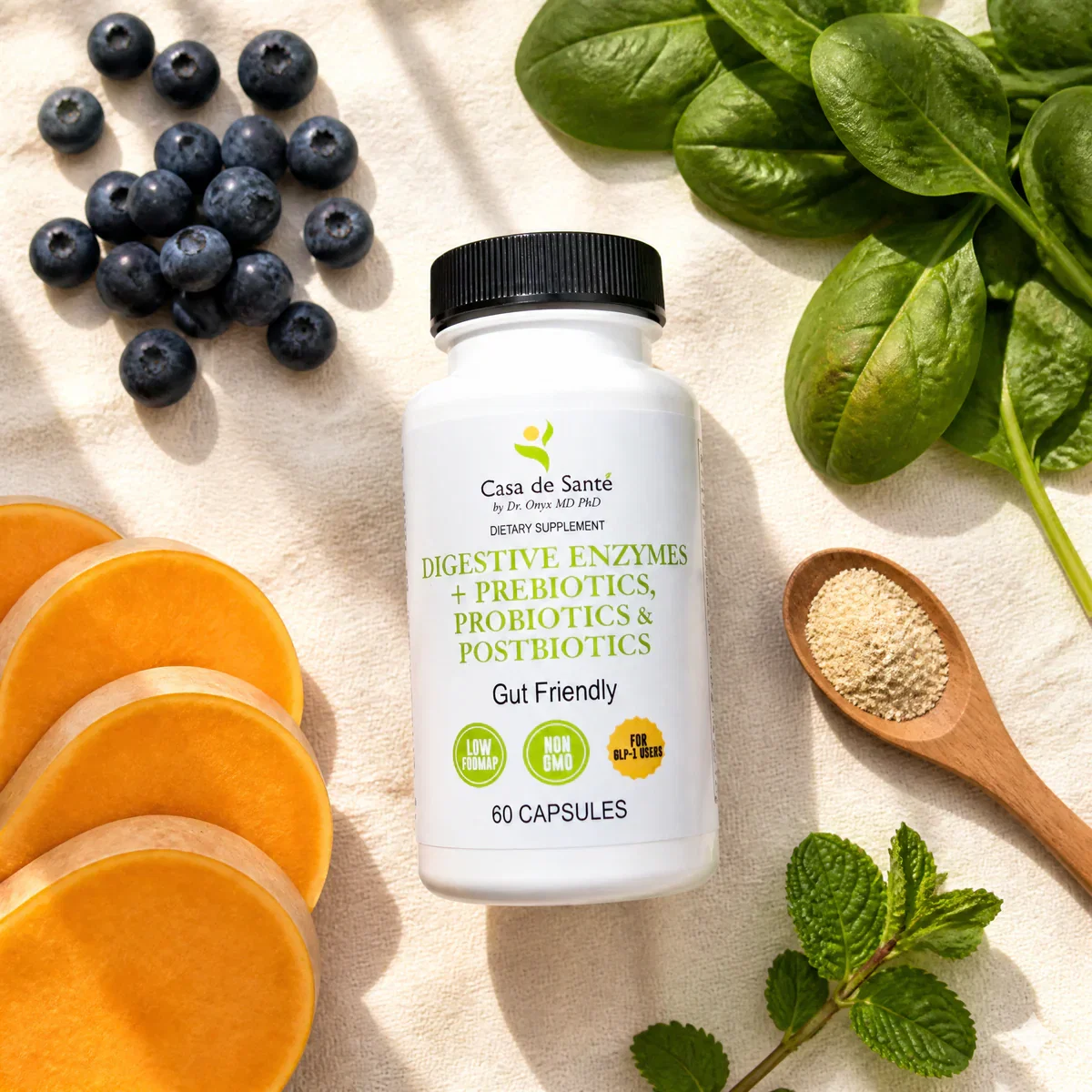
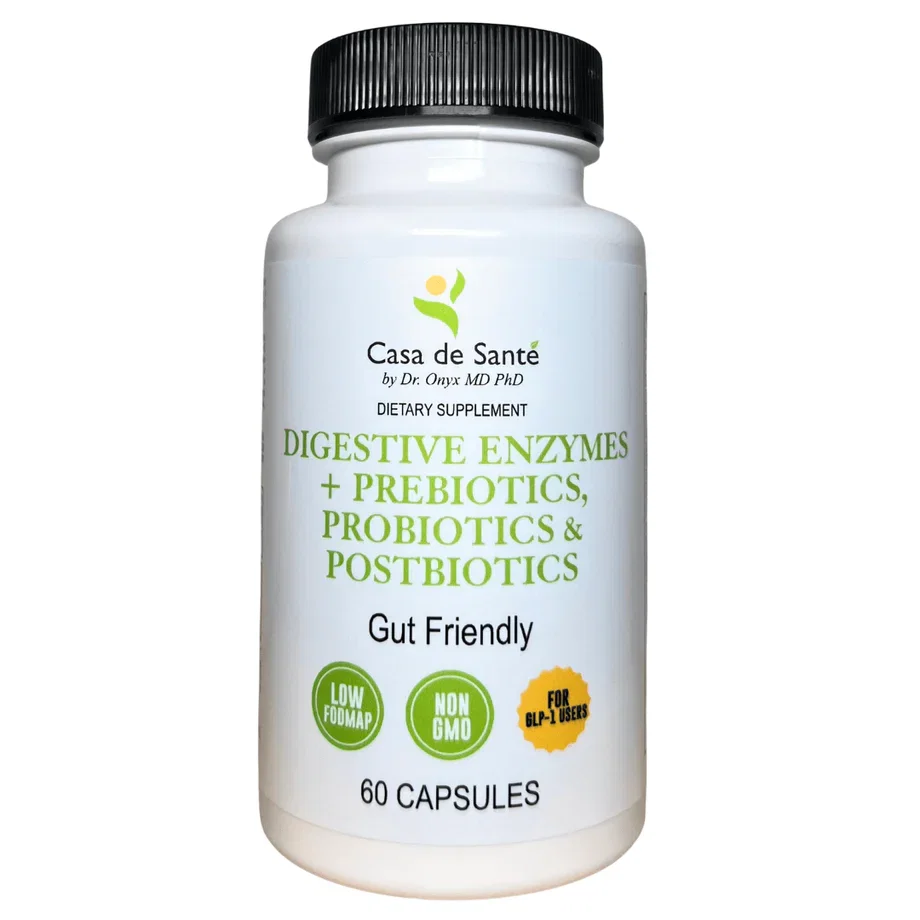
Featured FormulaGLP-1 Digestive Support Synbiotic
Targeted probiotic strains paired with gentle prebiotic fiber in one product, formulated for stomachs already dealing with GLP-1 sensitivity.
|
|
|
My patient? On her second round, she added a synbiotic from week one. When she tapered off semaglutide six months later, she kept 29 of the 31 pounds she had lost.
Same patient. Same medication. Different gut.
|
Your microbiome is either working with your medication or unraveling beneath it. The research says you can choose which one. |
|
OA |
To your health,
Dr. Onikepe Adegbola, MD PhD
Founder, Casa de Sante |
|
|