|
Having trouble viewing this email? Click here to read online
|

Whisked Away Weekly - Stories from Our Pantry
|
|
Subscribers save 5% with code cherries
|
|
🍩 AISLES
🍳 RECIPES
🍎 COUNTRY
|
| |
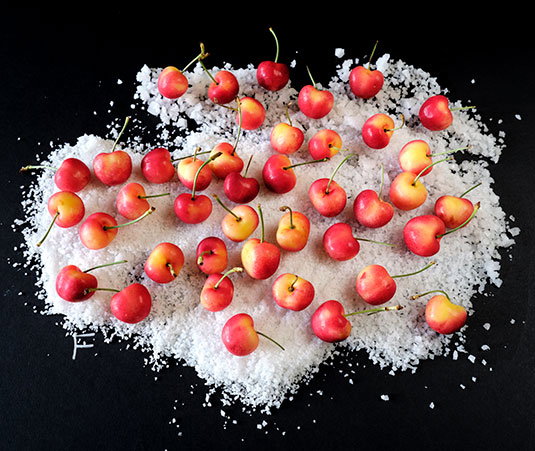
Washington's Picked-at-Their-Peak Sweet Cherries
Cherries did not originate here in Washington, though it feels like it for us who live here....
They actually first grew wild in northern Persia and the Russian provinces south of the Caucasus, and the fertile corridor between the Black Sea and the Caspian Sea. Prunus avium, the sweet cherry, is native to Europe, Anatolia, and Western Asia.
The Greeks were the first known to cultivate cherries, and the Romans kept going, growing more and more.
The name "cherry" itself is said to come from Cerasus, a Turkish town. The sour cherry was known to the Greeks as early as 300 B.C.E.
Cherries were first mentioned in writing in the 3rd Century B.C. in a book called the History of Plants, written by Theophrastus, an early botanist and protege of Aristotle (I looked for the 1st edition book online, it's not available).
The Romans continued to spread cherries across Europe, and the cherries arrived in America via boats in the 1600s.
Sweet vs. Sour: How Are They Related?
This is where it gets biologically fascinating. Sweet cherry (Prunus avium) is a diploid, with a somatic chromosome number of 16. Sour cherry (Prunus cerasus) is a tetraploid, with a somatic chromosome number of 32 which is double the chromosomes of its sweet cousin.
The sour cherry is essentially a natural hybrid. Studies based on chloroplast DNA markers strongly suggest that hybridization between P. avium (sweet cherry) and P. fruticosa (ground cherry) led to the emergence of P. cerasus, the sour cherry, at least twice in history. In other words, sour cherries were born when sweet cherry trees and wild ground cherry trees accidentally cross-pollinated, and the resulting hybrid doubled its chromosomes to survive, a process called allopolyploidy.
The sour cherry is, in a sense, a child of the sweet cherry.
There is reason to surmise that the sour cherry is derived from the sweet cherry, as Prunus avium is the more common and vigorous of the two, and has spread much farther from the primal habitation in Asia Minor. Or not.
Duke cherries, a third group, are a natural or cultivated hybrid between Prunus avium and Prunus cerasus, the sweet and sour.
Why Michigan Dominates Sour Cherries.
It comes down to geology, geography, and a giant lake. The glaciers left this region surrounded by freshwater bays, rolling hills of sandy soil, and gentle breezes to protect the crops from frost in a unique microclimate.
The climate in western lower Michigan is unique because of its location on the east side of Lake Michigan. The lake has a moderating effect on temperatures, which results in long, frost-free autumns and a delayed spring bloom period. That delayed spring bloom is crucial as it means the blossoms don't open until the worst frost risk has passed.
By the early 1900s the cherry industry was firmly established, and production in the Grand Traverse region surpassed other major crops.
Michigan harvests over 90,000 tons of cherries each year, making it the leading producer of tart cherries in the United States.
Traverse City, known as the Sour Cherry Capital of the United States, produces over 70% of the country's sour cherry supply. The dominant variety is the Montmorency. Originating in the Montmorency Valley of France, it was introduced to North America before the seventeenth century. It is considered the main cultivar grown on the continent.
Washington's sweet cherry dominance.
Washington is the most productive state for sweet cherries, followed by Oregon and California, altogether combining for more than 90 percent of national sweet-cherry production.
Long daylight hours and dry heat help cherries develop high sugar (Brix) and firmer texture. Elevation (especially in places like Chelan County) creates cooler nights, which improves color and flavor.
Wenatchee in particular has long been called the "Apple Capital of the World" but is equally significant cherry country, and Chelan County’s hillsides are some of the most productive sweet cherry ground anywhere in the world.
About our cherries:
Every year we seek out the finest cherries of all the varieties we sell, but every year the "finest" (biggest, sweetest, most perfect, most flavorful, etc.) variety of the year changes. Just like children, you think you have them figured out, and then they change....
Last year, it was the new kid on the block, the Black Pearl that was the shining star of the crop. The year before it was the Early Robins. And the year before that, it was the Bings, or maybe the Lapins, I don't remember. Regardless, we do our very best to get you the best that year's harvest has to offer.
Pre-order Washington's Picked-at-Their-Peak Sweet Cherries Here!
|
| |
|
|
| |
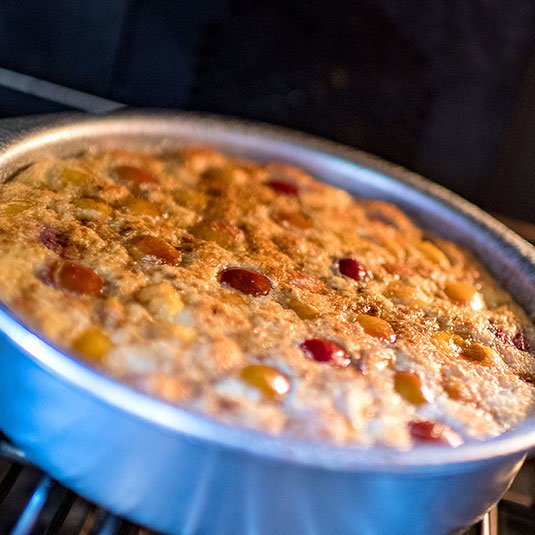
It is cherry season...finally!
It is cherry season ... finally! It is hard to resist those beautiful, round, amber-colored jewels. Although sweet cherries were really created by Mother Nature to be eaten plain - crisp and cold, straight from the fridge - undoubtedly, there are some that just aren't perfect, or you just need a new way to use a few of them to share with friends.
Although this dessert (which is a cross between a flan and a custard) maybe a tad bit of effort, the results are spectacular. Keep in mind the cherries were traditionally put into the dish unpitted, perhaps saving the French peasant a bit of precious time to slop the sows and thresh the wheat.
Clafouti is a simple and classic way to enjoy many types of fresh fruit. Quick and easy, feel free to substitute sliced pears, peaches or plums with equally delicious results.
See Fresh Sweet Cherry Clafouti Recipe Here!
|
| |
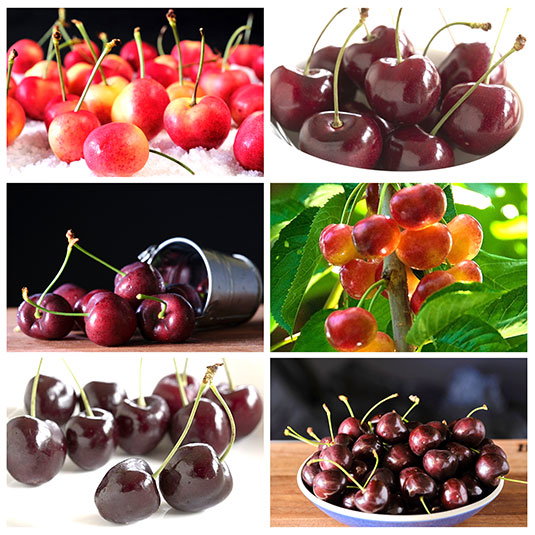
All the cherries with one click
You can pre-order the wonderful Sextet—all six varieties that we are offering this year all with one click.
Not only is this the easiest way to order, it is like buying 5 and getting the sixth one for free.
Think of the sextet as getting a wonderful full slice of all the sweetness that the summer has to offer in cherries.
All SIX fresh, sweet cherry varieties—for a total of 17 or 28 pounds of premium cherries—depending on what size you select. All delivered to your door.
EARLY ROBINS - 2.5 or 4 pounds - Estimated to ship Mid JUNE.
BING - 3 or 5 pounds - Estimated to ship in Mid-to-Late JUNE.
BLACK PEARL - 3 or 5 Pounds - Estimated to ship Late JUNE.
RAINIER - 2.5 or 4 pounds - Estimated to ship Late JUNE/Early JULY.
LAPIN - 3 or 5 Pounds - Estimated to ship Early JULY.
SWEETHEART - 3 or 5 Pounds - Estimated to ship Mid-to-Late JULY.
For those who believe cherry season is too short to choose just one, this is the full experience.
Our Fresh Cherry Sextet brings together six of Washington's most sought-after sweet cherry varieties which are harvested at peak ripeness and shipped directly to you throughout the season. From the first Early Robins in June to the final Sweethearts in July, this is a rolling delivery of the best cherries the Northwest has to offer.
A total of 17 (or 28) pounds of premium fruit, thoughtfully timed (about 1 shipment per week, Mother Nature willing!) so you can taste how each variety expresses the season differently because no two years (or cherries) are ever quite the same.
Pre-order soon, before the first cherry gets harvested!
Pre-Order The Fresh Cherry Sextet today!!
|
| |
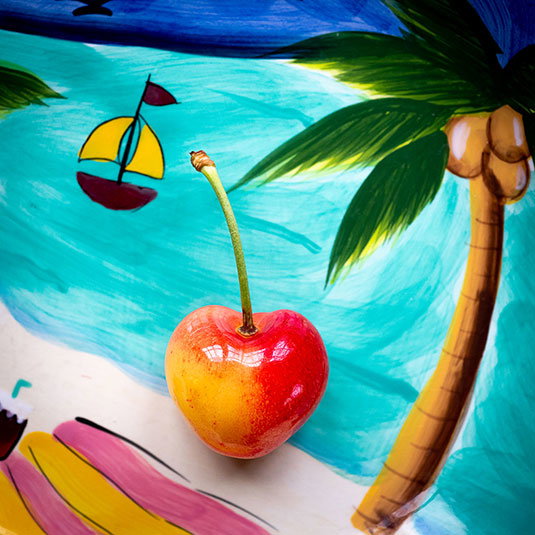
Most often the 1st cherry of the season
Every year the anticipation for the first cherry to be picked is a culmination of waiting almost an entire year from the last cherry you popped in your mouth to the excitement for the first one to come in June!
The Early Robin is a large cherry and if the year is good you will be rewarded with one of the sweetest bites that explodes with juice!
For many, the sweetheart is the easiest cherry to digest. Especially for older humans.
With less anthocyanins, a pigment compound, for which Bings, Lamberts and Black Pearl have extremely high concentrations. Anthocyanins are powerful antioxidants, but they are also known to have significant laxative and gut-motility effects.
Cherries also contain sorbitol, naturally. Sorbitol content varies by variety and is generally correlated with sugar type and concentration. Darker, more intensely flavored cherries tend to have different sugar profiles than blush varieties. This is well established as a cause of gastrointestinal distress in sensitive individuals, particularly older adults whose digestive enzyme production naturally declines.
All information as to why this is the favored cherry for those that are cautious around the little orbs. For my Father, the Early Robin was the only cherry he could eat without his tongue getting all "hairy" feeling.
The Early Robin was discovered by chance the way many historic varieties were found.
The variety was discovered in about 1990 by Robin Doty, who noticed that fruit on one tree in his Rainier cherry orchard at Mattawa, Washington, matured seven to ten days earlier than other trees in the block.
The fruit was large, firm, and sweet, and had a heart-shaped appearance, a mild flavor, and a semi freestone pit, unlike typical Rainier cherries. That semi freestone pit is a notably distinctive trait as Rainiers are clingstone, so this characteristic alone suggested it was a spontaneous mutation or chance seedling, not simply an early-ripening Rainier branch.
The Name - Early Robin - and a great story about It.
Doty named it Early Robin, not just because of his own name, but because robins in the orchard were always attracted to that tree, as it had fruit earlier than the rest of the Rainier trees. "They loved to eat that one," he recalled. "It was the only thing ripe at that time." So the name honors both the man and the birds—another lovely piece of cherry naming lore to sit alongside the Ah Bing story.
Pre-order Your Early Robin Cherries for 2026 Now!
|
| |
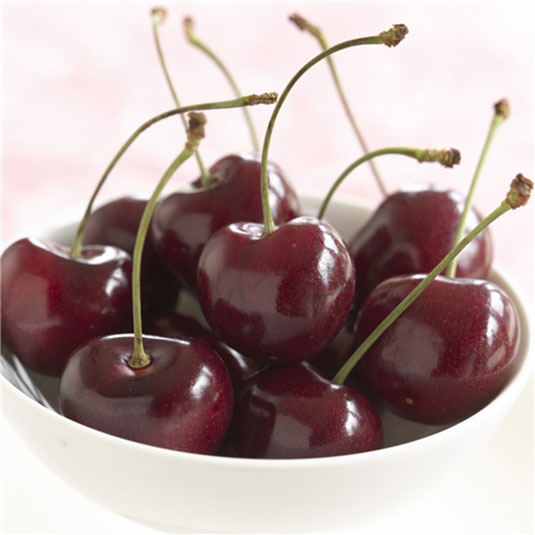
The Standard for Which All Other Cherries are Compared
A brief, important history of the best known cherry on the planet.
In 1847, Henderson Luelling brought 700 fruit trees by oxcart from Iowa to the Willamette Valley, Oregon establishing the first commercial nursery in the Northwest. He was soon joined by his brother, Seth Lewelling, who eventually took ownership of the nursery.
Among Lewelling's employees was his Chinese workers' foreman, Ah Bing. Lewelling and Bing alternated rows in the nursery's test area, and legend has it the memorable cherry fruited on a tree in Bing's row. Lewelling honored his Chinese foreman by naming the new cherry after him.
Florence Olson Ledding, Seth Lewelling's stepdaughter and one of the first female attorneys in Oregon, described Bing as more than six feet tall and of Manchu descent, hailing from northern China which was very unlike the majority of Chinese immigrants, who mainly came from the more southern Guangdong province.
According to Ledding, when someone suggested Lewelling name the cherry after himself, Lewelling protested saying, "No, I'll name this for Bing. It's a big cherry and Bing's big, and anyway it's in his row, so that shall be its name."
The Bing was a cross between the Black Republican cherry and the Napoleon, a light-skinned cherry originally from France, also known as Royal Ann in Oregon.
The story has a bittersweet ending. After working for Lewelling for thirty-five years, Ah Bing returned to China. He left behind no correspondence, immigration paperwork, or journals. It is possible he tried to return to the U.S. but could not due to the Chinese Exclusion Act of 1882, or that he left as a reaction to growing anti-Chinese sentiment.
Ah Bing faded from memory, though it is possible he is the best remembered of all, memorialized countless times in early summer when people bite into the fruit that bears his name.
To taste a Bing is indeed like eating a cherry. It is the flavor you expect. It is the flavor that a cherry is! And the flesh and the juice are dark, richly dark full of pigments. And you know this because this cherry stains with a gorgeous reddish color!
If you only have one cherry this might be the one to have.
Keep in mind that in the grocery "aisle" cherries are often referred to as reds and light skinned. The variety is rarely displayed and if it is, often they are sold as Bings and Rainiers, even if they are not.
And perhaps why some "Bings" one might like and others not so much.
Pre-Order Your Fresh Bing Cherries Now!
|
| |

Use a pre-made cake from France
This recipe uses a pre-made almond cake from France, but that does not take away from the wonderful flavor of not only the cake, but of the fresh, sweet cherries.
See the Almond Cake with Cherry Sorbet & Sugared Cherries Recipe here!
|
| |
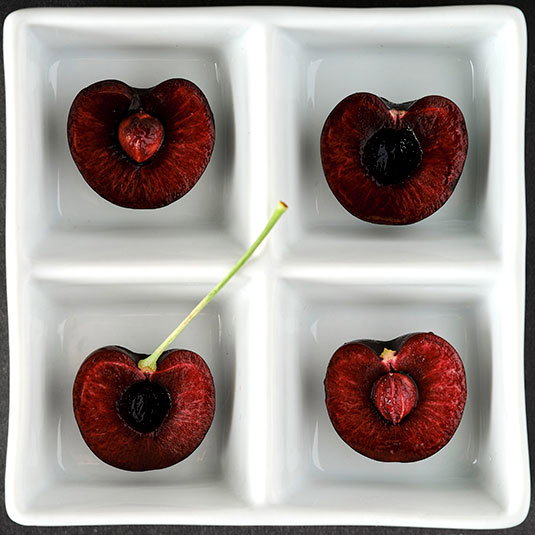
Last years new cherry - a runaway hit!
""I don't think I ever tasted Black Pearls before. What do cherries taste like? Bings taste like Bings, Rainiers taste like Rainiers, etc. Not that that isn't okay, but to me, the Black Pearls taste like cherries!""
-- Jack
"Hey,
Thought I would give you some feedback
(for what it's worth...)
The Black Pearl cherries are really tasty!
Excellent ...thanks!"
-- John
Pre-order Here for the new Black Pearl!
|
| |
What's Happening in the Store
Mother's Day Honey Tasting Event - May 9, 2026
Eliza will be talking about Honey! Join us Saturday, May 9, for a tasting that celebrates the kind of nuance, depth, and character that deserves a little extra attention. Because just like the best honeys, the best moms aren’t one-note.
We’ll be sampling a curated lineup that shows just how expressive honey can be—light and floral, rich and herbal, bright, deep, and everything in between. Each one shaped by place, season, and the quiet work of bees doing their thing.
See all about Mother's Day Tasting Event Here!
May, 2026
Monday - Saturday 10am-5pm
ChefShop Retail Shop, 1425 Elliott Ave West, Seattle 2 Parking Lots
|
| |
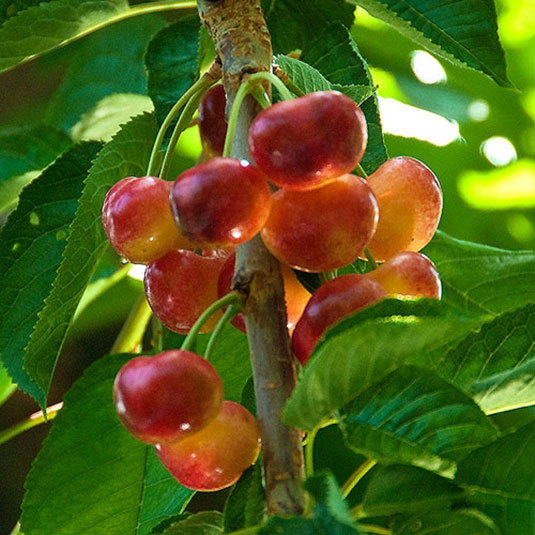
PICKED-AT-THEIR-PEAK
For many, the Rainier is remembered as the very special, exclusive cherry. It was a splurge to get them over the red cherries in the market.
Today they are still special, perhaps less reveled than before, yet still a favorite for all of us. The sweetness, the flavor, the bite and even the color! A wonderful cherry not to be missed.
The Rainier: Named for Mount Rainier and developed at Washington State University, they are a cross between two cultivars: the Bing, which originated in Oregon in 1875, and the Van, which originated in British Columbia in 1936.
Harold Fogle, the USDA breeder who created it in 1952, told The Seattle Times, "I was just as surprised as anyone that 'white' ones showed up." He had been trying to breed a better red Bing and got a golden-yellow showstopper instead.
The variety was initially labeled as "P 1-680" during research trials and was only officially recognized for commercial cultivation in 1960. Today it can fetch up to $5 per cherry in Japan.
Rainier cherries have higher sugar content than Bing cherries, in fact, one of the highest sugar contents of all stone fruits including plums, peaches, and apricots.
WSU horticulturist Matthew Whiting calls them "tree candy." They are honeyed, delicate, and low in acid—almost floral.
Pre-Order Your Rainier Cherries Now!
|
| |
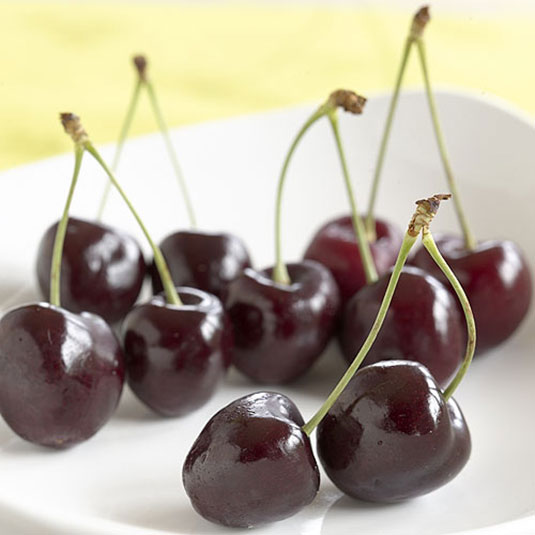
Often the Biggest Cherry of the year!
We have had the pleasure of working with two family farms over the last 25 years. And both sons of both families told us if they had a favorite cherry, off the record, it would be the Lapin.
Lapins have long been the benchmark for large late-season fruit.
Self-fruitful sweet cherry varieties originally came about through radiation-induced mutation in the 1950s. Dan Lewis at the John Innes Institute in England developed self-compatible cherry seedlings by pollinating Emperor Francis with irradiated pollen from Napoleon.
Charles Lapins in British Columbia then used that pollen to pollinate the Lambert variety, resulting in Stella. Stella was later crossbred with Van, resulting in the variety that bears Lapins' own name, released in 1984.
Pre-order your Lapin Cherries Here!
|
| |
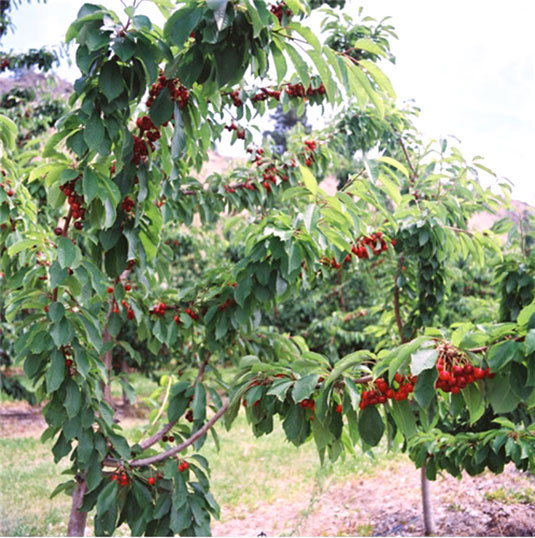
THE LAST CHERRY OF THE SEASON
This cherry has been getting bigger every season, often challenging the lapin for the biggest of the year.
Typically the lowest on the Brix scale, typically 14-17, giving the perception of a more sour cherry (incorrect description) it is less sweet. And quite frankly, by the end of eating all the cherries, a little less sweet is perfect!
The Sweetheart cultivar was developed at the Pacific Agri-Food Research Centre in Summerland, British Columbia.
The cross was made in 1975 and selected in 1982, and the variety was officially released in 1994. It was bred by David Lane, the same Dr. W. David Lane of the Summerland program whose name appears throughout modern cherry history, including as the breeder who later worked on Sweetheart's offspring varieties.
It is a hybrid of the Van and Newstar cultivars. Van is one of the most important foundational varieties in Pacific Northwest cherry history—firm, productive, dark red, widely used as a pollinizer. Newstar is less famous but was itself an early-blooming, large-fruited variety from Summerland. So the Sweetheart has deep Canadian roots, bred entirely within the Summerland program's genetic pool.
It has since been used as a parent cultivar for several new varieties.
The American Society for Horticultural Science awarded Sweetheart their Outstanding Fruit Cultivar award in 2012.
Pre-order Fresh Sweetheart Cherries now!
|
| |
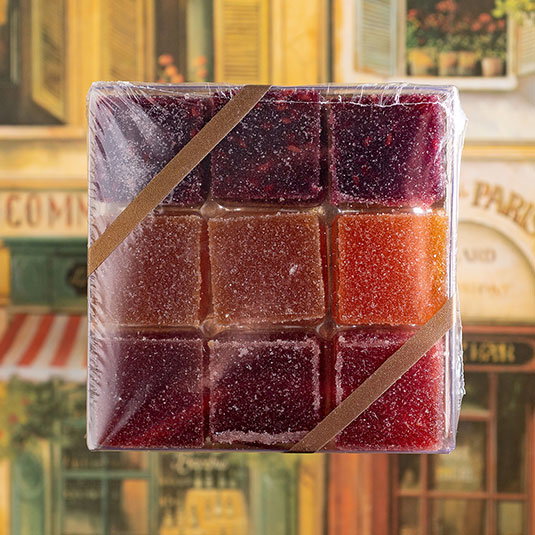
Mon Pari French Fruit Jellies
A pate de fruits from Mon Pari Gourmand is not simply a candy.
Founded in 1957 under the name Paris Caramels, this family-owned company has spent nearly seven decades refining the art of French confectionery.
The Conraux family built the business on a deep reverence for traditional methods, passing their expertise from one generation to the next while thoughtfully embracing innovation along the way.
Today, Mon Pari Gourmand is recognized by the French state itself as an Entreprise du Patrimoine Vivant (a Living Heritage Company) a prestigious designation awarded in 2018 that honors businesses whose mastery of traditional craft is considered part of France's living cultural legacy.
What separates Mon Pari Gourmand's pates de fruits from all others begins long before anything reaches a cooking pot. The company works exclusively with small-scale fruit growers spread across France, from the orchards of Normandy to the valleys of the Rhone.
Fruit arrives directly from the farm, harvested at the peak of ripeness because Mon Pari Gourmand understands that the quality of what goes in determines everything about what comes out.
Once the fruit arrives, it is peeled entirely by hand and processed immediately, preserving every note of freshness and natural aroma. No filler fruit is ever used.
Shop now for Mon Pari French Fruit Jellies - Pates de Fruits!
|
| |
recipe
Jean Galton's positively addictive Sugar & Spice Pecans are made with an exotic blend of flavors, including Ceylon Cinnamon.
Shop now for Sugar & Spice Pecans Recipe here!
|
| |
|
|
| |
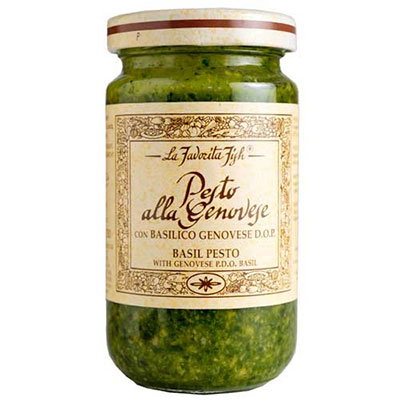
Makes a quick pasta easy
The company, La Favorita Live S.r.l., originally only sold their foods in the Piedmont and Liguria regions, using natural ingredients with simple commercial production.
Today, using what is considered the best for Pesto, basil from Genoa, "Basilico Genovese" is protected by the European Union with the Denominazione di Origine Protetta or the DOP designation. Pesto alla Genovese is an excellent representation of the quality the company still produces today, more than 60 years after its inception.
Using a machine of rotating knives and a mixing machine of "antique" origin allows for a delicate, handmade result in a commercial environment, allowing the basil to maintain its character all the way to you. Topped up with Ligurian olive oil (made from ripe Taggiasca olives) creates a natural preservative and cover for the pesto.
This is definitely an item you want in your Essential Pantry! Add to a bowl of trofie pasta, and you have an authentic Ligurian delish dish! Simple, quick and easily delicious!
Shop now for Pesto alla Genovese!
|
| |
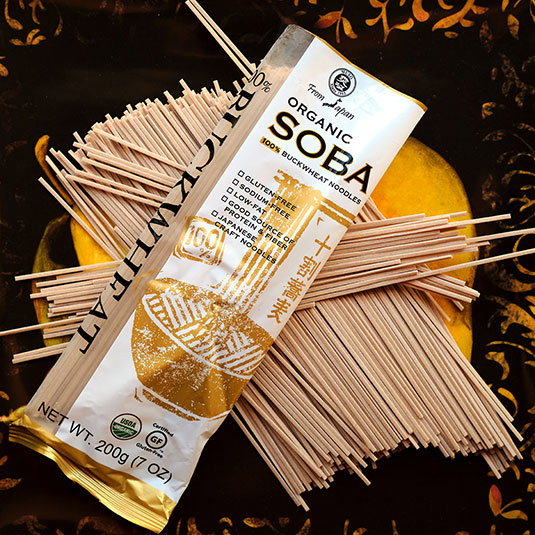
A delicious noodle
Buckwheat soba noodles are one of Japan's best-loved foods. They are so popular that certain restaurants have nothing but these noodles on their menus.
These delicious noodles take just minutes to prepare in hot water and have a distinctive nutty flavor that pairs well with cold dashi broth, scallions, sesame oil, and bean sprouts. This common preparation can also be embellished with shiitake, pork, vegetables, and tempura.
They can be chopped and rolled with vegetables in nori for a vegetarian sushi, or coated with a sheen of butter and tossed with sauteed fresh vegetables.
However you nibble on them, slurping down these long noodles is said to ensure a long and happy life.
Shop now for Organic 100% Buckwheat Soba Noodles here!
|
| |
|
|
“
Shared by a Reader
The ultimate comfort food. This is the real deal—rich, creamy deliciousness. Some people put bread crumbs on top before baking or potato chips on top. Do whatever you like, after all, it's your mac n' cheese. Sometimes you just want whatever your mom used to do...that is the definition of comfort food.
— Marian, ChefShop Newsletter Reader
See the Mac n' Cheese Recipe here!
|
| |
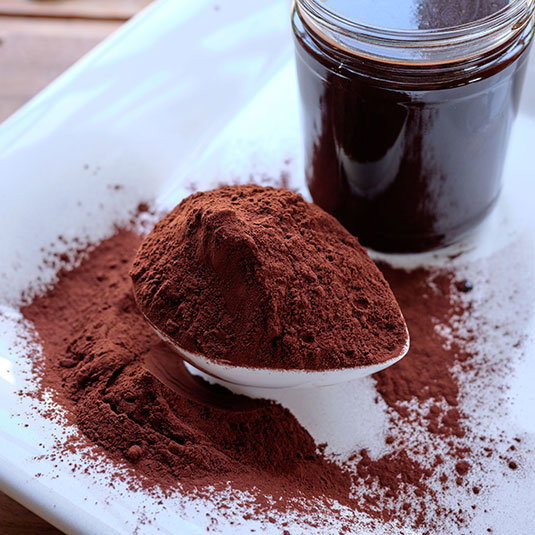
Richer, Darker and Full of Chocolate Flavor
Professional pastry chefs are using ChefShop Grande Brut because it does several things well at once: deep flavor, smooth texture, rich color, easy blending, low acidity, and real versatility across applications. It is a many-trick cocoa powder.
We stock it now because after working with it ourselves, we found it spectacular! It makes a giant difference!
ChefShop Grande Brut contains 22% to 24% cocoa butter. That is significantly higher than most cocoa powders on the market, and it is one of the main reasons we chose it. That extra cocoa butter is not a minor detail. It changes how the cocoa tastes, how it blends, and what your finished desserts actually feel like.
Most people focus on cocoa percentage (and with cocoa powder it is always 100% as it has no sugar) and overlook fat content entirely. It is the balance between cocoa mass and cocoa butter that matters. Cocoa butter is the natural fat in the cacao bean, and it shapes everything about how cocoa performs in a recipe.
Shop now for ChefShop Grande Brut Cocoa Powder here!
Shop now for our Classic ChefShop Cocoa Powder here!
|
| |
|
SHARE THE LOVE
Give the Gift of Love Through Food
Gift Certificates available for any amount you choose.
Get Gift Certificate →
|

|
|
| |
This Week's Recipes
|
See What You Missed in Previous Newsletters
|
|
|
ChefShop.com
1425 Elliott Ave W
Seattle, WA 98119
206-286-9988
You're receiving this email because you purchased from us or subscribed. We respect your privacy and will never share your email address.
Unsubscribe from this list. |
Privacy Policy |
Terms
|
|


