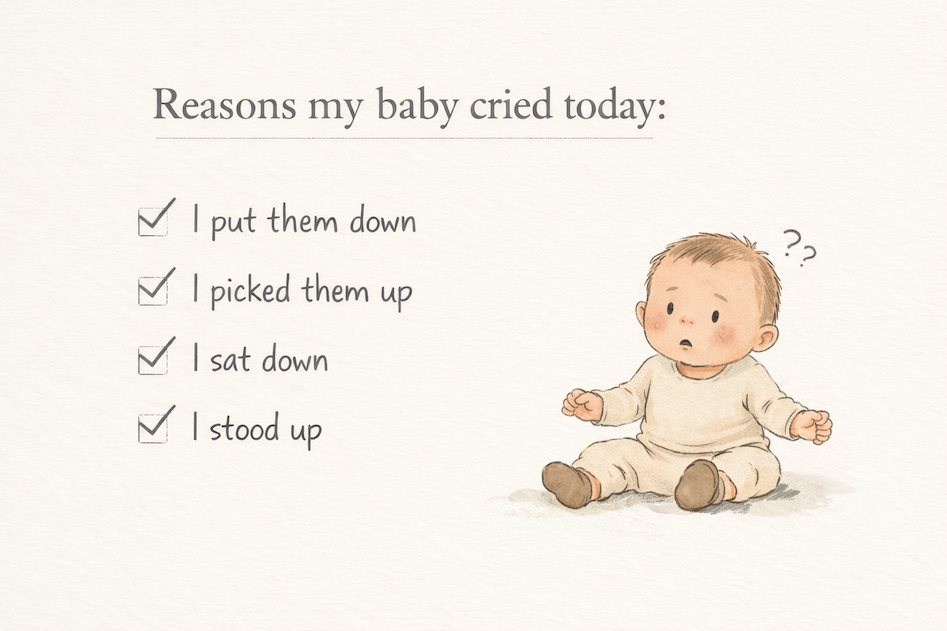
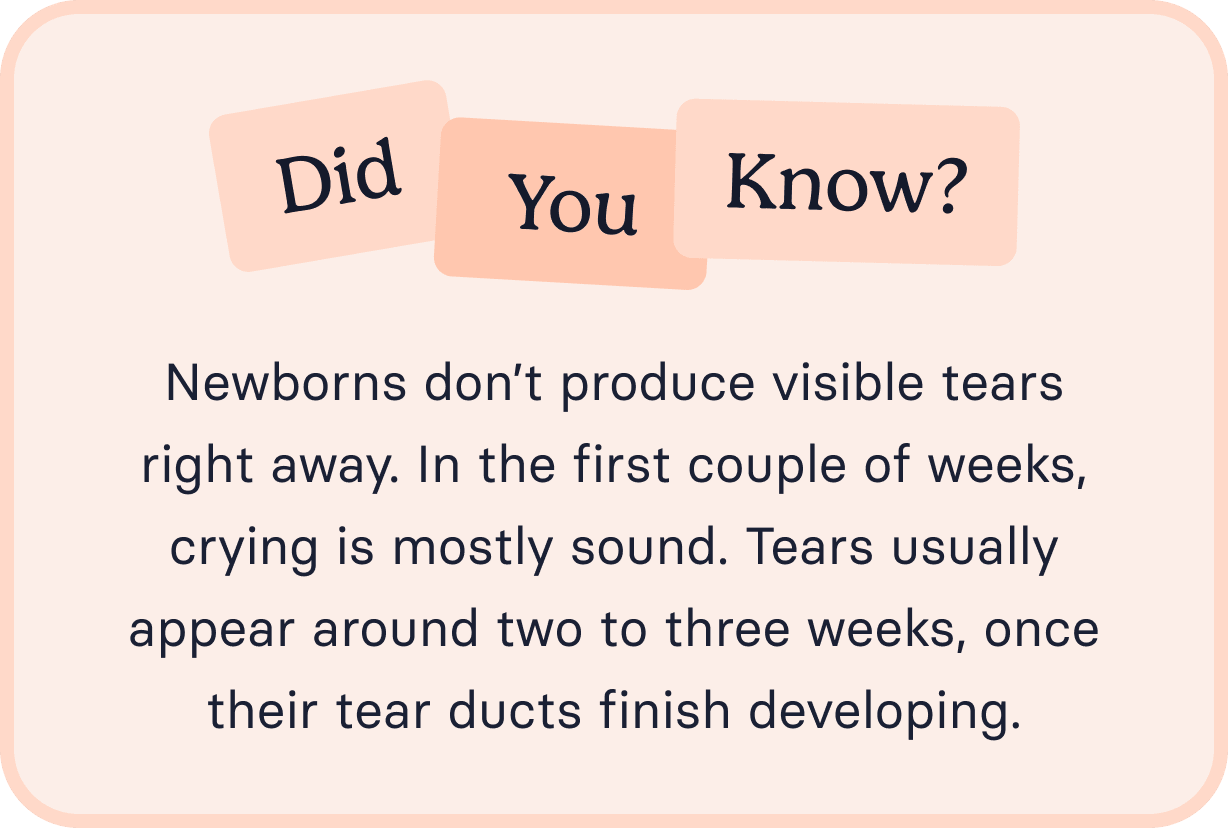
Babies don’t all behave the same way. They don’t sleep the same. They don’t settle the same. But in those first weeks, there is one thing they all have in common. They cry.
How much varies. Some babies cry for a few minutes and settle, while some may keep going. But don’t worry, it's perfectly normal and as babies reach two to four months old the amount of crying should go down. Unfortunately, there's no app that can translate baby cries (who wouldn’t love one?). But there are patterns. So what do those cries mean? And how do you handle it when it’s a lot? Let’s get to it!
|
|
Crying is how babies talk
|
|
Babies cry because it’s how they’re built to communicate. Before words, before gestures, crying is the signal that gets a caregiver to respond.
Research shows that infant crying isn’t random. From an evolutionary perspective, crying functions as a signal to get a caregiver’s attention and keep the baby close, which would have helped with survival in our early human history. Sarah Ockwell-Smith, a parenting researcher and author, explains that crying is something babies do for survival. They don’t have the ability to calm themselves yet, and they don’t have other ways to ask for help. So yes, from a biological point of view, crying works, and that’s exactly what a newborn needs.
According to Dr, Michael Chichal, MD, it is very normal for the baby to cry more in the afternoon or evening. It is often called the witching hour. This happens because sometimes babies are overwhelmed or overtired by the end of the day. If the baby is feeding well, growing normally and relaxes at other times, then this pattern is not harmful.
|
|
The most common reasons babies cry
|
|
Most baby cries fall into a few buckets. Not always neatly. Sometimes it’s more than one at once. But these are the usual suspects.
- Hunger
This is usually the first thing to check. Newborn stomachs are tiny, so babies need to eat often. Sometimes every one to three hours. If it’s been a while since the last feed, hunger is a good bet. What you might notice: Rooting, sucking on hands, smacking their lips, turning their head like they’re searching for something.
- They’re tired, but can’t fall asleep
This one trips a lot of parents up. You’d think a tired baby would just sleep. But babies don’t know how to calm themselves yet. They get overtired, their bodies get wound up, and crying is what comes out. What you might notice: Yawning, rubbing eyes, looking away, fussiness that starts during play and keeps building.
- Something feels uncomfortable
Sometimes it’s obvious. A wet diaper. Sometimes it’s not. Too hot. Too cold. A tag that scratches. A sock that feels weird. Even a stray hair wrapped around a toe. What you might notice: Squirming, arching their back, crying that doesn’t ease with your usual soothing.
- Gas or tummy trouble
Newborn digestion is brand new. Gas can get trapped, and when it does, it can really hurt. What you might notice: Pulling legs up toward the belly, a tight face, turning red, crying that comes and goes in waves.
- They want comfort
Sometimes your baby isn’t hungry or tired or uncomfortable. They just want you. They spent months close to your body. Being alone can feel like a big change.What you might notice: Crying that stops the second you pick them up.
- Too much going on
Lights. Sounds. People. Everything is new, and sometimes it’s just too much all at once. What you might notice: Turning their head away, clenched fists, hiccups, crying that gets louder the more you try to engage.
|
|
How to calm a crying baby
|
|
There isn’t one thing that works every time. What settles your baby today might not work tomorrow. That’s normal. But these approaches tend to help many babies, much of the time.
- Bring them close and keep moving
Babies are used to motion. Your walking, swaying, or gentle bouncing can feel familiar and reassuring. It doesn’t need to look a certain way. If you’re holding them and moving, it counts.
- Add steady sound
Newborns aren’t used to quiet. Constant sound feels familiar. White noise, running water, or a soft, steady “shhh” can help create a calmer background when everything feels loud.
- Offer something to suck
Sucking is naturally soothing for babies. Nursing, a pacifier, or a clean finger can help them settle when they’re overwhelmed. Some babies rely on this more than others.
- Soften the environment
Sometimes babies need less, not more. Dim the lights. Lower your voice. Step into a quieter space. Fewer sights and sounds can help their nervous system slow down.
|
|
How to stay calm when the baby cries
|
|
There are moments when nothing works, and that can feel overwhelming. In those moments, it’s okay to put your baby down safely and give yourself a few minutes of quiet. A small pause can make it easier to return with calm. You can try:
- Listening to music
- Having a cup of tea
- Reading a book
- Calling a friend
- Talking to your partner or a family member
- Meditating or relaxation exercises
|
|
Your baby is going to cry. Some days you'll nail it and figure out exactly what they need. Other days you'll try everything and they'll just keep going. Your baby will learn new ways to communicate, and you’ll get better at reading them. One day you'll look up and realize you’re negotiating with a toddler who has opinions about wearing pants. You’ll miss these days (maybe!)
|
|
Once your little one arrives, quality sleep becomes precious. That's where Cradlewise comes in. Using SmartSoothe technology and built-in sensors, the crib learns your baby’s sleep patterns and detects early wake cues - giving parents back (on an average) up to 2 hours of sleep.
|
|
|
|
|