All about that baby-soft skin & how to care for it
By Cradlewise Staff
|
|
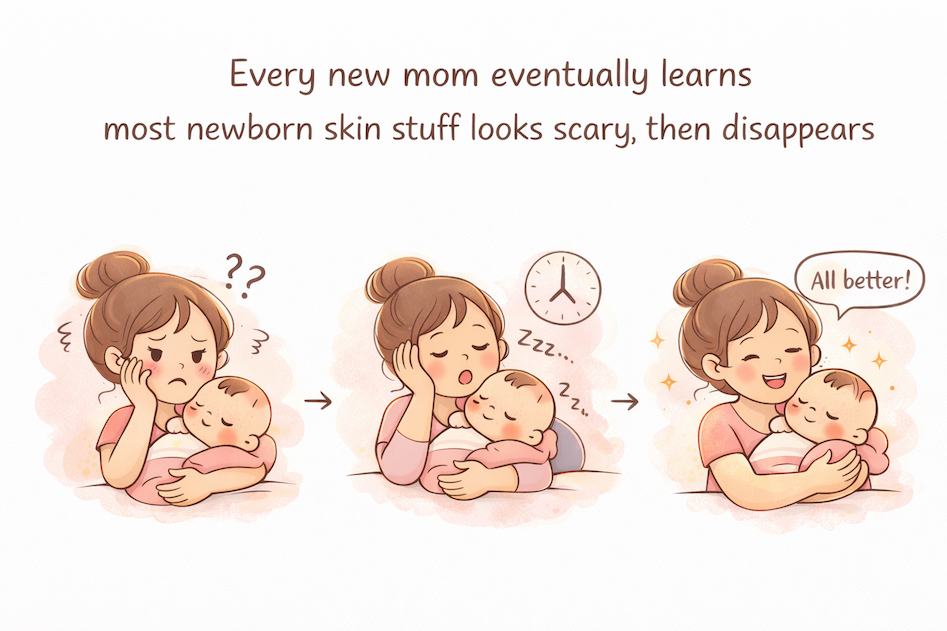
Newborn skin is thinner than yours, more sensitive than yours, and surprisingly reactive to everything—air, fabric, even that organic soap you spent twenty minutes picking out. It looks flawless in those first photos. But it's actually pretty delicate and constantly adjusting to life outside the womb.
So you'll have questions. Should I bathe my newborn every day? What soap is safe? And what are those white patches all over their scalp?
You’re not alone in having these questions! Understanding what's happening makes it way less stressful. And the care part? Simpler than you think. We'll go through what you need to know about baby skin and the few things that actually make a difference.
|
|
Why newborn skin is different from yours
|
|
Your baby's skin is about 30% thinner than yours. That's why it feels so soft. And why it reacts to everything. For nine months, your baby floated in fluid. Warm. Protected. Constant temperature. Now they're out here with air and fabrics. Their skin has to figure all of that out. So you'll see changes. This isn't a problem. It's just their skin adjusting by learning how to make its own oils, hold onto moisture, all that stuff. It takes a few weeks. But it happens without you having to do much.
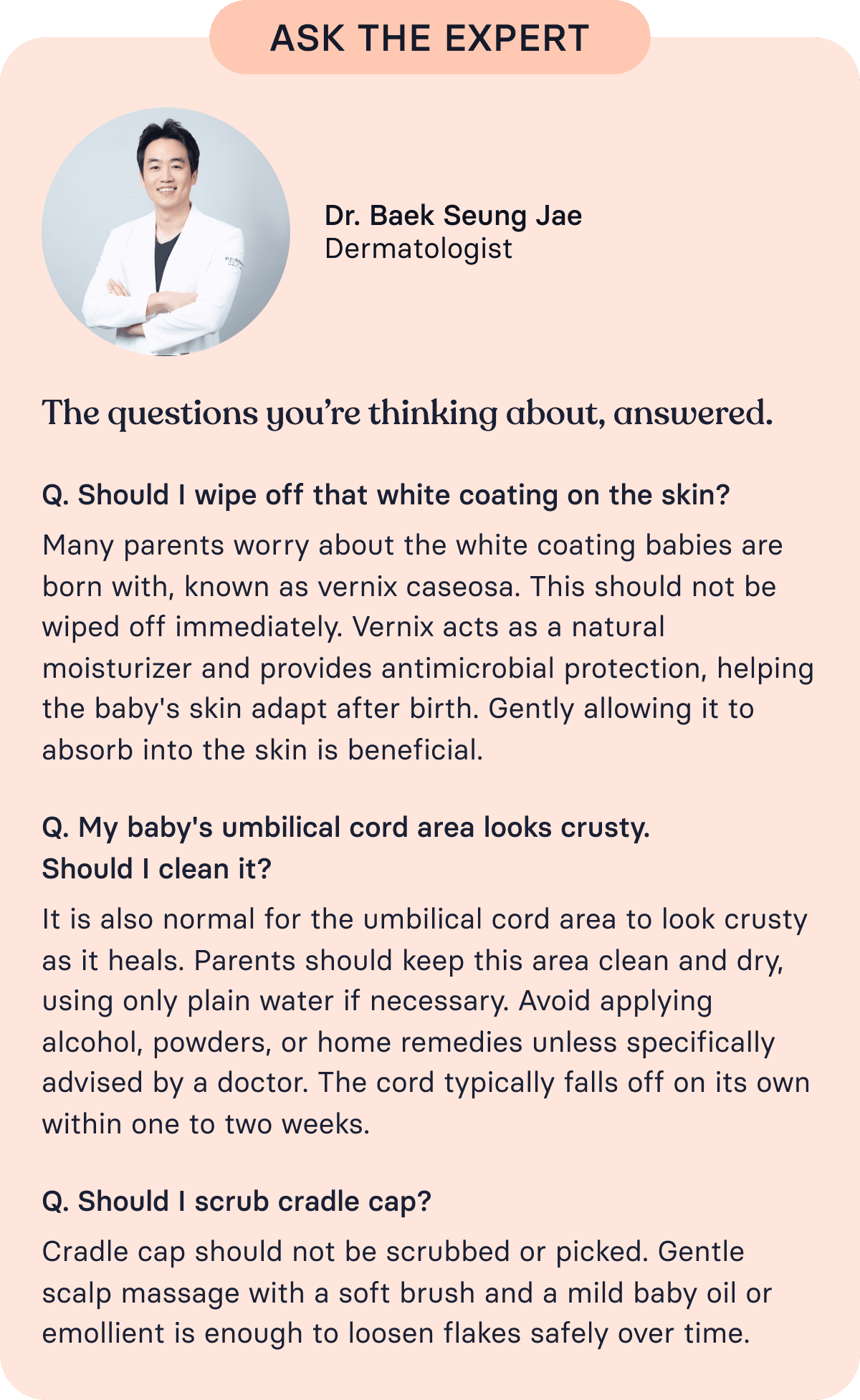
“Newborn skin needs protection, not over-treatment. A baby's skin is thinner, more sensitive, and still developing its natural barrier, so gentle and minimal care is always the safest approach.” - Dr. Baek Seung Jae, Dermatologist
|
|
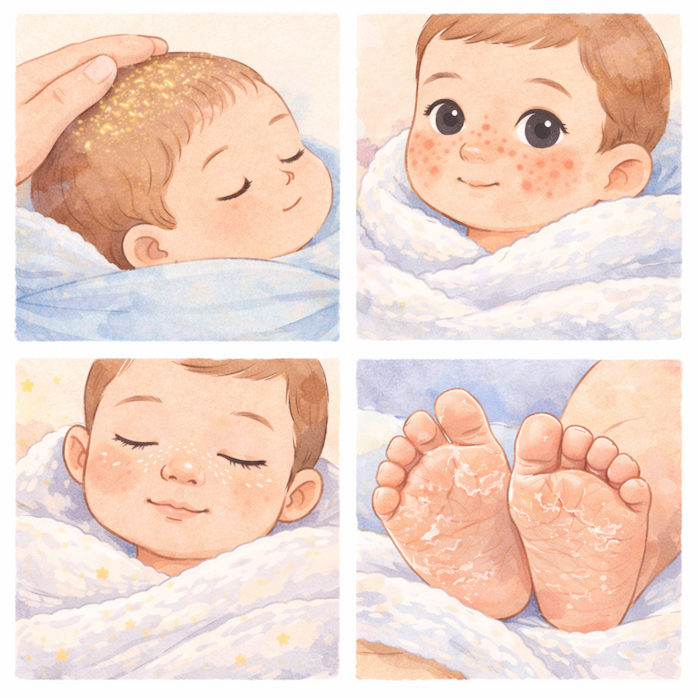
The normal stuff you might see
|
|
Cradle cap
What’s going on? You may find yellow or flaky patches on your baby’s scalp. Doctors call it seborrheic dermatitis. It’s very common. It usually shows up in the first few months. No one knows the exact cause. It’s not painful.
What helps? Most of the time, nothing. Gentle washing is enough. It often clears up on its own. If it doesn’t improve or starts to look worse, check in.
Baby acne
What's going on? These are small red bumps on your baby’s face. They usually show up around two to four weeks. They come from leftover pregnancy hormones still moving through your baby’s body.
What helps? Warm water during bath time is enough. No special products. The bumps fade on their own. If the bumps spread beyond the face, look infected, or keep getting worse, check in with your pediatrician.
Milia (and those white bumps)
What’s going on? Milia are tiny white dots, often on the nose or cheeks. They look like little pearls under the skin. They happen when dead skin gets trapped near the surface.
What helps? Nothing. They go away on their own, usually within a few weeks. Don’t try to pop them.
Peeling skin
What’s going on? Many newborns shed their outer layer of skin. You’ll notice it most on the hands and feet. It’s just the skin adjusting after life in the womb.
What helps? Let it happen. The skin underneath is fine. If it looks dry, a fragrance-free moisturizer is okay. Most babies don’t need anything.
|
|
The basics of baby skincare
|
|
Baby skin doesn’t need much. In fact, less usually works better.
1. Fewer baths are better
Babies don’t need a bath every day. Two or three times a week is enough. Bathing too often can wash away the natural oils that protect their skin.
2. Keep products simple
Baby skin absorbs a lot. So stick to fragrance-free, hypoallergenic products. Perfumes and dyes can irritate their skin. You don’t need fancy. Plain works best.
3. Warm water does most of the work
You don’t need much soap. Warm water cleans just fine. If you use a wash, choose something gentle and use less than you think you need.
4. Moisturize only when skin looks dry
Some babies have dry skin. Some don’t. If their skin feels rough or looks flaky, a basic fragrance-free moisturizer can help. If their skin looks fine, you can skip it.
5. Preemie skin needs extra care
Premature babies have thinner skin that loses moisture more easily. It can dry out faster and break down more easily too. A small amount of petroleum jelly each day can help lock in moisture and protect their skin barrier.
|
|
According to Dr. Baek Seung Jae, when choosing skincare products, it is important to avoid harsh or irritating ingredients. Fragrances, alcohol, parabens, sulfates, phthalates, essential oils, and strong preservatives can easily trigger irritation, rashes, or eczema in newborns. Always look for products labeled as fragrance-free, hypoallergenic, and dermatologist-tested for babies.
|
|
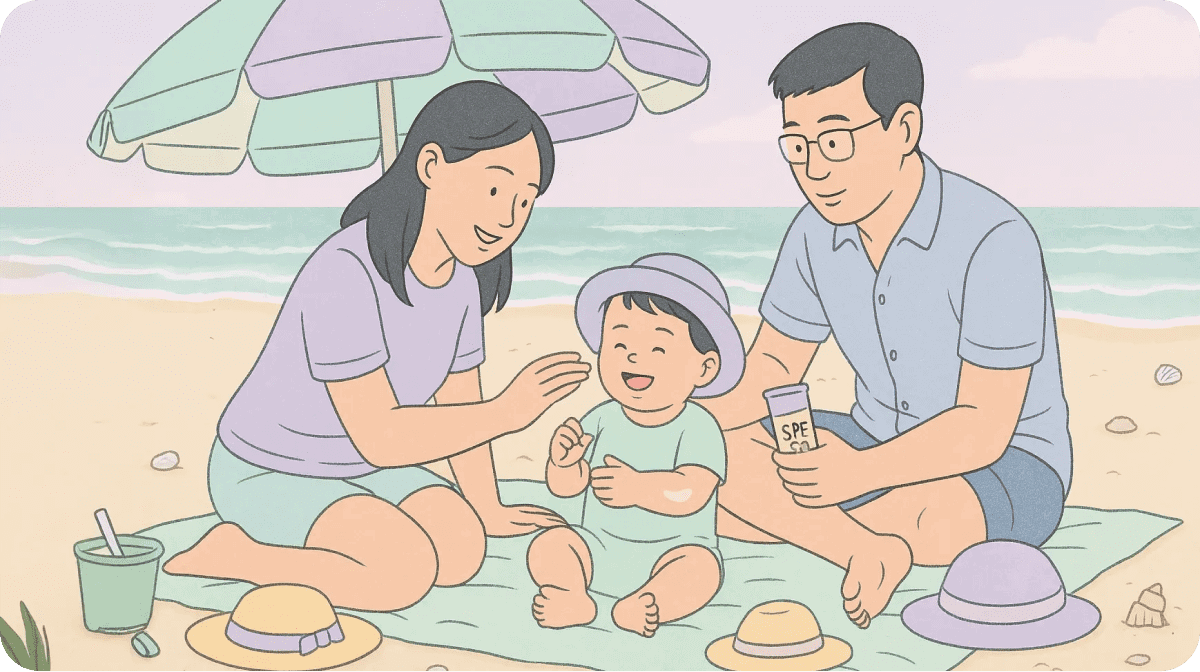
This confuses a lot of parents. You know sun protection matters, but you're not sure if sunscreen is safe for newborns.
✔️Avoiding the sun is the best protection.
✔️Use clothing, hats, and stroller covers whenever you take your baby outside.
✔️Sunscreen should be avoided when possible for babies under six months because the FDA hasn't studied its safety in infants that young.
For babies older than 6 months, use a fragrance-free, hypoallergenic sunscreen with zinc oxide or titanium dioxide as the active ingredients. These are physical sunscreens. They sit on top of the skin and block UV rays.
|
|
Sun safety 101: When can babies wear sunscreen?
|
|
The TL;DR on baby skin ❤️
|
|
Most skin stuff fixes itself. The things that don't? Your pediatrician has seen them a thousand times. Call if you're worried. No one's going to judge you for checking. And hey, those ridiculously soft cheeks are only this soft for a little while. Enjoy them.
|
|
Once your little one arrives, quality sleep becomes precious. That's where Cradlewise comes in. Using SmartSoothe technology and built-in sensors, the crib learns your baby’s sleep patterns and detects early wake cues - giving parents back (on an average) up to 2 hours of sleep.
|
|
|
|
|