Going home and recovering after a C-section
By Cradlewise Staff
|
|
Preparing for labor means preparing for all the possibilities. C-sections included. If you have one scheduled, you're here for a reason. If you're wondering what recovery looks like in case you need one, read on.
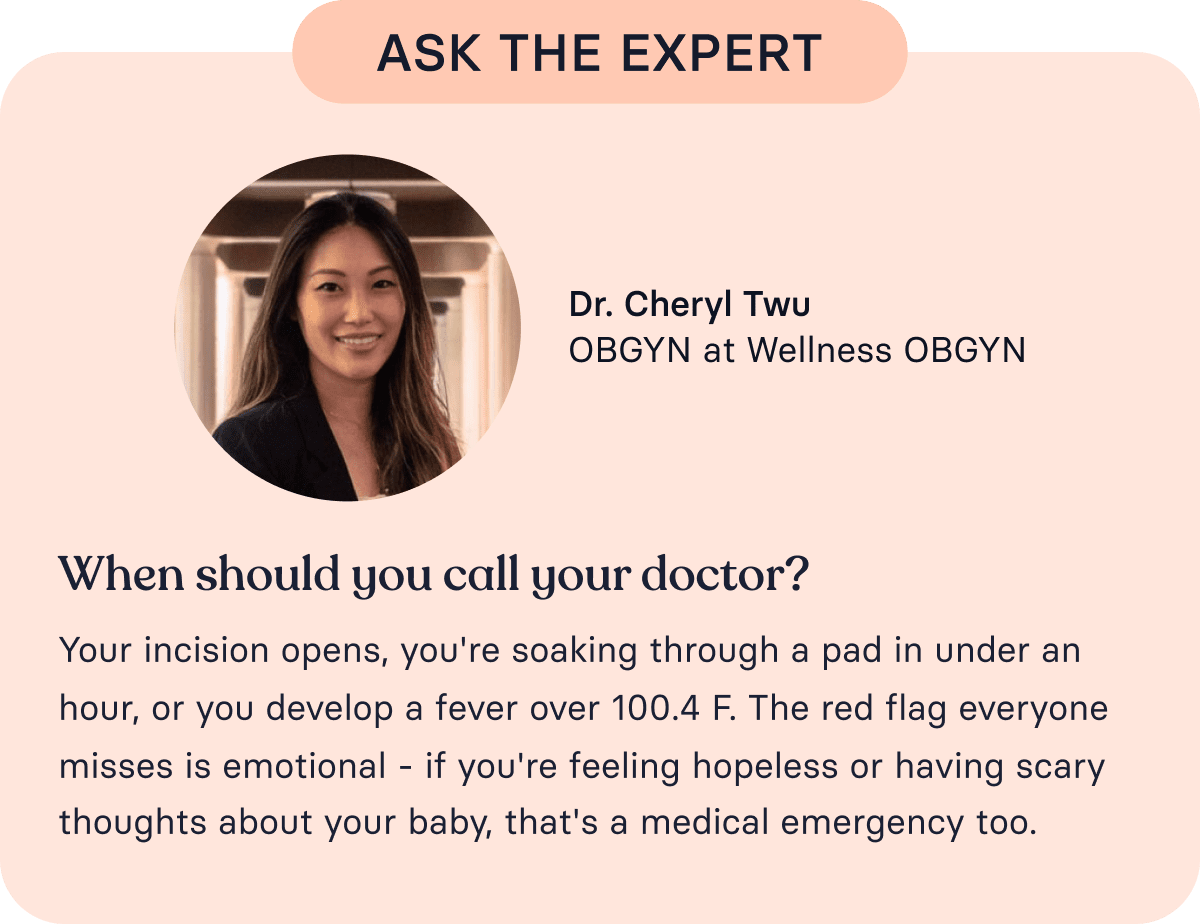
Although C-section births are generally safe, taking care of a newborn while recovering from major surgery is a lot. The hospital will send you home with instructions and pain meds. But it's the small stuff that catches you off guard once you're past the front door. The daily routine. How your body feels. What you can and can't do yet. Dr. Cheryl Twu, OBGYN at Wellness OBGYN is here to walk you through caring for yourself during recovery.
|
|
How long does it take to recover after a c-section?
|
|
Once you're home, expect to take things easy for several weeks. If you had complications during delivery or you're managing other kids at home, recovery might take longer. That's normal. Most people feel a lot better by six weeks. But if you're still in pain or something doesn't feel right at that point, talk to your doctor.
|
|
How are the first few weeks at home?
|
|
We asked moms who've been through c-sections to share what those first weeks at home were really like. Here's what they told us.
- The first thing everyone mentions is how slow everything is. It might take a bit of effort and practice to get up from the couch and that's okay!
- Your abdomen is going to feel tight and sore. You might need to hold a pillow against your incision when you cough or sneeze. Even laughing can be weirdly painful.
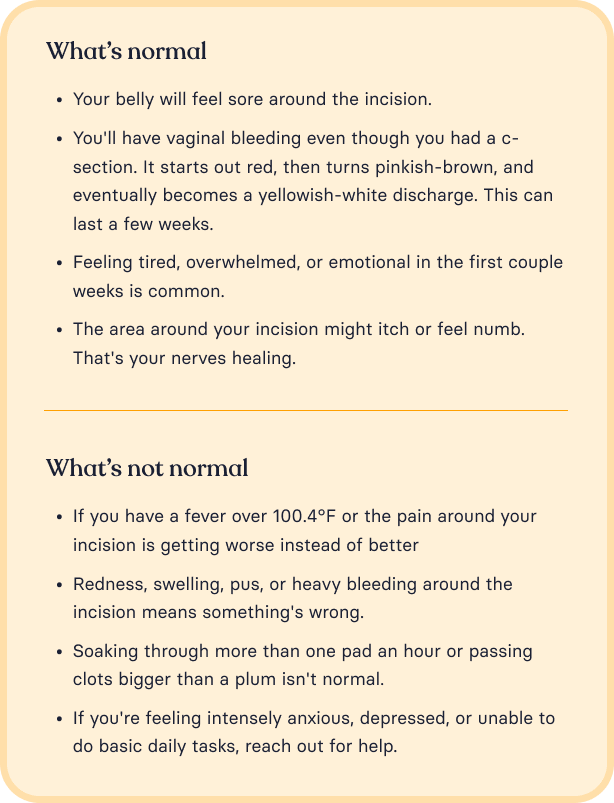
- The bleeding might be quite heavy in the first week, like a heavy period. It might also be heavy when you first get up in the morning, and after breastfeeding.
- Sleep is hard. You can't just roll over, and you have to kind of log-roll yourself to the side, push up with your arms, and try not to pull anything too much.
- You might feel emotional about your changing body. It’s normal to feel frustration about needing so much help and not being able to move the way you want to. That's real, and okay.
|
|
How to care for the incision?
|
|
Your incision is usually low, right along your bikini line. You might have a dressing over it when you first get home. Your doctor will tell you when to remove it, usually after a day or two. Once it's off, you can look at it. I know that feels scary, but looking helps you know what's normal for your body.
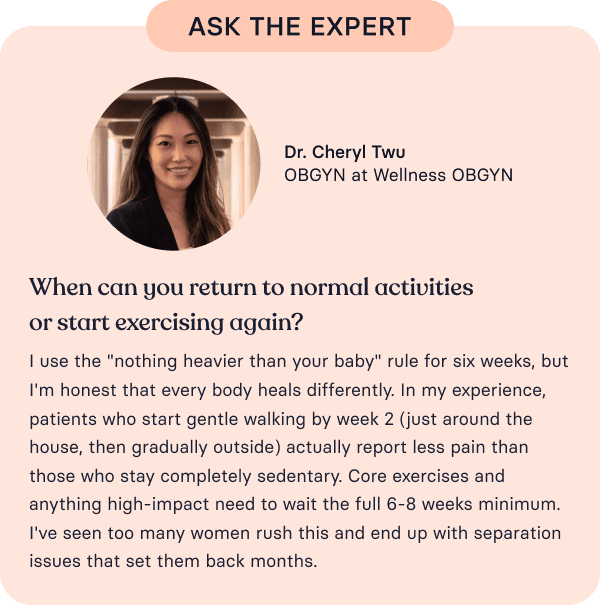
Dr Cheryl Twu says, “Keep it dry for the first week, then gentle soap and water is fine. I tell patients to pat, never rub, and let air get to it when possible at home. The biggest mistake I see is patients using fancy creams or hydrogen peroxide too early, which actually delays healing. Wait until week 3-4 before any scar treatments.”
|
|
What are the things that make recovery easier?
|
|
- High-waisted underwear or postpartum underwear that sits above your incision. Nothing should rub on that scar.
- A belly band or postpartum wrap. Some people love them, some don't. Try it and see if it makes you feel more supported when you move.
- A step stool by your bed if it's high. Getting in and out is easier.
- Pillows. So many pillows. One to hold against your belly when you cough. One between your knees when you sleep on your side. A breastfeeding pillow so you're not holding your baby's weight against your incision.
- Stool softeners. Your first postpartum poop is scary enough without adding constipation from pain meds.
- Accept help when you can. Say yes when people offer to bring food or hold the baby while you shower.
|
|
Postpartum recovery care after cesarean
|
|
A guide for your partner or support person
|
|
If you're the person helping, here's what makes a real difference.
- She's recovering from major surgery. Her core muscles might not work the way they normally do, so things that seem simple might be really hard.
- Hand her the baby when she's already sitting down. It saves her from having to reach or bend, which can pull on the incision.
- Offer your arm when she needs to get up.
- Bring things to her. Water, snacks, diapers, her phone. Walking back and forth across the room takes effort she might not have right now.
- Keep an eye on how she's doing. If the pain seems to be getting worse instead of better, or if she has a fever, or if the incision looks more red or swollen, help her call the doctor. Same goes if she seems really down or anxious. Trust your gut if something feels off.
- She might feel frustrated about needing so much help. That's normal. Don't take it personally. Just show up and be there.
|
|
Recovery takes time. Sometimes longer than you want it to. There will be days when you wonder if you'll ever feel like yourself again. You will. In a few weeks, moving won't hurt. The incision will fade into a scar, and you'll realize you made it through.
|
|
When your little one sleeps peacefully, you will also get a chance to rest better and recover faster. Cradlewise learns your baby's sleep patterns and gently soothes them back to sleep, giving you those extra hours of rest you need.
Plan ahead and save more during our Holiday Sale!
|
|
|
|
|