US · crema.co

Acidity, where does it come from and how did it get in my coffee

Today is the exciting conclusion to the Acidity 2 parter. Looking in to which Terroir, Varietals, Processes and Roasts have more or less acidity.


This email was sent

Is this your brand on Milled? Claim it.

 
May, Day 12, 2-4
 
Today, in this Sunday Sippin, it's time to bring all this acid talk to a conclusion, with part 2.  Following the list format like last week, we'll go through the various coffee Terroir's, Varietals, Processes and how these affect a coffees perceived acidity.  Remember, acidity is not bad, bitter is bad, and they are different.  A coffees flavor is derivative of it's acidity.
 

Welcome to Sunday Sippin'

 
Beverages Ingested, Tested &  Suggested
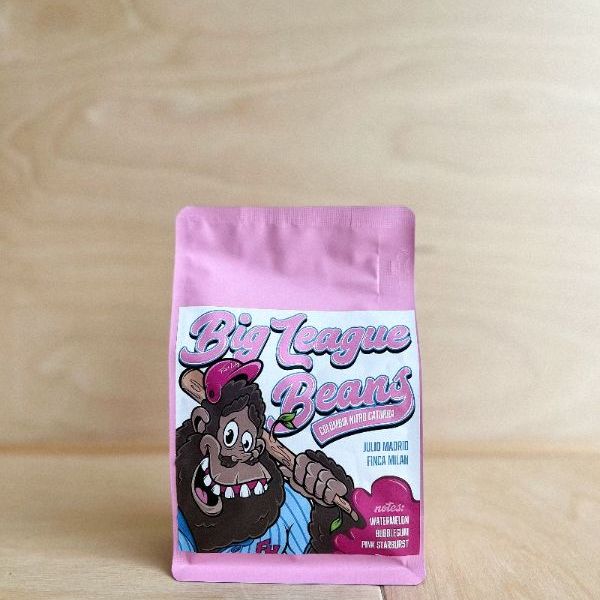
  1. Coffee of the Week: Sasquatch Vol. 12; Big League Beans
  2. Cocktail Suggestion: Cucumber Mezcal Spritz
  3. Wine:  Chateau Margaux, 1985
Sunday Sippin Line Up
SUNDAY LISTENIN:
Hana Vu

Alone

YOU TUBE
SPOTIFY
APPLE MUSIC


Acidity & Coffees, Part 2 of the Relationship 


Last week we looked at the 10 most notable acids in coffee, I’m sure your brilliant mind absolutely has them memorized, so no need to go over them again (or just search your email history to see them again).  And as is consistently said in specialty coffee, acidity in coffee isn’t easily defined, so it’s generally described in the form of how one perceives it vs raw data about which acids and how much.  This is because that data may give you tangible facts about the acids present but how those facts relate to your cup would take a food scientist to interpret.  And so, until a better method comes along, we continue to rely on the “pros’ to tell us how they perceive the acidity in the cup and use that to base our decisions.  Nevertheless, there are certain things to know about acidity, such as how it relates to terroirs (aka it's origin), which varietals tend to be more or less acidic, as well as how processes and roasting styles play a part.  Arming yourself with an understanding about how these affect acidity will help you look for coffee genres that match your preferred thresholds/preferences.  Even if you continue to try all different coffees, which of course, yes you should. You will better know what to expect going in to each one and thus what to be looking for in each, in turn becoming a coffee sommelier of sorts (breakfast pairings?).


Terroir, or a coffees origin.
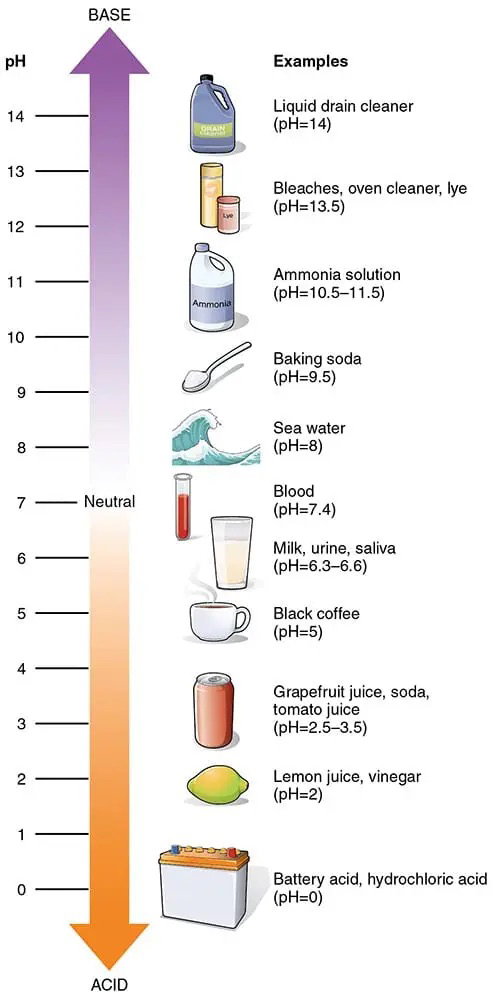
Soil and climate naturally will have a massive impact on the acidity (the flavor) in the coffee.  Any gardener or farmer or even anyone’s who tried to unsuccessfully grow grass understands what it means to measure PH in your soil and then adjust (add something to bring it up or down) accordingly.  Even coffee farmers will often use lime to help foster coffee tree growth.  Then you have to take in average temperature and by extension elevation (average temps change at different elevations) in to the equation, along with weather, such as average rainfall & when.  And so we tend to find coffees from different lands all have their own notable acidic flavor characteristics, quite indicative of their origin. 
Of course you can get very granular on this topic, looking at micro-climate and even meso-climate, like how Burgundy has different price points for wines from different parts of the slope on the same relatively small hill.  However, today we’re just talking about macro-climate affects.


  • South American coffees from Colombia tend to be higher in Citric acid, these coffees usually are said to have medium acidity.  And in comparison to especially African and even their Latin American counterparts, South American coffees do tend to be the least in terms of perceived acidity levels/descriptions.  Brazilian coffees would probably be on the lightest side of the 3.  Whereas, Peruvian coffees, particularly of specialty coffee grade, are usually grown at higher elevations and compared to Colombia and Brazil would be the highest in acidity of the 3.
     

  • Latin American coffees tend to be more vibrant in their perceived acidity levels than South American and Indonesian coffees.  Costa Rican coffees are generally described as having bright and lively acidity, thanks to the volcanic soil of the area.  Nicaraguan coffees the same.  Guatemalan coffees are said to be moderate in acidity and Mexican coffees are often described as having light to moderate acidity, so they are perhaps going to be the least acidic (perhaps better to say less vibrant) of Latin American coffees, somewhat similar to Brazil.
     

  • Southeast Asian coffees are thought to have the least vibrant acidity of all coffee growing regions.  In specialty coffee, these are predominantly going to be coffees from Indonesia but every once in a while a coffee from Vietnam or India may pop up.  Nevertheless, Indonesian coffees are viewed as more earthy, maybe even grainy and heavier bodied, this heavier body is sometimes attributed to being more "flat" which is a characteristic of less perceived acidity in the coffee.
     

  • On the flip side, African coffees are said to exude acidity and are labeled as "complex", meaning they have become known for vibrant, dancing acidity in their coffees.  Ethiopia is known for juicy, citrusy, pronounced acidity.  Kenyan coffees, which are high in Malic acid, are often said to have bright acidity and the ones you will often hear referred to as “Complex”, due to their notably acidic style.  Tanzanian coffee while considered bright and more acidic, in relation to other growing regions, tend to be a little more moderate than their Kenya and Ethiopian counterparts.  Coffees from smaller countries like Rwanda, Burundi and Cameroon would be the most moderate of the African coffees in terms of perceived acidity levels.  This is thanks, in part, to the higher elevations these coffees are grown at, where the average growing temp tends to be cooler with less oxygen, and so the ripening process is slowed. 


Outside of soil, the average temperatures of the growing areas will have a definite impact on acidity in the cherries/the beans themselves in the same way wine does with its grapes.  Cooler wine-growing areas are known for more vibrant acidic wines, but also less body, such as Chardonnay or Pinot’s because the cooler, shorter growing season means less time for the sugars to develop and thus their acidity is more pronounced.  Whereas hotter regions produce big bold wines with heavy body and less acidity due to the heat and longer growing season producing more sugar in the grape.  Fruits, by and large, all play by the same rules, and so coffee acts the same, with more acidity developing in cooler areas.  To a proper degree (yes, “proper” is subjective) we want acidity in coffee and so that is one of the reasons why high altitudes are required for specialty coffees, the cooler, yet still tropical year round temps provide the perfect acidity balance.


Varietals.
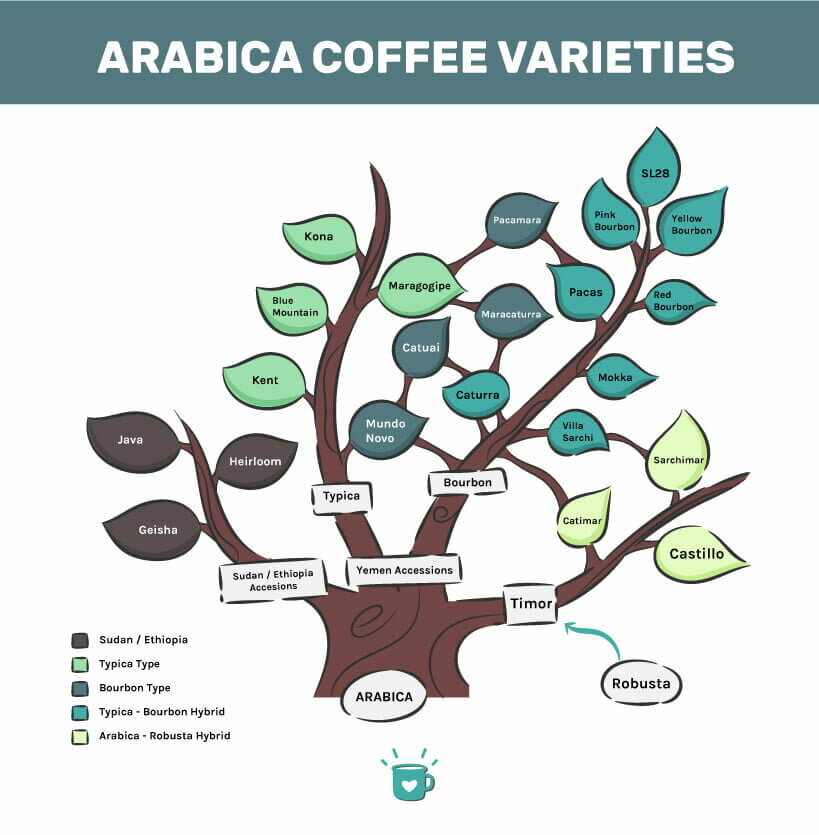
Now, of course giving a brief description of the perceived Acidity level for each varietal, may be interesting to someone (possibly) but ridiculously long and difficult to gather.  Thanks to the many, many mutations and hybrids there are 1000’s of varietals worldwide, just in the Arabica species alone.  However, even though crema.co doesn’t have all the varietals listed in our database, we don’t need too because much of the lesser known or wild varieties are just all classed together under varietals like Typica or Ethiopian Heirloom (aka Ethiopia Landraces).  And not all varietals are good, or are able to weather disease and climate change so specialty coffee tends to generally offer a fairly select group of the most popular/favored ones, which I list below.  Of course, this is a short list, there are certainly several more that are commonly offered and specialty coffee is happy to cup new ones all day long and then make them available if they meet the mark.  When you come across those ones, a quick google or chatgpt (if you want to see to King Google dethroned someday) look up, should help you become at least little bit more familiar with the characteristics of that varietal, usually someone, somewhere has written about it.


  • Naturally, we start with the native catch-all varieties, Typica and Ethiopian Heirloom.  Typica, as you may have guessed, due to it's wide range and being grown around the world (and sometimes some producers don't even bother to have their beans lab tested and just defer to calling them a Typica variety by default) you can’t exactly pinpoint their perceived acidity levels but nonetheless, the varietal has its own set of inherent characteristics no matter where it’s grown.  It often exhibits a moderate to high level of acidity and they tend to feature bright, citrusy acidity.
     

  • Ethiopian Heirloom:  Being that this is just a bucket name for the literally 1000+ wild varieties in Ethiopia, these varietals can exhibit a wide spectrum of acidity levels, from moderate to high. Ethiopian Heirloom coffees are known for their bright acidity and “complex” flavor profiles.


  • Bourbon:  another widely available, classic coffee varietal that tends to have a moderate to high acidity level. Like Typica, Bourbon coffees usually are described with bright, citrus and winey (wine like) acidity.
     

  • Gesha/Geisha: The Gesha varietal is renowned for its exceptionally high acidity levels. Coffees produced from Gesha beans often have a bright, intense acidity with complex flavor notes.  Geisha coffees always place highly in premium coffee auctions, and that is in large part to how the acidity helps promote its floral and tropical fruit like characteristics.
     

  • SL28/SL34: These varietals have become increasingly popular thanks in part to coffees professionals, like James Hoffman calling shouting them out.  Developed by Scott Laboratories in Kenya, these are known for their bold, winey acidity. SL28 and SL34 coffees are regularly described as featuring pronounced acidity with fruity and wine-like flavors that you’d find/compare to fruits like black currant, grapefruit, and tomato.
     

  • Caturra: A mutation of the Bourbon varietal is widely grown in Central & South America.  Caturra coffees typically have a moderate to high acidity level.  They tend to range heavily, probably due to the various processing methods that are used on them, so you’ll see them described with citrusy acidity but then also described as having a nutty, which is more commonly associated with lower acidity.
     

  • Pacamara: A hybrid varietal created by crossing Pacas and Maragogipe. It often displays a moderate to high acidity level, along with a smooth, full-bodied profile which generally denotes a lesser/moderate acidity level.


  • Villalobos: A relatively new coffee varietal developed in Costa Rica. It is prized for its high acidity, which contributes to its bright and crisp flavor profile. Costa Rican Villalobos coffees often feature citrusy acidity.
     

  • Sarchimor: I threw this one in because it’s starting to become popular.  It’s a hybrid variety that was developed in Costa Rica by crossing Villa Sarchi and a Timor Hybrid, it was primarily bred to resist coffee leaf rust.  These generally exhibit a moderate to high acidity level, and you’ll often hear the terms bright, vibrant acidity associated with them.
     

  • Aramosa:  This is the Low-Caff coffee we went across the pond for, to the Barn, in Germany.  It’s rare so there isn’t much detail on its acidity but what is written about it describes it as also having moderate to high acidity levels.  Aramosa is a hybrid of Robusta (Coffea Racemosa) which generally carry lower acidity levels, and Arabica which will range from moderate to high acidity (btw all the other varieties above are all Arabica).


Processing.
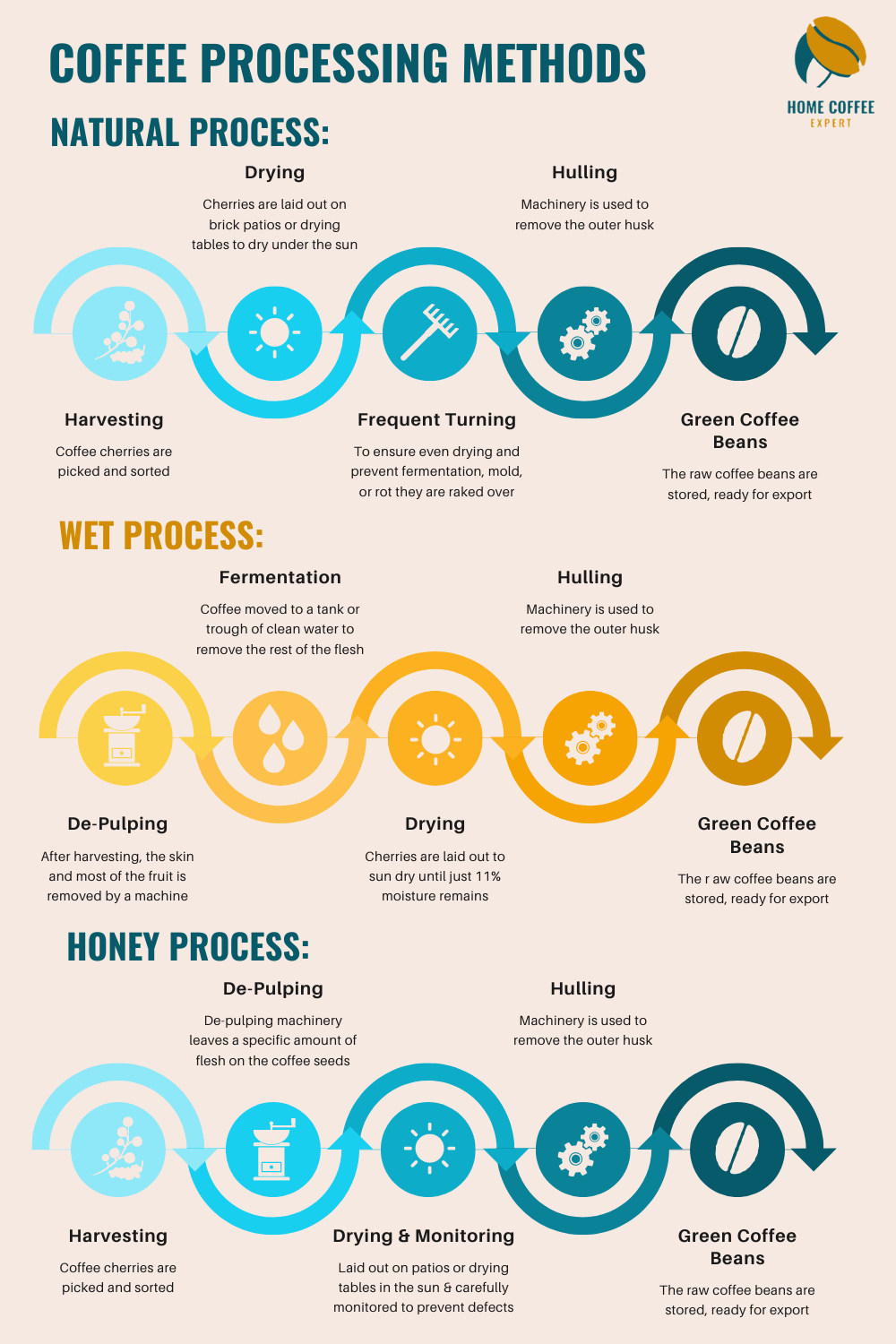
Processing plays a massive role in developing the various kinds of acidity and their levels, found in your cup.  The reasons mostly boil down to sweetness of the cherry, aka the mucilage left on the beans and the length of time.  Can we just go ahead and say that sweetness is technically the antithesis of acidity. Well, we would if we are talking about acidity only being sour, yet in coffee that isn’t always the case, in fact sour taste is more the result of over-fermentation. As discussed last week there are several acids in coffee and some of these don't get perceived as sour but actually as sweet or fruity, depending on which ones they are.  When the sugars in the ripe fruit are in longer contact with the bean, logically the sweeter/fruitier it will be.  That is why Washed process coffees, where the mucilage is all washed off right away, are generally going to be higher in "Perceived" acidic notes and referred to as having vibrant acidity levels.  The acidity comes through more vibrantly with less time in contact with the sugars in the cherry mucilage.  In my observation, dark roast coffees tend to be washed coffees, perhaps because they hold up better to the prolonged heat or because you taste more of the roast with it's nutty, chocolate characteristics anyway, so why start with a coffee that has fruitier notes.  Nevertheless, at least in small part, it stands to reason why many darker roasts are viewed as more acidic coffees, it's partly because they generally are Washed coffees.  

As we go down the line we have Semi-Washed and Black, Red, Yellow (there’s also White but its never seen, it’s basically just a semi-washed) Honey processes.  They all de-pulp the cherry skin but with different levels of mucilage left on the beans.  Again following the logic that more sweetness will offset some of the coffees harsher acidity means these coffees are going to come across a little less acidic than Washed but actually have more citric and malic acid.

Natural coffees you would think would be the least acidic and to a degree you would be correct because the mucilage is left on entirely and basically dried in to the bean, imparting a lot the sugars in to the coffee.  Natural coffees are enjoyed for this reason due to their fruitier tasting notes but where the sugars help to offset some of the acids in the beans, they also exaggerate others.  Fruit itself is actually pretty acidic and so the slow, longer drying process imparts these fruity acids, namely more citric and malic acids.  Fermentation contributes to the formation of acetic acid which can render the coffee sour if over fermentation occurs.  And it’s for this reason that the best producers will carefully measure moisture content/humidity, oxygen and manage temperature to prevent this from ruining their crop.  Fruit forward processes like Natural and Anaerobic, even more so, can be more risky in terms of over-fermentation happening very easily, particularly in humid climates, which is why Natural processes are preferred in drier climates.

Anaerobic processed coffees, it’s this very process that prompted me to want to include the role of processing methods in affecting coffees acidity because it’s kind of fascinating how acid altering this process can be.  It’s sometimes referred to as Anaerobic fermentation, anaerobic meaning no oxygen during the process.  This absence of oxygen during fermentation alters the biochemical reactions that occur, leading to the development of specific acids that contribute to perceived acidity in the cup.  Despite the coffee cherry often being left on the beans (aka Natural + Anaerobic) in this process and the extra sugars that imparts, the actual result is a brighter, much more pronounced acidity in the cup compared to all other processing methods.  However, on the flip side, since the fruit is left to ferment on the bean, the acidity is really nicely balanced out by more sweetness and good body.  This process can often provide a more pleasant aroma after grinding and brewed.  Anaerobic processing also needs to be highly controlled because it has the least margin for error, as a result though, the acidity levels, more or less, can thus be more controlled.  This ability for more control greatly increases the consistency because by controlling factors such as fermentation time, temperature, and processing conditions, producers can develop & maintain a more uniform acidity profile, resulting in a reliable and predictable flavor experience.  The counter-point to this would be that while each individual producer has much more control over acidity levels and thus can uniformly re-create that over and over, more control amongst many various producers around the world means these coffees can potentially vary greatly from one to the next, which is why a lot of focus is put on the reputation and notoriety of the producer.


Roasting
As has been alluded too a number of times throughout this 2 part acidic series, darker roasts actually have the least acidity vs medium and lighter.  The science here is fairly straightforward and simple; acidity can be cooked out.  The longer the roast, the more citric and malic acid is stripped away, moving the coffee away from citrusy/fruity like flavors to nuttier, chocolate like notes.  I have heard, and actually feel it myself, that dark roasts tend to feel more acidic but that is a bit of a tongue trick, it’s actually bitterness that we are attributing to acidity. In the case of lighter roasts, it’s actually somewhat opposite because these coffees being higher in citric and malic acid actually manifest themselves in the form of fruitier, sweeter tones.

And to sum up, this is why specialty coffee descriptions frequently use terms like bright, vibrant acidity that leads to a sweet, fruity cup.  I may seem like an oxymoron but it’s more the consumer (all of us) getting our head around what acidity isn’t, we think it means bitter but that’s only some acids, others deliver much more scrumptiously sweet flavors.  Don’t be afraid of acidity in coffee, look for it, try to sense the various types of acids on your palate and think about what you like or dislike with what you’re sensing/tasting.  Eventually, you’ll enjoy certain ones more than others as you find your happy balance.  Then when someone says this coffee is too acidic, you can perhaps reply; “actually I don’t think it’s quite acidic enough, it's just bitter".


There is only enough left to roast and pack 8 more bags, missing out would make for a sad Sunday.
Sasquatch Vol. 12: Big League Beans

= Cucumber Mezcal Spritz

I'm a serious sucker for anything Mezcal but make it a Spritz and I'll blindly follow to the ends of the Earth.
Enjoy.

Feel free to dress it up with Champagne, Prosecco, Cava, Sparkling wine, whatever you got.  The sparkling water and cucumber is meant to make it more of a refresher cocktail but yeah, it's a little weird.
 
Ingredients:
 
  • 2 oz tequila, or Mezcal
  • 1 oz cucumber juice, blend 1 cucumber with 1/2 cup water & strain
  • 1/2 oz jalapeño syrup
  • 3/4 oz lime juice
  • Sparkling Water
Preparation:
  • Add all ingredients, Except sparkling water/wine, to a cocktail shaker and shake.
  • Strain into a glass filled with ice and top with topo chico (or any fizzy water).
  • Garnish with anything green and/or a strawberry cut in half.

M Klass TOP Picks

Pour Over / Drip Brewer Recs
Espresso Recs
Anaerobic/Co-Ferment Fruity Recs
Medium / Dark Recs
Decaf Recs
GIFT CREMA.CO


AND FOR THE WINNERS

  • Jacob Banes (#53194)
  • Philip Van Dyke (#38213)
  • Sourivanh Theuambounmy (#52037)


WANNA BE A WINNER THIS WEEK...


I think you already guessed it...
Yes, yes, 2 very fortunate crema.co customers who get the:
Sasquatch Vol. 12, Big League Beans
Will See It Free
(in the form of equal  site credit)
Btw, you are Certainly "In" the running if you already picked this up earlier, when the initial notification went out.

 
Thank you for your support. We love you almost as much as we love coffee."
- mklass + the Crema.co Team
 
spread the good word about crema.co
https://www.facebook.com/cremaco/ https://www.facebook.com/cremaco/
Forward Forward
UNSUBSCRIBE
 
Are you sure?

Lists help you organize the brands that you care about. Your lists are private to you.