|
|
|
|
A song for your Sunday listenin' pleasure.
The coffee, wine & cocktail/mocktail currently consumed around here.
PICK 6 COFFEES
Six Super Lovely Coffees from the one bringing June's Magnificent Rare & Delicious - it's "Indie".
WINNERS & HOW TO WIN
FILLED WITH FILTH AND FOUL DISEASE
|
|
|
Hi
Welcome to the End - of May.
Speaking of the end, today's Sippin article is about the disease and/or pests that tend to End coffee trees.
Sure. it's not the happiest topic on Earth but these foul things are also what shape the coffees we drink and will drink tomorrow.
So today, may I introduce the culprits.
Thank you sharing some of your final May (2026) moments with me here at Sunday Sippin - I do so hope you enjoy...
|
|
|
|
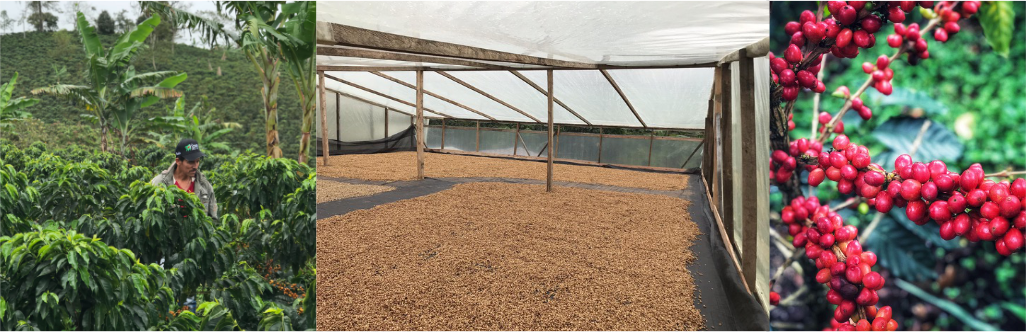
Named after the village where the coffee was grown, this washed lot of Gibrinna 74110 and Serto 74112 varieties were processed at the Weessi washing station. Cherries are sorted for defects then pulped to remove the outer fruit layer using Penagos eco-pulpers, which help to use as little water as possible throughout the washing process. Freshly pulped seeds are then fermented in water for 12 hours before moving to drying tables.
|
|
|
|
Indie Team member, PC, first met Luis Anibal Calderon at the recent Best of Huila Auction in Colombia. In person, it is clear that Luis is a visionary with the endurance of an ultramarathoner. Landslides blocked the roads during PC's time in Huila, preventing her from visiting Luis' farm. However, thanks to importing partner Felipe, a long-time friend of Luis, Indie and crema.co are still able to offer this ultra-rare coffee.
Luis Aníbal Calderón is highly regarded as an innovative, variety-driven producer who has led the way in Huila—and Colombia more broadly—toward experimental, high-value specialty coffee, combining agronomic curiosity with advanced processing and a strong community influence.
|
|
|
It is entirely unique to get to drink a well-tended Sidra, and much more so one that has a Black Honey process. Sidra is exceedingly labor-intensive, sensitive, and low-yielding - which means that a grower will only invest in it when aiming for top-tier, competition-level coffee. It thrives with experimental processing, carrying an elegant and silky, almost wine-like texture -- having it in the hands of an experienced producer like Luis makes it a luxurious coffee treat.
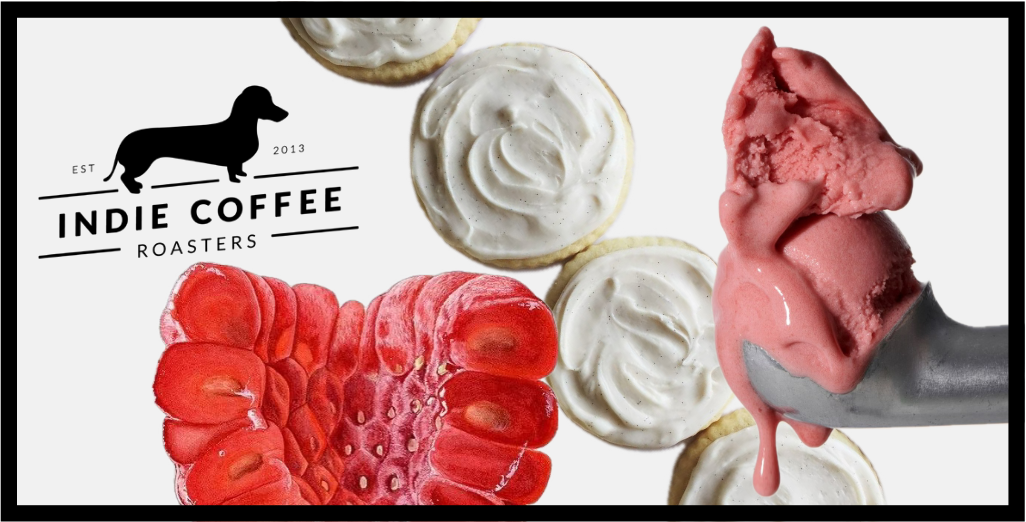
Phenomenal crisp fresh raspberry notes with a light malt backbone pair effortlessly with silky cream and the subtle tart and floral sweetness of red currant. The result is a gorgeous, jammy aroma, a soft, pastry-like sweetness, and a striking depth and intrigue in a cup with a lingering, complex finish.
|
|
|

|
|
PC, of Indie Coffee Roasters, tastes the Sidra Black Honey Colombia! See what she thinks in the video above!
|
|

|
COCKTAIL: Rhubarb Bellini
INGREDIENTS:
- 1 lb fresh rhubarb, roughly chopped
- 1⁄4 cup water
- 6 tablespoons granulated sugar
- Zest of one orange
- 1 oz Aperol
- 1 bottle Prosecco, chilled
DIRECTIONS:
-
Make the Rhubarb Compote: In a medium saucepan, combine rhubarb, water, sugar, and orange zest. Heat over medium-high, stirring occasionally, until the rhubarb breaks down completely. Remove from heat, stir in vanilla, and let cool. Strain through a fine mesh sieve, pressing to extract as much liquid as possible. Chill the purée until ready to use.
-
Assemble the Bellini: Spoon 1–2 tablespoons of rhubarb purée into each champagne flute. Stir in 1⁄4 ounce Aperol per glass. Top slowly with chilled Prosecco, allowing the bubbles to mix naturally. Stir gently if needed and serve immediately.
|
|
|
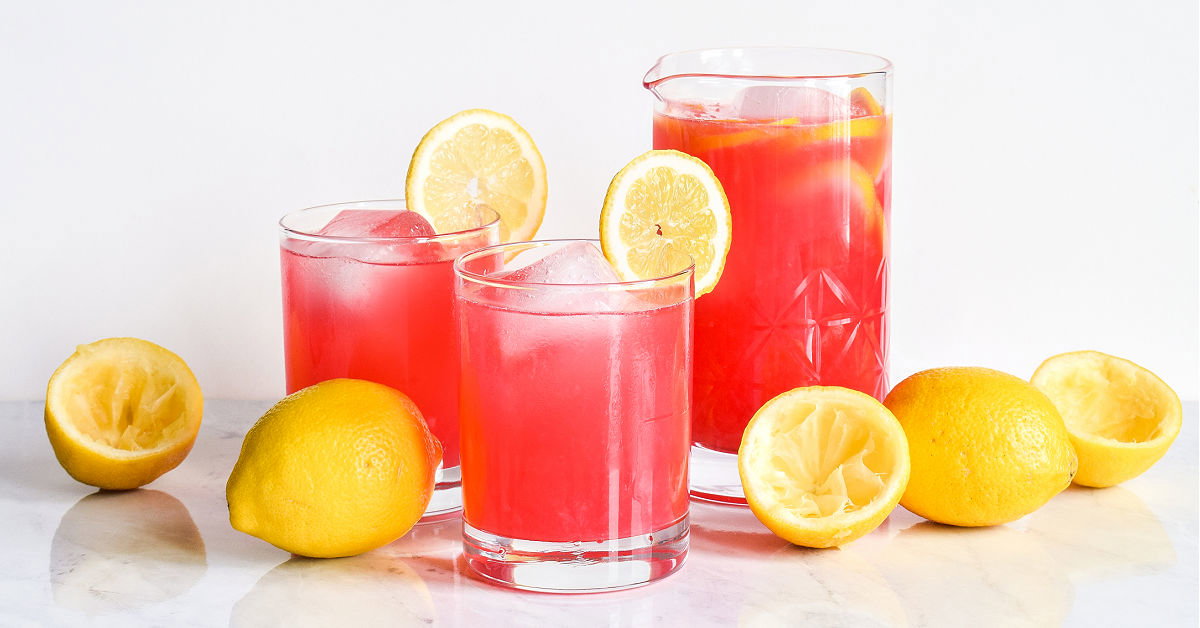
MOCKTAIL: Refreshing Rhubarb Lemonade
INGREDIENTS:
- 4 cups rhubarb, chopped
- 2 cups sugar or honey
- 6 lemons juiced and zested
- 6 cups water
- 1 sprig mint
- 1 pint strawberries, frozen
- ice
PREPARATION:
- Place the chopped rhubarb, sugar, lemon juice, and lemon zest into a medium-large pot.
- Bring to a boil and then reduce to a simmer for 20 - 30 minutes.
- Strain with a fine mesh strainer fitted on a large bowl, use a wooden spoon to force as much liquid as possible into the bowl.
- When ready to serve, dilute it with additional water to taste. Throw in some frozen strawberries, sliced lemon, and some fresh mint or basil. Enjoy!
|
|
|
"Garrigue, smoke, licorice, herbs, cinnamon, and mineral-driven cherries create the core of the perfume. On the palate, the wine delivers lusciously-textured layers of sweet, red fruits, with elegance, and purity as their calling card." - Jeff Leve, The Wine Cellar Insider
|
|
THE MARINER’S REVENGE
by The Decemberists
“'The Mariner's Revenge Song' is a nine minute honest-to-god pirate shanty with humour, drama and a knowing grin” - drownedinsound.com
|
|
|
|
Featuring six coffees from BOLD BEAN!
|
|
|
Anytime a new RARE & DELICIOUS is dropped, you should know exactly what that means.
3 peops who pick it up, may very well win it free
|
|
-
Richard Nam
- Ashley Crisostomo
- Brett Henry
|
|
|
Root Rot (Collar Rot)
Coffee Leaf Rust - CLR
Coffee Berry Disease - CBD
Coffee Wilt Disease - CWD
Coffee Leaf Miner - CLM
Coffee Berry Borer - CBB
Coffee Fruit Rot - CFR
“The coffee cherries looked charming there - all juicy and debonair - the poor coffee farmer found so sweeeet. - And so she’d harvest them -the sun was drying them, but now filled with filth and foul disease”
If you’re a Decemberists fan, you might have recognized this little jingle, I changed some words but kudos to you if you caught it early. To everyone else, it’s this week’s Sippin Song, so you can have a listen for yourself. I don’t usually start Sippin with a song but what better to turn a terrible topic into catchy, light-hearted fare - Ring Around the Rosie, anyone?
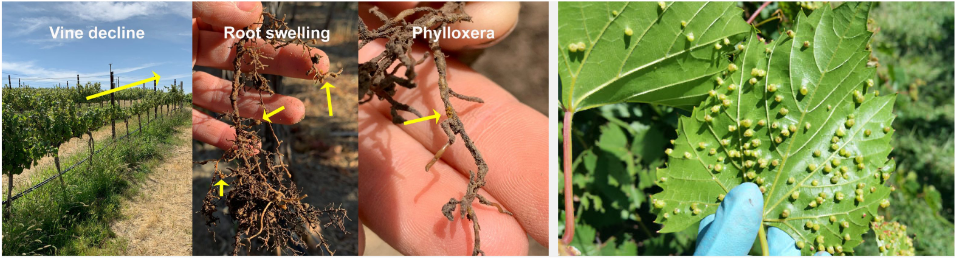
It’s not uncommon for me to reference coffee diseases and devastating pests in various articles but I realized we’ve yet to dedicate an actual episode of Sippin to the topic. While it may not sound like the nicest topic, it's rather surprising that this is just coming now - being that disease and pests have literally shaped the coffees we drink today. Reason being is there’s no real way to fight back and win by eradication. Science and producers have long-since realized the best weapon is research and development. Similar to how phylloxera decimated France’s vines, it wasn’t a chemical or pruning method that killed off the pests, technically the aphid-like insects are still here, there and everywhere. Instead it was making the vines resistant to them. Which is why most all of France’s vines have some American DNA in them now. The coffees we drink, both the species and their varietals, also the amount of their output, are all the result of coffee disease and pest destruction creating an urgent need for a resistant response.
|
|
|
Fertilizers, pesticides and other plant care cultivation techniques can only get a coffee farmer so far, eventually change in the form of new plantings will be thrust upon them. Otherwise they watch as their production decrease year over year until the tree is dead but then it’s not about planting the same tree. Producers are now armed with a lot of research into what coffee varietals can resist the diseases and pests affecting them - the ones common to their region. Beyond that they are armed with new hybrid cultivars and F1 hybrid seedlings to replant, that produce vigorously and are resistant to what plagues their coffee tree cousins. In order for the coffee to sell it has to taste good, first and foremost, but basing their decision on taste profiles alone is basically bad business. A savvy producer must also base his or her decision on what will produce well long-term. Because while we all love those small-lot Geisha’s, they're mainly ruin vs reward when the output is so low and the tree is overly-susceptible to just about everything. Aside from great tasting, you're also paying for the difficulty of growing Gesha (Geisha) coffee, another reason why it tends to cost more. That’s why F1 hybrid coffee trees were unheard of 15 years ago in specialty coffee (other crops, like tomatoes for example, are almost all F1’s and have been for many years). And today we’re seeing them pop-up daily from stellar producers around the coffee belt.
|
|
|
So let’s have a look shall we? While of course there are all kinds diseases and pests that can potentially be devastating to vegetation, coffee trees inclusive, there are mainly a top 5 closely associated with coffee trees that I hear about most frequently and thus what we’ll look at today.
Before we look at the ones native to coffee, there is one to address that comes in multiple forms and is more of a equal opportunity offender - not coffee tree specific.
Root Rot
|
|
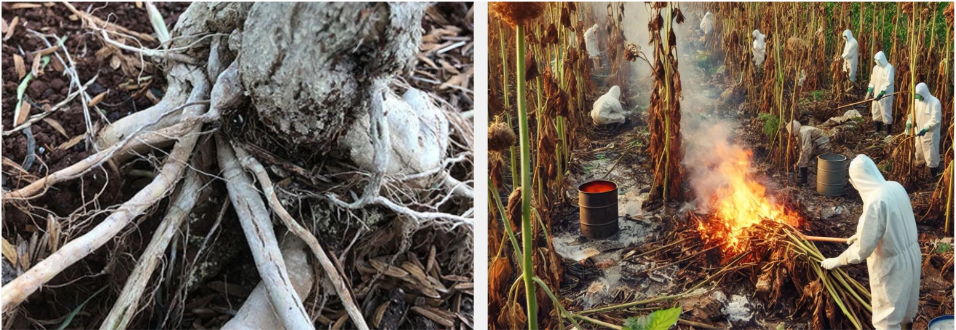
If you’re like me, you may have a lost a plant or two to root rot yourself - what can I say, they looked thirsty to me. There’s more than one version of root rot (aka Root Collar Rot) but the reason for it is all the same - too much moisture in the soil with poor drainage and warm temperatures that cause Fungi to proliferate rapidly. The primary causes of root collar rot are two types of fungi: Rhizoctonia solani and Fusarium spp. Root rot was not significant in coffee until wild weather patterns recently. While Brazil and parts of Africa experienced droughts, Indonesia and Vietnam experienced torrential rains that seemed endless. Most Arabica is grown at higher elevations with natural drainage and the climate tends to be on the arid side, so it’s fairly rare for specialty coffee producers to deal with this one. However, Robusta is grown at lower elevations, ironically because it is heartier and easier to grow in hotter temps but this logistical solution comes with consequences for producers in places like Vietnam most prominently. Unlike there is with pests and diseases, there isn’t a varietal or species of coffee tree that thrives in high moisture environments. Instead employing modern drainage practices like using porous Biochar in the soil can help but if the growing location traps too much moisture, the solution is probably to find a new location which is obviously easier said than done.
Coffee Leaf Rust - CLR
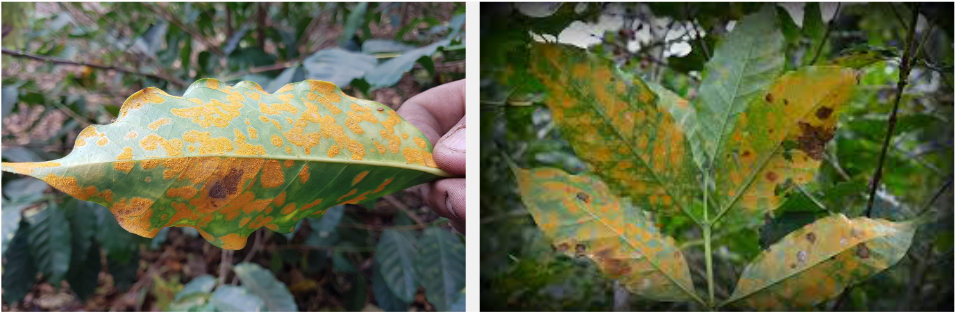
This fungus is a worldwide problem for coffee producers and Colombia has been battling it for generations. The BBC highlights that it has “the power to cripple, or even wipe out, the country’s national product, the base of one of its biggest industries, and one of its most important sources of foreign currency.” In two years alone (2013-2014) it caused over 1 Billion USD in damage, according to USAID.
|
|
|
Coffee leaf rust (CLR) IS caused by the fungus Hemileia vastatrix. The disease presents as an orange rust-like dust on the underside of the coffee leaves. It is a cyclical condition that causes defoliation. Wind and rain spread coffee leaf rust spores, which thrive at around 70°F/21°C. So the disease can easily become prevalent in Arabica grown at higher elevations where temps are milder, as CLR likes.
The primary pathological mechanism of the fungus is a reduction in the plant's ability to derive energy through photosynthesis by covering the leaves with fungus spores and/or causing leaves to drop from the plant. The reduction in photosynthetic ability (plant's metabolism) results in a reduction in quantity and quality of flower and fruit production, which ultimately reduces the beverage quality.
Copper-based fungicides, such as Bordeaux mixture, have proven to be effective and economical, and work best when applied at inoculum levels below 10%. Most small-holder farmers don’t have access to these though and/or can’t afford them. New F1’s such as Starmaya have proven to be especially resistant to this type of fungus/CLR.
Coffee Berry Disease - CBD
|
|
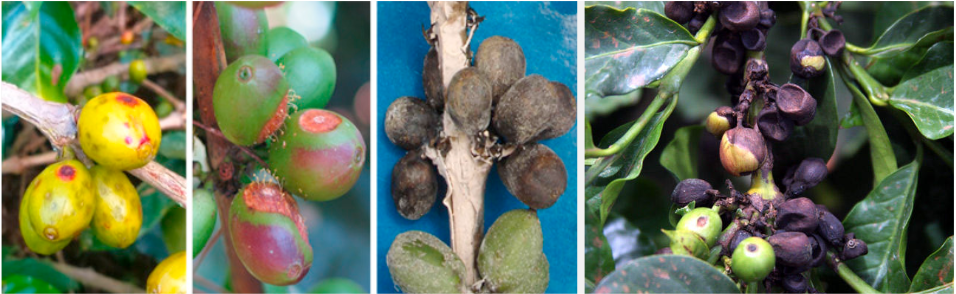
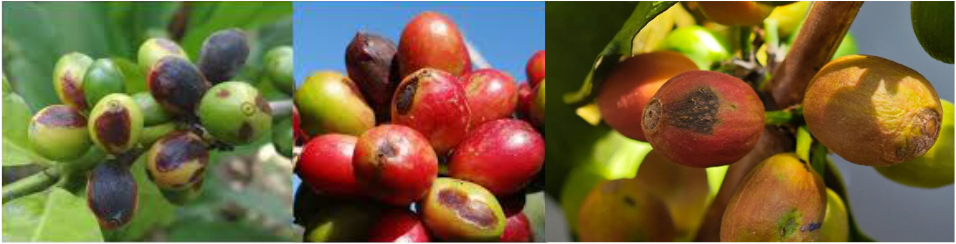
Coffee berry disease (CBD) caused by the fungus Colletotrichum kahawae is a particularly devastating disease, which affects developing berries, leading to berry rot and shed before the beans are formed inside. It causes sunken lesions on green berries that leads to them dropping prematurely, resulting in a 80%–100% yield loss. CBD occurs only in Africa, but a less virulent form of the fungus occurs worldwide, attacking only ripening berries causing “Brown blight,” and the mature beans inside are not destroyed. The disease causes pulp to stick to the bean, making wet processing difficult and reducing quality. High humidity, relatively warm temperatures, and high altitude are ideal for disease formation. The disease is highly dependent upon climatic factors: humidity, rainfall, and temperature. Rainfall is necessary for spore germination and dispersal for C. kahawae. Temperatures of 20–22 °C (68–72 °F) are optimal for germination and mycelial growth.
The use of fungicides on susceptible varieties can be extremely costly especially as the disease progresses. In Kenya, it is estimated that it would cost $500 per hectare to manage CBD with chemical control.
Coffee Wilt Disease - CWD
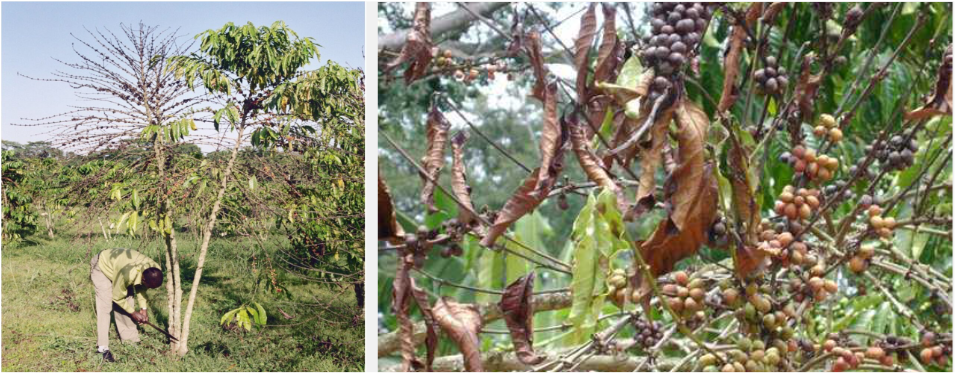
Coffee Wilt Disease (CWD) disease was first observed in the Central African Republic in 1927, where it began to attack a lesser known species, Coffea Excelsior. In the 1950s evidence emerged that Coffea Arabica and Robusta (Canephora) coffee might be susceptible. The coffee community really became aware of CWD during the 1997–98 conflict in the Democratic Republic of Congo (DRC). During the war, ripe and unripe beans from the DRC were trafficked into Uganda. This introduced a new disease to the Ugandan coffee crop and brought about devastation, with reports of up to 70% crop losses of robusta coffee. Strains of the disease now affect arabica coffee in Ethiopia and Tanzania, and surveys indicate it is now present throughout Ethiopia.
|
|
|
Coffee wilt is a vascular disease of the coffee tree trunk that is caused by the soil-borne fungus Fusarium xylarioides. It infects the coffee trees roots, blocking water intake and sap circulation, causing leaves to fall, branches to die, and cherries to appear ripe prematurely. Using these red but immature coffee cherries can result in loss of acidity, increased bitterness, and “green” flavors in the cup. Eventually true to it’s name, the coffee tree will wilt and die off.
Now we’re going to switch gears from diseases to pests and then come back to one last disease - it’ll make sense why when we’re there.
Coffee Leaf Miner - CLM
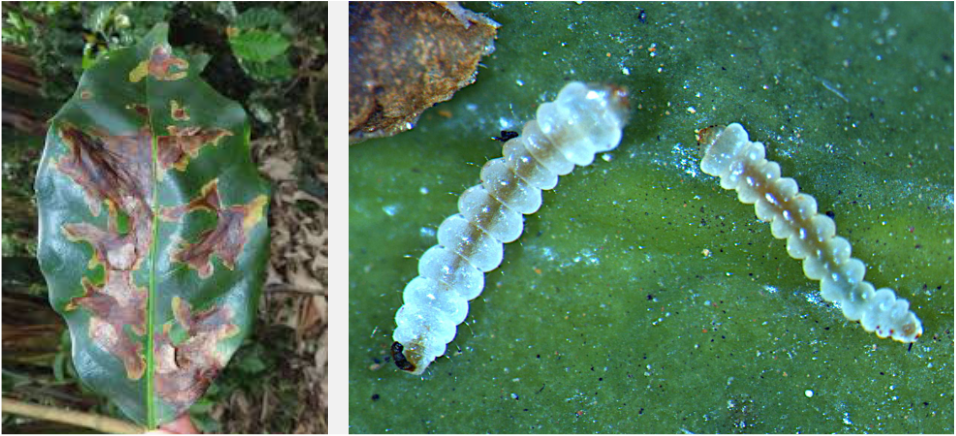
It’s not common to hear about the Coffee Leaf Minor devastating trees but if allowed to overrun trees these moths larvae can decimate. However, it’s not in the top 5, it’s really just an extra 6th entrant I included because it targets coffee trees more-so than any other vegetation.
|
|
|
Coffee Leaf Miner is not one but actually two different, related moth species; Leucoptera coffeella, which is prevalent in Latin America, and Leucoptera caffeina, which is found in African producing countries. CLM larvae eat coffee leaves, so if several live on the same leaf, it may suffer necrosis of up to 90% of its structure. Necrosis is the death of cells. As they feed, coffee leaf miner larvae leave pale yellow trails underneath the coffee leaf epidermis which later appears as dark watery spots or brown papery patches. Defoliation affects the plant’s ability to photosynthesize. Without photosynthesis, the plant can’t grow properly. Fruit may not mature and the overall yield is likely to be much lower. If immature or dead beans make it into the final brew, they can create bitterness and astringency.
Coffee Berry Borer - CBB
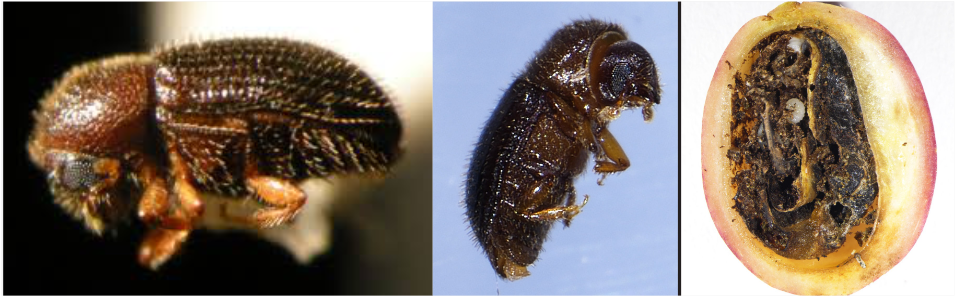
While Coffee Leaf Rust has run rampant and been devastating worldwide, it still plays second fiddle to the havoc wreaked by the Coffee Borer Beetle probably the most significant threat to coffee worldwide today. Dating back to the 16th century, originally from Africa, the CBB has caused the most damage to coffee throughout history. Its anthropological name is Hypothenemus hampei, Spanish common names of the insect include barrenador del café (coffee borer), gorgojo del café (coffee weevil), and broca del café (coffee drill).
|
|
|
The adult female bores into coffee berries to lay eggs, and the emerging larvae feed on the seed. The female beetle lays 35–50 eggs, which produce 13 females for each male. The average lifespan for females is anywhere from 35 to 190 days. Sibling insects mate inside the seed, with the females then spreading either to other coffee plants or further along the same plant. The males never leave the fruit, living its entire life cycle in a coffee cherry. Due to their lifespan being mainly inside the shell of the coffee cherry they are very difficult to eradicate with pesticides. The only recourse is replanting cultivars or hybrids more resistant to the beetle. Those effects being that bored cherries ripen prematurely and harvested bored cherries are of lower weight. Coffee berry borer damage also affects the sensory qualities of the coffee and this reduces the commercial value of the crop. If damage is significant, it can cause the cup to taste bitter, tarry, or fermented.
Coffee Fruit Rot - CFR
Coffee Fruit Rot (CFR) is a severe fungal disease that affects coffee berries (cherries), causing sunken lesions, external necrosis, and fruit mummification. It is primarily driven by Colletotrichum (anthracnose) and Fusarium species, plant-pathogenic fungi (congratulations to you if any of these species of fungi are actually recognizable to you).
|
|
Long overlooked in coffee farming, peer-reviewed studies in Phytopathology have proven that a suite of Fusarium species (predominantly F. bostrycoides and F. nirenbergiae) cause massive internal rotting. They aggressively target the mesocarp (pulp) and completely brown the endosperm (the bean itself). The losses are devastating indeed, usually in the neighborhood of 80%. Beyond physically destroying the cherry, it creates severe processing issues: infected beans become brittle, discolored, and chemically altered, entirely ruining the cup quality profile required for specialty coffee markets.
Now for the reason I saved this one until after we covered the Coffee Borer Beetle (CBB). The beetle Hypothenemus hampei (CBB) is CFR's delivery mechanism. The borer naturally houses both Colletotrichumand Fusarium within its body microbiota. As it drills into the coffee cherry to feed and lay eggs, it injects these pathogens directly past the fruit's defensive skin. Thus the reason why CBB is public enemy number 1 - it's a double whammy. Additionally, the ultimate remedy would normally be to replant with resistant trees but there are few, if any, varietals very resistant to CFR, that are also resistant to Coffee Leaf Rust or vice versa.
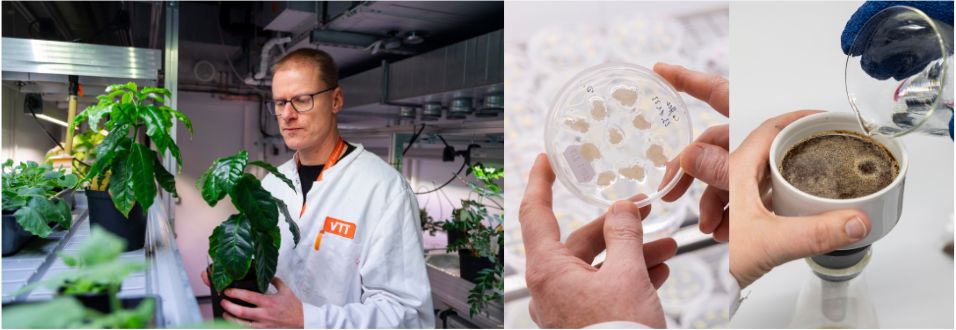
Ok now file these away because you'll continue to see references to these in future Sippin's since they are so prevalent. The main diseases and pests inflicting coffee producers livelihoods today. When you hear about the fight of disease and pests it’s a 95+% chance it’s one of these. And hopefully you were able to appreciate how destructive these are, being that they basically can wipe out an entire farm of mature trees. For this reason, much of the money being spent on scientific coffee research is predominantly around finding new varietals that are more resistant.
If these diseases and pests weren’t such a serious concern, I can assure you that, outside of the Landraces grown in Ethiopia, we’d all still be drinking the two mother varieties: Bourbon and Typica, along with Geisha. So, indirectly, we can technically say we have disease and pests to thank for the many newly developed varietals we’re all drinking today. Not that there is anything wrong with Bourbon and Typica varietals, taste wise.
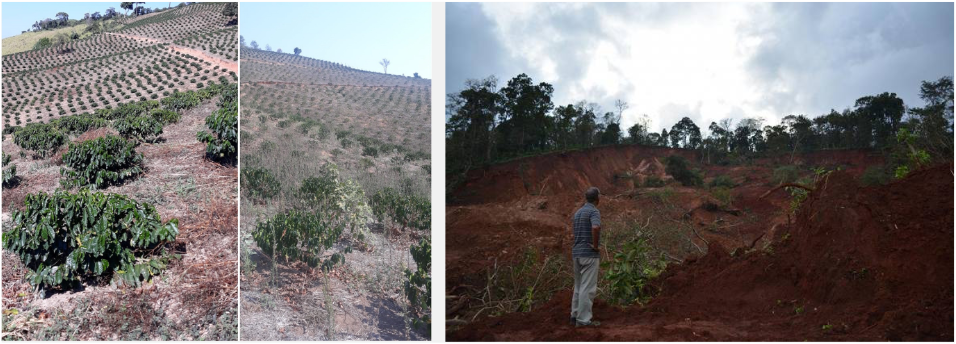
Lastly, climate change is often cited as a primary problem for coffee producers - i.e. the 2050 problem. This is fairly true but it’s mostly true in that it’s the catalyst for these diseases and pests to proliferate perhaps faster than they did before or maybe even at all. Some diseases like CLR have been around for many years, well before climate change was a concern but then faded from our peripherals because of resistant varieties developed something like 60+ years ago. Today, even those varieties are in some cases less resistant but throughout the coffee-belt it has roared back as changes in weather patterns, namely becoming wetter, have made conditions more hospitable for fungi to spread. Just as drought’s and landslides, from prolonged rains, are nothing new but both have become more common and thus more devastating, the pests and plant eating fungi are often not new but have recently become more common and more devastating.
|
|
IIt’s a little like whack-a-mole, science works diligently to address one disease or pest and then another pops up. So far there is no super tree / coffee varietal that is resistant to all and still produces coffee cherry seeds that taste really good. Not only that, we tend to now like the variety of drinking different varietals, recognizing it’s a food that's perhaps meant to be varied. Therefore, farmers are being encouraged to choose new varietals that are resistant to the diseases or pests most rampant in their growing region. They have to play the odds that way.
|
|
|
|
|
|
|