|
|
|
|
A song for your Sunday listenin' pleasure.
The coffee, wine & cocktail/mocktail currently consumed around here.
PICK 6 COFFEES
Six genuinely delicious coffees from Bold Bean!
WINNERS & HOW TO WIN
WILL THEY OR WON’T THEY - COFFEE IN ANGOLA
|
|
|
Well hello there,
It's relatively rare for long weekends to line up for two countries but this weekend is one of the few where both the UK and US are taking Monday off.
Happy Long Weekend to everyone on both sides of the pond!
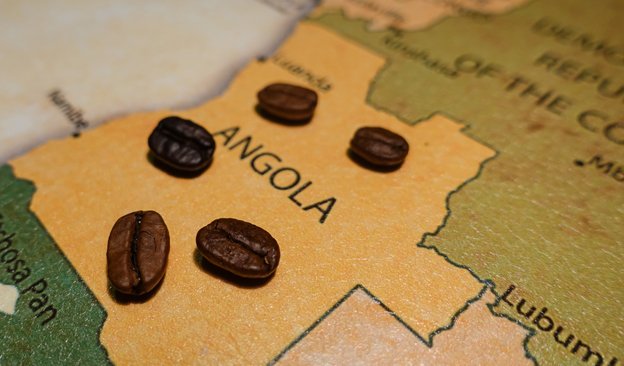
Today's topic is that of Angola. Odds are you haven't had much coffee, if any, from Angola. And yet in the 70's they were 3rd in the World, in terms of production volume. We'll look at what happened, why and where it all stands today.
|
|
|
|
A testament to collective strength, this washed Cauca coffee represents a small group of Bolivar neighbors who pooled their harvests to compete—and win—in Colombia's Subasta Por La Paz auction. Nanelle selected this as her top lot for its distinctive flavor profile. Their success exemplifies how community collaboration and unwavering perseverance can overcome profound challenges, producing exceptional coffee.
|
|
|

|
COCKTAIL: Halekulani
INGREDIENTS:
- ¾ oz bourbon
- ¾ oz rye whiskey
- ½ oz demerara syrup
- ½ oz fresh lemon juice
- ½ oz fresh orange juice
- ½ oz pineapple juice
- 1 barspoon grenadine
- Dash of Angostura bitters
- Garnish: pineapple fronds
DIRECTIONS:
-
In a cocktail shaker filled with ice, add bourbon, rye, demerara syrup, lemon juice, orange juice, pineapple juice, grenadine, and bitters.
-
Shake vigorously until well chilled.
-
Strain into a chilled coupe glass or rocks glass (over fresh ice).
-
Maybe Garnish with pineapple fronds (if you actually got 'em).
|
|

|
MOCKTAIL: Cucumber Lime Fizz
INGREDIENTS:
- 2 pounds seedless watermelon (1/8th of a good-size watermelon)
- 1 cup cold water
- 2 teaspoons lime juice
- 1 tablespoon simple syrup or agave nectar
PREPARATION:
- Blend all ingredients, adjusting sweetness as needed.
- Strain through a mesh strainer or cheesecloth (optional).
- Serve over ice.
|
|
|
“Lemony freshness, with sliced pear, lemon sherbet, apple crumble and pie crust aromas. It’s creamy and balanced, with a medium body and a rounded, biscuity finish. 70% pinot noir and 30% chardonnay. From organically grown grapes. Sustainable." - James Suckling
|
|
LA FEMME À LA PEAU BLEUE
by Vendredi Sur Mer
“La Femme à la Peau Bleue”, Vendredi sur Mer reflects on nostalgia and the longing for a past love while navigating the path to healing. She reminds us that moving forward means embracing our memories and finding the strength to keep going.”
- What the France
|
|
|
|
Featuring six coffees from BOLD BEAN!
|
|
|
Get any of the PICK 6 Coffees above so you can be one of three who see it free!*
*Winners will receive a rebate in the form of applicable site credit and are announced in next week’s Sunday Sippin’!
|
|
-
Akash Malhan
- Oleg Melnikov
- Todd Knutson
|
|
|
To quote the illustrious words of one; “Ladies Love Cool James” (aka LL Cool J) and take them entirely out of context: “Don’t call it a comeback” - because they haven’t comeback yet and they haven’t “been here for years”. Yes, coffee production in Angola has been “knocked out” since the early 80’s (interestingly right around when LL Cool J got started). Tbh, this isn’t all the uncommon for Africa, as sad as it is to say. Angola has followed the same trajectory / storyline as their African coffee producing counterparts, Rwanda, Uganda, Kenya, etc.
|
|
|
We’ll get in to that in more detail but the recycled plot is basically one whereby colonialism creates coffee production but in all the wrong, demoralizing ways. There's a drawn out, bloody revolt ending with the colonizers being kicked out, but taking all needed resources with them, and only leaving a power vacuum. Naturally this descends in to years of civil war and coffee fields become fallow.
|
|
|
True to form, this is the near exact same sad story for Angola’s coffee production. Coffee was introduced to Angola earlier than other African countries, by its Portuguese settlers in around 1830. By comparison, Kenya was introduced to coffee around 1890 and Rwanda and Uganda in the early 1900.s. However, when you think of the land most famously colonized by the Portuguese and famous for slave labor in coffee - Brazil - it’s no wonder Angola would have a got a head start. Brazil had started cultivating coffee about 100 years earlier after it first being introduced in 1727. The first trees came over from Brazil and in the end many of the same Portuguese settlers who would be forced to flee Angola went to Brazil to continue producing coffee. It didn’t take long for the crop to make an impact. The first recorded farm was established by a Brazilian farmer in 1837. Production proliferated from there, particularly in the north, by the early 1970s Angola was one of the world’s largest coffee producers - although it was mainly Robusta (Coffea Canephora). To be give specifics, it was the 3rd largest producer by volume in 1973 and 1974, following Colombia at no. 2 and Brazil, who has always been, and still is, far and away in the top spot.
Don’t take these production highs to mean these must have been the good ol’ days. This expansion was deeply violent. Large settler estates relied first on slavery and later on forced and contract labor systems actively maintained by the colonial state. In the 19th and most of the 20th century, Angolan coffee was cultivated on a variety of farms (fazendas) owned and managed by the Portuguese. In the 1970s, it’s reported that there was more than 596,000ha of coffee-growing land, more than half of which was made up of large estates (100ha or greater).
Land was taken from subsistence farming, taxes were imposed to push people into wage labor, and rural livelihoods were steadily eroded. Coffee wealth accumulated narrowly among white settlers and a tiny African elite, while most Angolans experienced falling living standards even as exports grew. It wasn’t all massive plantations, in fact those mostly came later. Research in to Angola’s coffee frontier shows that African smallholders were central to the expansion of coffee cultivation, particularly in northern Angola, long before the large twentieth-century estates took hold. Farmers cultivated wild and semi-wild robusta trees in forested systems, drawing on local ecological knowledge rather than colonial instruction. However, participation in coffee was not free choice in a fair market, but a strategy for survival, security, and status under deeply unequal conditions. And as demand from the US and Netherlands intensified, coffee came to be viewed as a commodity to be extracted from the Angolan people.
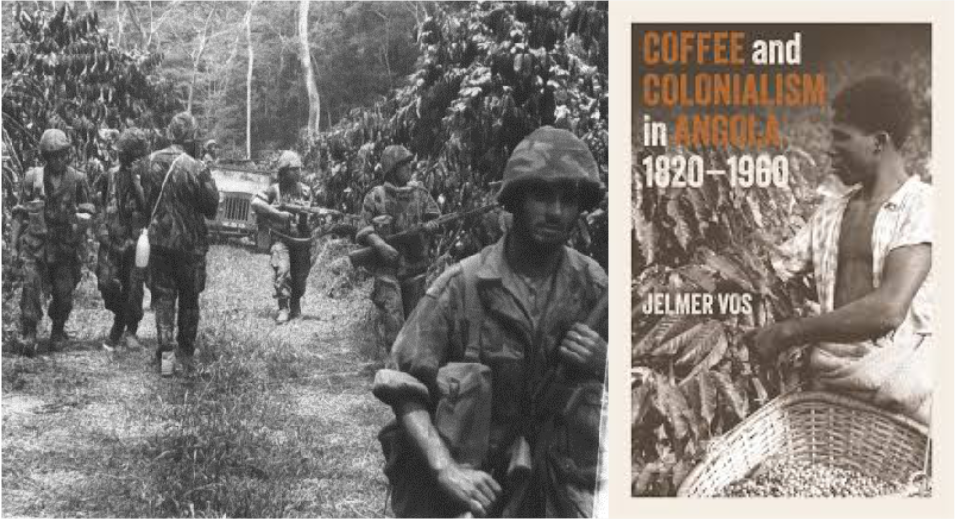
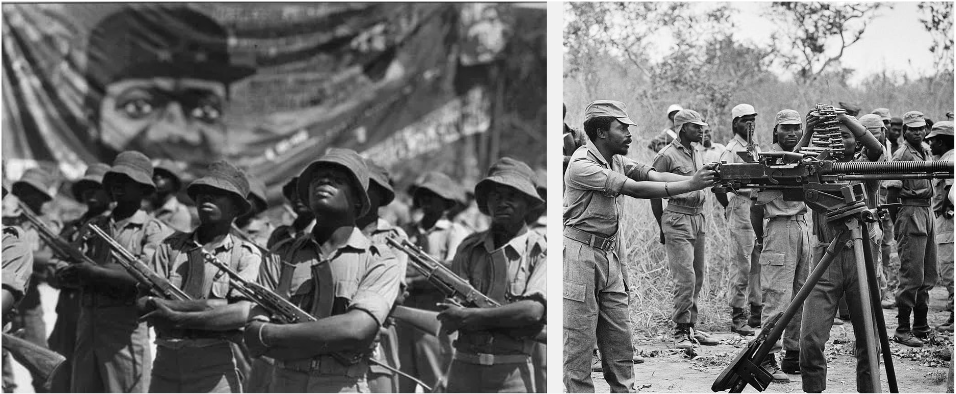
Later on, leading up to the events of 1975, and for much of the 20th century, coffee was not just an economic crop - it was embedded in political repression. Plantation labor conditions were a flashpoint for resistance, most notably in Baixa do Cassange in 1961, where striking agricultural workers were met with extreme violence. Coffee workers were not on the margins of Angola’s struggle for independence; they were at its center. And for the next 14 years after 1961, the country fought the grueling Angolan War of Independence (1961–1974) whereby three main nationalist movements—the MPLA, FNLA, and UNITA—waged a protracted guerrilla war against Portuguese colonial rule.
|
|
|
And yet the relief they hoping for didn’t really come from their fight - it mainly came from a different fight in Portugal itself. Although, the protracted battles raging in the colonies are what spurned the upheaval back home. Enter the “The Carnation Revolution” (April 25, 1974): A military coup in Lisbon that overthrew the Portuguese Estado Novo regime, which had refused to relinquish control of the colonies. The new government immediately stopped fighting and aimed for rapid decolonization. This in turn led to the “Alvor Agreement” in January of 1975 - also the height of Angola’s coffee production - and set the date for Angola’s independence, officially November 11th 1975. The parley agreement was signed with the MPLA, FNLA, and UNITA who had been somewhat united in their fight against Colonial Portugal but now without a common enemy, the country almost immediately descended in to a bloody civil war. Ultimately, the MPLA seized control.
To say this marked the end of coffee production in Angola, would be an understatement because the demise was so swift it’d probably be better described as a deathblow. As a final insult to injury, Portugal withdrew almost immediately, with little preparation and no meaningful transfer of power. After independence, many estates were nationalized as the Portuguese settlers all withdrew (many to Brazil), but the sudden loss of skills, capital, and infrastructure, combined with a highly centralized state, left agricultural production to basically struggle and die. This in turn led to Angola’s migrant workforce abandoning coffee estates.
|
|
|
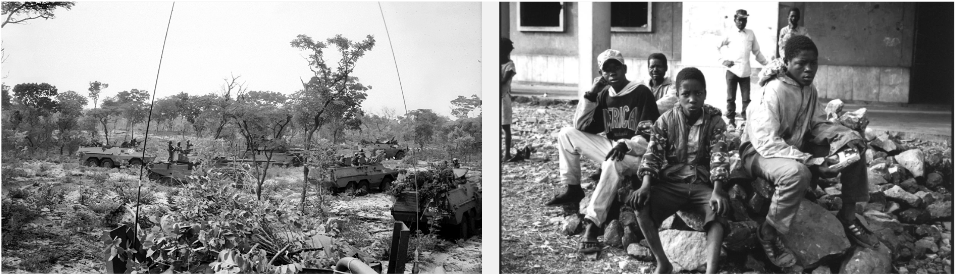
Colonialism was defeated but it was yet another case of be careful what you wish for and the devil you know. Civil war filled the vacuum left by Portuguese rule in a way that it was just colonialism in a different form. Decades of underdevelopment, inequality, and centralized control fed directly into a prolonged civil war that became entangled with Cold War geopolitics. During this nationalized period, there were ONLY two state-owned companies that managed all coffee marketing and exports: Cafangol and Uigimex. Rural areas were mostly devastated due to all these factors. Thus, coffee trees were basically abandoned. By the mid-1980s, production had collapsed to a tiny fraction of colonial-era levels. And by the time civil war ended in 2002, much of Angola’s agricultural base had been hollowed out, coffee never regained its place as any kind of economic anchor.
|
|
|
A different commodity took its place, the largest global commodity - oil. A classic resource curse, oil accounts for roughly 30 percent of Angola’s GDP and more than 90 percent of its exports today. It generates revenue, but it does so in isolation. The sector creates relatively few jobs, links poorly to local businesses, and exposes the economy to global price shocks. Since oil wealth does not circulate and is either concentrated to a few wealthy corporations and/or the centralized government, the rural areas have remained very poor. Inequality has only deepened since colonial rule, as agriculture has been underinvested in. This technically shouldn’t be for a country with such vast arable land and a young population looking to work. However, powerhouse oil has significantly crowded out any other sectors from getting broader development, keeping most Angolans quite impoverished despite the giant revenues oil brings in. Not to mention, it’s literally soiling agricultural land to the point that nothing will be safe to grow.
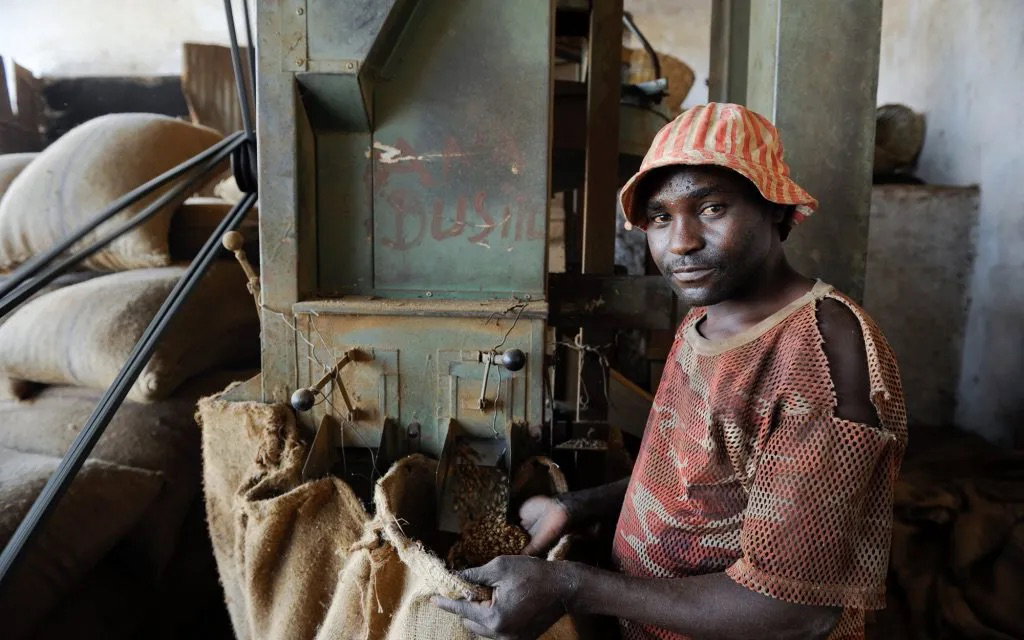
Today, Angolan coffee production has yet to make a come-back, it’s still quite small and fragmented. And yet the outside coffee industry is cheering on gains they eek out. The country still grows primarily robusta, with some arabica planted at higher altitudes. Around 85 percent of production comes from smallholders farming just a few hectares. Much of the infrastructure is outdated. Many trees are old and low-yielding. Processing is mostly natural and sun-dried, with limited access to equipment and finance. Transport costs, bureaucratic hurdles, and limited credit continue to hold producers back from expansion.
In 1993 a feeble attempt was made to liberalize the coffee industry, however a number of government organizations have been involved in the sector in the years since. Under its privatization programme, the government sold off all 33 state coffee plantation companies. Since liberalization, the Secretary of State for Coffee through the State Secretariat for Coffee (Secafe) has been responsible for issuing licenses and monitoring and regulating the Angolan coffee industry. To this day the government still decides the price to be paid to producers through its research facility, Instituto Nacional de Café (INCA). In May, at the beginning of the coffee season, INCA announces the minimum price to be paid to all stakeholders. This is determined by the freight-on-board (FOB) price, and is then divided equally into thirds between the producer, trader, and exporter.
|
|
|
Any conversation about reviving Angolan coffee needs to be grounded in reality. This is not about returning to colonial-era volumes - not that we should be romanticizing those times either. For example in 2020, Angolan coffee exports totaled 27,701 60kg bags, representing a 30% increase on the previous year. While some pointed to this as the beginning of a recovery, it is still a considerable departure from the figures of the late 1960s and early 1970’s when it peaked at 5.2 million bags. There are about 40,000ha of coffee farms In Angola. During the heyday of coffee production in the 1970s, that was closer to 600,000ha. Of these 40k, most are grown by smallholders in areas of up to just 5ha. The large colonial estates are gone. In theory these small-holder farmers would benefit from more specialty grade Arabica coffee production, vs the cheaper robusta.
|
|
|
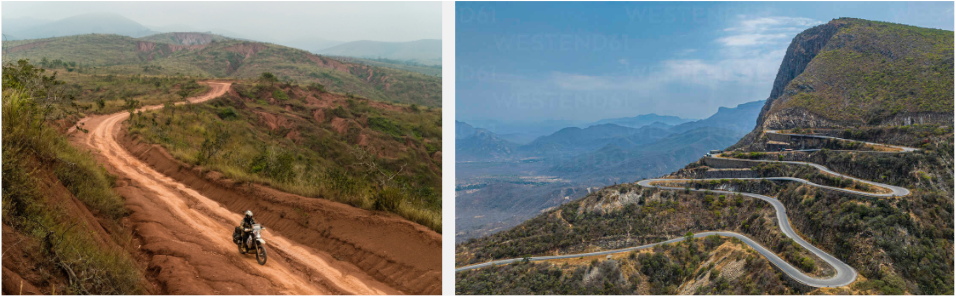
The prevailing reason for the lack of any specialty coffee production is a lack of infrastructure, lack of well-run, organized cooperatives and heavily due to the government setting prices, creating a lack of incentive to do-so. Governments tout their price setting as a means of fair trade but in reality the control only allows for taxation. In the end the price they set is low because the quality is pushed down to the point that only volume is rewarded. However, infrastructure is so old, poor and in disrepair that Angolan output per hectare is far below other African producing countries like Rwanda, Ethiopia, Kenya, etc. And these countries are heavily producing higher grade Arabica vs mainly Robusta, as Angola has been doing. Even most of the trees themselves are several decades old, meaning that yields are low and that farms are desperately in need of regeneration or replanting. Angola coffees have been defined as having a distinctive old taste, insufficient moisture content, and discolored or yellow beans. The result of trying to process coffee with a lack of appropriate equipment. Transport infrastructure is another key issue. Most Angolan coffee farmers are in rural areas, and transporting their crop to processing centers can be complicated and costly. Meanwhile, while Angola’s fortunate to have their own large shipping ports in Luanda, the country is relatively large and roads to get there can literally disappear (wash out).
|
|
|
Add to this, the common challenges facing all producing countries - credit and short-term finance being near impossible to come by for coffee producers in Angola. The few banks that exist are unwilling to finance most exporters, as they deem the coffee business too risky. Only a few big exporters are financed, and funding is only made available against collateral. Add to this the coffee diseases, pests, and a lack of access to agricultural inputs (fertilizers etc.). As a result, many farmers simply sell their coffee cherries to roaming vendors, who then process, dry, and roast the beans in big cities. Making transparency (a hallmark of specialty coffee) a bit of a pipe-dream at present. This is why most of us have never had a decent Angolan grown coffee in our lives. And if you’re like me, there’s a small thrill in trying coffees from new regions as if finding a hidden gem before the rest of World wakes up to it. If Angola can manage to put out some gems, there’s a line of people waiting to gobble them up.
|
|
|
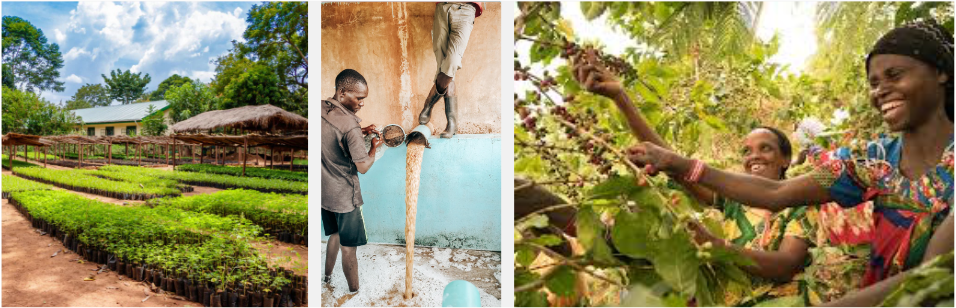
While it feels like all bad news, there is some reason for hope, potentially. As mentioned, the country is young, the sad result of several years of conflict, and so there are a large amount of demobilized soldiers the government is focused on finding work for, amidst efforts to return the many rural people who were displaced. The government launched a revitalization programme for arabica coffee that was marked by the distribution of 15,000 seedlings to 30 families in Beteleme. Over time, the aim is that similar initiatives will provide more than 3,000 people with a source of livelihood. Furthermore, the United Nations Conference on Trade and Development (UNCTAD) is currently working with farmers, the government, and other players in the country’s coffee sector to assess how producers and exporters could better position themselves within the global value chain.
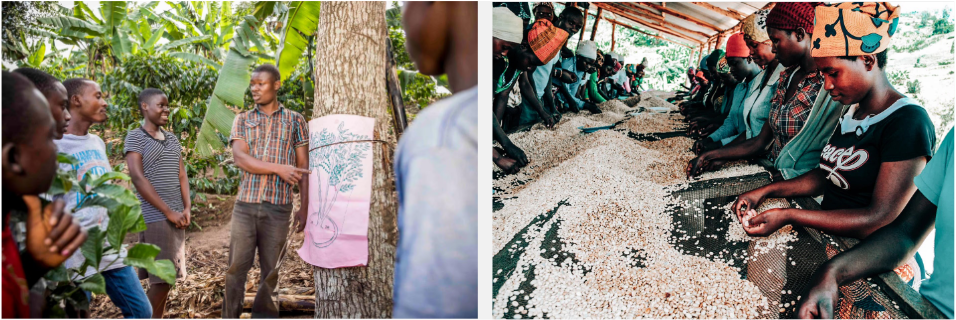
These gains feel symbolic but not meaningful. In order for specialty coffee production to ever make inroads - they first literally need better roads - so basically it’ll mean less government centralization/control and more investment in infrastructure to support. What has been successful in other African producing nations, particularly ones recovering from a similar past, like Rwanda for example, is well-funded, organized co-ops. Particularly ones that can support processing and trade directly with buyers. Despite the programme mentioned above, most people feel the largest limiting factor is a policy environment that, historically, has not favored coffee production. Globally, coffee crops are on the decline due to headwinds intrinsic to the relatively risky business of coffee production. Meanwhile demand, especially for specialty grade coffee is increasing, most notably in producing countries themselves. This means there is actual longevity in coffee production, unlike oil. Sure, it’d be less profitable in the short-term and yes we live in a world of instant gratification but the long-term benefits are quite obvious.
There are a small handful of companies, such as Cafe Cazengo founded by the Miguel family whom had been coffee farmers for several generations prior to the war. They reestablished in 2010 by reviving farms and establishing roasting and distribution partnerships in the U.S. However, for the most part the specialty coffee is on the sidelines in Angola for now. That said, if Angola can make good, the industry appears ready to reward it’s efforts.
|
|
|
|
|
|
|