Featured Industry Story: The End of the Season Is the Best Time to Look at Your Equipment
As summer starts to wind down (although it doesn’t feel like it), it's easy to fall into the mindset that the golf season is winding down with it.
For many golfers, the focus shifts from improving the game to simply getting in as many rounds as possible before the weather turns.
But some of the best golfers approach this part of the season differently.
They start paying attention.
After a full season of golf, you have something you didn't have back in March: a year's worth of evidence.
You know which clubs you trust. You know which ones you avoid. You know which shots cost you strokes. And if you've been playing the same equipment all season, you probably have a pretty good idea of where your bag is helping you—and where it isn't.
That makes the end of the season a perfect time for an equipment checkup.
Start With the Clubs You Didn't Trust
Think back over your last 20 rounds.
Was there a club you consistently struggled to hit? A fairway wood that never seemed to fit your swing? A long iron that spent most of the season sitting in the bag? A wedge that seemed to fly unpredictably?
Don't immediately assume you need a new club.
Instead, ask why.
Sometimes the problem is the golfer. Sometimes it's the club. And sometimes it's simply a matter of loft, shaft, lie angle or gapping that isn't quite right.
A fitting can help separate those possibilities—and that's far more useful than simply replacing the club you don't like.
Look at Your Gaps, Not Just Your Clubs
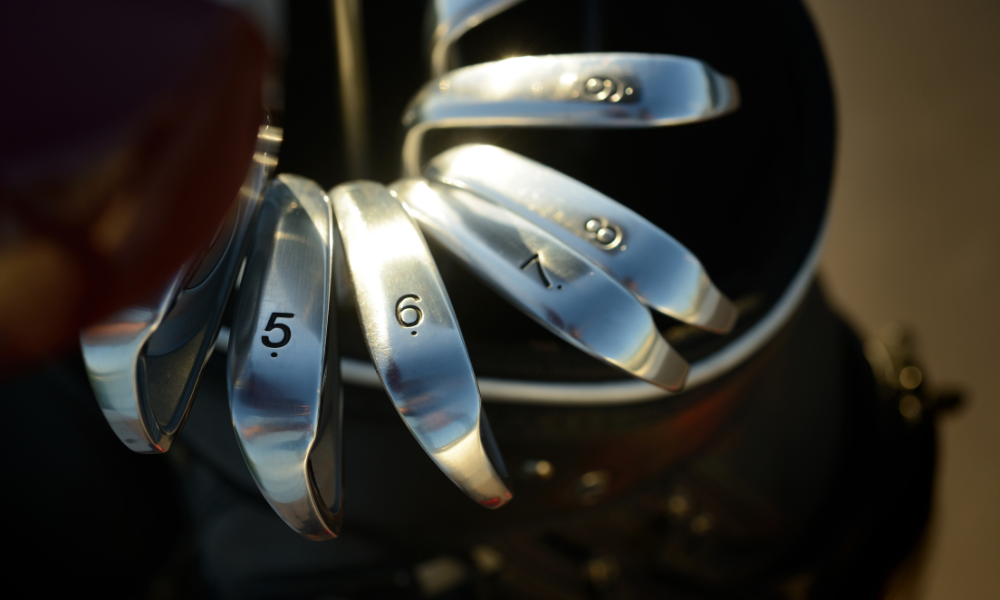
The numbers on the bottom of your clubs don't necessarily tell you how your bag actually works.
After a full season, you should have a pretty good idea of your real-world distances. Maybe you have two clubs that go nearly the same distance. Maybe there's a 20-yard hole between two clubs. Maybe your 5-wood has effectively replaced your 3-iron.
Those are clues.
The goal isn't to carry the clubs you're supposed to carry. It's to build a set that gives you useful options when you actually play golf.
Don't Forget the Wedges
Wedges might be the most overlooked piece of an end-of-season equipment review.
Take a look at your loft progression, your actual yardages and the condition of your grooves. Think about how often you found yourself between clubs around the green or from scoring distances.
A few small changes in the wedge setup can potentially have a bigger impact on scoring than replacing a driver that you only hit 12–14 times per round.
Your Grips Have Had a Long Season, Too
Your grips have probably seen hundreds—or thousands—of swings since spring.
If they're hard, slick, worn or simply don't feel the way they did when they were new, it's worth addressing before next season.
That's particularly important as temperatures fall. Cooler weather can make grips feel firmer, while additional layers and colder hands can make maintaining consistent grip pressure more difficult.
A fresh set of grips may be one of the simplest equipment changes you can make.
And Then There's the Golf Ball
Fall is also a good time to reconsider whether the ball you've been playing actually matches your game.
But don't assume cooler temperatures automatically mean you need a different ball.
Cold air is denser, which can reduce distance, and a golf ball that's been sitting in a cold car or garage can also lose some resiliency. Titleist recommends storing golf balls at room temperature rather than trying to compensate by simply changing to a different model.
The important thing is consistency. If you've spent the entire season learning how your ball launches, spins and reacts around the greens, changing models without a reason may create more variables than it solves.
The best time to figure out what needs to change for next season may be while you can still remember exactly what didn't work this season.