In this 88th edition of A Cup of Stories, LABS' weekly newsletter, you'll see:
➪ Our main topic:The most promissing edtechs in LatAm and the Caribbean, according to HolonQI and why their are poised to ascension.
➪ In Things to Keep an Eye on this week: Brazil sets date and rules for 5G auction.
➪ In LABS round-up (our newest section focused on startups, investment firms and M&A): Investors are likely to pour $18.6 billion into Latin American startups this year, says Atlantico; Brazilian Infracommerce buys Synapcom for BRL 773 million after IPO, creating a full e-commerce company.
➪ And in Latin America Stories to Watch: Insurtechs want to make the market more accessible and simple for Mexicans;
Brazilian Unxpose tracks security gaps before hackers can find them.
Enjoy it! Any complaint or suggestion, please let me know: [email protected]
LatAm's most promising edtechs, according to HolonIQ
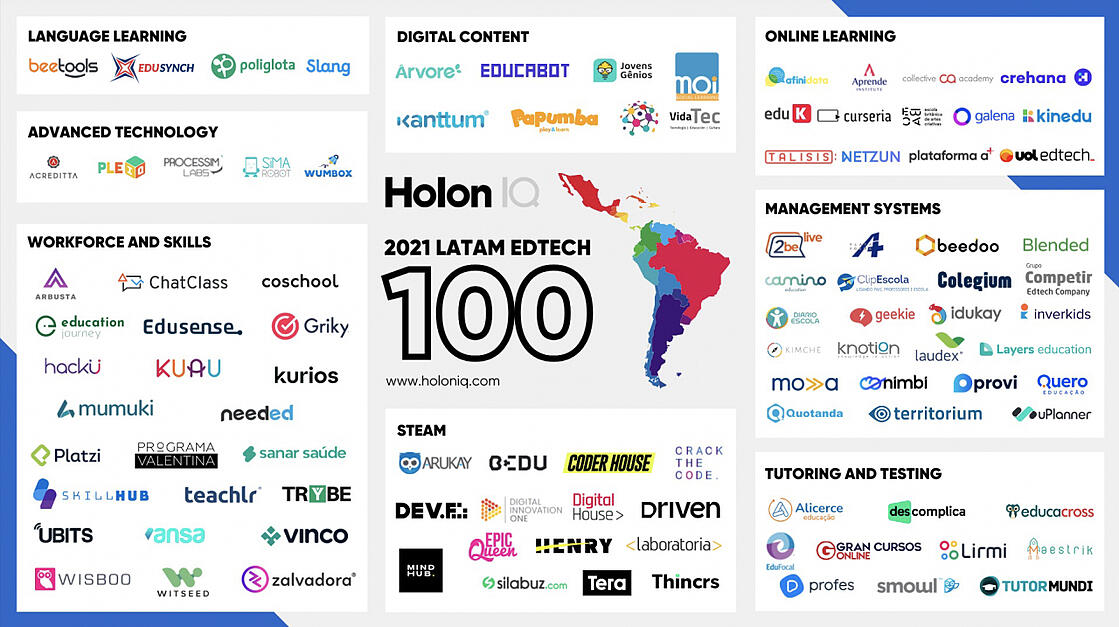
Last week, HolonIQ's intelligence team, with market experts' help, published its selection of the 100 most promising digital education companies out of almost 2,000 edtechs evaluated in Latin America and the Caribbean. They did that based on HolonIQ’s scoring fingerprint that includes criteria such as capital, team, market, product, and momentum. It's the second annual list made by HolonIQ (the first one was released in June last year).
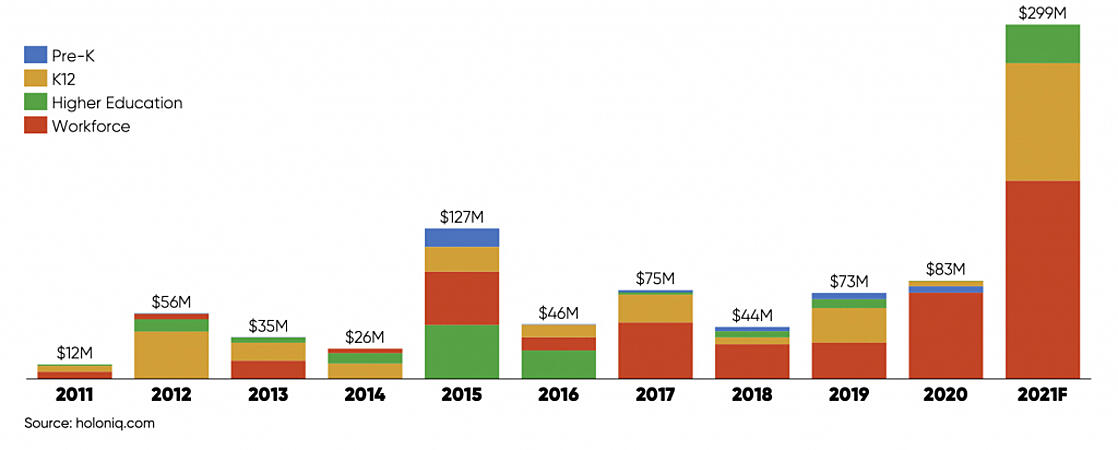
In the first half of 2021, venture capital firms poured as much as $299 million into these companies, and they are on their way to reach $1 billion in investments since 2010, says HolonIQ.
There have been twelve $5M+ rounds raised by edtechs in HolonIQ's list in the last two years, including blockbuster fundraising from online learning platform Crehana, study support and test prep platform, Descomplica and coding school, Digital House.
The country with more edtechs on HolonIQ's list is Brazil (39% of the total), followed by Mexico (16%), Argentina (13%), and Colombia (11%). HolonIQ's map also included platforms from Guatemala, Venezuela, Ecuador, CostaRica, and Jamaica for the first time.
Just over a third of the 100 select startups have less than five years of foundation — 12% of them started between 2019 and 2020, which leads us to the momentum factor...
(In LatAm and globally) edtech giants are poised for ascension
Educators and administrators often joke that change happens at a glacial pace in the education world, and some might say the edtech industry as a whole was a sleeping giant before COVID-19 shook things up. Now that the edtech giant is fully awake, more well-funded, and roaring to life after years of listless growth, the time is ripe to examine this sector that is so crucial to the planet’s future.
Against the backdrop of pandemic-related school closures and mandatory lockdowns around the globe, there’s been an abrupt pivot to remote and hybrid learning. At the same time, edtech leaders and scrappy startups are eager to create more solutions and tools that can serve learners of all ages – from kids working in virtual and hybrid classrooms to adults who want to learn everything from how to cook to how to code.
Though it may not have made headlines, Latin America has been quietly growing into a hub of edtech innovation for almost 10 years, said Fernando Valenzuela, former edtech executive and founder of the Global Impact EdTech Alliance (G.I.E.A.) headquartered in Mexico City.
“Compared to the global leaders, the Latin American edtech startup space is still fragmented and small, but it is already the fourth-largest market and has grown at an annual rate of 14% since 2013. We now have a very strong ecosystem here with about 150 or so recognized edtechs in the region,”
Fernando Valenzuela, former edtech executive and founder of the Global Impact EdTech Alliance (G.I.E.A.).
The adoption of remote learning and edtech solutions has accelerated out of sheer necessity during the pandemic, compressing “three to five years of normal technology adoption into about 12 months, with this disruption driving the sector to think completely differently about the way the world learns,” said Thiago Payva, vice president of education at HolonIQ, told LABS’ U.S. Correspondent Bonny Renner some weeks ago.
The edtech sector has a particularly critical role to play in Latin America, where systemic education gaps and limited resources directly impact both lives and livelihoods – especially those living in poor, rural, and indigenous communities.
According to the World Bank, about 120 million school-age children in Latin America and the Caribbean had already lost or were at risk of losing a full academic year as of this February, resulting in an estimated 7.6 million more “learning poor” primary education school-age children in the region.
And the digital magic needs to happen not just at school but in the labor market.
As demand for highly skilled workers across LatAm continues to rise, and job seekers look for ways to better themselves or change careers, edtechs are responding with solutions aimed at helping people build the skills they need to succeed in an increasingly competitive digital economy.
Do you want to know how exactly Latin American edtechs are dealing with all this demand?
The Brazilian fifth-generation (5G) mobile spectrum auction is scheduled to take place on November 4th. Anatel, the agency that regulates the sector in the country, approved the rules for the auction last Friday. The new notice, with these new rules, was published this Monday. The obligations foreseen for those who win the concession of 5G frequencies, which range from bringing fast internet to thousands of public schools in the country to the connection of highway corridors in the country to 4G technology, should still generate discussions throughout this week. Interested companies have until October 27 to submit their proposals. As LABS has shown, the auction is likely to be the largest ever managed by Anatel, and also the largest when it comes to 5G frequencies in the world. With the approved modifications, the economic value of the auction could reach BRL 49 billion ($9.1 billion) in total, while the investment expectation over the granting periods (which range, depending on frequency, from 2022 to 2029) can reach BRL 163 billion ($30.5 billion). The auction includes the bidding modeling for the 700 MHz, 2.3 GHz, 3.5 GHz, and 26 GHz bands and the list of locations and cities eligible for 5G commitments in the country, among other rules.
Investors are likely to pour $18.6 billion into Latin American startups this year, says Atlantico
Driven by low global interest rates and the effervescence of the Latin American ecosystem, investors are likely to pour $18.6 billion into the region this year. That’s what the venture capital fund Atlantico estimates in its new report. Data gathered from different sources by the fund, including interviews with executives from more than 20 of the most prominent startups in the region, indicate that technology-based companies in the region attracted $9.3 billion in the first half of the year and that this amount should be easily surpassed in the second half. Read more about it here.
Brazilian Infracommerce buys Synapcom for BRL 773 million after IPO
Infracommerce, a Brazilian company of digital solutions for e-commerce, has announced the acquisition of Synapcom, a digital business company focused on the development and operational management of e-commerce projects, for BRL 773 million. The acquisition comes four months after Infracommerce held its IPO on the Brazilian stock exchange B3, when it raised BRL 902 million, as part of the strategy to expand the digital white label ecosystem of e-commerce solutions for global brands and industries in Brazil and Latin America. As we say in Brazil, Infracommerce wants to make barba, cabelo e bigode¹. Read more about it, in English or Brazilian Portuguese.
Insurtechs want to make the market more accessible and simple for Mexicans
›› LABS Social isolation accelerated digitization and motivated the development of new distribution channels. At the same time, with the public health system often approaching collapse, Mexicans were forced to look for alternatives. As a result, private health insurance penetration has increased even in a high cost and adverse scenario. LABS' contributor Verónica García de León talked to Endeavor México and some of the leading startups in the sector — Clupp, Sofía, and Zenda.la — about how startups want to change the industry in Mexico. Read the full story in English, Brazilian Portuguese, or Spanish.
Brazilian Unxpose tracks security gaps before hackers can find them
›› LABS With an eye on a booming market – both in investments and in demand due to the increase in global cybercrime – Unxpose has developed a solution to identify system flaws ahead of criminals. Read the full story in English or Brazilian Portuguese.
¹ bar•ba, ca•belo e bi•go•de: Literally it means beard, hair, and mustache. It is a direct reference to beauty salons that offer all the typical services of the activity. On a daily basis, however, it is used by us Brazilians whenever we want to emphasize that a company or person offered or had access to a whole range of services.
To make sure that our emails get in your inbox, add [email protected] to your mailing list.