|
Don’t let anyone tell you that India is not at the World Cup. True, the national team did not qualify. But as Indian media outlets and uncles on WhatsApp will proudly point out, four players of Indian origin will take part, turning out for Australia, Congo, New Zealand and Qatar. The excitement may feel misplaced, but it is understandable given the state of the national team. The Blue Tigers, as they are called, are ranked 138th in the world—but even that may be flattering. Over the past year, they have been tamed by Bangladesh (181st), Hong Kong (156th) and Singapore (148th).
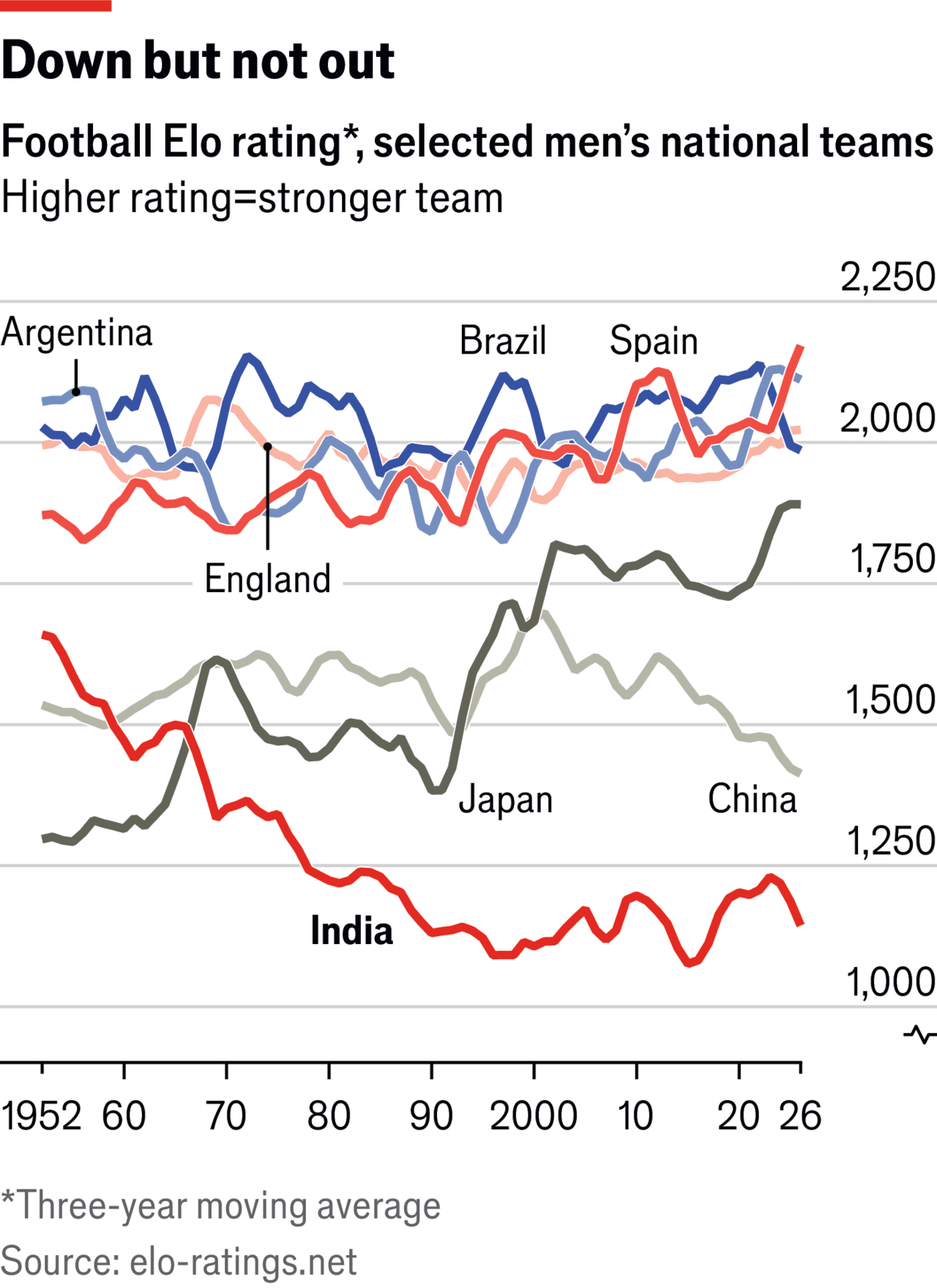
India was not always this hopeless at the world’s favourite sport. At independence it was among the best teams in Asia (see chart below). It even qualified for the World Cup in 1950, albeit after the three other teams in its group withdrew. Eventually it dropped out, too. Not because FIFA, the sport’s global governing body, forbade its players from playing barefoot, as the popular myth goes, but because the Indian football federation judged the Olympics in Helsinki, two years later, a better use of its scarce travel funds. In hindsight the decision looks misguided—not least because India lost its opening match there 10-1 to Yugoslavia.
Since then administrators have hobbled Indian football in more deliberate ways. In 2022 the All India Football Federation (AIFF) was suspended by FIFA after its president overstayed his term. His successor has hardly restored confidence. This season’s Indian Super League (ISL), the country’s top competition, was delayed for months by a contractual dispute between the AIFF and its commercial partner. A former staffer has accused the federation of operating like a grocery shop.
Yet as easy as it is to bash babus (bureaucrats) for the country’s failures, other factors are at play. As I
write this week,
there are many contributors to football success—some of which are out of any football administrator’s control. Rich countries do better; so do tall ones. India trails on both fronts. But football heritage matters even more. Europe and South America have spent more than a century building effective footballing ecosystems. That has created vast gaps with countries like India in participation, infrastructure and training. India, for instance, has around 50 coaches holding Asia’s highest-level licence; Spain, with less than 5% of India’s population, has more than 2,000 with the equivalent.
Such chasms can be bridged, eventually. A handful of countries, such as Japan, have done so by pouring money and attention into grassroots football, training and infrastructure. None of this is alien to India, whose vast networks of academies churn out prodigies in cricket and chess. But these games are still the exception. India is far from a sporting country: one recent study found that just 7% of Indians exercise daily.
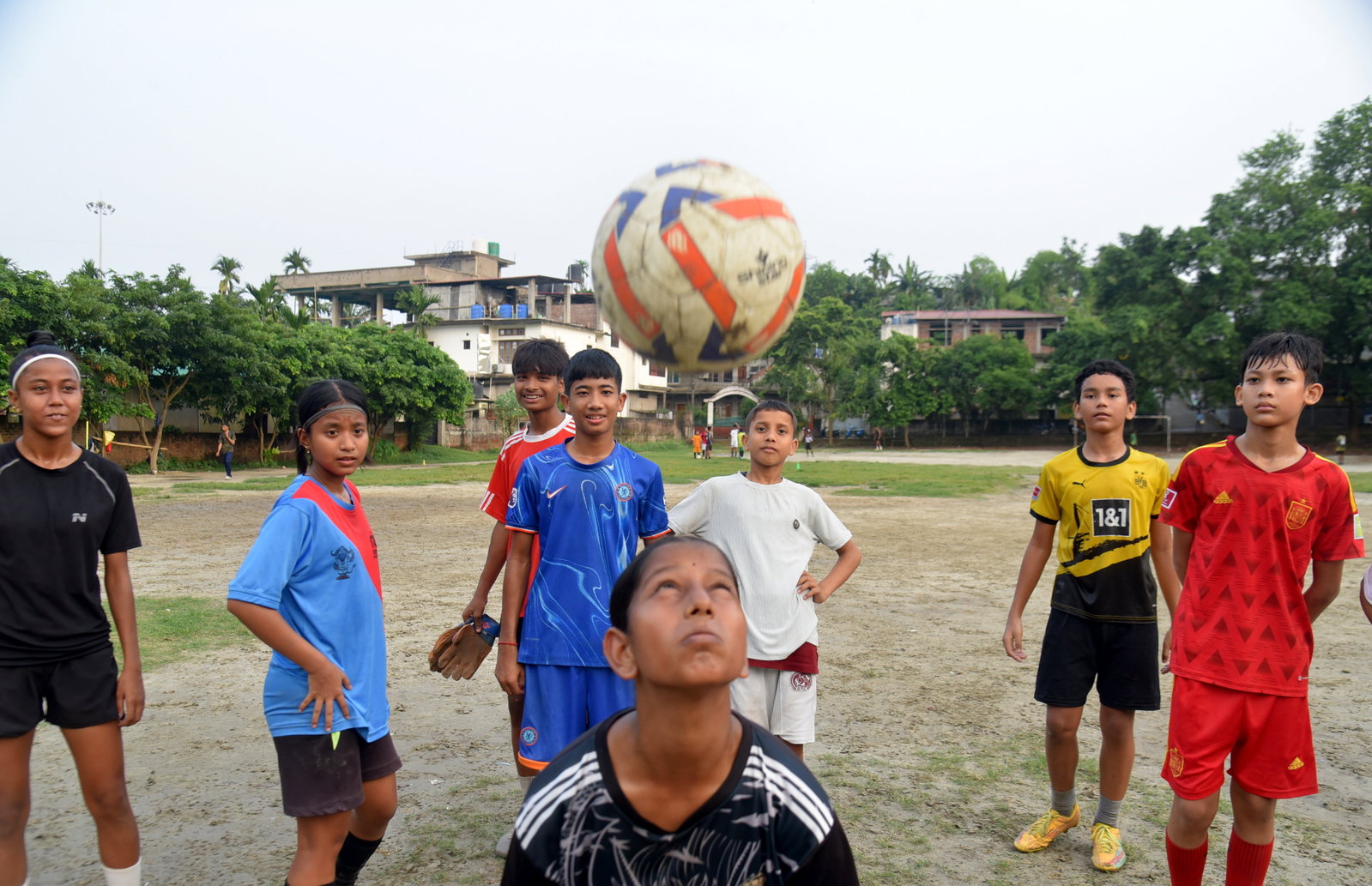
The good news is that the seeds of a football revolution are already present. The sport has always been loved in Goa, Kerala, West Bengal and the north-east. But it is becoming more popular everywhere. ISL matches, when they do take place, enjoy decent attendances, rivalling many minor European leagues. But turning this into a national obsession might require a footballing hero. After all, cricket’s grip on the Indian imagination owes much to Sachin Tendulkar, just as chess’s does to Vishwanathan Anand.
The search for the football equivalent need not be limited to India. Around the world, countries are embracing diasporas and naturalised players as a way to quickly boost performance. At this year’s World Cup, roughly a quarter of players will have been born outside the country they represent. India has found this route difficult because its laws ban dual citizenship. Officials are now considering relaxing them. And in November they even convinced Ryan Williams, a winger with a Mumbai-born mother, to give up his Australian citizenship to don India’s blue jersey (he repaid them by scoring within four minutes of his debut). Instead of celebrating Indian-origin players abroad, perhaps Indian officials should do more to make them their own.
|