Today's newsletter is a deep dive into a foundational technology of the AI era: neural networks.
Fahim here.
Today I want to share a newsletter written by our technical content design team. It's a deep dive into a core technology of the AI era: neural networks.
Neural networks have revolutionized the field of artificial intelligence (AI), mimicking the complex way our brains process information. Let's unpack the evolution of neural networks — from the basic perceptron model to advanced transformer models — and explore their impact on various industries.
Understanding the evolution of neural networks is crucial for machine learning (ML) engineers, data scientists, and other professionals in related fields because it provides insights into the progression of AI technologies, enabling them to stay informed, adapt to emerging trends, and advance their careers.
Please enjoy — and let me know what other topics you'd like to learn about in the future. Happy learning!
Hands-on Learning. Powered by AI.
In addition to 1,000+ hands-on courses and projects, you'll get all of our AI-powered learning features, including:
💻 Instant Code Feedback
🤖 AI-Powered Mock Interviews
✍️ Prompt Engineering Widgets
🔢 Data Science & ML Skills Training
⛓️ AI Courses & Projects(tinker with LLMs, LangChain, NLP, and more)
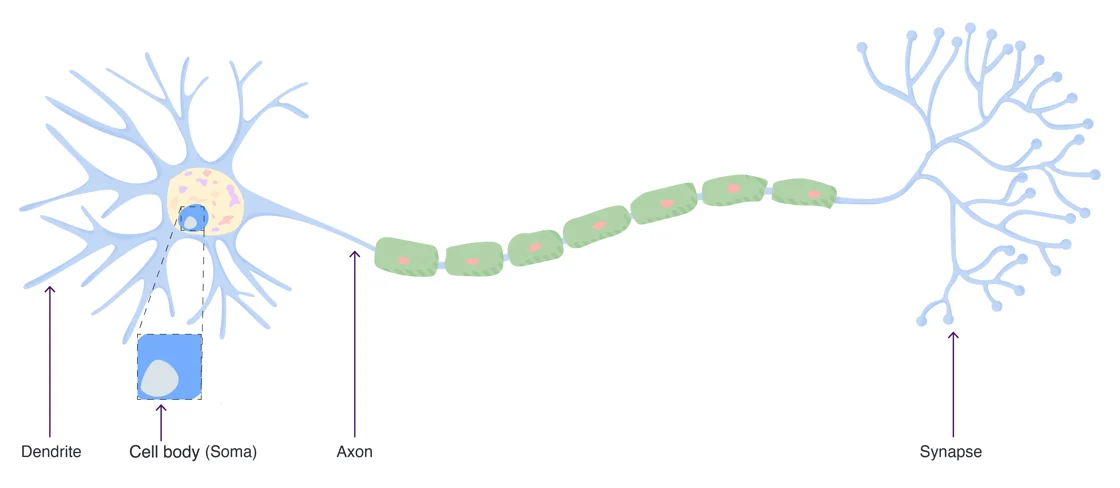
A biological neuron is a nerve cell that serves as the fundamental building block of the nervous system, responsible for transmitting information through electrical and chemical signals.
It operates by receiving signals through its dendrites, processing these signals in the cell body, and transmitting output signals along its axon to other neurons or muscles. This process enables complex interactions essential for thought, sensation, movement, and regulating bodily functions.
Visual representation of a biological neuron
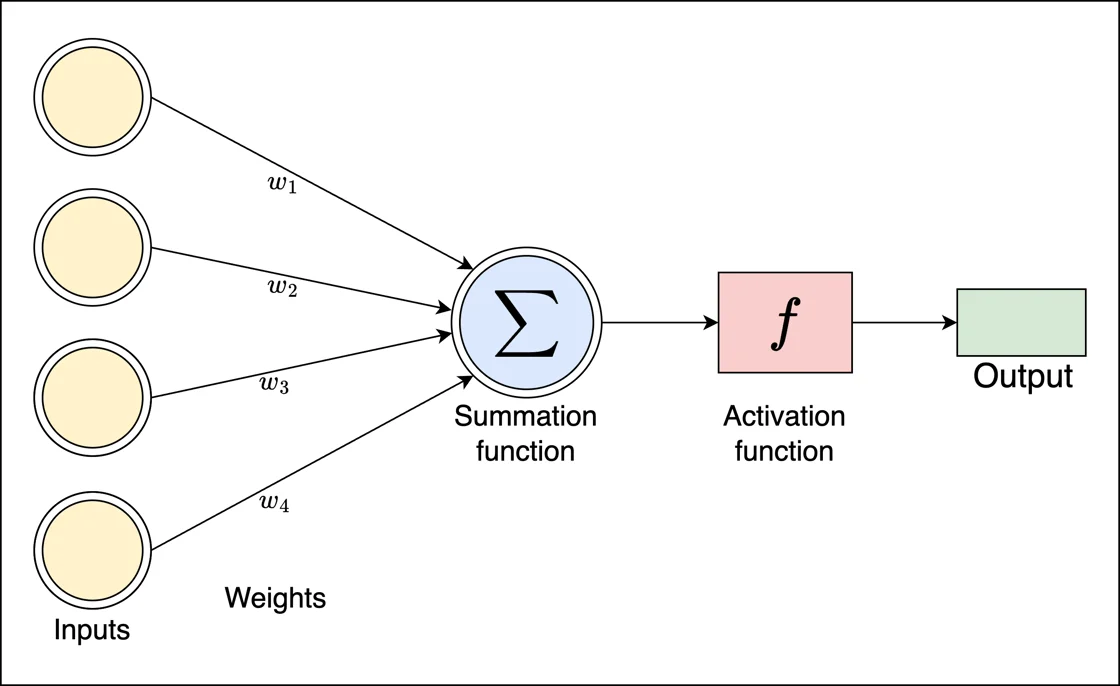
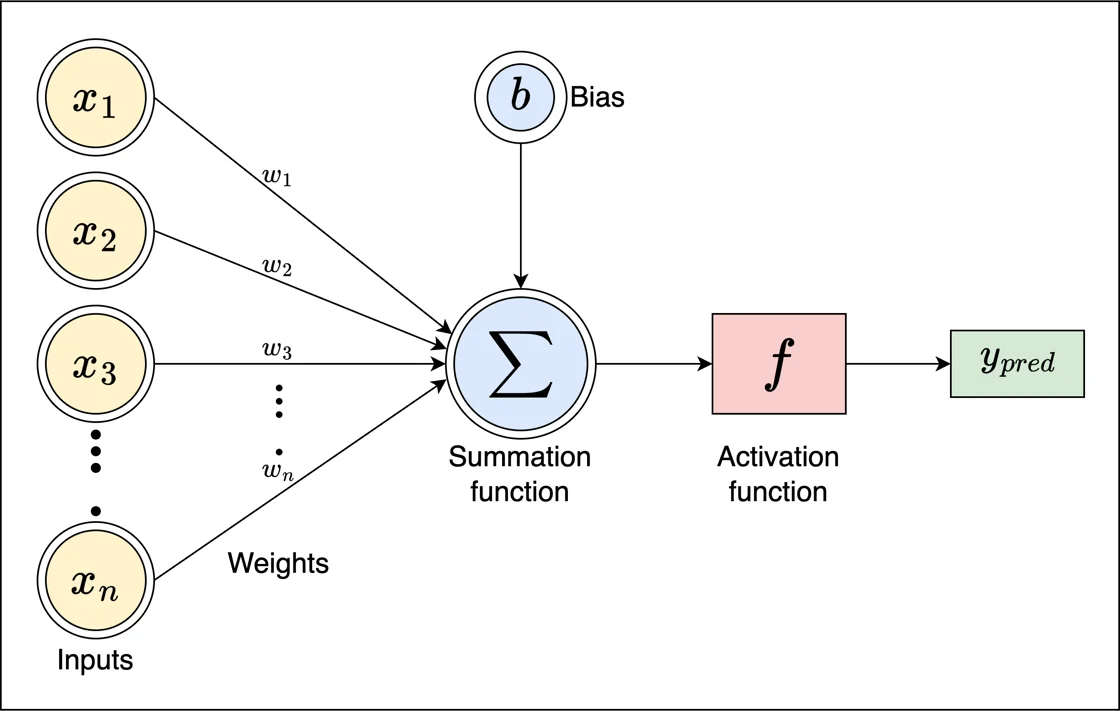
An artificial neuron, at its core, is a simple mathematical model designed to mimic the behavior of a biological neuron.
It receives one or more inputs, which could represent sensory data or the output from other neurons. Each input is multiplied by a weight that signifies its relative importance. The neuron then sums these weighted inputs, and this sum can be further processed by a nonlinear function, known as an activation function, to determine the neuron’s output. This output can then serve as an input to other neurons in the network. The process of adjusting these weights based on the network’s performance on given tasks is the foundation of learning within artificial neural networks.
Visual representation of an artificial neuron
In comparing biological neurons to artificial neurons, the soma (cell body) is akin to the node, dendrites (signal receivers) correspond to inputs, synapses (connections between neurons) align with weights/interconnections, and the axon (signal transmitter) matches the output.
The transformative evolution of neural networks
The evolution of neural networks marks a fascinating journey through the advancement of AI, with each stage introducing more sophisticated models capable of tackling increasingly complex problems. Here’s a concise overview of these key milestones and their contributions:
The perceptron model
The multilayer perceptron (MLP)
Convolutional neural networks (CNNs)
Sequential models
Transformers
Large language models (LLMs)
The perceptron model (1958)
Developed by Frank Rosenblatt, the perceptron represented the dawn of neural networks, introducing a machine capable of learning from training data. Its design—a single layer of artificial neurons with adjustable weights—allowed it to perform simple binary classifications, laying the groundwork for future developments in AI.
The mechanisms of a perceptron
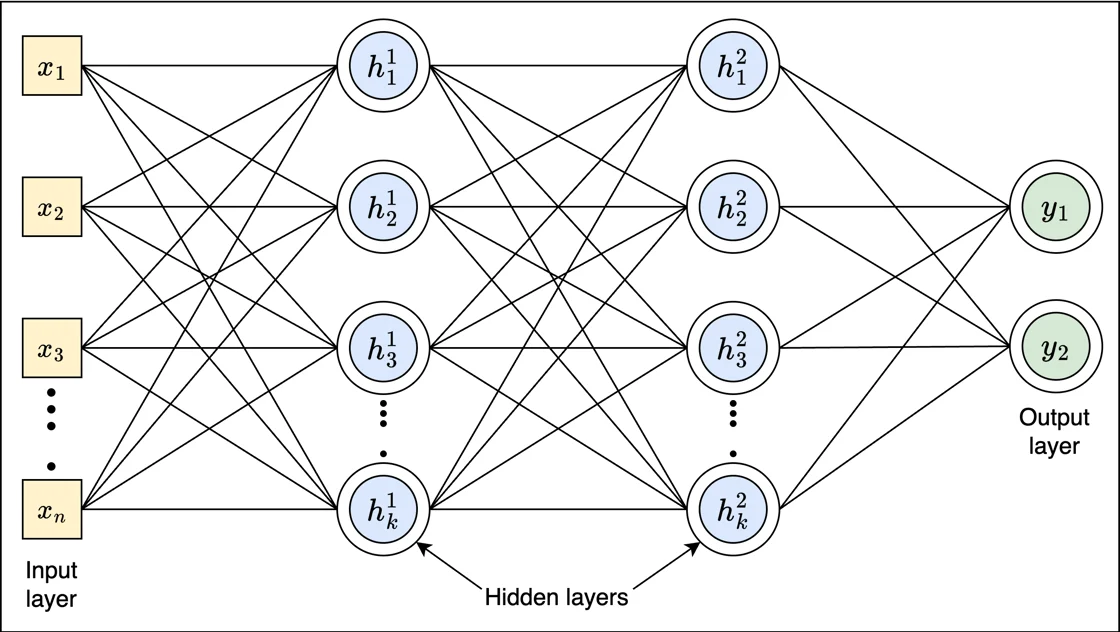
The multilayer perceptron (1986)
Introducing multiple layers between input and output, the MLP enabled nonlinear transformations and the creation of more complex decision boundaries.
This innovation underpins many of today’s deep learning architectures, showing versatility across various applications, from voice recognition to social network filtering.
The layers of an MLP with a simplified visual guide
Convolutional neural networks (1998)

Tailored for grid-like data (e.g., images), CNNs employ convolutional layers to extract features and pooling layers to reduce spatial size. This structure has propelled major advancements in image recognition, facial recognition systems, and even medical image analysis, showcasing profound impacts on both technology and society.
Exploring the inner workings of CNN architecture through a classification example
Sequential models (1997)
Sequential models such as recurrent neural networks (RNNs), long short-term memory (LSTM) networks, and gated recurrent units (GRU) have been designed to process sequential data, enabling them to retain information over time.
This design enables them to be particularly effective in tasks involving sequential data like natural language processing, including language translation and text summarization, as well as in time-series forecasting, where understanding the context and sequence of previous data points is crucial.
Exploring the inner workings of sequential models through an illustrative diagram
Transformers (2017)
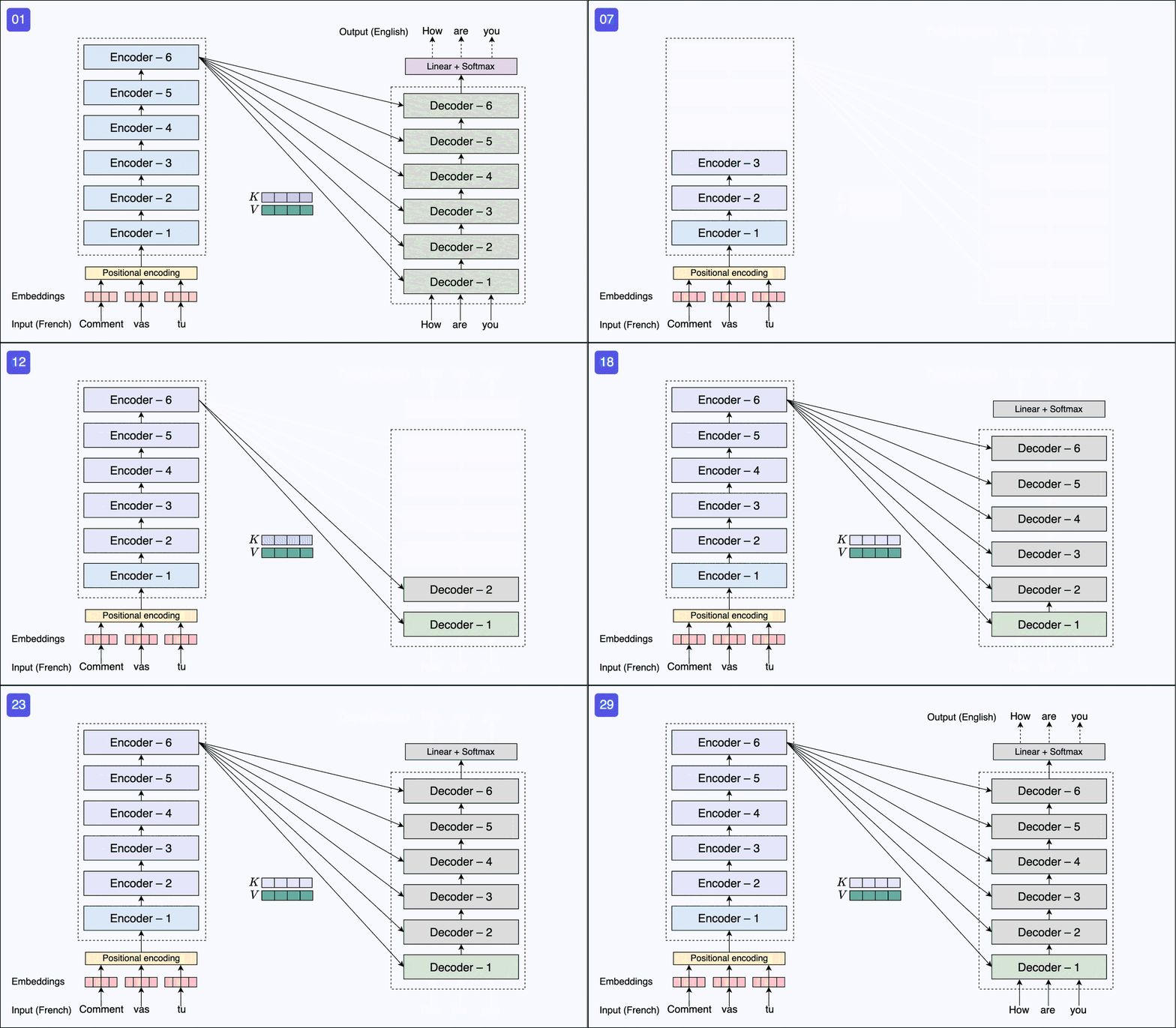
Transformers revolutionized the handling of sequential data through their attention mechanism, which allows the model to focus on different parts of the input data to varying degrees.
This capability has led to unprecedented success in a wide range of natural language processing tasks, such as language translation, text generation, and even complex question answering across large datasets. Transformers’ flexibility and efficiency have positioned them at the forefront of current AI research and applications.
Exploring the inner workings of a transformer through a language translation example
Large language models
As we look at the forefront of neural network research and application, LLMs like the GPT (Generative Pretrained Transformer) series, BERT (Bidirectional Encoder Representations from Transformers), and T5 (Text-to-Text Transfer Transformer) emerge as incredibly influential developments.
These models are trained on vast amounts of textual data, enabling them to generate coherent and contextually relevant text, answer questions, summarize text, translate languages, and even create content that closely mimics human writing styles. LLMs are not just revolutionizing natural language processing tasks but also expanding their utility across diverse fields. For instance, in law, they assist in legal research; in healthcare, they facilitate medical inquiries and improve patient care; and in education, they create personalized learning materials and tutoring systems.
The scalability and adaptability of LLMs continually set new benchmarks for what AI can achieve in understanding and generating human language. Their ability to process and analyze large datasets quickly and accurately also presents new opportunities for handling big data, offering insights and solutions that were previously unattainable.
Moreover, as LLMs evolve, there’s a growing emphasis on ethical considerations and the mitigation of biases within these models, aiming to ensure that advancements in AI contribute positively and equitably across all sectors of society.
Recommended Courses
Expand your understanding of the evolution of neural networks with the following Educative courses:
A Beginner’s Guide to Deep Learning: This course offers a comprehensive introduction to deep learning, covering fundamental concepts and practical coding in NumPy and Keras. Gain hands-on experience with quizzes and coding challenges.
Introduction to Deep Learning & Neural Networks: Covering basic to intermediate concepts, including CNNs, RNNs, GANs, and transformers, this course is suitable for data scientists, engineers, architects, and software developers alike.
Natural Language Processing with TensorFlow: Learn TensorFlow and Keras fundamentals, and dive into NLP tasks like text generation, machine translation, and question-answering using CNNs, RNNs, and transformers.
Getting Started with Google BERT: Explore transformer architecture with a focus on BERT, including pretraining, usage, and variants like M-BERT and VideoBERT.
Building Advanced Deep Learning and NLP Projects: With 12 real-world projects, this course provides hands-on experience with tools like NumPy, Matplotlib, scikit-learn, and TensorFlow, making it ideal for those with Python basics and a grasp of artificial neural networks.
Continue your learning journey and stay updated with the latest neural networks and AI advancements with Educative!
Conclusion
The evolution of neural networks, from perceptrons to advanced LLMs, highlights the rapid progress in AI and ML. These milestones signify deeper understanding and more sophisticated approaches to mimic human-like processing. With LLMs at the forefront, neural networks are poised to impact various aspects of human life.
However, this progress underscores the need for ethical governance and responsible AI use. As neural network technologies advance, so must our frameworks for societal impact management. The future of neural networks not only promises technological innovation but also calls for deeper engagement with ethical considerations. Collaboration between technological advancements and inclusive policy-making will shape an AI-enabled world for the betterment of humanity.
Note: Should you have any additional questions or specific topics you would like us to delve into in future newsletters, feel free to contact us!