|
|
|
|
|
|
|
|
|
|
|
|
|
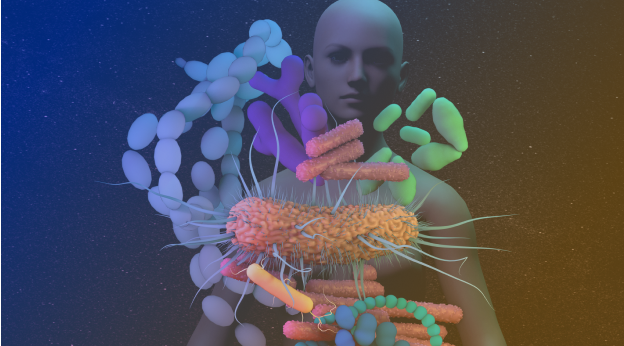
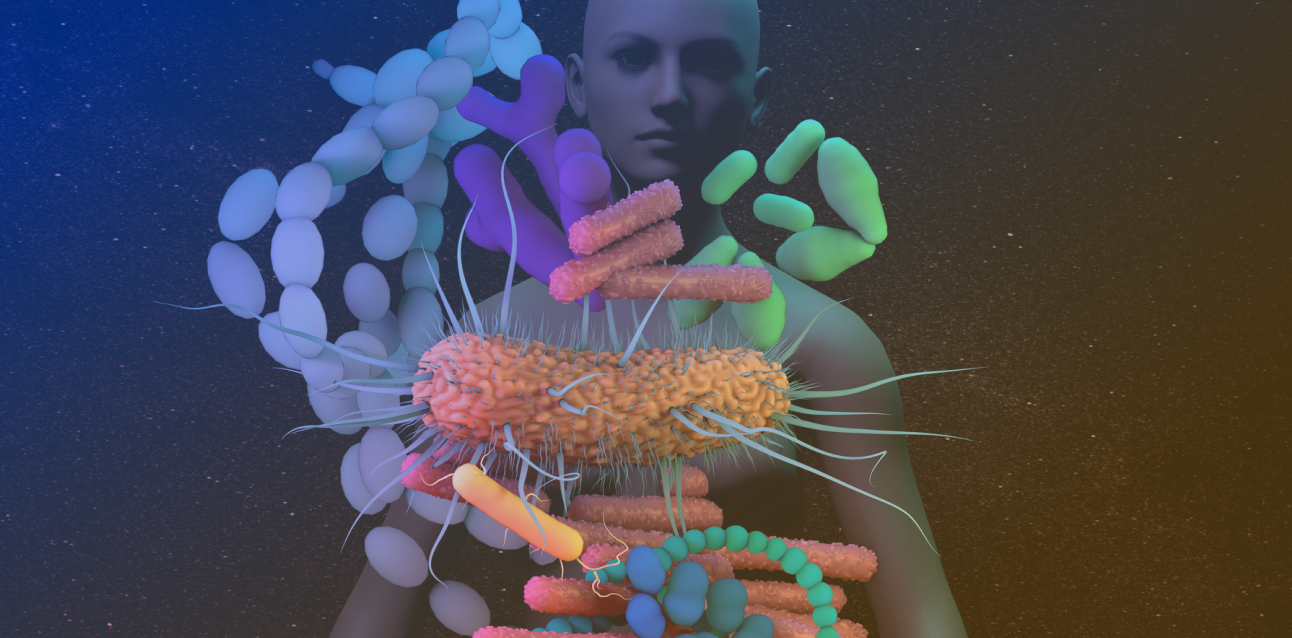
This month, we focus on what many scientists consider to be one of the body’s organs—the trillions of bacteria, archaea, fungi and viruses that contain at least 150 times more genes than the human genome and weigh more than your brain (around 5 lb)—your gut microbiome. Since science sequenced the human genome about a decade and a half ago, research has turned its attention to the many ways in which these microbes change the way we live, interact, and fight disease. Among the recent discoveries: people over 100 years old show distinct microbial patterns that may confer special protection; gut microbial diversity as we age may be a predictor of mortality, and some teams of epidemiologists are looking to the microbiome as a source of bacteria that may fight our most dangerous viral foes.
|
|
|
|
|
|

|
|
|
|
|
|
The Importance of Microbial Diversity As We Age
|
|
|
|
|
|
|
|
|
We know that diversity—of activities, of stimuli, of ideas—is good for the brain as you age, but did you know the same principle of diversity holds true for your gut? A study of 9000 individuals found that, in older adults, particularly those 65+, the more unique the microbial composition in their gut, the healthier they were likely to be. Microbial “drift”—the measure of uniqueness used as a marker in the study, was calculated based on the presence of a core type of bacteria found in most humans in the genus Bacteroides: the less Bacteroides present, the more those bacteria had been replaced by other types unique to the individual, and the lower the mortality rate for that group across a four‑year period. (National Institute on Aging)
|
|
|
|
Sir Richard Roberts on the Importance of Bacteria For Our Health:
|
|
|
“They live with us, they've made us their home, and they don't want anything to happen to their home. And so they go to great lengths to protect us from pathogens and from things that otherwise might kill us. Just imagine, when you buy a home, the first thing you do is put a fence around it. You don't want anything bad to happen. Bacteria feel the same way, they love us and we should love them...When I first got into this field, I felt pretty much the same way that everybody was feeling at the time: That bacteria were pathogens that were interesting and these others didn't seem to be terribly interesting at the time.
But as time has gone on, I've become, slowly, a huge admirer of bacteria. I recognized their value as research reagents, because one can do experiments with them. You know if I tried to do experiments with you, you're going to object, you won't like to be part of a study, but bacteria seem not to object. So we can do experiments with them that we otherwise could not do.”
|
|
|
Sir Richard Roberts, Ph.D.
Nobel Laureate, chief scientific officer at New England Biolabs, and Elysium Scientific Advisory Board member
|
|
|
|
|
|
|
|
|
|
|
|
|
|
|
|
|
THIS MONTH
|
|
What We’re Reading
|
|
|
|
These are third-party articles about science that we find interesting but have no relationship to Elysium or any of our products. Elysium’s products are not intended to screen, diagnose, treat, cure, or prevent any disease.
|
|
|
Can the bacteria in your intestines help fight off COVID?
Viruses present a specific health challenge—they’re constantly mutating, and antiviral drugs are difficult and time-consuming to develop. Operating from the principle that we are host to trillions of microbes in the form of a microbiome, scientists have turned their attention to harnessing this ecosystem in combating viral pathogens. Individuals with pre-existing medical conditions like diabetes and obesity, as well as those who have been hospitalized with COVID, have distinct microbiome patterns. This may mean that altering the gut microbiome may help fight these health conditions. (National Geographic)
Centenarians’ gut microbes harbor protective properties
A team of researchers, including at Harvard and MIT, have found that centenarians have higher gut levels of a bacterial species that produce secondary bile acids, which are generated in the colon and thought to protect the intestines from pathogens. When the researchers isolated these species in a lab, they inhibited the growth of a variety of bacteria, including antibiotic-resistant strains. (Medical XPress)
There’s an app for a healthier gut
The sciences began to turn their attention to the importance of the gut microbiome to general health around a decade and a half ago, when we sequenced the human genome. While our personal microbiome comprises bacteria all over the body, the ones in the gut are the most significant to our wellbeing, and have been found to impact immunity, appetite, and mental health. Epidemiologist Tim Spector at King’s College London is co-founder of the ZOE app, which creates personalized diets based on an individual’s microbial needs. (The Guardian)
Quercetin supplementation increases microbial diversity in mice
In animal models, researchers at Tianjin Medical University have found that supplementing with the senolytic quercetin had beneficial effects on gut bacteria, increasing counts of the beneficial genera
Clostridia,
Bifidobacterium, and
Lactobacillus, and reducing counts of
Fusobacterium and
Enterococcus, which are associated with negative health outcomes. To date, there is there is not yet evidence that this study can be extrapolated to humans. (NCBI)
|
|
|
|
|
|
|
|
|
|
|
|
|
TERM OF THE MONTH
|
|
Bacteroides
|
|
/ ˌbæk təˈrɔɪ diz /
|
|
|
|
A genus of anaerobic bacteria making up the majority of the mammalian microbiota that play a fundamental role in processing complex molecules. While Bacteroides is considered a “beneficial” strain, the majority presence of Bacteroides in the gut later in life may indicate that a host’s microbiome is not as diverse as it could be.
|
|
|
|
|
|
|
|
|
|