|
Thanks for reading The Abstract. This month’s edition is
1,083 words, about a
4-minute read.
|
|
Is there a topic that you’d like to see more of in
The Abstract? Drop us a line at
[email protected]. Want to get
The Abstract in your inbox? Sign up here.
|
|

|
|
|
|
Summer is peak sunscreen season, and this month brought a notable update: The FDA approved a new sunscreen active ingredient for the first time in decades. We offer expert commentary from Dr. Richard Granstein, a world-renowned leader in the field of dermatology and member of the Elysium Scientific Advisory Board. Also in the July edition of
The Abstract: new research on NAD+ and retinal cell resilience, placental metabolism and the timing of labor, whether GLP-1 medications may have a role in longevity, and how brain health can improve across adulthood.
|
|
|
FDA approves a new sunscreen ingredient for the first time in decades
|
|
|
|
|
For the first time since the late 1990s, the FDA has added a new active ingredient to the list of permitted over-the-counter sunscreen ingredients. Bemotrizinol (BEMT), already used in Europe and other markets, protects against both UVA and UVB rays and has low levels of absorption through the skin. The FDA considers it generally recognized as safe and effective for adults and children 6 months and older, opening the door to more modern sunscreen formulations in the U.S. market. The first sunscreen products with bemotrizinol are expected to be available in the U.S. in fall 2026.
|
|
|
The Expert’s Take:
|
“Bemotrizinol provides broad-spectrum protection against both UVB and UVA radiation. UVB is the primary cause of sunburn and a major contributor to skin cancer and skin aging, while UVA plays a significant role in photoaging and also contributes to skin cancer. Compared with many currently used sunscreen ingredients, bemotrizinol offers several important advantages. It is highly photostable, maintaining its effectiveness during prolonged sun exposure, whereas many chemical UV filters degrade over time and may form byproducts that can irritate the skin.
Another key advantage is that bemotrizinol is very poorly absorbed through the skin. In contrast, several commonly used chemical sunscreen ingredients can be detected in the bloodstream after application, raising ongoing questions about their potential biological effects, including possible hormone-disrupting activity. Mineral sunscreens avoid this concern but often leave a white cast that many people find cosmetically undesirable. As a chemical UV filter, bemotrizinol provides effective protection without this drawback.
Skin cancer is the most common group of human malignancies and remains a major cause of illness, healthcare costs, and, particularly in the case of melanoma, death. The approval of bemotrizinol represents an important advance for public health in the United States.”
|
|
Richard Granstein, M.D.
|
|
George W. Hambrick, Jr. Professor and Chair of the Israel Englander Department of Dermatology, Weill Cornell Medicine, and member of the Elysium Scientific Advisory Board*
|
|
|
|
|
|
|
THIS MONTH
|
|
What We’re Reading
|
|
These are third-party articles about science that we find interesting but have no relationship to Elysium or any of our products. Elysium’s products are not intended to screen, diagnose, treat, cure, or prevent any disease.
|
|
|
Your brain may be more adaptable than you think
|
|
A three-year study of nearly 4,000 adults ages 19 to 94 challenges the idea that brain health inevitably declines with age. Participants in the BrainHealth Project completed biannual assessments and had access to brief online trainings, coaching, and habit-building tools designed to support cognitive clarity, emotional balance, and connection to people and purpose. Across the study period, brain health scores improved across age groups, with the largest gains seen in participants who started with the lowest scores and those who engaged most consistently. The study was not randomized, and the sample was not fully representative, but the finding is encouraging: Brain health may be something we can actively build—not simply try to preserve. (Scientific Reports)
|
|
|
NAD+ may help protect vulnerable retinal cells
|
Retinitis pigmentosa is an inherited retinal disease that causes progressive vision loss, but the cellular drivers are still being understood. In a new Nature Communications study, researchers found abnormal mitochondria and reduced NAD+ metabolism in retinal cells in rat and human cell models of MERTK-associated retinitis pigmentosa. Oral NMN improved markers of retinal degeneration in rats, suggesting NAD+ availability may influence mitochondrial vulnerability in this disease context. The findings are preclinical, but they add to the growing connection between NAD+ metabolism, mitochondrial health, and tissue resilience. (Nature Communications)
Further studies are needed to evaluate whether the same result would extrapolate to humans.
|
|
|
Could NAD+ help regulate the timing of labor?
|
|
A new
Science study suggests placental NAD+ may play a role in the onset of labor. Researchers found that NAD+ levels declined in placental tissue before labor in mice and humans, allowing prostaglandins—compounds that promote uterine contractions—to accumulate. In mice, giving an NAD+ precursor delayed labor, pointing to placental metabolism as a new area of investigation in preterm birth. As Sandra M. Blois, M.D., Ph.D., told Medscape,
“NAD+ metabolites in the blood and placenta could be used as new biomarkers to identify women at risk for preterm labor. Similarly, the preventive or therapeutic administration of NAD+ precursors could support placental function and prolong pregnancy.” The findings are early, and safe NAD+ supplementation during pregnancy has not been established. (Medscape)
|
|
|
Are weight-loss drugs also longevity drugs?
|
|
GLP-1 medications are being studied not only for weight loss, but for their possible effects on healthspan and biological aging. As
The New York Times reports, early evidence suggests these drugs may improve metabolic, cardiovascular, liver, and kidney health, while also influencing inflammation—one of the cellular processes linked to aging. One preliminary study found that semaglutide appeared to slow biological aging markers in people with H.I.V. and lipohypertrophy, a population that experiences accelerated aging. But the bigger question remains unanswered: whether GLP-1s offer longevity benefits for metabolically healthy people. Experts say the evidence is still too early to support off-label use for longevity alone. (The New York Times)
|
|
|
|
|
TERM OF THE MONTH
|
|
NAD+
|
|
/ˌen-ā-ˈdē/
|
|
NAD+ (nicotinamide adenine dinucleotide) is a coenzyme found in every cell, where it helps convert nutrients into energy and supports many of the cellular processes involved in repair, resilience, and healthy aging. NAD+ levels decline with age and under certain forms of stress, which is one reason scientists study NAD+ metabolism in areas ranging from mitochondrial function to tissue health.
|
|
|
|
|
|
|
AGING 101
|
|
The skin benefits of carotenoids
|
|
|
|
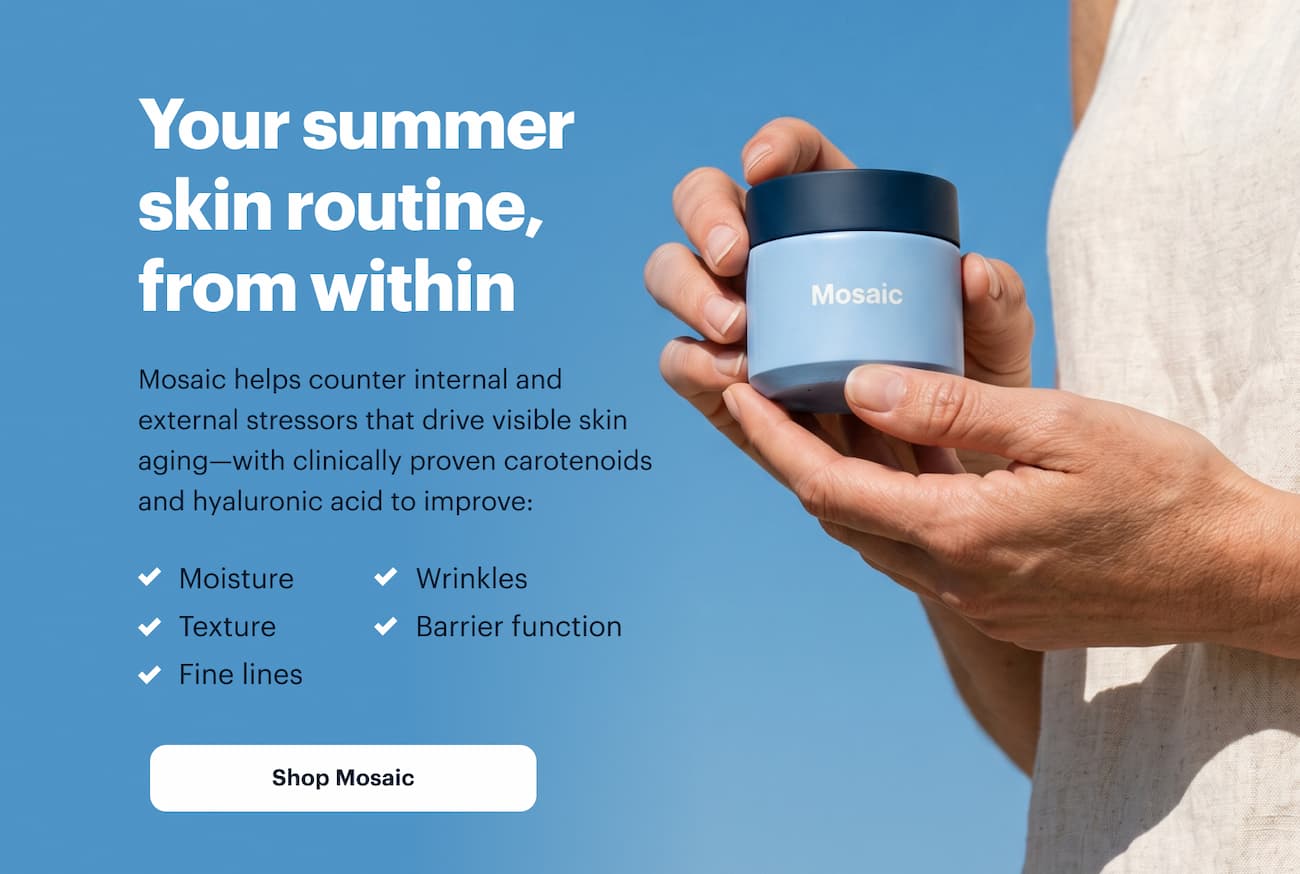
Carotenoids are potent antioxidants that can reduce free radicals in the skin and promote resilience against environmental challenges and oxidative stress. They can help restore healthy, youthful skin by maintaining natural collagen and elastin levels. (Read more)
|
|
|
|
|