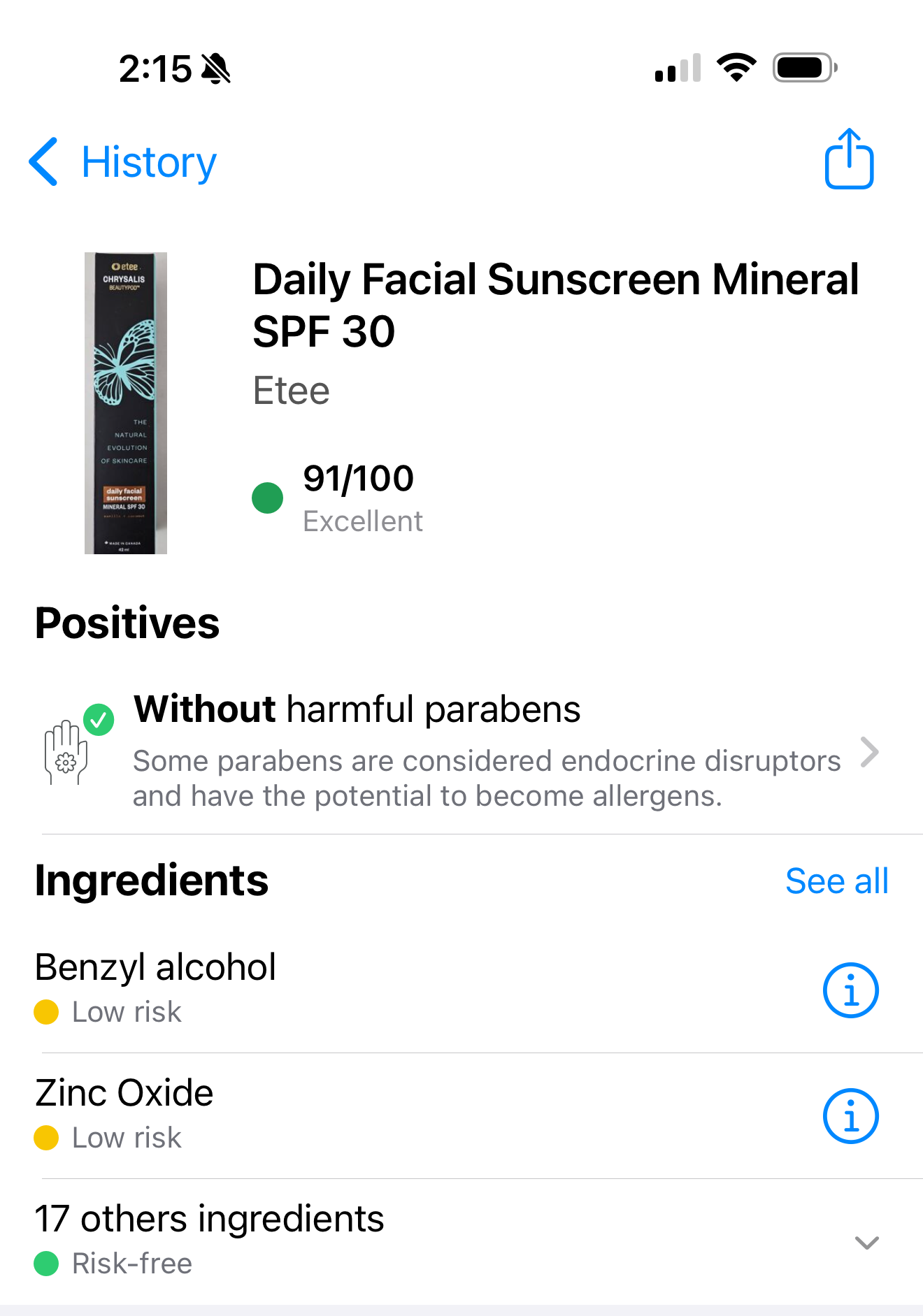
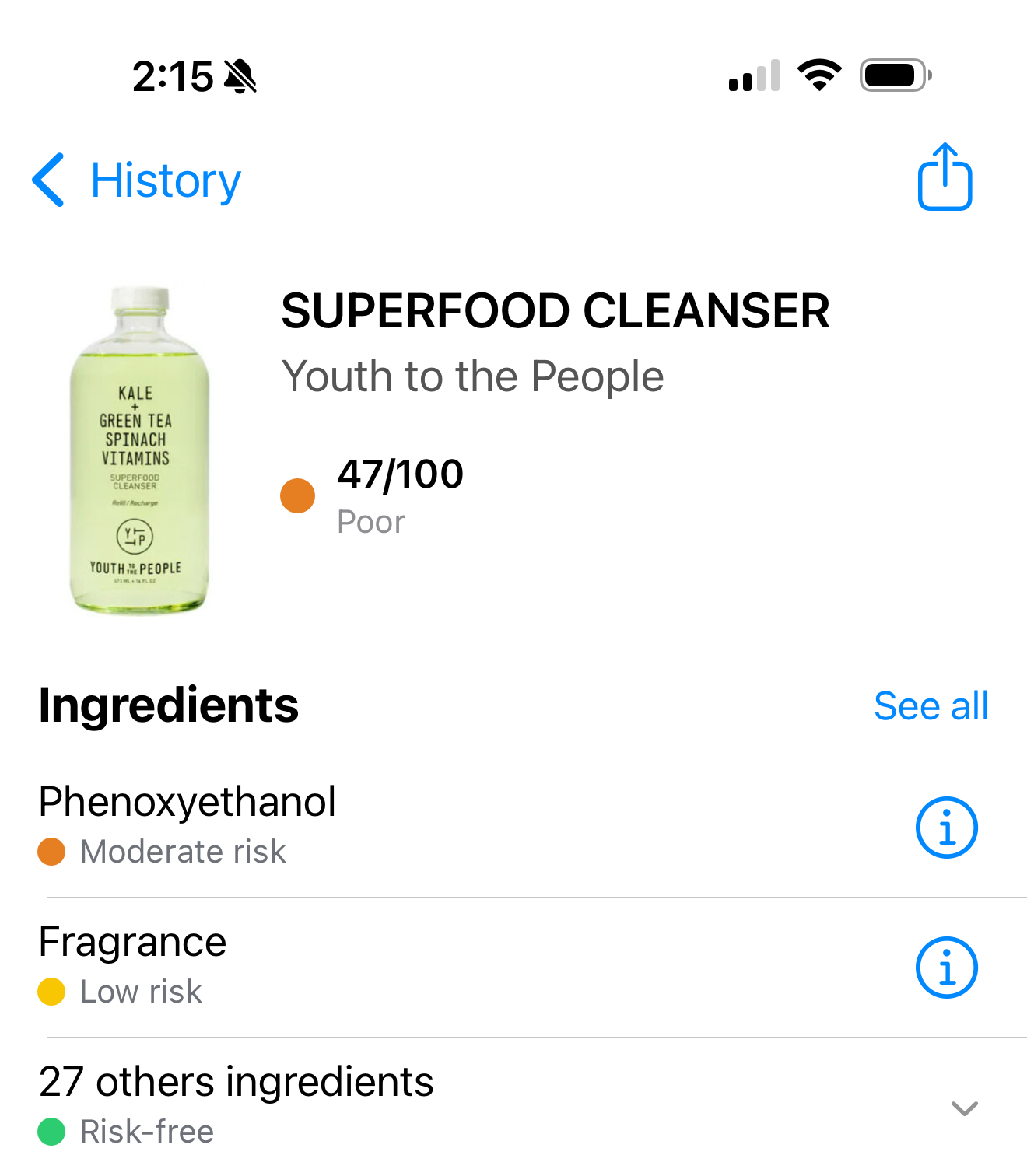
The key thing to understand is that Yuka's score isn't a weighted average. It's set by the single highest-risk ingredient in the formula.
So if one ingredient is flagged as moderate risk, the whole product is automatically capped below 50/100. Every other ingredient just adjusts the number within that ceiling.
What the app doesn't do is ask:
1- How much of that ingredient is actually in the product?
Ingredients are listed in order of quantity and since Phenoxyethanol - the 'moderately risky' ingredient in Youth to the People's cleanser - is almost the last ingredient on the list, it's likely less than 1% of the formula - well under the safety threshold set by European regulators.
On top of that, Phenoxyethanol has been flagged as 'risky' by EU regulators only if it's left-on-skin.
So what if it's used in a face wash? Well, in this use case, it's not actually left on the skin, it's rinsed off, so while there may be very trace amounts, it's just not an issue when used as a cleanser.
2. What's its purpose in the formula?
In this case, Phenoxyethanol is a preservative, to ensure the cleanser won't grow bacteria, mold, or yeast while sitting on your bathroom shelf. And this is an important job.
3. Is there an environmental concern?
Genuinely, yes. It's petroleum-derived, and there are genuine concerns that it can be toxic to aquatic life in high concentrations, but given that it's less than 1% of the entire bottle, that means the small amount is unlikely to cause harm. But it's something we're keeping our eye on because we use it too!
And so, I think it's important to evaluate the ingredient's purpose, proportion and specific use case to determine 'risk'.
And if you want a good real life example:
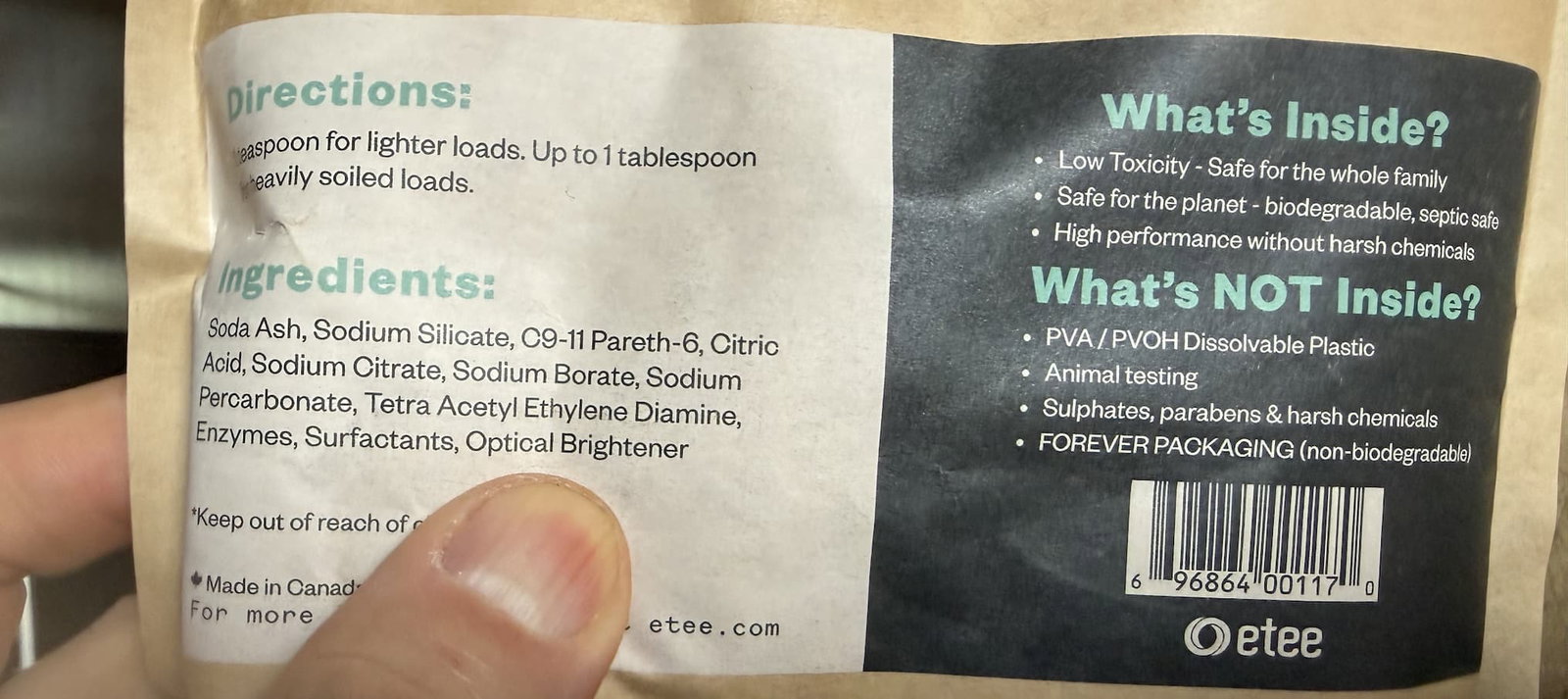
Check out our Laundry Detergent Ingredients:
|