| Dear Fellow Genealogist,
The Civil War had ended—but not for everyone. News of Robert E. Lee’s surrender at Appomattox Courthouse on April 9, 1865, didn’t reach some outlying areas for weeks. And the Emancipation Proclamation (which freed the enslaved in conquered Confederate territories) was difficult to enforce until Union troops arrived.
For the enslaved of Galveston, Texas, official emancipation came on June 19. On that day, Union troops posted General Order No. 3., which began: “The people of Texas are informed that, in accordance with a proclamation from the Executive of the United States, all slaves are free.”
The day has since been celebrated as Emancipation Day, or Juneteenth, which spread from Texas to neighboring states in the following years. In 2021, it received recognition as a federal holiday.
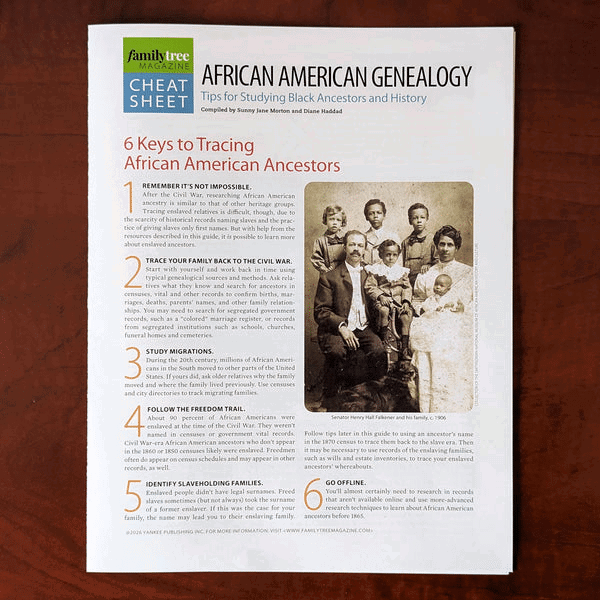
Today, Juneteenth is an opportunity to celebrate the end of slavery writ large—and learn about its history. In that spirit, this newsletter shares a trio of articles about researching African American ancestry (both before and after slavery).
With eyes having seen the glory of the coming of the Lord,
— Andrew, Editor of Family Tree Magazine
|
|
|