| Dear Fellow Genealogist,
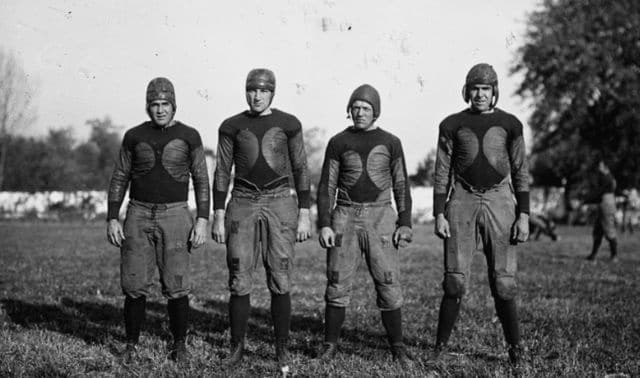
Yesterday was an unofficial holiday here in the U.S.: the beginning of the NFL regular season.
For some Americans, football is a family activity: playing a quick game in the backyard, grilling at tailgates, or gathering around the TV for a cozy Sunday afternoon.
You might think of each NFL team as a kind of ancestor. Teams are born when the league expands and can die when a franchise folds. In the meantime, they form “family groups” (conferences) and occasionally emigrate from one city to another. They form wide networks of players, coaches and administrators and create their own sorts of “records” (e.g., “most passing yards” rather than a census return).
Some even change names, an obstacle genealogists are quite familiar with. The Dallas Texans, a 1960s-era team that played just three seasons, “fathered” neither the Dallas Cowboys nor the Houston Texans. The franchise today goes by a different name in a different city: the Kansas City Chiefs.
Timelines can be useful tools for tracking all sorts of historical events: ancestral movements, vital events, name changes—and NFL history. Today’s newsletter examines the “family history” of NFL teams, then provides strategies for building historical timelines of your own family and tips for researching athletic ancestors.
Tweaking his fantasy football roster,
— Andrew, Editor of Family Tree Magazine
|
|
|
| Did you know that you can unlock over 3,500 premium articles (including this one!) on FamilyTreeMagazine.com with a Premium Membership? Once you're logged in, a Premium Membership not only includes exclusive access to premium articles on the website, but also a digital magazine subscription to Family Tree Magazine. Unlock the article below, plus thousands more by subscribing today!
|
|
|