A Crowd Is Not A Community
By Phil Nobile Jr.
(I wish I had a new banger to drop on this momentous 300th Terror Teletype, but I’m scrambling to get the summer issue done, and it seems like this editorial hasn’t gotten any less true since 2022, so let’s revisit.)
I don’t know when the term “horror community” sprung up online – I will guess without Googling, because I’m on a deadline, that it was around 2018 – but it seems like for as long as it’s been in use, it’s been deployed as some kind of disappointment cudgel for one section of fandom to wield against another section of fandom, a rallying cry against a group of online strangers who aren’t living up to the standards another group of online strangers is holding them to. And it’s carried with it a disconnect that’s only grown in size over the years.
So when someone in the “community” does something dumb or egregious or in bad taste or even, unfortunately, criminal, what tends to happen online is the “community” gets mad that people in the “community” aren’t doing enough to protect the “community.” You’ll end up seeing folks more upset at the “community” than at the transgressor. The “community” that flocked to horror for a sense of “community” ends up decrying the “community.” It’s a confusing, angry ball of cognitive dissonance on a good day, and some days – well, some days it’s a goddamn mess, sending folks into spirals of despair and self-doubt about their chosen alignments.
And this might sound cynical, but the funniest thing about it all is that I don’t believe there is an actual ‘horror community.”
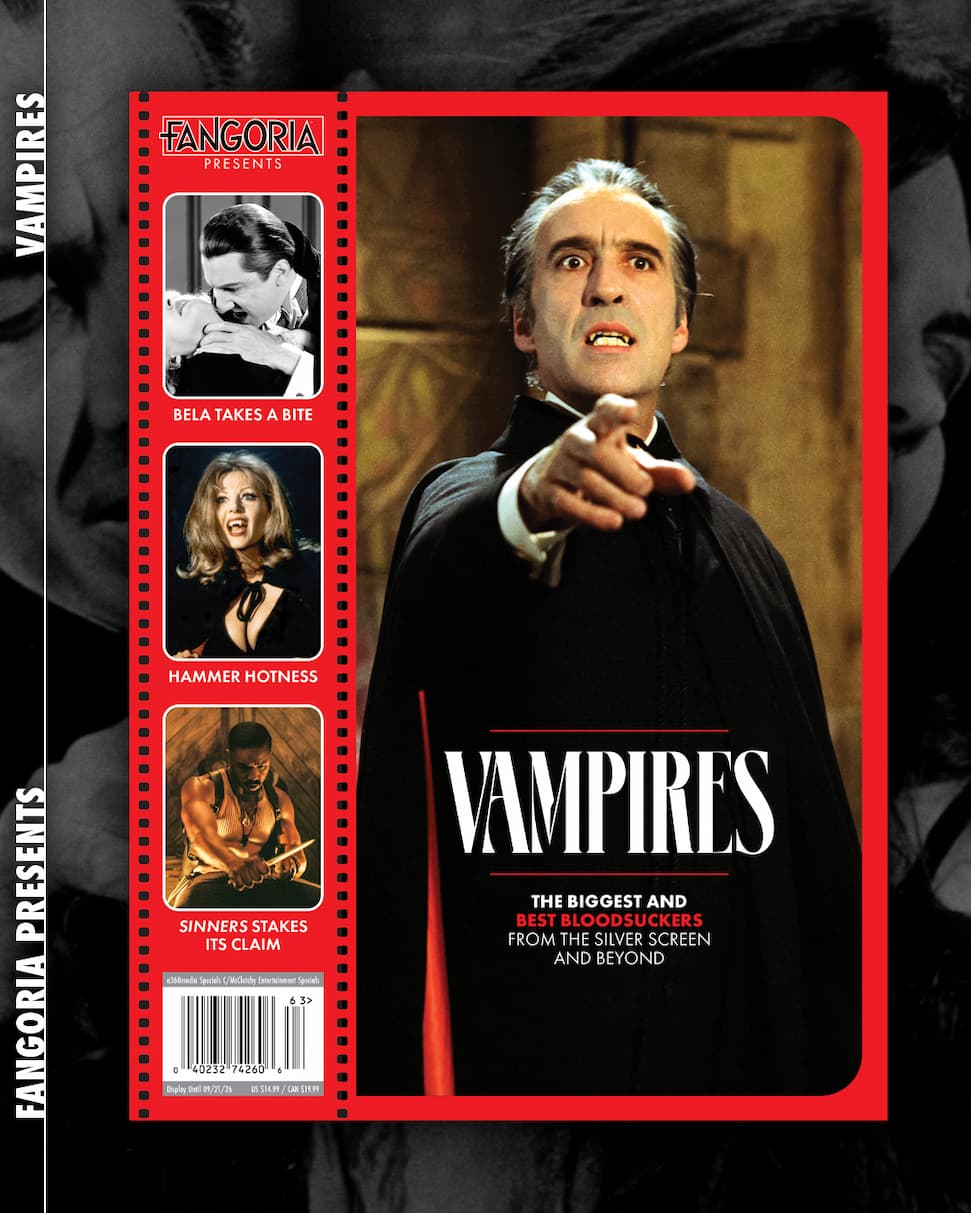
Horror – as an interest, passion, or profession – has fandoms and sub-fandoms; it has cliques; it has little fiefdoms. If horror is your business, you might have an audience, or followers, and hopefully customers (those three are not the same thing, by the way). It’s tempting, natural and even good business to try to pretend these hundreds of little enclaves are all part of one tribe. But when you expect all these different sects to be in lockstep like one big, idyllic Mickey Mouse Club, you’ve made a terrible mistake – and you might actually be looking for a cult, not a community. (I’m gonna pause here and plug issue #15 of FANGORIA, in which Richard Newby delves into how horror explores the dangers of buying into “community” better than I ever could. It’s a great read.)
I don’t make this assertion lightly. This job has given me a front-row seat to just how much horror fandom is NOT some monolithic “community.” Our FANGORIA Pride Shirt, which we’ve been doing for nearly eight years, does a great job of raising money for charity and galvanizing like-minded fans. It also results in angry emails and canceled subscriptions every year. (So not only are these particular fans not aligned with us, they’re not even paying attention. Some community!)
Examples exist in other fandoms, and again, I’ve seen it firsthand. When I stood up in 2021 for a woman being harassed online by other Bond fans, some of those fans tried calling my house and my cell phone, looked up my home address, and created a social media profile pretending to be my dead dad. Does that sound like a community, or just a pack of assholes?
I do not claim any fellowship with these people; an overlap in our DVD collection does not magically create some kinship between us. But I also don’t blame the good people in my fandoms for their existence. When someone in your imagined “community” makes a shitty joke and a thousand people like it while a thousand people call for an apology and atonement, is the “community” at fault? Or is that just life? People suck all over; call it out, but you can’t take the proximity so personally. Even in our beloved horror stories, the community is not responsible for the transgressor. Freddy Krueger isn’t Springwood’s fault; no one blames all of Haddonfield for Michael Myers. There’s a house around the corner from mine positively beshitted with MAGA flags and banners. Does that person speak for my community? My town overwhelmingly voted blue; enjoy shitting up your lawn, buddy.
But while Elm Street or Haddonfield or my neighborhood might be legit communities, I don’t think that term accurately describes horror fandom. So if it’s not really a community, what is it? I’ve seen “scene” used for horror, but that phrase to me denotes a level of participation that doesn’t apply to the group we’re talking about. The “indie horror scene” describes filmmakers, not me streaming their movie from my couch.
It seems to me that horror fandom is a crowd, not a community.
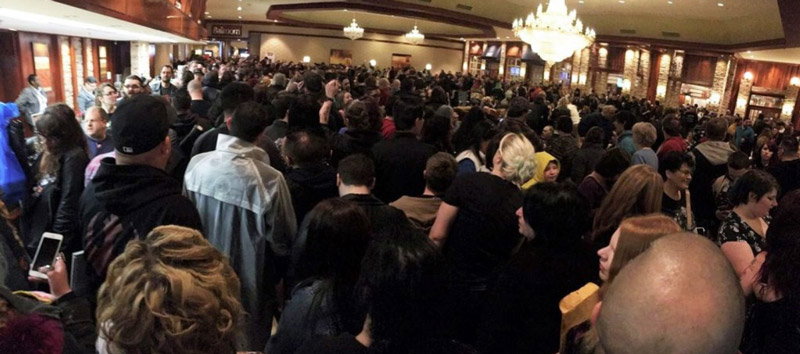
Consider: a community is a group entity that has shared goals, not just shared interests; it’s a collective that looks out for each other. A crowd, on the other hand, is a large collection of people who do not necessarily know each other, but are gathered for some shared reason. You and your friends might all be in the crowd, but the crowd contains mostly strangers. A crowd is unpredictable; there could be a maniac in the crowd. We’re hard-wired to put our trust in a community, but our instincts tell us to keep our guard up in a crowd. Which one sounds more like horror fandom to you?
A community is an idea (or maybe an ideal); a crowd is a mathematical reality. I think it’s worthwhile to strive for the ideal, so long as we don’t ignore the reality. Stand for what you stand for, always call out the bad stuff, but don’t fault a crowd for not being a community.