AT News: The Performative Storytelling Phase
In this new, data-heavy landscape, the “story” has become the ubiquitous delivery mechanism to provide meaning.

Is this your brand on Milled? Claim it.

Thanks for reading. Get more of Flylab–upgrade to paid for full access. AT News: The Performative Storytelling PhaseIn this new, data-heavy landscape, the “story” has become the ubiquitous delivery mechanism to provide meaning.
Today, everyone is a storyteller–it feels like you can’t wade through the vacuous wasteland of LinkedIn, a corporate/org mission statement, or a social media post without stumbling over some version of the word “storyteller.” Data analysts have become “journalists” and “data architects;” brands don’t sell gear anymore, they sell ethics, emotional loyalty and activism; even influencers are framing their AI-enhanced selfie reels in narrative arcs. It’s easy to roll your eyes at the trend–I do it daily–but we didn’t get here by accident. A series of technological run amoks and correlated cultural shifts over the last 15 years have thrown us into this moment. ¹ And digging ourselves out will require a more deliberately analog approach to our professional and artistic aesthetics (think: Jack White banning cellphones at his concerts, Phoebe Bridgers’ phones-free MSG show and putting a more “human” friction into the creative process). Most people who are thinking about this stuff (the intersection of technology and mental health) in a rigorous, scientific way now largely agree that the costs of rapidly advancing tech far outweigh the benefits, unless you’re building data centers or raising capital for AI innovation. Which begs a few questions: How did the trailer slide off the road? And what, if anything, can we do about it? The jackknifed trailer (how we entered the phase of performance). The deluge of information: We are drowning in data, metrics and content (we have been for a while). And because factual information and raw data are now cheap and ubiquitous (AI will only accelerate this trend), they’ve lost their historic ability to move people on their own. Back in the day, when the jobs report or drop in interest rates was the story–we didn’t require 300 or 3,000 podcasters to analyze and pontificate on what this information meant. We simply read the headline in The Wall Street Journal and moved on with our days. In this new, data-heavy landscape, the “story” has become the ubiquitous delivery mechanism to provide meaning. And the fact that you can now package the information in an endless assortment of mediums only serves to complicate the delivery and siphon off even more of our limited attention spans. The rise of the personal brand: The cultural and economic shift where individuals–not just corporations–have learned to build and market their human personas, skills and reputations as branded entities to rise above the noise and stand out. The modern economy now asks individuals to market themselves like products, whether we like it or not, and platforms like LinkedIn, Instagram, TikTok and Substack have provided everyone free, direct access to a global audience (social media democratization). You no longer need a PR firm or mainstream media feature in Vanity Fair to get noticed; you just need a phone, good looks (sometimes not) and an online content strategy. (There’s also the reality that the traditional corporate contract is dead in lieu of the gig economy, and the fact that most modern consumers are now justifiably skeptical of faceless corporations. But this is a whole other write-up.) The evolution of product to purpose–as Andrew Luter deftly pointed out last week, features and products today are easily copied: “The real competitive advantage is an angler who doesn’t just fish with your gear, but identifies with your brand as part of who they are on the water. That’s a customer no competitor can poach with a 10% price drop or a marginally better blank. That’s not marketing. That’s a moat.” If you’ve built a digital fly-fishing widget, mapping tool or custom Shopify site, competitors will use AI to methodically replicate your work (that’s a certainty). So, brands have finally started to realize they can’t easily compete on what they do, and they’ve adjusted the marketing strategy (smartly) to focus on why they do it. Credible “storytelling” has become the de facto first down, off-tackle run play to build customer loyalty, community and a deeper understanding of the nameless faces behind the business. And having the unique ability to speak to your customers with intelligence, honesty, humor, irreverence (or maybe a combination) is what will eventually separate businesses from the ever-growing crowd. If your strategy is to simply look like everyone else, you definitely are going to lose. The only question is how quickly your digital mediocrity and also-ranism plays out. If the entire ecosystem is made up of competing storytellers, how do you build a brand voice that’s real, can communicate effectively and maybe even transcends? Step one: Who are you? The first thing you’ll want to do before you ever peck out a sentence of copy or pay for an hour of expensive video is to define yourself (your values and ethos, specifically) and identify your target community–once you’ve done this, you can ground your voice in a specific mission or subculture. Trying to appeal to everyone is, unfortunately, appealing to no one. Are your people dirtbags, gear heads, public land activists, or weekend escapists? The subtleties matter. And maybe you have one of these demographics already captured and want to expand into another–mixing subcultures (from a marketing perspective) is harder to do than you think. Also, the other thing you should do is look at all the competition, and then come up with an alternative strategy. Looking and sounding like another brand (or AI) is a complete waste of time and money. Step two: How you speak. Once you understand who and what you are (and importantly, are not), you can begin to think about how you interact with the world around you. Is your (distinctive) voice and vocabulary serious and engaged (Patagonia) or more subversive and rebellious (Liquid Death). Building this world view matrix isn’t a particularly simple or easy exercise, but when it’s done well, you can begin to itemize and audit all of your platforms (web, social media, newsletters etc.) for honesty and consistency. It doesn’t make any sense to speak one way on your website then another on Instagram. Build an original voice and own it. (This is probably why influencers have mushroomed in popularity–if nothing else, their individualistic voices are relentlessly consistent.) Step three: Get in and get out. David Ogilvy, the “Father of Advertising” from the Madison Avenue ad agency Ogilvy & Mather (Confessions of an Advertising Man), had a fairly simplistic philosophy about ad marketing and writing: in business, time is money, and cluttered writing wastes both. ² He professed a fairly rigid simplicity with consumer interactions: “Write the way you talk, naturally. Use short words, short sentences and short paragraphs. Never use jargon words like reconceptualize, demassification, attitudinally, judgmentally. They are hallmarks of a pretentious ass.” He always was thinking about words and style that valued an economy of language, not excess. Understand what you want to say and say it. Beating around the bush reflects a lack of discipline and clarity, and most consumers are highly attuned to long-winded blather. Step four: Build a style guide. A brand voice only works if every copywriter, founder white paper, freelance designer and social media manager uses it consistently. Create a simple, highly accessible field guide for your business: 1. Keep it brief. 2. Know your audience (and define the core user). 3. The brand personality should never change. 4. Get consistent about your grammar, punctuation and formatting (even emojis, if you use them). 5. Test, tweak, iterate. It’s not that much different than learning to train a dog or becoming a competent fly angler–build a set of rules, adhere to them religiously, slowly move the needle day after day, year after year. No one’s ever had a perfectly trained animal or fly cast after a single day or year–build the repeatable systems, do the painstaking work and you’ll get there. Finally, be open to an imperfect process (that’s the point). In his 1895 essay “How to Tell a Story” (from Tales, Speeches, Essays, and Sketches), Mark Twain defined his core argument for the veracity of storytelling this way: A great story isn’t about what you say; it’s entirely about how you say it. “I do not claim that I can tell a story as it ought to be told. I only claim to know how a story ought to be told, for I have been daily in the company of the most expert story-tellers for many years” I guess what he was saying is that there isn’t any specific road map to get there, but you still ought to be trained and have a pretty good idea where you’re headed. And like anyone who’s any good at it, you’ll have to pull apart the craft and earn it along the way. If you want to shorten the learning curve, by all means get an MFA, read great books, study meaningful movie directors (Yorgos Lanthimos) and stop burning your wick on the social media slop machine. Those would be a few good first steps. Other than that, “giving a shit” about the creative process (in the words of Jeff Galbraith) is another meaningful stake to put in the ground, because this will allow you to take some chances, fail miserably, dust yourself off and do it again. I also find it hard to believe that any machine will ever know what it’s like to be human, or have the sensibilities to construct living, breathing stories in messy and meaningful ways. The human condition will never be perfect–and that’s always been the point of great storytelling. Better to simply lean into it. – Andrew Steketee
ADA Website Compliance PSAThis isn’t (new) news, but predatory law firms have been targeting small businesses, particularly their websites, for ADA non-compliance during the last decade, and in earnest the last few years. The Americans with Disabilities Act (ADA) was passed to ensure equal access for everyone (physically and digitally), but more recently, a lucrative industry of “serial litigation” has emerged. Predatory law firms often exploit vague (and evolving) areas in the law to target small businesses. And because small businesses typically lack in-house legal counsel, they are primary targets for quick, lucrative settlements. This has fueled the recent rash of “sue-and-settle” digital accessibility lawsuits against small businesses. From WCAGsafe (Web Content Accessibility Guidelines): “ADA (Americans with Disabilities Act) lawsuits have become one of the fastest-growing areas of civil litigation in the United States. Over the last decade, lawsuits related to accessibility–particularly website accessibility–have surged dramatically. As digital services expand and enforcement intensifies globally, businesses face mounting legal pressure to ensure their websites, apps and digital services are usable by people with disabilities.” And because fly-fishing and outdoor retailers rely heavily on e-commerce, highly visual content and complex online booking systems, they are prime targets for “tester” plaintiffs, utilizing screen-reader software. (This isn’t conjecture; it’s already happening.) Depressingly, WCAGsafe also flags a new AI risk: “A structural shift transformed ADA litigation in 2025: AI tools lowered the barrier to filing a lawsuit to near-zero. According to Seyfarth Shaw, 40% of all federal ADA Title III filings in 2025 came from pro se plaintiffs (self-represented individuals without an attorney)–up 40% year-over-year. Federal pro se Fair Housing Act suits jumped 69% in the same period.” What are the top five WCAG (Web Content Accessibility Guidelines) structural failures driving legal risk?
A word on “quick fix” AI accessibility widgets or “overlays” like accessiBe: they are fast, cheap and simple, but don’t rely on them. You need to fix the root problems (underlying code), and they can, in fact, make you more vulnerable to web accessibility lawsuits. Someone please provide some litigious sanity: Rep. Sam Graves of Missouri is trying to get some basic legislation passed to protect small businesses–H.R. 7328, the Protecting Small Businesses from Predatory Website Lawsuits Act–but like everything in the United States Congress, progress is slow (the bill has been referred to the House Committee on Energy and Commerce). Before you know it, small businesses, and particularly e-tailers, should have more robust protections against this kind of stuff, but in the interim, talk to your web developers to get compliant ASAP. ³ Most website/app fixes are pretty straightforward to mitigate, particularly with the influx of AI support. TroutRoutes: Species Data for Nine States Across the WestThe new and highly requested “species filter” from TroutRoutes changes how anglers are able to e-scout water, so they can target specific fish. Honestly, this is a pretty cool feature and we’ve been using it this spring and summer. The functionality allows you to filter on trout, salmon, steelhead (runs) and even the all important whitefish (who knew there was a pygmy whitefish). Erik Johnsen, the community marketing manager from TroutRoutes, sits down with Ross Purnell of Fly Fisherman to discuss the new features, “multiple sources of truth” for the data (national data sets all the way down to state and local community resources) and chasing native trout in Wisconsin’s Driftless Region. 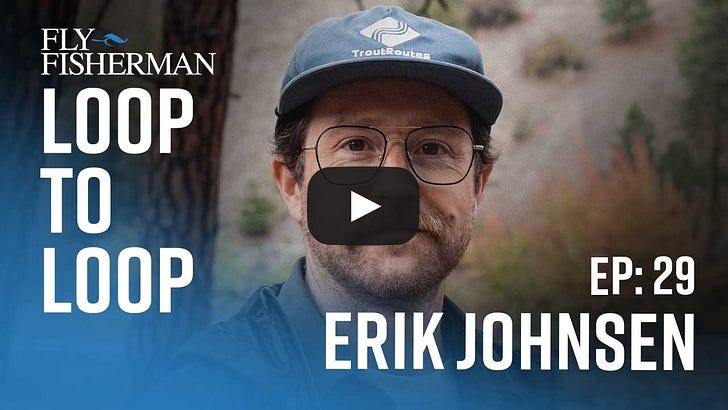 Powered by onX Maps, TroutRoutes is a premium fly-fishing app that helps anglers find access points, map out future adventures, download offline maps and target specific fish species. Grab a one-month free trial of the PRO membership and check out the app (link says “PRO 7-day trial,” but it’s a month). Recent News
 Fly-fishing MediaThe Trout Angler’s Guide to Fishing Through Drought from Tim Romano. “One of the biggest things anglers can do during drought conditions is simple: fish early. And I mean really early. Dawn early. Water temperatures can climb shockingly fast once the sun hits low, thin summer flows. By noon, many rivers are already approaching dangerous territory. Once water temperatures creep into the upper 60s–especially 67 - 68°F and above–trout stress and mortality spikes. Carry a thermometer and actually use it. They weigh almost nothing and are probably one of the most important pieces of gear you can own during a drought year. A lot of people suggest fishing late in the evening instead, but realistically that can be a bad idea. Water temperatures often continue climbing long after the day’s peak air temperatures and can take many hours to cool back down.”
Lindsay Kocka’s New Wade Well Online Training StudioWade Well Launches the First On-Demand Movement, Mobility, Performance and Recovery Training Studio Built Exclusively for Anglers and Guides. The studio opens with over 75 classes covering movement, mobility, athletic performance, prehab, nervous system management and recovery–a comprehensive systems approach that’s structured around the specific patterns and demands that fishing and guiding place on the body. New classes across all categories are added monthly. Sessions run from five to thirty minutes and require minimal equipment, making them practical for use at home, at the lodge, at the boat launch, or at the airport during long layovers. Flylab Members: 20% off your first year of the annual studio subscription.
Photo: Dylan Barker Gear BuzzTim Romano has a great barbed wire (fishing) hack from Chilean guide, Ives Barrientos: “The hose instantly covers the barbs, giving you something safe to grab onto, while also protecting your waders from an expensive and potentially trip-ending puncture. If you’re dealing with multiple strands, you can move it around as needed.”
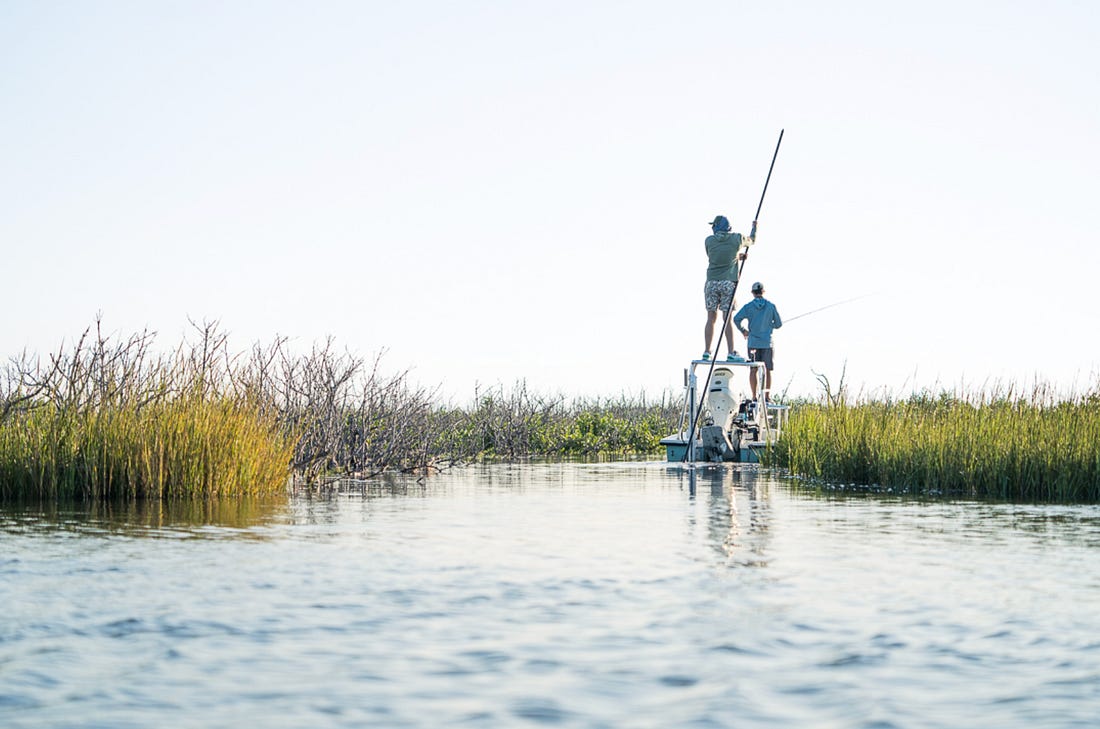
 Boating News from SCSOARS announced a remarkable expedition retracing John Wesley Powell’s legendary 1869 journey through the Colorado River canyons, offering modern river runners a chance to follow one of the greatest small-craft adventures in American history. If you’ve got 42 days burning a hole in your pocket, you can scope out the itinerary here. If your ideal weekend involves equal parts rivers and live music, Georgia’s Knobby Knees Music Festival is gearing up for another year of bluegrass, camping and river shenanigans hosted by the Flint Riverkeeper. Meanwhile, the Ohio River Way is seeking a Conservation Planning Intern to help map and protect 71 miles of the Ohio River corridor between Kentucky and Ohio, focusing on flood resilience, biodiversity and recreational access. Protect Our Rivers continues its impressive cleanup efforts with another season of boots-on-the-ground river stewardship, proving that sometimes the most important river trip is the one spent hauling out someone else’s trash. Out west, American Whitewater is celebrating a major win as California’s famed Lumsden Road has finally reopened, restoring long-awaited access to the Wild & Scenic Tuolumne River and the legendary Cherry Creek run after years of storm-related closure. Meanwhile, Colorado’s ambitious effort to reduce water consumption appears to be off to a slower-than-hoped-for start, raising fresh questions about how the state will balance growth, agriculture and recreation as drought pressures persist. And down in southwest Colorado, the long-running Dolores River Festival is once again bringing boaters, anglers, conservationists and river lovers together to celebrate one of the West’s most iconic waterways. Not a bad excuse to spend a weekend on the river. hitoláayca (Going Upriver): Devin Reuben is training to become the first certified Nimiipuu (Nez Perce) whitewater guide of his generation. “Building a connection with the river can take you far in life…” 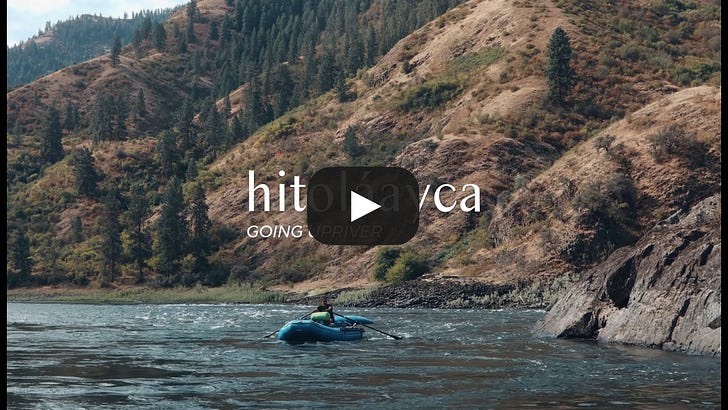 Fly-fishing JobsBay Flats Lodge: Fly-fishing Guide (Seadrift, TX ). Bay Flats Lodge is looking for passionate, professional and proficient fly-fishing guides to join the Bay Flats Lodge team. Applicants must have guiding experience in the relative area (Texas Gulf Coast region) and have a good grasp of sight-fishing and poling shallow flats for redfish and speckled trout.
Head to flyfishingjobs.com to search for more listings. MusicI love not fixing things. Not quite Springsteen’s Nebraska, or BJM’s psych acid rock, Los Angeles’ Failure, Nashville’s Stephen Wilson Jr. and Owen Burton, the Plimsouls 80s power synth pop, or the slightly forced duets with Courtney Barnett (Lotta Sea Lice), this version of Kurt Vile has stripped most of the affectation away, leaving us an artist who’s largely comfortable in his own skin. And that’s a good place to be as a musician–where the “flaws” have become the brand identity and trademarkable IP (Intellectual Property). Kurt Vile’s 10th studio album, Philadelphia’s Been Good to Me, is full of loose, hypnotic loops, fuzzy synths and “misplaced” guitar riffs–longtime Vile fans will appreciate the “home basement studio” sound and feel, as well as the mundane, everyday observations that have built his dedicated fanbase; new listeners can sail away into the meditative journey, and worry less about Kurt’s destination(s). This is an album perfect for summer evenings, road trips and a classic love (kv version) on the 8-track. Songs worth listening to: Zoom 97, Rock o’ Stone, Chance to Bleed, Philly’s been good to me, 99th Song, Every time I look at you. The Pitchfork interview and pull quote: “You kind of nailed it when you said it’s the ‘moment.’ It’s the moment that excites you: When you’re writing a song, you feel it, you have chills, you know? Or when there’s a magic moment on stage and you’re all locked in... I live for that kind of thing. I love not fixing things, making them feel fucked up, or just leaving them fucked up. If you listen to the old Stones records or the Velvet Underground, the reason they’re so unique is because there’s a million, trillion imperfections in there.” – Andrew Steketee
1
2010s The content floodgates open (self-publishing). 2015 - 2018 Death of the chronological feed (algorithms start aggressively favoring retention). 2020 - 2022 Corporate trust bottoms out (global pandemic, better have a mission statement). 2023 - present Generative AI tools automate and democratize content (cost of synthetic facsimiles drops to zero).
2
A memo drafted by David Ogilvy for the management to circulate as they saw fit: September 7, 1982 How To Write The better you write, the higher you will go in Ogilvy & Mather. People who think well, write well. Good writing is not a natural gift. You have to learn to write well. Here are 10 hints: 1. Read the Roman-Raphaelson book (Writing That Works; How to Communicate Effectively In Business) on writing. Read it three times. 2. Write the way you talk. Naturally. 3. Use short words, short sentences and short paragraphs. 4. Never use jargon words like reconceptualize, demassification, attitudinally, judgmentally. They are hallmarks of a pretentious ass. 5. Never write more than two pages on any subject. 6. Check your quotations. 7. Never send a letter or a memo on the day you write it. Read it aloud the next morning–and then edit it. 8. If it is something important, get a colleague to improve it. 9. Before you send your letter or memo, make sure it is crystal clear what you want the recipient to do. 10. If you want ACTION, don’t write. Go and tell the guy what you want. David Ogilvy
3
“An ounce of prevention is worth a pound of cure.” – Benjamin Franklin, 1736
You’re currently a free subscriber to Flylab. Support independent storytelling and upgrade your subscription.
|