|
Thanks for reading. Get more of Flylab–upgrade to paid for full access.
We’re often asked on partner and brand calls about how AI is changing the future of content marketing (and SEO), and what this means for small, scrappy, outdoor marketing teams and their digital traffic. Yes, the days of “spray and pray” page building to scrape Google’s endless search opportunities are over, but that doesn’t mean your fly shop traffic engine is doomed–it just means you need a new playbook.
The first thing to understand is how AI is disrupting your historic (and dependable) traffic funnel, and what can you do about it.
Death of the “info click”: If consumers are searching for specific products, contextual fishing information (“how do I tie a size #18 Parachute Adams?”), or river access overviews, for example, they are being provided immediate answers right in the AI search browser. If this is the core information you are providing on your fly shop website, the LLMs are already ingesting that information and syndicating it, whether you like it or not. This kind of traffic is going to collapse, if it hasn’t already. Content farms: AI is making it effortless for anyone with a computer to churn out endless amounts of generic, AI-generated content–and the entire digital ecosystem is being flooded with this garbage. This will, obviously, make it harder for your content to stand out and compete. AI-inspired discovery: consumers are increasingly querying ChatGPT, Gemini, etc. with more and more complex recommendations. The days of basic keyword enablement (“Sage graphite fly rod” and all the misspellings) are being replaced with more sophisticated and complex user engagement: “I’m looking for an 8-foot 10-inch fly rod that is primarily constructed to cast dry flies, made by a reputable fly rod manufacturer and has positive gear reviews from trusted media sources. Please link some of the gear reviews.”
Below, you can see how Google’s AI Mode handled the search query about the fly rod. Over time, the LLMs will also learn about the individual user and refine the results to make them more contextual and personalized. It’s a little scary to think about how frighteningly good they already are at their jobs, but that’s where we are.
An AI Counter-strategy
Obviously, AI is really good at synthesizing tons of facts, data and information, but it’s not very good at being and sounding even close to human, and all the language and output has a similarly sterilized and soulless feel. And the more you read, the easier it is to suss out. This presents a subtle, but powerful marketing opportunity.
Move on from generic-sounding “how to” guides and information and lean into your unique “perspective and experiences”: AI is never going to understand or articulate the river conditions, insect activity, fish behavior and human interactions that make up the story and IP of your shop community or outdoor brand. Lean into the hyper-specific and personal. AI is excellent at summarizing “consensus data,” but it can’t ever replicate the lived human experience, your unique, curated tastes, or the idiosyncrasies of your brand community. Tell these stories. Build an authoritative point of view: write opinionated, expert-driven content. If you sell high-end fly rods, don’t just write about tech specs and regurgitated manufacturer brand stories. Tell us what we don’t know about the fly rods and brand (from your perspective) and why we should care. Voice, personality and curation are your moat against the glut of commoditized AI content. Double down on hyper-local and real-time data: AI models are trained on old data. But they don’t know what happened on your watershed this week or this morning. That’s a pretty big opportunity for outdoor brands to capture useful traffic. Think about how you syndicate “local” information to your users on the digital channels they’re already plugged into (YouTube, Instagram Reels, or TikTok). Speaking of “multi-modal search”: since users can now search using images, video and (conversational) audio alongside text, your content should be equally rich. Product pages might integrate video, Spotify podcasts, data embeds and backlinks to other reputable media sites. Build user trust through varied mediums, not just words (that are easily replicated). Phase out your duped content: I stopped counting the number of times I’ve seen “such and such” fly rod on a fly shop’s Shopify integration with the exact same photos, product description and tech specs as every other fly shop and the manufacturer. Differentiate, customize and make the listings yours. Competing directly with a thousand other identical listings is a recipe for cannibalization and failure. Never stop building your “owned” audience: if you rely on Google for site traffic, you’re simply “renting” your audience and should find ways to own it. Make your primary website goal: capturing email addresses, SMS sign-ups, or app downloads (if relevant). You also should be thinking about “building community,” cultivating forums, weekly newsletters, or in-person (fly tying, travel) clubs. Specialty retail thrives on passion, and if you can get customers to come directly to your branded or physical channels, you bypass the engine’s gatekeeping entirely. Play the local listing metadata game: keep your Google Business Profile religiously updated with reviews, photos and accurate location data–AI pulls heavily from local map integrations.
None of this will be particularly easy, and you might even have to hire a good ad writer to support the learning curve, but you’ll acquire a ton of insights about your users and grow the business in the process.
Also, be a tortoise, not the hare. This new era of search and AI optimization certainly will penalize generic, low-effort content generation and formulaic SEO/AIO strategies, while also rewarding novel and thorough practitioners. Build slowly, quarter after quarter, and the results will come.
Being good at anything requires a baseline mastery of skills–that’s perfectly obvious. But the people, brands and anglers who stand above generally have made a deeper commitment to the process: they care about what they do and they’re willing to invest the time and effort.
Do this, and you’ll win. – Andrew Steketee
A controversial proposal to rebuild the failed Teton Dam in southeastern Idaho has resurfaced. Backed by local agricultural groups and state senator Kevin Cook of Idaho Falls, the initiative aims to increase surface water storage. Proponents are claiming that modern engineering can safely resurrect the project; environmentalists and tribal groups cite historical, ecological and safety concerns. This is an incredibly dumb idea. In 2026, we should be finding ways to protect free-flowing rivers in eastern Idaho, not build archaic water storage infrastructure.
From the Jackson Hole News&Guide: “The usual controversy surrounding damming free-flowing rivers is compounded in the case of the Teton Dam by its catastrophic failure in June 1976, just seven months after it was completed. The collapse killed 11 people and 16,000 livestock, and wiped out the towns of Sugar City and Rexburg. It also cost the federal government hundreds of millions of dollars in claims. The site is still owned by the Bureau of Reclamation, the federal agency responsible for managing water in the Western United States, and congressional approval would be required for reconstruction.”
Scott Bosse from American Rivers: “We’re looking at ways to manage water the way the settlers did, but maybe has been lost and forgotten. We need to be containing water. We need to be saving water from spring runoffs and storing it underground and replenishing our aquifers. What we’re talking about up in this valley is incidental recharge. When water is plentiful, put it in the ground. And when water isn’t plentiful, make sure that you’re conserving every drop. There are so many ways to meet the increased demand on the upper Snake River system besides building a dam on the Teton River. There’s aquifer recharge, reconnecting a river to its flood plane, restoring wetlands. It’s really simple, it’s really cheap and it’s environmentally beneficial. It would be a tragedy if today the Teton River was a place that marked the resurrection of the modern dam building era.”
Yvon Chouinard: “The whole idea of impounding water above the surface is an old idea that has to go away.”
Help support the last free-flowing river in eastern Idaho at American Rivers.
It’s summer travel season, and if you’re off the grid or just exploring in the mountains, you should definitely consider Global Rescue.
Global Rescue has been a leader and pioneer in the travel services industry since 2004. They provide the finest integrated medical, security, travel risk and crisis management services available anywhere, delivered by their teams of critical care paramedics, physicians, nurses and military special operations veterans. Their personal memberships and enterprise solutions provide rescue and evacuation services when travelers become injured, sick (including COVID-19) or their safety is threatened.
Find out more about their plans.
From the NYTs: America the Undammed. More miles of the country’s rivers were reconnected last year thanks to dam removals than at any other time in history. “Last year, more sections of the country’s rivers were reconnected thanks to dam removals than at any other time in history, according to the nonprofit group American Rivers. In 2025, more than 100 dams were dismantled in 30 states, reconnecting around 4,900 miles of waterways, including 156 miles of a branch of the Juniata River that are now reconnected thanks to the removal of Bedford’s two dams. The resulting free-flowing waterways are healthier, cooler and less prone to algal blooms, and serve as vital habitat for migratory fish and other aquatic life.” A Colorado nonprofit is offering to buy water for fish. “The Colorado Water Trust, founded in 2001, has negotiated agreements that have put more than 98,000 acre-feet of water back into streams. An acre-foot equals 326,000 gallons of water, enough to serve two to four urban households for one year, or enough to cover one acre of land to a depth of one foot. Typically, the trust matches water owners with interested buyers and helps move the transactions through the various state agencies that must approve them. Under old Colorado law, water could only be used for a specific purpose, such as farming, or municipal drinking water or industrial uses. But new laws allow water to be used for environmental purposes, with proper approvals.” Losing Paradise from Re:Public: As rising seas swallow Louisiana’s marshes, oil companies are fighting to keep control of the water replacing their land–and turning fishermen into criminals. “According to Louisiana law, navigable waters and the water bottoms beneath them are public, owned by the state for the benefit and use of the public. Wagley knew the law and he checked both boxes. He was clearly in navigable, tidal water–he was in a boat, after all, in a spot he knew was always deep no matter the time of year. But Continental Land and Fur had a different interpretation of the law…” Winston Fly Rods has been acquired by Lance Robertson out of Twin Bridges, Montana. From the fly rod maker: “Mr. Robertson is a long time business leader, engineer and passionate fly fisherman. He and his family live near Twin Bridges, MT. ‘The R.L. Winston Rod Company has a compelling team in place, delivering among the best rods and reels they have ever produced, positioning the company well for a bright future,’ says Robertson. ‘We anticipate the entire Winston team remaining with the company moving forward. As part of today’s announcement, I would like to share that Andy Wunsch, General Manager, will continue with the company in the role of President & General Manager.’” From The Adipose: Cold Water, Culverts and the Future of Idaho’s Wild Salmon and Steelhead. “Federal agencies and conservation groups often note that the Columbia-Snake system contains a substantial share, frequently described as roughly half, of the remaining high-quality cold-water habitat for salmon in the lower 48 states. The habitat still exists. The question is whether fish can reach it. Large infrastructure, particularly the four lower Snake River dams, dominates public debate. But on the ground, many of the most immediate barriers are smaller and less visible. Culverts…” David E. Petzal remembers Pulitzer-Prize-winning journalist Philip Caputo, 1941-2026. “On May 7, cancer succeeded in doing what Illinois mobsters, the People’s Army of Vietnam, the Viet Cong, and various Middle Eastern terrorists, failed to do, by ending the life of Philip Caputo. Phil, like Ernest Hemingway, was a major American writer who loved the outdoors, particularly hunting, and wrote about it. In his 84 years, Caputo wrote about everything. He began as a reporter for the Chicago Tribune in 1968 and won a Pulitzer Prize in 1972 for exposing political corruption. He continued for the Tribune as a foreign correspondent until 1975, covering most of the really unpleasant places in the world, and survived both a kidnapping by terrorists and a bullet in the ankle. He covered the fall of Saigon in 1975, and then retired from reporting to write full time.” From the State of Brand: Every Company Now Sounds Like ChatGPT and That’s the Biggest Brand Opportunity in a Decade. “The Great Flattening. Language models are trained to produce the statistical average of everything ever written, so when enough companies route their communications through them, every company starts sounding like the average of every other company. The shareholder letters converge. The press releases converge. The earnings calls converge. They’re all drawing from the same underlying model of what corporate language looks like. The inputs are already in place. Three-quarters of PR professionals now use AI on the job. Ahrefs analyzed 900,000 new web pages and found 74% contained AI-generated content. 91% of B2B marketers increased their content output in 2025. More volume, routed through the same few models, produces faster convergence.” Food for thought for marketing and PR departments. SEO wakeup call: keywords and search links have become an afterthought. From TechCrunch: Google Search as you know it is over. “The era of the ‘ten blue links’ is officially over. At its Google I/O conference on Tuesday, Google unveiled an AI-powered overhaul of Search centered around a reimagined ‘intelligent search box’–what the company describes as the biggest change to this entry point to the web since the search box debuted more than 25 years ago. Instead of returning a simple list of links, Google Search will drop users into AI-powered interactive experiences at times. Google is also introducing tools that can dispatch ‘information agents’ to gather information on a user’s behalf, along with tools that let users build personalized mini apps tailored to their needs.” What this means for the average marketing team: everyone’s getting into the scalable content business or you’re paying someone to build it for you or you’re partnering with a credible media brand to draft off their traffic. But the days of simple, free SEO traffic are over. If you’re a specialty retailer with a generic Shopify site, start looking for ways to partner with credible media teams. Kyle Frost on Sean Duffy’s (the U.S. Secretary of Transportation) marketing schtick and new Great American Road Trip. “The thing that bothers me about The Great American Road Trip is that it asks people to do something the administration is simultaneously making harder. Gas is at a four-year seasonal high because of a war the administration started. International tourism is down because of anti-US sentiment, fee changes and visa policies. The public lands that inspire millions of road trips are having their staff gutted, funding nixed, and being opened to increased extraction. I’m all for encouraging people to travel and experience different sides of the US. Road trips are a great way to do that. But the show, featuring the Transportation Secretary, isn’t tied to a single piece of policy that would make it easier or more enjoyable to do so.” From Wired: The US Built a Site to Ensure Fair Access to Public Lands. Then Everything Went Wrong. “Last year Sam Carter, the host of the River Radius podcast, did an episode where he built a bot to show that gaming the Recreation.gov system was possible. He was shocked at the response. ‘So many people say they’re using bots, people are bragging about it,’ he told me. He heard from people who’d built their own, groups who have their own server dedicated to getting permits, and people who paid thousands of dollars to have someone build one for them. It’s happening. The question is how pervasive it is, and how easy it might be for anyone to hack Rec.gov. The answer is, pretty easy.” The AMFF Honors Meredith McCord with the 2026 Izaak Walton Award. “Meredith McCord has become one of the most influential voices in modern fly fishing through her pioneering work in global travel angling, particularly for giant trevally and other saltwater species. A long-time advocate for women in the sport, McCord has inspired anglers around the world through her writing, speaking engagements, hosted travel programs, and mentorship. She holds more than 220 International Game Fish Association (IGFA) world records and awards, including IGFA’s Top Female Angler of the Year and Grand Champion of the Ladies Tarpon Fly Tournament in Islamorada, Florida.”
The creative decisions you make at scale are the face of the brand: YETI Doesn’t Sell Coolers. “YETI Presents–the in-house film operation YETI launched in 2015–is one of the most consequential brand decisions in outdoor over the last decade, and almost no one outside the studio’s own field of view has reckoned with what it is actually doing. On Thursday morning, May 14, YETI reported a Q1 2026 quarter that beat consensus on revenue and EPS and sent the stock up roughly sixteen percent pre-market. The story underneath those numbers is harder to see if you don’t know what to look for. Twelve months ago, YETI launched its first hiking pack. Six months ago, it opened a fitness category. Right now, it is in the middle of absorbing a brand it bought for $36 million and re-routing its consumer-facing technical IP through the YETI mark. None of those moves should land the way they are for a brand whose product DNA is a $400 cooler. They are landing because of an asset most of YETI’s peers don’t have at scale: a decade of cinematic storytelling that has answered, at character-led depth, the question every brand silently has to answer for every customer it wants to keep–what kind of person is this brand for?” Tim Schulz on the dangers of Zero Startup Inertia and the pitfalls of technological advancement. “The same kid who sold me the Zero Startup Inertia reel also sold me a rod with Zero Friction Guides. So, when nothing started my reel inerting, my line zoomed through the guides like a skinny kid on a slip-and-slide. I’d be watching Cedar Waxwings eat March Browns, and then, zing, all my line would be off the reel and in the river. It was pretty easy to reel it back in, what with the zero startup inertia. But, still, it was an annoyance I could do without.” Orvis media roundtable: President Simon Perkins sits down with Tom Rosenbauer on the Orvis Fly Fishing Podcast. They discuss the company’s recent business pivots, store closings, shuttering the legacy catalog and recent rumors about being for sale. There’s basically one (business) way out: wake up and own digital media, become technically adaptable and lean into a “long-term brand view.”
|
Orvis' Return to Roots, with Simon Perkins
Tom Rosenbauer, The Orvis Company
Episode
|
From Epic Fly Rods: Bob Wyatt’s Trout Hunting is back. “First published over 20 years ago, it’s one of those rare fly fishing books that quietly reshaped how anglers think about trout, flies, fly rods, and presentation. No trends, no noise–just clear, hard-earned insight that still holds up.” Available now from Coch-Y-Bonddu Books in the UK. From Hatch Travel: “El Ultimo Puesto (The Last Place) is a new and exclusive destination perched near the border of Torres del Paine National Park that caters to just four guests per week. Located on a remote part of a private estancia, which encompasses over 30,000 hectares, and completely removed from the crowds of Puerto Natales and large ‘adventure hotels,’ the Puesto offers visiting anglers access to over 35 miles of private, wild trout water, as well as welcoming non-anglers to enjoy a host of other activities such as hiking, horseback riding, wildlife viewing and sightseeing.” Learn more. Swedish filmmaker, Rolf Nylinder, with a new Kokkaffe Diaries entry: Shaky Pike, Four Buns and Cowboy Coffee. “A day of fly fishing, mumbling and filming things I stumble upon. Things like northern pike, the Caspian tern, Jacksson, Shadows and some golden sunlight.”
 Film inspiration outside of the category: SALT is a short, autobiographical film by Alice Ward, a filmmaker (Sea Pea Films), surfer and woman living with Cystic Fibrosis. “From the moment her mother noticed her unusually salty skin at birth, leading to her diagnosis, salt has shaped Alice’s life in profound ways. The ocean became both a place of challenge and freedom, ultimately guiding her to become the first woman in Ireland to film surfing from within the water, capturing the sport through a distinctly female perspective.”
Flylab reviews a pile of gear down in Chile’s remote Aysén region: the Echo Streamer X 9-foot 7-weight, Sitka CrossCurrent Zip GTX Waders, Korkers Bantam Lite Wading Boots, Fishpond Thunderhead Grande Submersible Duffle and a bunch more travel stuff.
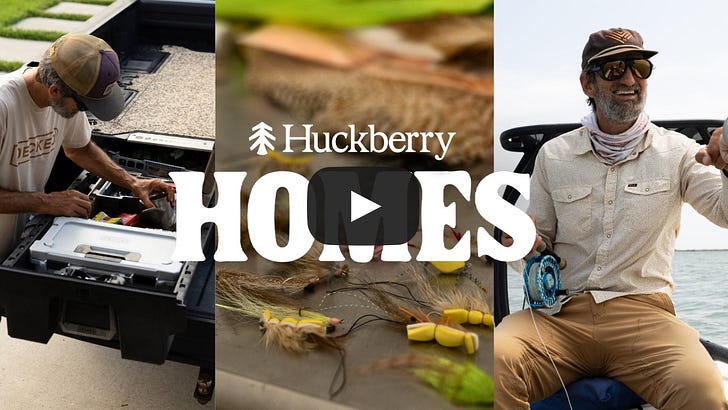
Huckberry Homes interviews fly-fishing guide JT Van Zandt from Rockport, Texas and checks out his gear, garage and boat setups. “From his meticulously organized DECKED system to his legendary fly-tying bench, JT shows us how a well-ordered life leads to a quieter mind.”
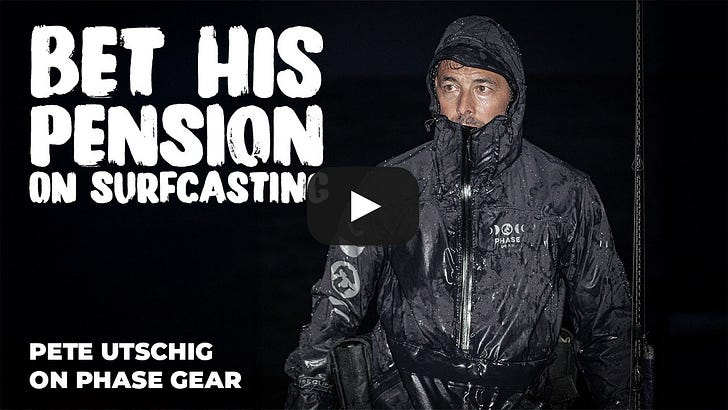
High-end consumer experiences. Snow Peak is creating “community-driven hubs where retail, outdoor recreation, and culture intersect.” They’re making a (smart) bet that a 2026 resurgence in consumers searching for “community” and “physical experiences” will become the “premium tier of consumer life.” For outdoor brands and retailers, this is a shift in brick-and-mortar purpose from transactional, unit-economic-driven ecommerce toward more curated, experiential events and ecosystems. Will it work? Consumers, particularly younger demographics facing rising isolation, will have to demonstrate an appetite for immersive brand experiences. George Revel from Lost Coast Outfitters breaks down the value of fly lines: Why Fly Lines Matter. “Weight-forward and double are where most anglers’ knowledge of tapers ends. However, there is a much richer story in taper design that can be read on the taper diagram. Tapers have exploded in recent years with the advent of compound tapers. Tapers are simply how weight is distributed along the head. Weight near the front of the head helps turn over heavy flies, while weight toward the rear aids roll casting and accuracy.” George’s favorite lines: 1. RIO Elite Gold Max: “Throw[s] streamers, indicators, dry droppers, and even smaller dries if you put a 12-foot leader on it.” 2. Scientific Anglers Amplitude Textured Trout Expert: “A smooth 70-foot taper with a 15-foot buttery front taper unravels with incredible elegance.” 3. Scientific Anglers Amplitude Smooth Anadro: “A 60-foot, weight-forward head with a short front taper and really long back taper makes it a top choice when drifting with indicators.” 4. RIO Creek: “A short, punchy head perfectly designed for short casts and flicking hoppers to alpine trout.” 5. RIO Elite Predator (full-float line): “Featuring a short, powerful head, this line has what it takes to move heavy flies quickly.” 6. RIO Avid Gold: “Best value line.” From the Skwala Lounge: The Differences Between SPF and UPF. “For anglers spending six, eight, ten hours in direct sun–often on reflective water that doubles your UV exposure–comfortable, well-designed high-UPF clothing gives you more coverage and consistency than sunscreen. The fewer areas you need to slather with goo, the better…” Testing Dometic’s New Modular Drinkware with Katherine Englishman. “What really sets the Dometic drinkware apart is the modular collar and lid system that’s interchangeable across the line. This is the feature I was most curious to test in the real world. Swapping out the lids and collars allows you to tailor the drinkware to the day’s activities–a handle for a hike or gym, something sleeker for eight hours in a cupholder or backpack pocket, for example.” Nick Parish over at Current Flow State has put together a CFS Lower Deschutes Ribbon Map–cool idea and great cause. “The six-foot long ribbon map of the Lower Deschutes has almost 200 features, including campsites, day use areas, boat launches, rapids, creeks and historical areas of interest. It’s printed on waterproof, tear-proof paper and comes stored in a special tube to bring with you on your river adventures.” And every dollar raised from it goes to the river. Pete Utschig, a New York City Fire Department veteran and founder of Phase Gear, sits down with Peter Jenkins at The Saltwater Edge and talks about building a surfcasting brand, bootstrapping a business and “grinding it out.” Check out Phase Gear.
Fresh Water News examines Colorado Water Trust’s latest “crazy drought quest,” where the nonprofit is trying to buy water to keep fish alive as another low-water year shapes up across the West. Meanwhile, The Whale Foundation is once again offering scholarships and support programs for current and former Grand Canyon river guides proving, yet again, that river people continue to quietly take care of their own. American Whitewater notched a win on the Nolichucky River after litigation helped spare the Appalachian waterway from further riverbed mining damage, while back here in Colorado they’re also sounding the alarm after lawmakers failed to address the state’s wildly murky river-access laws. Speaking of low water, drought conditions have now forced portions of the paddling events at the 2026 GoPro Mountain Games to relocate away from Vail as organizers scramble for runnable flows. Chesapeake Light Craft is heading to the 2026 WoodenBoat Show with another lineup of dangerously good-looking small craft guaranteed to make you consider an ill-advised new project boat. And on the electric front, EMO Electric reports the first shipment of the highly-anticipated ePropulsion Spirit 2 has officially landed stateside. The new 2kW / 5HP electric outboard (with a 3kW boost mode) promises more power and a pile of upgrades over the Spirit 1.0. Finally, Reuben Smith’s Tumblehome Boatshop is bringing back its beloved Saturday Shop Talk starting May 16 with coffee, muffins, wooden boats and an open walk-through of the projects currently sprawled across the shop floor.
April continued a trend we witnessed in Q1, and that we have been watching since Q4 of last year: positive dollar-sales growth compared to comparable months of prior year, but driven more by increasing ASP’s (Average Selling Prices) than by unit-sales growth. April’s growth numbers were indeed strong, and very similar to Q1: dollar-sales up +11%, units up +3%, ASP’s up +8%.
Noteworthy growth continues to come in the Flies, Rods, Reels, Accessories and Tools categories. The Rods category had been driven in recent months, at least partially, by closeouts; but the bulk of those closeouts now seem to have cleared through the channel.
Unit-sales growth is always encouraging, and we see it YTD in Flies, Rods, Reels, Lines, Eyewear and some Accessories and Tools. But we want to be clear–some portion of that YOY growth has been due to the early fishing season that has ramped up quickly in the western half of the country, due to warmer temps and lower-than-normal snowpack. If overall precipitation remains low through the spring and early summer, it’s possible that unit-sales could begin trending downward earlier than usual this season, perhaps even in July.
Regarding Average Selling Prices: since October of last year, markedly higher ASP’s in most categories are largely due to 2025 tariffs. Recent judiciary rulings state that those tariffs were illegal and will not carry into the future, but in what feels like a continuing environment of uncertainty around tariffs, it’s unlikely that brands will respond by reducing their pricing. Therefore, we expect the YOY trend in ASP’s to continue, at least through Q3.
But that’s just tariffs. If petroleum prices stay high through the summer, then shipping costs on practically anything could also increase, and even some petroleum-based materials could cost more. And either of those factors could pressure some brands to again review their Wholesale and MSRP prices.
In short, we are talking about inflation. But, as opposed to demand-driven inflation, these days we talk about inflation driven by supply chain cost increases, whether from tariffs or materials or fuel surcharges. Any of those elements, plus inflation in other consumer goods segments of the economy, could eventually influence how some anglers will choose to spend their discretionary dollars.
What’s the good news? Well, the fly-fishing industry is doing better than some other outdoor verticals. People are fishing, and they have been regularly accessing their fly shops for consumables (Flies, Leader-Tippet, Floatant, Indicators, etc.). And so far this year, they are eagerly spending on Rods, Reels, Waders, Eyewear, Vehicle Racks and more. The early season warmth, with almost no runoff, is clearly outside of our control, but is helping to drive sell-through.
What can we control?
If you’re a retailer, you already know you need to build community around your shop. But what else is worth considering?
Don’t let revenue growth distract you from protecting your margins. Maybe go a little deep on low-risk inventory (especially fast-moving consumables). Stay connected with your brand partners, and never stock out of your top-selling SKU’s, in any category.
If you’re a brand, of course you always have to make compelling new product.
Be as flexible as possible in filling orders when retailers want them, especially as seasonal weather abnormalities impact consumer behavior–that might mean more ASAP shipping earlier in the season, or it could mean something different in the fall; whatever your retail partners are calling for, ship it as quickly as you can. Keep dealers informed, promptly and concisely, of how your supply chain and operating costs are impacted by factors outside of your control, and what those factors might mean for both the retailer and the consumer. Preemptively do what you can to not let dealers stock out of your core products.
TrackFly is a data aggregation and analytics platform, connecting specialty retailers, brands and sales professionals. They are helping Flylab track key industry trends.
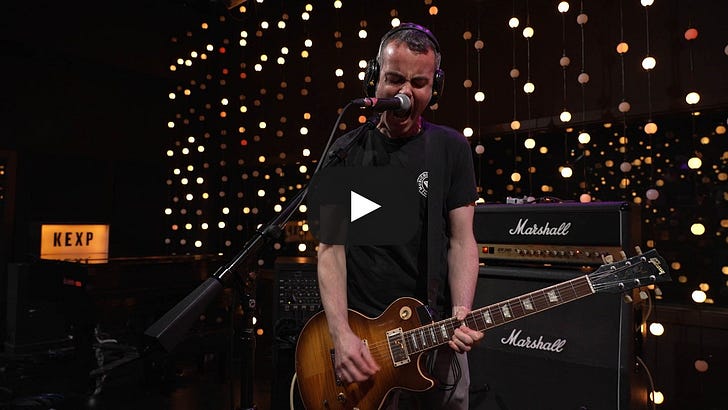
Because it’s Memorial Day weekend (sort of), let’s make this simple: mclusky live in the KEXP studio.
You’re currently a free subscriber to Flylab. Support independent storytelling and upgrade your subscription.
|
|