The Disappearance of Stanley Bain
“Stanley Bain was definitely at the forefront of the bonefishing gold rush that hit the Bahamas in the late ’80s and early ’90s…” – Brian O’Keefe

Is this your brand on Milled? Claim it.

Thanks for reading. Get more of Flylab–upgrade to paid for full access. The Disappearance of Stanley Bain“Stanley Bain was definitely at the forefront of the bonefishing gold rush that hit the Bahamas in the late ’80s and early ’90s…” – Brian O’Keefe
After Argentina, my travels bounced me around to different locations pursuing all kinds of fish–bonefish, permit, tarpon, snook and just about anything else I could find that would eat a fly. I visited places like Belize, the British Virgin Islands and Mexico. It wasn’t until I landed on South Andros Island in March of 2007 that a new story idea took shape, and took over my life for the next two years. I understood early in my writing career that long-form journalism might not appeal to everyone–life is busy, distractions are everywhere and attention spans just aren’t what they used to be. But for me, there’s still something special about those deep, captivating stories from magazines I grew up with like The Atlantic, Outside and Vanity Fair. Writers like Dominick Dunne, Jon Krakauer, William Langewiesche and Mark Bowden had a way of weaving long, complex narratives that kept me hooked. This love of storytelling is part of what inspired my first fly-fishing magazine article, published by The Drake. It is the same story that later became the third season of Down the Path, a podcast that launched in 2019. But it all started years earlier on the island of South Andros. I was there to write a standard 1,000-word travel/outdoor piece for the back section of The Denver Post. But, as things often happen, I became sidetracked and went deep down a rabbit hole. A day after arriving at Bair’s Lodge, located about a 30-minute drive south of South Andros-Congo Town-Queen Airport, we got into some bonefish, saw our reel backing a few times and I had my first tangle with a formidable barracuda that would forever transform my thoughts on this saltwater “trash fish.” I could tell on the first day my writing assignment was going to be a slam dunk. And then we had five more days ahead of us. Our first two days of fishing were still tough. Overcast skies, wind, rain and intermittent periods when we simply couldn’t fish botched our time on the skiff. On the evening of our second day at dinner, our guide manager gave a quick announcement about the weather forecast. Whatever front we just dealt with was moving on. “We should have a number of clear days ahead. Is anyone interested in making the long run down south to Grassy Cay?” he asked. My buddy and I looked at each other before quickly shooting our hands in the air. “We are,” my buddy said. “Hey, question, so whatever happened to ’ol Stanley?” asked one of the other anglers sitting a few seats down. The lodge manager looked over and gave a short laugh while shaking his head. English was not his first language. You could tell he wasn’t enthusiastic about the subject matter with a bunch of newly minted lodge guests and chose his words carefully. “From what I’ve heard, he’s just gone,” he said. “Disappeared. But it sounds like a long story.” I was intrigued. That brief dinner conversation altered the course of my writing career and sent me on a years-long odyssey trying to solve the mystery of Stanley Bain…
The Disappearance of Stanley Bain(The Drake, 2007: volume 9, issue 2) “There was no evidence to show they’d been around. There were no boats, no wreckage. There was nothing.” – Henry Bain. Andros Island, Bahamas On the morning of August 5, 1995, Stanley Bain stood in front of his Cargill Creek Lodge and surveyed the small fly-fishing empire that he’d built. The resort sat near the North Bight on South Andros Island, The Bahamas, concealed among lush tropical gardens and manicured lawns. Three satellite cottages peppered the outskirts of his property, which included an in-ground swimming pool and a Cessna 402 for his more affluent clients who wished to arrive via private charter. And surrounding it all were some of the most productive bonefishing waters in the world. Stanley was preparing for a two-week fishing trip to harvest lobsters for the coming year’s clients. A recent hurricane had just passed and he and his brother William were getting a late start on the opening of lobster season. But soon after fueling up the 36-foot Luhrs Sport Fisherman and two Dolphin skiffs that would accompany them, Stanley, William and three lodge employees set out into the emerald waters surrounding Andros. As they headed away from Cargill Creek, the group passed Simon Bain, another of Stanley’s brothers, who was returning with a client from the North Bight and Moxey Creek after a morning chasing big bonefish. Simon ran his boat close in front of his older brother’s cabin cruiser, and he can still remember his two brothers laughing as he passed. It was the last time he would ever see them. Stanley Bain and his crew of four disappeared that day forever. Andros Island has long been considered one of the premier bonefishing destinations on the globe. It is the largest of the more than 700 Bahamian islands, at 40 miles wide and over 100 miles long, yet it remains one of the more sparsely populated. Its location some 150 miles southeast of Miami and its reputation as home to the biggest bonefish east of the Keys has made it a popular bonefish haunt ever since Colonel Hank Thorne built the legendary Bang Bang Club on the north side of Big Wood Cay in the ’40s. At the time of his disappearance, Stanley Bain was the personification of Bahamian fly fishing. He’d started fishing the flats and creeks around Andros with his father as a young boy, and he later guided at the Bang Bang Club itself, working for a time with the legendary “Bonefish” Charlie Smith, inventor of the Crazy Charlie. He was also a husband and a father. He and his brothers were very close and by all accounts, he had a tight knit family. Most agree that Stanley Bain was 49 years old at the time, and seemed to be at the top of his game. “Stanley Bain was definitely at the forefront of the bonefishing gold rush that hit the Bahamas in the late ’80s and early ’90s,” says photographer Brian O’Keefe, who fished with Bain three times in the early ’90s, including some of the first exploratory trips to the desolate south end of Andros. “Nobody at that time was actively putting that area of Andros into a commercial program. It was an overnight trip to fish it and fuel was expensive. When we were down where he was building Grassy Cay Lodge, we wouldn’t see anyone–ever.” These days, you can choose from over 30 lodging options on Andros, but 15 years ago almost every angler who came to the island stayed in one of three places: The Andros Island Bonefish Club, Cargill Creek, or Charlie’s Haven–run by Charlie Smith–all located about midway down the east coast, near the North Bight. “Bain was positioned to do very well with Cargill Creek and the new Grassy Cay Lodge,” says O’Keefe. “If things hadn’t turned out the way they had.” In truth, “the way things turned out” remains an almost complete mystery. But there’s no shortage of speculation. “South Andros is just wild, more wild than Alaska, really,” says fly-fishing writer Ted Williams, who stayed at both of Bain’s lodges and has fished Andros extensively. “All the Bahamians have different theories about Stanley. That’s the way they like it–they’re into rumors. But nobody really knows what happened.” In the 1980s, Stanley was a financially successful Bahamian who was involved in the construction business in Nassau. He was also a big supporter of the Progressive Liberal Party, or PLP, led by Prime Minister Lynden Pindling, who ran the Bahamian government for 25 years, until being forced out by a corruption scandal. Because of his political connections, Stanley was able to secure large loans from the Bahamian bank. His first operation, Cargill Creek Lodge, did quite well, so he decided to expand his operation and open a new lodge on the south end of South Andros. But right about the time Grassy Cay got going, the PLP fell out of power. “In those days, when you were a big supporter of Lynden Pindling, like Stanley was, you could go to Pindling and he would recommend you to any bank to get any amount of money, just like dat,” says Gary Francis, a Bahamian guide who was on Andros at the time of Stanley’s disappearance. “Then one day he just comin’ up from Cargill Creek and he never returns. Gone into thin air. They didn’t find no boat or nothing.” So, the obvious question lingers–what about the big loans? Did he ever pay them back? “That’s what a lot of people are trying to figure out,” Francis says. “Big loan.” Beyond his questionable financial situation and close ties to a corrupt Bahamian government, there is also widespread supposition of drug smuggling in Stanley’s past. Jerry Tone Sr. and his wife Betty, both avid fly anglers, were among the first paying clients to stay with Stanley at Grassy Cay Lodge. They fished with him for several years. “Stanley used to sit up on the roof of the lodge to make his phone calls back to Nassau because it was the only place he could get reception,” recalls Jerry. “Either that or he didn’t want us to hear what he was talking about. Apparently, he was in the construction business, but people always talked about him possibly being in the drug business.” Chip Bates, owner of Angling Adventures and another American close to Stanley, was the exclusive booking agent for Cargill Creek and Grassy Cay Lodge. “The drug dealing never came up in conversation, but I didn’t doubt the rumors for a second,” Bates says. “But at the same time, these were the stories that gave Stanley this larger than life persona.” The south end of South Andros is less than 90 miles from mainland Cuba. So, a questionable disappearance such as this naturally calls into question whether the boat may have ended up farther south than it intended. This became an intriguing scenario when it came to light that, according to Stanley Bain’s accountant, Bain was carrying $10,000 in cash on board. “Well, the general thought was that the crew was going to fill the boat with enough lobster to support both the lodges throughout the season,” says Bates. “But if for some reason, Stanley didn’t get enough lobster he was going to buy the lobster from other fisherman right out on the water, before they hit the market and the prices went up.” “I’ll tell you this,” Bates continues. “Stanley was a scrapper. He wouldn’t back down from a fight. He might have approached the wrong boat, and they might have seen the amount of cash he had and picked a fight. If that happened, the others on the boat would have had no choice at that point but to go along for the ride. If these guys were Cuban, it would be very easy to disappear all the people and that boat. Everything could have ended up down in Cuba.” And if Bain’s boat went north or east, it could have simply fallen under the spell of the Bermuda Triangle, and be added to the roster of the more than 1,000 boats and 200 airplanes that have gone missing there in the past 200 years. But the most benign and logical possibility is the most natural of events. What if Stanley simply ran into bad weather and capsized? According to the National Oceanic & Atmospheric Administration (NOAA), in August of 1995 there were nine storms in the Atlantic Ocean in the vicinity of the eastern seaboard. There were only two storms in the general vicinity of Andros and the rest of the Bahamas and Cuba. The first was Hurricane Erin, which developed sometime around the 30th of July and hit Category 1 status in the Bahamas July 31st. This was the storm that caused Stanley to be delayed until August 5th, four days after the beginning of the 1995 lobster season. The second was Tropical Storm Jerry. Jerry’s reign lasted from August 22 through August 28th. According to his brothers, Stanley should have been back on South Andros on the 18th. On the 22nd of August, Jerry was only a Tropical Depression and is cited around southwest Andros with 30-35mph winds. Even if Stanley was still on the water on the 22nd, Jerry wasn’t the type of storm to sink a 36-foot cabin cruiser, two skiffs and drown an entire crew without a trace. The Perfect Storm’s Andrea Gail, by comparison, was hammered by 120-mph winds and seas up to ten stories high. Yet pieces of the Andrea Gail were still found by search crews. It seems that the nation of the Bahamas has all but forgotten about their son, Stanley. Little was ever recorded in the papers, and the police report is thin. Stanley’s brother, Henry, filed the police report at the Cargill Creek Police Station when the crew went missing. Stanley had told Henry his game plan that day: head south from Cargill Creek and make one stop at Grassy Cay, then continue on for about 40 miles southwest toward Cuba. Once they were done fishing they were going to spend a few days on Grassy Cay to do some repairs and upkeep. On August 19th, family members tried to contact Stanley and William at Grassy Cay, but they could not be reached by phone. Alarmed, Stanley’s family left for Grassy Cay immediately. When they found no one, they returned and notified authorities. One of the three employees on the boat was Hubert Mackey, a 32-year-old Andros local and bonefish guide, married with a new child. His father, Rudolph Mackey, was also a bonefish guide, at the nearby Andros Island Bonefish Club and was part of the large search party that went out to the banks in between Andros and Cuba to look for the missing fishermen. “I went out searchin’ in a boat and a plane,” says Rudolph. “We flew out over to da bank near Cuba, but if we got too close the Cubans would have shot us down. We were scared to get too close.” Rudolph knew Stanley well. When asked whether or not Stanley could have been doing other things out on the water, Rudolph simply replied, “Stanley was into lots of different things.” The search lasted for weeks. Friends and family continued looking for the fishing party long after the official search was over. Henry Bain is still tormented by the loss and the unanswered questions. “There is a guy here with the Bahamian government who my other brother went to see,” says Henry. “This fellow went and spoke with the police in Cuba, trying to figure out if they somehow drifted into Cuban waters or ended up there somehow. He was high up in the government and could find out nothing.” Cargill Creek Lodge folded shortly after Stanley’s disappearance. It was eventually purchased in 2003 by Rupert Leadon and is now part of the Andros Island Bonefish Club. Grassy Cay lodge lies in ruins on the south end, where local guides will sometimes point it out to their guests when talking about the history and mysteries of Andros. All that remains of Stanley and his crew 12 years after their disappearance from this beautifully desolate island are rumors, conjecture and speculation. Stories and conspiracy theories pervade the back channels and endless, bonefish-filled flats that stretch around Andros, adding to the mystery of Stanley Bain and his place in Bahamian fly-fishing lore.
PostscriptAlthough this story was published by The Drake and edited by Tom Bie, the first person I ran it by was Charlie Meyers. It was an early, unpolished draft, but one that I had spent hours researching. I didn’t think it was a great fit for The Denver Post, but decided to give it a shot. By that time, I knew Charlie and trusted his opinions. I thought I might get some useful feedback and critique, and from a storytelling perspective, I was sure he was going to love the research and narrative I had put together. As always, Charlie provided direct and pointed feedback: “Here’s my critique: You’ve done a good job with the construction and the writing in general. My concern is with your character. I find little either to love or hate with him, which, in the literary context, means I can’t identify. I’m not sure Stanley ever will make the cut. I just don’t see the drama or the personage there. As for The Post, it’s too far afield. No way to make a connection.” After all of the work and research, the critique stung, but his opinion was 100% spot on. And it continued… “You need to find some importance with him, something that makes me care whether he was lost or not. I suspect a large problem is with the great time lag, coupled with what seems a general indifference among many of the people who remain. This is a mystery, but there aren’t enough details about the disappearance: a description of the boat and the other people, more about the circumstances, the Cuba thing up front. If you can’t present Bain as more of a fishing personage in some larger-than-life context, then what we have left is a long-ago case involving a possible drug deal gone bad or some sort of vague political or financial retribution. In that part of the world and against the backdrop of time passing, neither of these seems compelling. I hope this doesn’t sound harsh. I applaud you for taking a whack at it. I’m not sure I would have mustered the courage. Happy New Year.” Ultimately, I took his advice to heart. I went back and tried to figure out which parts of the story–and the details about the man–I had missed. I started interviewing people again, asking more questions and looking for new information and connections. Charlie’s feedback made me think about everything I had overlooked, and from that point forward, I thought about those things every time I planned an interview. It changed the way I thought about stories. It completely changed the way I asked questions. And it made me pay closer attention–to listen to the people more carefully.
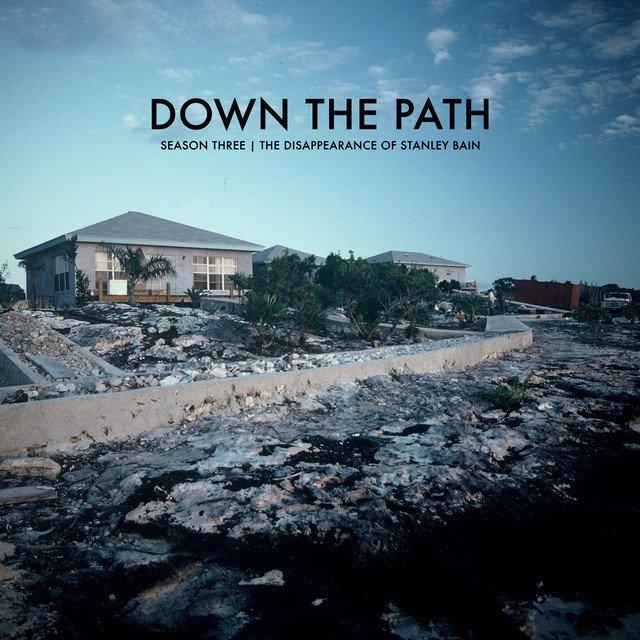
More on Stanley Bain from The Flyfish Journal. Down the Path: Season Three.
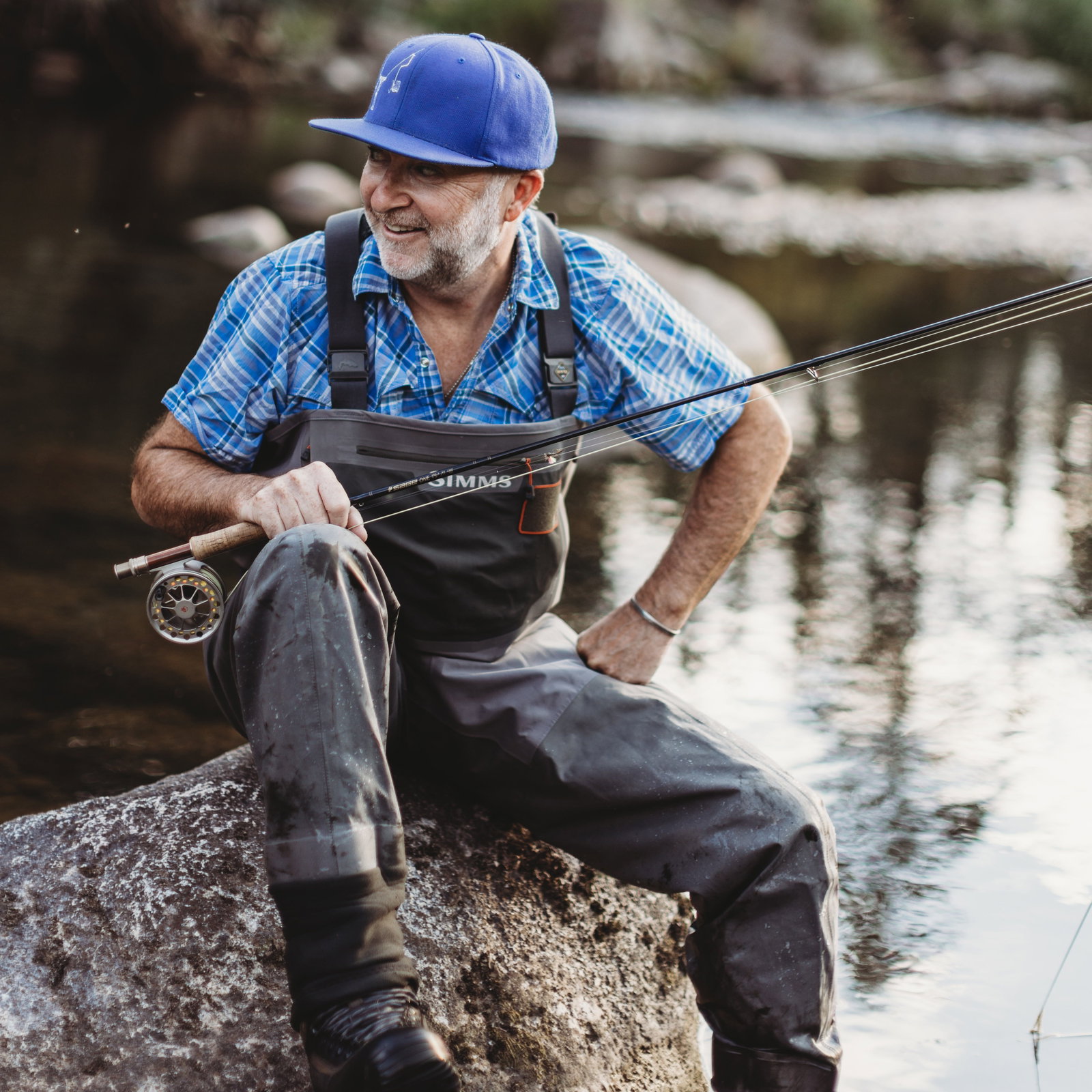
Will Rice is a journalist and writer whose work has appeared in The Denver Post, The Drake, The Flyfish Journal, Outside Magazine and more titles that we can count. He’s also the creator of Down The Path, a true-crime and investigative podcast that focuses on the mysterious disappearances and tragedies in the world of fly fishing and remote travel, while also giving a voice to the families and communities left behind. Originally from upstate New York, Will spent many years in Colorado before relocating to Vancouver, British Columbia, where he now lives with his wife, Sara, and their dog, Buzz.
You’re currently a free subscriber to Flylab. Support independent storytelling and upgrade your subscription.
|