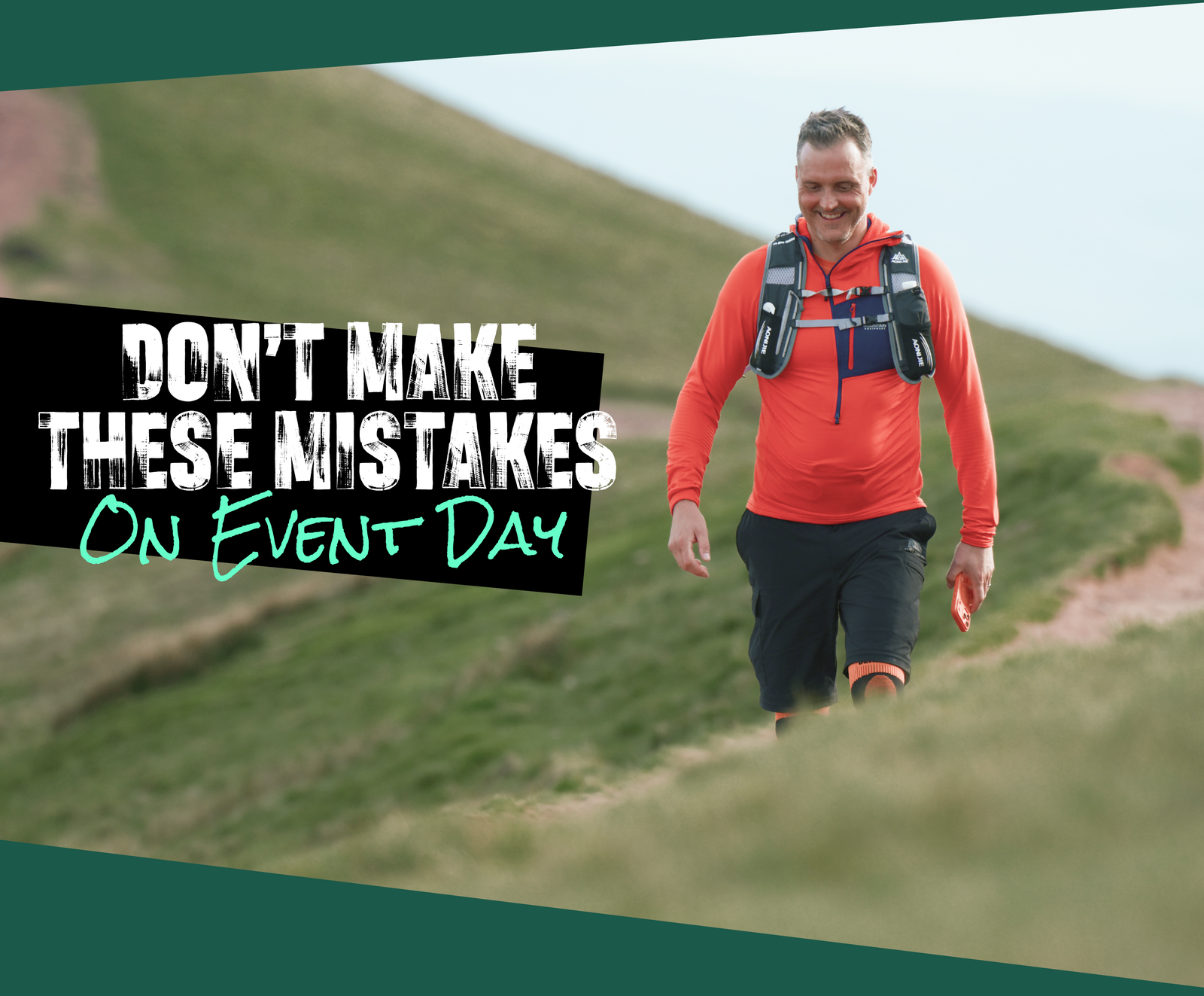
Whether you're training for a marathon, taking on an endurance event, or planning a long-distance hike, preparation goes far beyond your training plan.
Our founder, Rhys, learnt that the hard way during last year's Apex Everest event.
Some things went to plan.
Others definitely didn't.
Here are five lessons he took away from the experience, and why they might help you too.
One of the biggest mistakes?
Not planning nutrition properly.
Rhys relied on snacks throughout the day rather than a structured fuelling plan, leaving him short on carbohydrates and electrolytes when his body needed them most.
Takeaway: Fuel before you're hungry and hydrate before you're thirsty. Your body will thank you later.
Rhys tackled the event in hybrid hiking boots.
On paper, they sounded like the right choice.
On the mountain, they weren't.
They were too heavy for the terrain and made every step harder than it needed to be.
Takeaway: Match your footwear to the challenge, not just the weather.
Last year's weather changed constantly.
The wrong waterproof and too many layers made staying comfortable far more difficult than it should have been.
Now, Rhys starts slightly cold and builds layers throughout the day as conditions change.
Takeaway: A smart layering system is far more effective than wearing everything at once.
Endurance isn't just about covering miles.
Rhys shifted his focus towards spending more time on varied terrain, alongside strength work targeting the ankles, knees, glutes and core.
Even his gym sessions became more repetitive, using slower, higher-rep movements to build both physical endurance and mental resilience.
Takeaway: Train for what the event will ask of you, not just what looks good on your watch.
During training, Rhys discovered he had deep compartment syndrome.
Instead of ignoring it, he worked with his physio to manage it through foam rolling, fascia release and targeted conditioning.
It wasn't about pushing through the pain.
It was about training smarter.
Takeaway: Small niggles are much easier to deal with than injuries you've ignored for months.
Preparing for an event doesn't stop when the session ends.
Recovery is what allows you to train again tomorrow.
Whether that's eating well, staying hydrated, sleeping properly or using compression to support your joints and muscles, every small habit adds up over time.
That's why Bearhug products are designed to help keep you moving, before, during and after your biggest challenges.